 Newshot
United Launch Alliance's Vulcan Centaur rocket suffered an anomaly during its launch today (Nov. 15), resulting in the loss of 40 Amazon internet satellites.
The Vulcan Centaur lifted off from Florida's Cape Canaveral Space Force Station today at 12:40 p.m. ET (1740 GMT), hauling 40 satellites for the Amazon Leo broadband constellation toward low Earth orbit (LEO). But they never got there.
"Based on data received by our Launch Director, we confirm that the Vulcan vehicle launched from Space Launch Complex 41 suffered an anomaly 10 minutes into the flight and failed to deliver the Amazon mission to orbit," ULA said in an update on X today, 50 minutes after launch. "Since the anomaly just occurred, we don’t have any specific data yet to understand what occurred today."
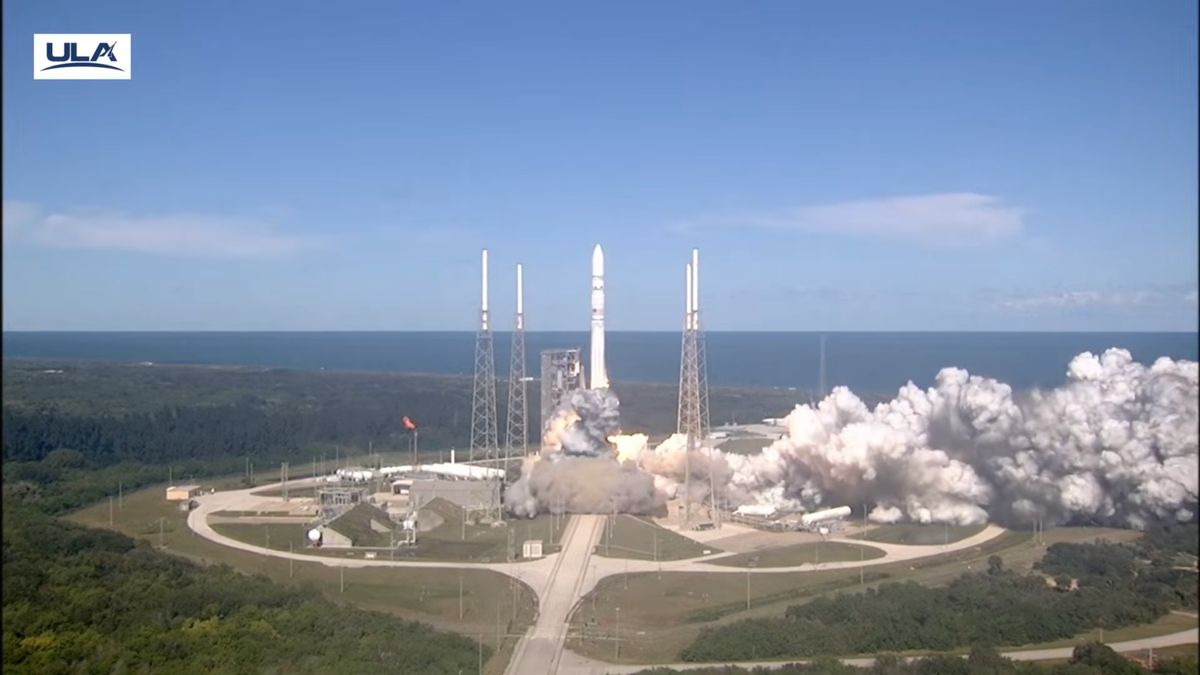
Today's launch was supposed to be a bounce-back mission for the Vulcan Centaur, the successor to ULA's workhorse Atlas V rocket.
Vulcan debuted in January 2024 and had four total flights under its belt before today. On two of those missions — its second, in October 2024, and its fourth, in February of this year — the rocket experienced an issue with one of its solid rocket boosters (SRBs).
In both cases, an SRB nozzle burned through and fell off about 30 seconds after launch. Vulcan Centaur overcame the problem on both launches, successfully delivering its payloads to their designated orbits. But the U.S. Space Force was concerned enough that it decided to pause national security launches on Vulcan until ULA addressed the problem. (Vulcan's third and fourth launches were Space Force missions.)
ULA worked hard on that front and got Vulcan ready to return to flight, which finally occurred today after nine months..
"The integrated team has made great strides in improving our understanding of the SRB anomaly that occurred on the previous Vulcan flight and have identified several potential contributors, which have been mitigated through design and process improvements to the nozzle," the company said in an Oct. 28 update.
That nozzle work apparently paid off: The SRBs appeared to perform as expected during today's launch. But a different, more serious problem cropped up today, and Vulcan Centaur could not overcome it.
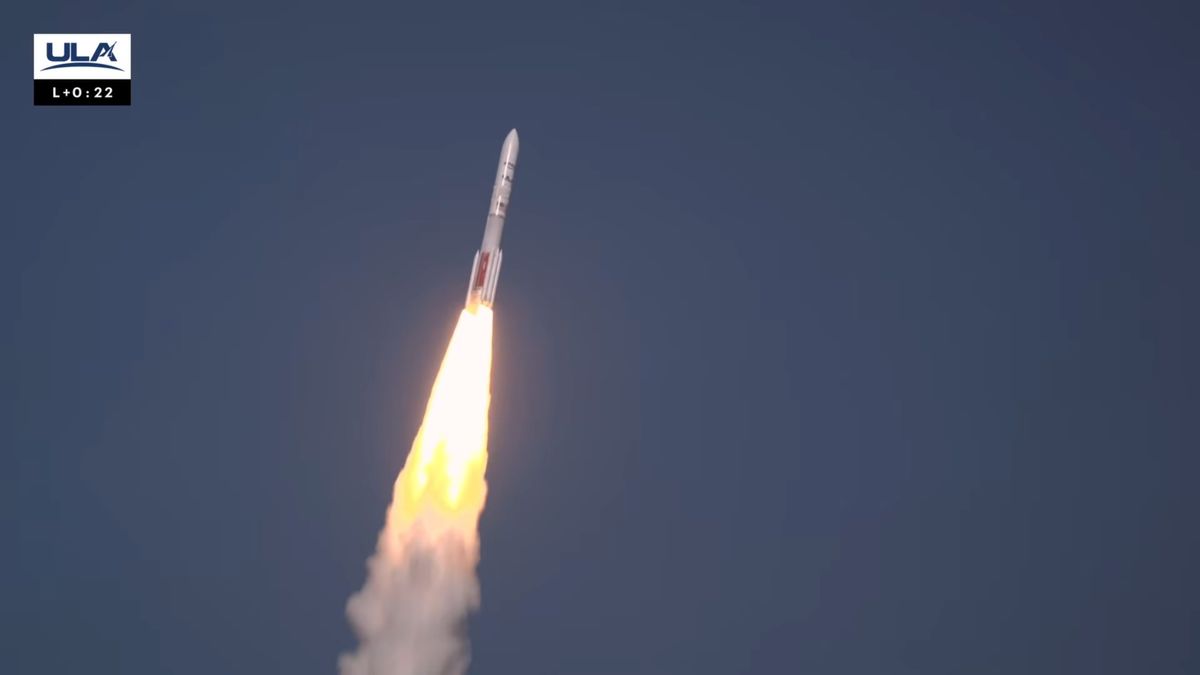
Today's launch was supposed to help build out Amazon's broadband constellation in LEO, which was previously called Project Kuiper but is now known as Amazon Leo. It will eventually compete with SpaceX's Starlink network, which has been up and running for several years.
Amazon Leo will consist of more than 3,200 satellites. Before today, about 400 of them had reached space on 15 launches, which were conducted by three different rockets — the Atlas V, SpaceX's Falcon 9 and Arianespace's Ariane 6. Today's launch was the first such mission for the Vulcan Centaur, which explains ULA's name for the launch — Vulcan Leo 1.
The Amazon Leo launch was part of a very busy stretch in spaceflight. SpaceX launched its Starship megarocket on Friday (Nov. 13), on a test mission that featured the first-ever catch of the vehicle's Ship upper stage. And Rocket Lab launched its 100th-ever mission early Saturday morning (Nov. 14), sending a private Japanese Earth-observing satellite to orbit.
Editor's note: This story was updated at 12:50 p.m. ET on Nov. 15 with news of liftoff, then again at 1:45 p.m. ET with news of the anomaly and loss of the mission.

Michael Wall is the Spaceflight and Tech Editor for Space.com and joined the team in 2010. He primarily covers human and robotic spaceflight, military space, and exoplanets, but has been known to dabble in the space art beat. His book about the search for alien life, "Out There," was published on Nov. 13, 2018. Before becoming a science writer, Michael worked as a herpetologist and wildlife biologist. He has a Ph.D. in evolutionary biology from the University of Sydney, Australia, a bachelor's degree from the University of Arizona, and a graduate certificate in science writing from the University of California, Santa Cruz. To find out what his latest project is, you can follow Michael on Twitter.
You must confirm your public display name before commenting
Please logout and then login again, you will then be prompted to enter your display name.