 Newshot
Article title: XREAL AURA Hands-On: The Future of Sci-Fi Movies, So Close Yet So Far
Body:
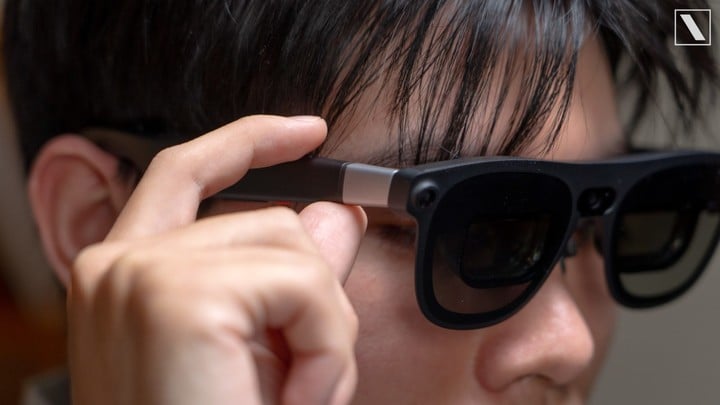
XREAL AURA Hands-On: The Future of Sci-Fi Movies, So Close Yet So Far
2026-11-23 12:00
In the sci-fi film Minority Report, Detective John Anderton stands before a massive transparent screen, wearing special gloves. He reaches out, grabs a piece of surveillance footage, drags it in front of him, enlarges it, examines it, and then casually flicks it aside.
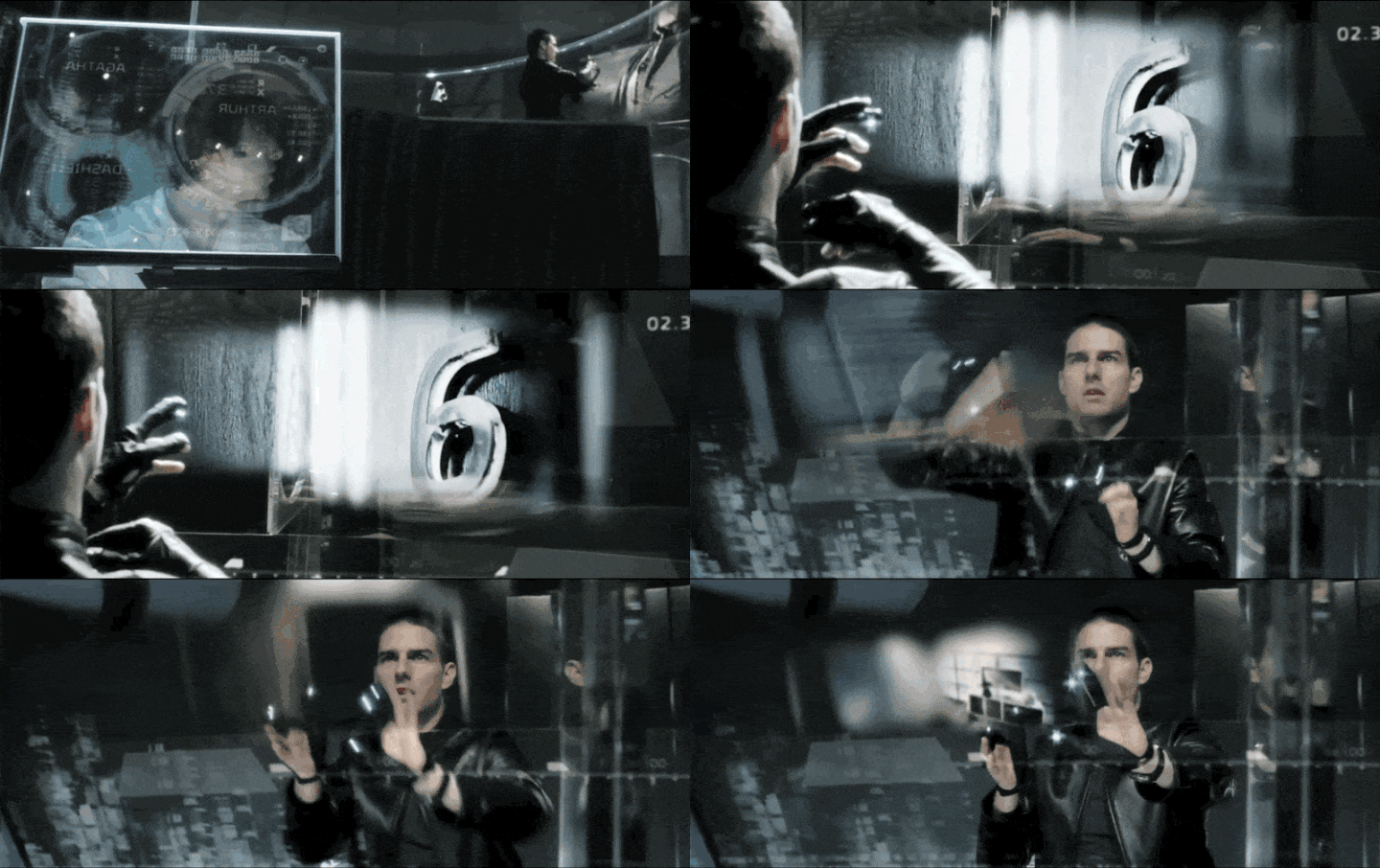
Moments later, he pulls up another clip from the side, waving both hands through the air, arranging the information before him as if handling physical objects.
Recently, a similarly "cyberpunk" scene appeared in the editorial office:

Several colleagues wore sunglasses-like glasses, reaching into the air, clicking, and occasionally pinching and dragging.
A colleague watching from the sidelines couldn't resist teasing: "Cyber performance artists."

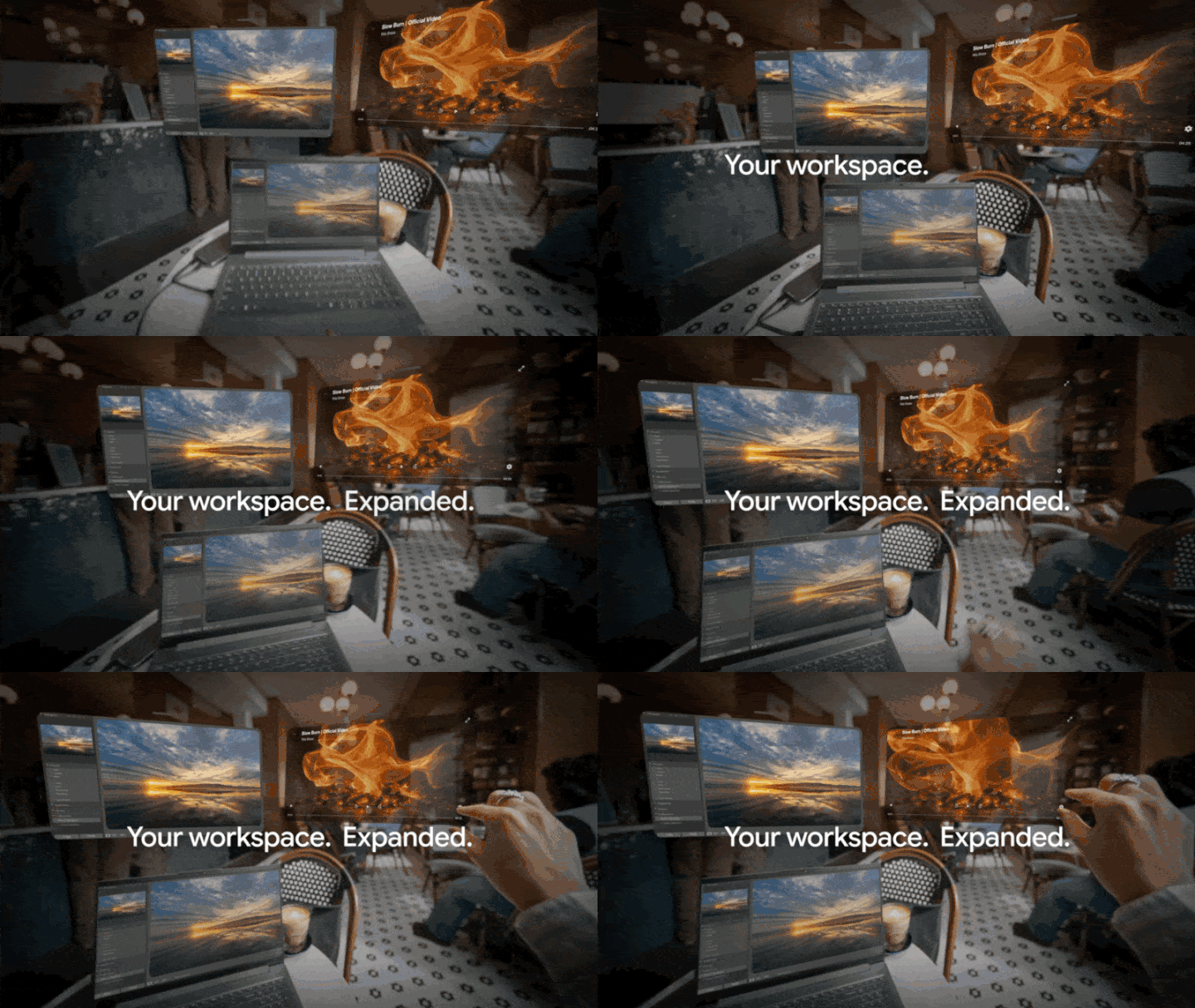
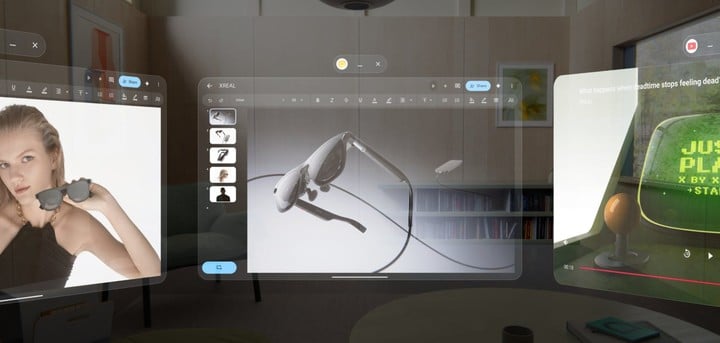
And inside the glasses, they really could select and drag windows in front of them with their hands, or pinch to resize them.
Browsers, videos, and various apps can appear around you simultaneously. Turn your head to look elsewhere, then look back, and the windows you just arranged are still exactly where you left them.
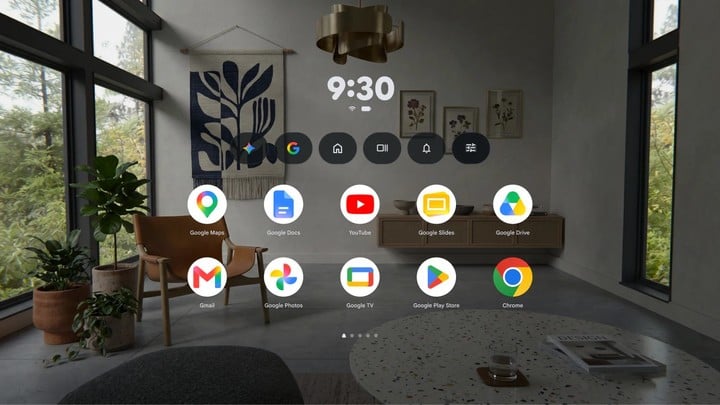
This is XREAL AURA, an Android XR spatial computing glasses built jointly by Google and XREAL.
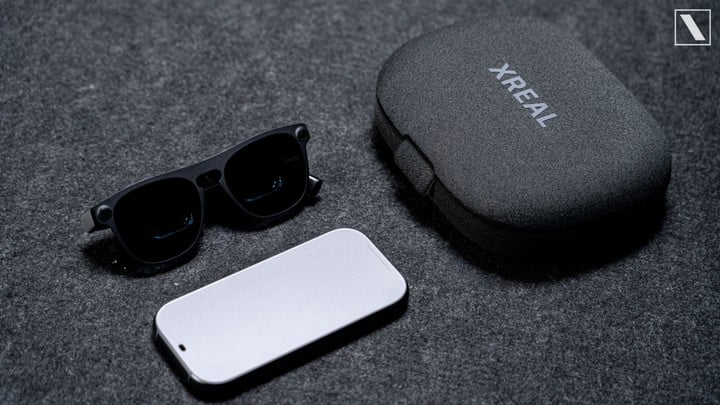
It combines display, spatial positioning, and gesture interaction, turning those once-unreachable operations from Minority Report into features you can experience firsthand.
Put on a pair of glasses and step into a virtual world
Over the past few years, consumer AR glasses have mostly played the role of a "portable big screen," with the core task of projecting the display from a phone, computer, or game console in front of your eyes.
We've tried quite a few such products before—RayNeo and XREAL's own Air series can all do this.
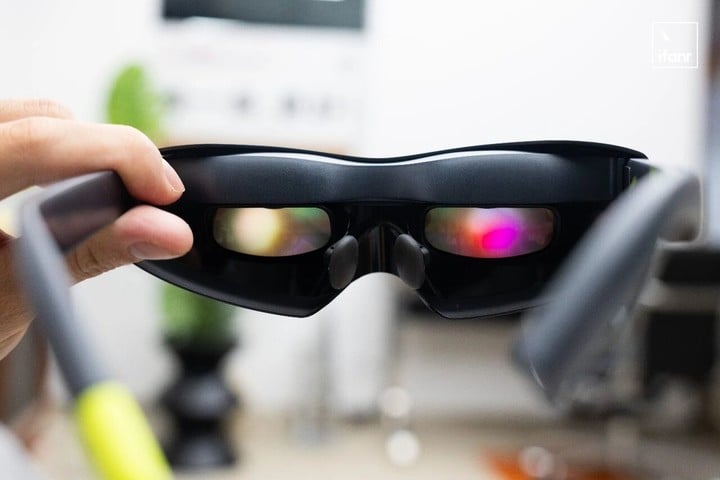
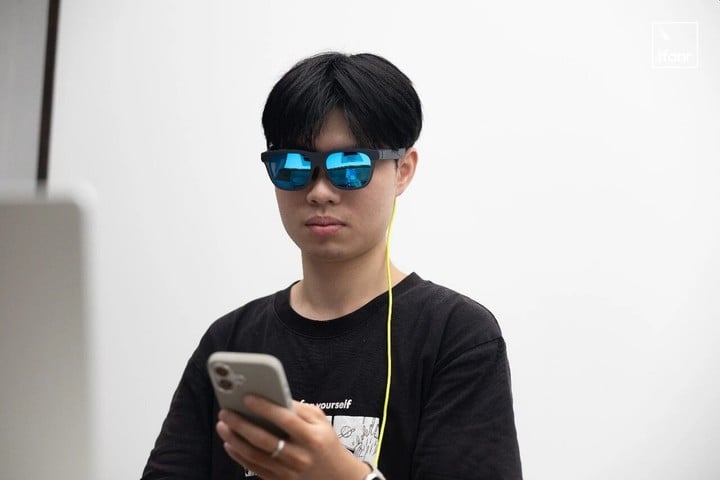
AURA goes a step further, aiming to make these windows truly "stay" in the space around you, and to let you interact with them in the most natural way—gestures.
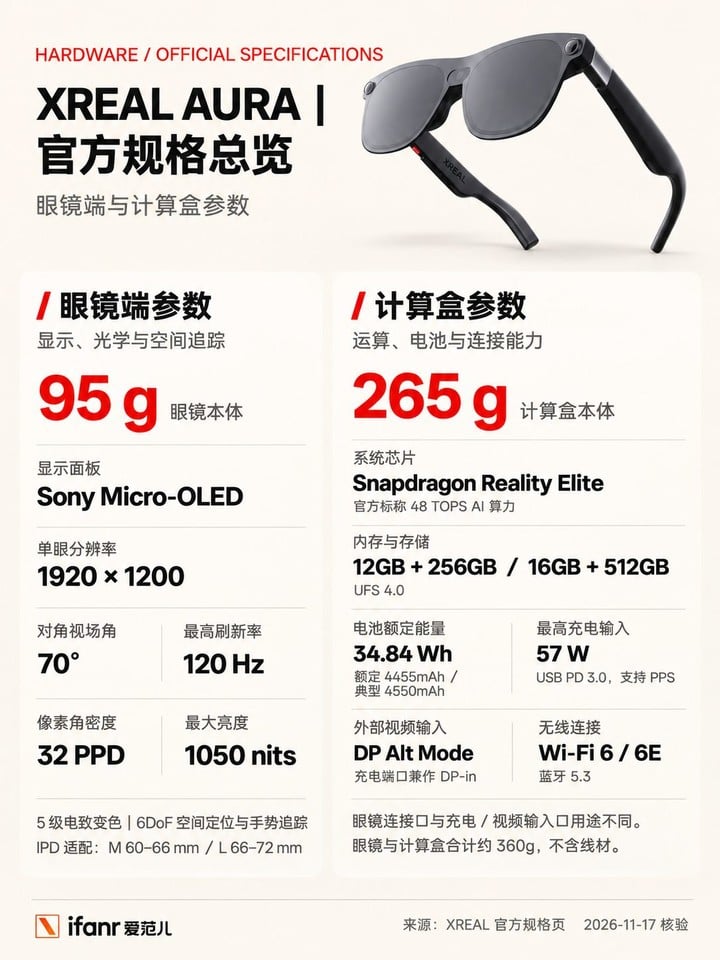
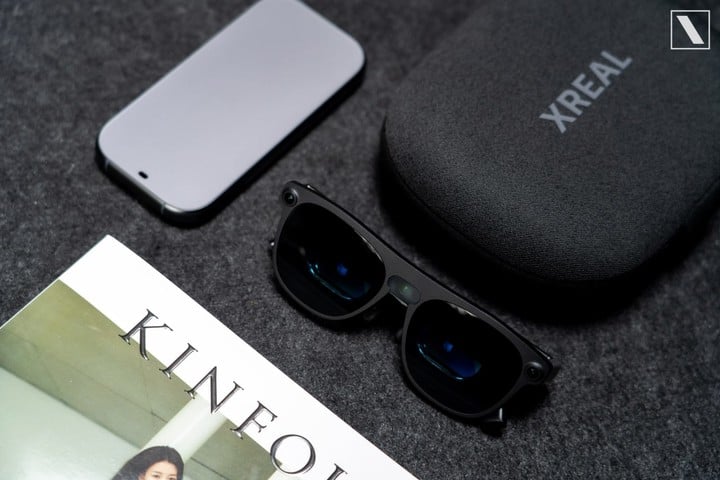
It uses an architecture of 95g glasses plus a 265g separate computing unit, runs the full Android XR system, and starts at a limited-time US market price of $1,099 (regular price from $1,279).
Its experience is somewhat similar to Apple Vision Pro, but the two approach spatial computing very differently.
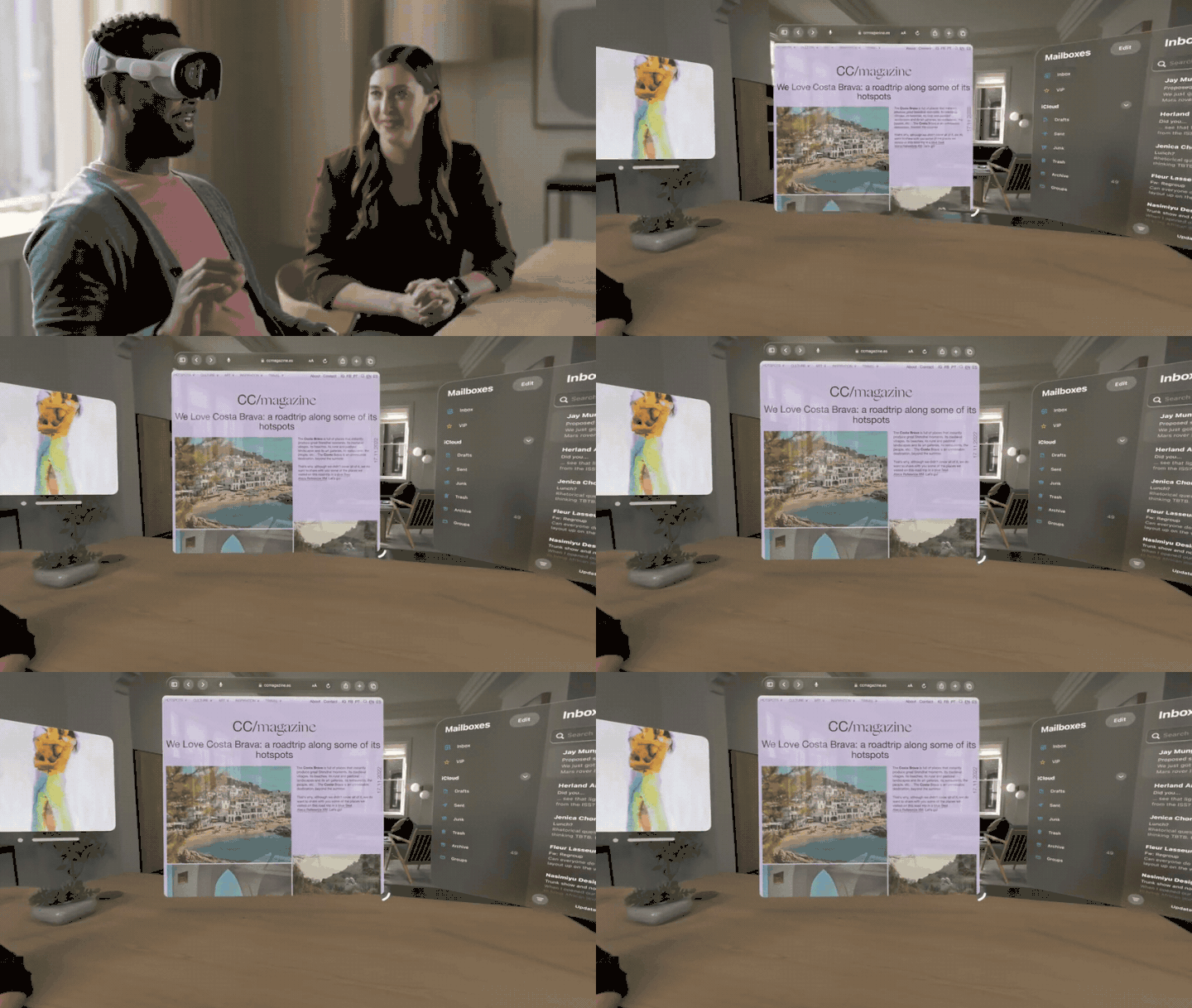
Image | Vision Pro demo, source Apple
Vision Pro is closer to a VR headset; the device itself does not let light through. Apple uses external cameras to capture the surrounding environment, then presents the real-time feed on the screen in front of your eyes, letting you "see" the real world and blending virtual windows and gesture interaction into it.
AURA takes another path. It uses an X Prism optical see-through solution; the lenses themselves let light through, so the table, walls, and people around you are real, while virtual windows are overlaid in front of your eyes through the optical system.
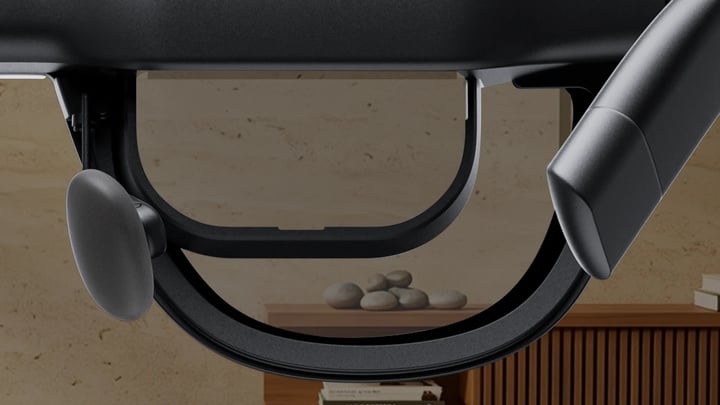
This also makes the two feel very different once worn. Vision Pro needs to first capture the real world and then present it to you;
AURA lets you look directly through the lenses at reality, with just some operable digital content added in front of you. The room is still the same room, only with a few floating screens around you that you can reach out and touch at any time.
At first, the unfamiliarity of spatial interaction did leave me somewhat at a loss, and for a while I even felt it was more uncomfortable than novel.
But after spending some time figuring out its operating logic, things changed. Gestures that originally required deliberate thought gradually became natural, and I began to have the inclination to try operations I hadn't encountered before.
AURA's UI, sound effects, and interaction animations are all quite interesting. Once familiar with them, you can't help but want to play a little longer.
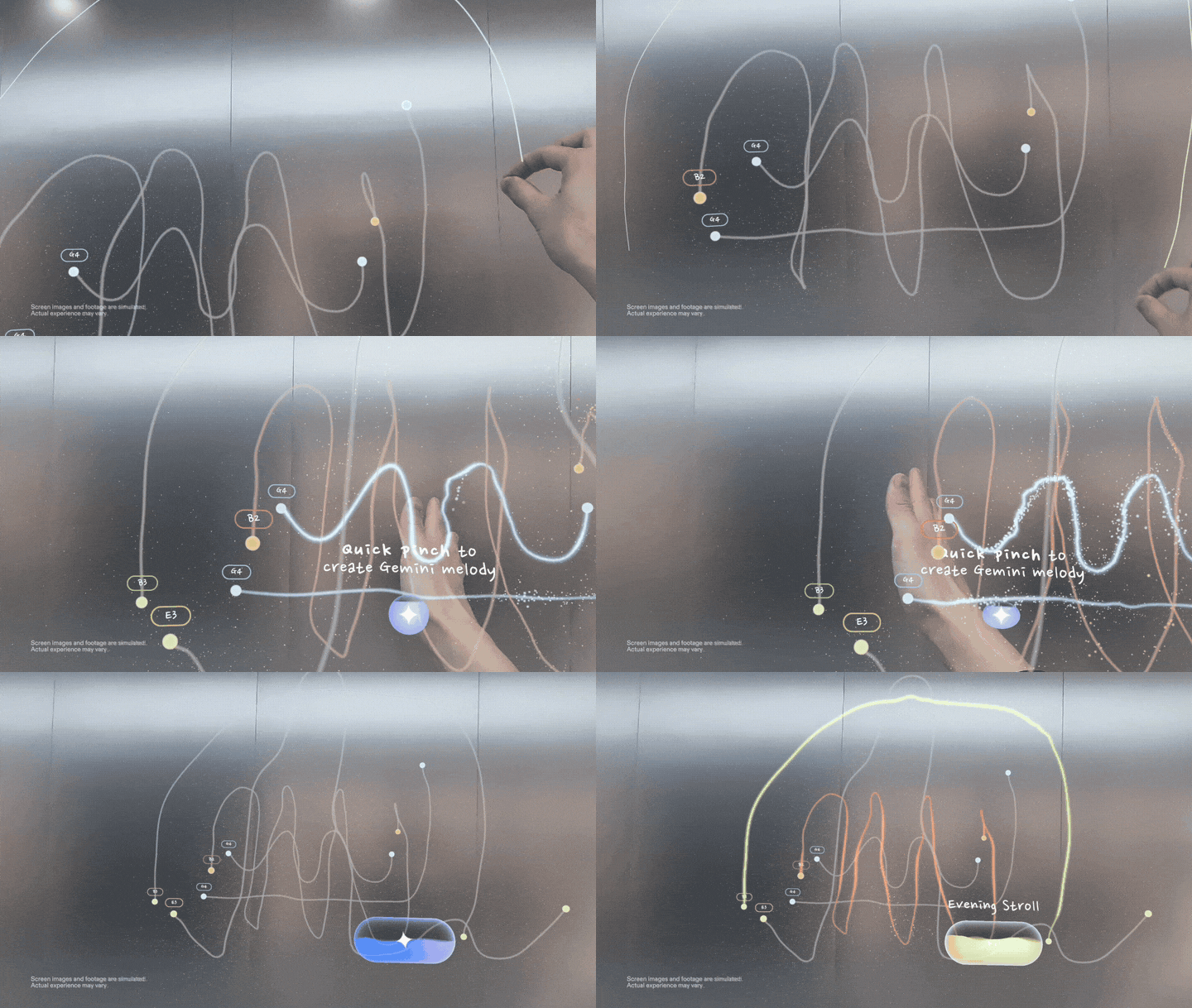
Image | XREAL official gesture drawing and control demo
Beyond interaction, AURA's display and sound performance also left a good impression on me.
AURA is equipped with a Sony Micro-OLED panel, with a per-eye resolution of 1920 × 1200, a maximum refresh rate of 120Hz, a maximum nominal brightness of 1050 nits, and a diagonal field of view of 70°.
The lenses support five levels of electrochromic dimming, which can be adjusted manually or automatically become transparent when you turn away from the content.
Spatial audio also responds quickly, with a subjective feel close to AirPods Pro. What surprised me more was that the sound also "moves" along with the window.
For example, when you open Apple Music or a video app and push the window farther away, the sound seems to come from farther away too; pull the window closer, and the sound actually gets louder.
When watching a movie, the picture and sound both come from the same position, giving a quite good sense of immersion.
Especially when playing Minecraft with a controller, as long as you drag a corner of the window and enlarge the game screen until it almost fills your entire field of view, only that world made of blocks remains before your eyes.
As you play, you may even forget that you are actually still sitting in a room.

Within reach, yet also beyond grasp
However, as the novelty gradually faded and I began using AURA in more everyday scenarios like office work and web browsing, I also gradually came to understand its usage characteristics and some details that could still be refined.
The first thing I noticed was the difference in experience when reading text.
AURA's 70° field of view and high brightness really do make it easy to get absorbed when watching videos or playing games.
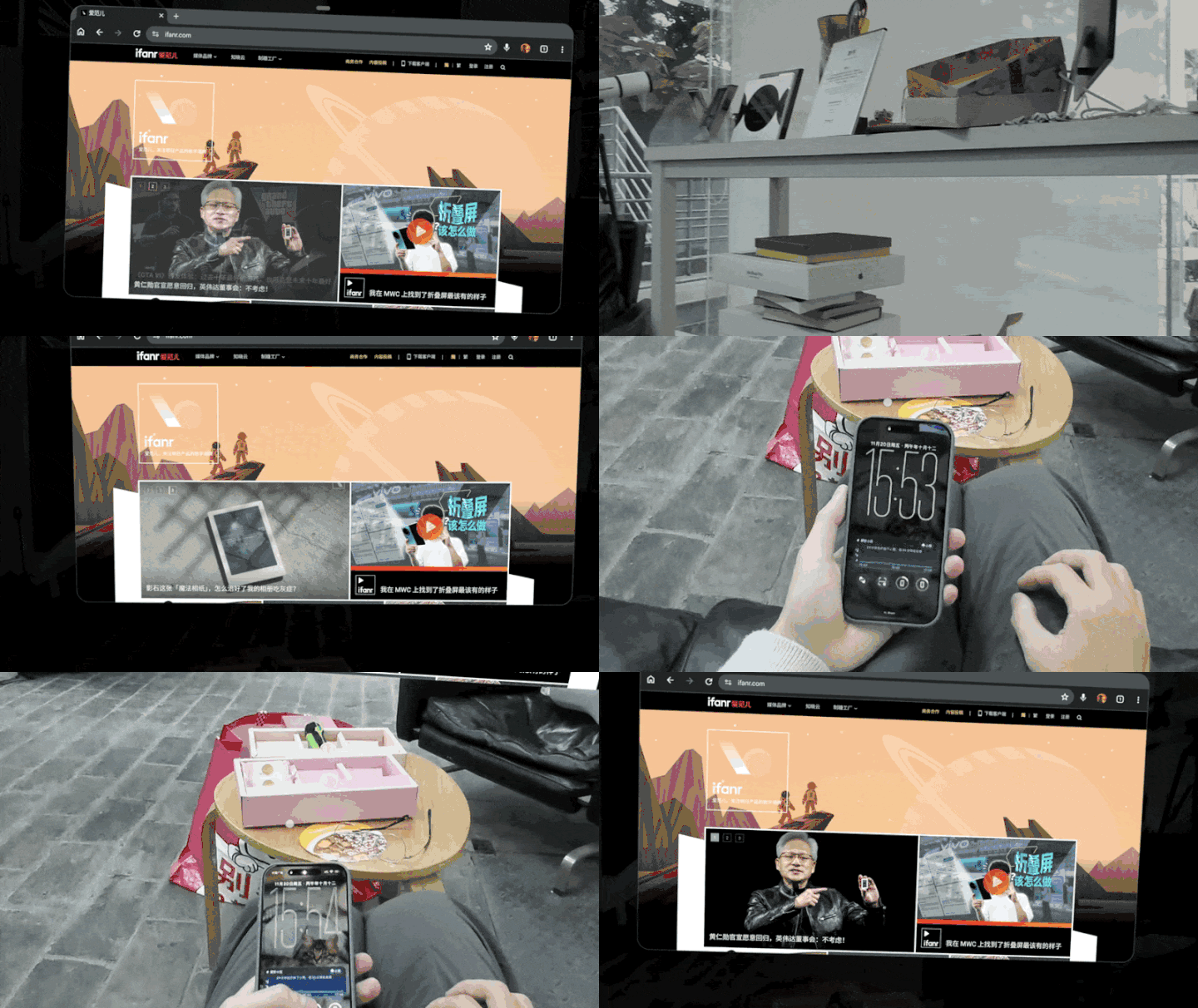
But when I open a browser to seriously read an article or work on documents, my requirements for the picture become more detailed: some jagged edges are still visible around text, and when I turn my head, the clarity of the text also fluctuates somewhat.
Compared with audiovisual content, dense small text and continuous reading make these details more likely to enter your line of sight. The large field of view brings an expansive sense of space, but to further support long hours of office work, the fineness of text and dynamic clarity are still worth continued refinement.
Similar differences also appear in certain specific images. For example, in dark mode, some gray backgrounds show a somewhat uneven green tint. However, ifanr has learned that subsequent mass-production versions will further improve the related display performance.
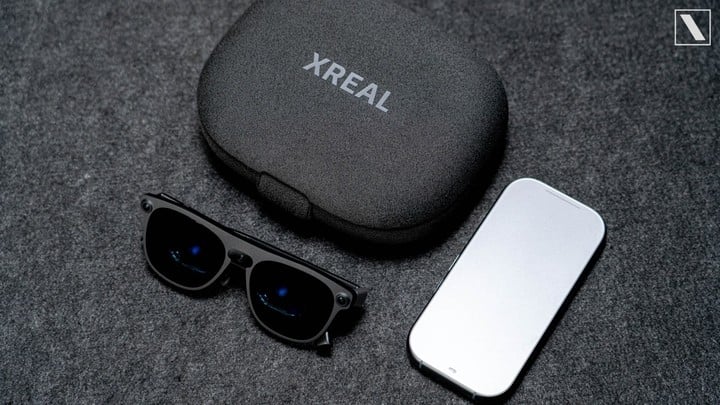
For AURA, how to further balance clarity and color consistency across the picture while maintaining a thin and light form factor and a large field of view is a direction worth continuous optimization.
Gesture interaction, meanwhile, needs to be viewed in the context of its product form.
At first, reaching out to click and pinch-drag windows does bring the novelty of directly operating a spatial interface. AURA's startup guide is also thoughtfully done, with fairly refined sound effects and animations, and some buttons actively snap the cursor, making initial operations easier to complete.
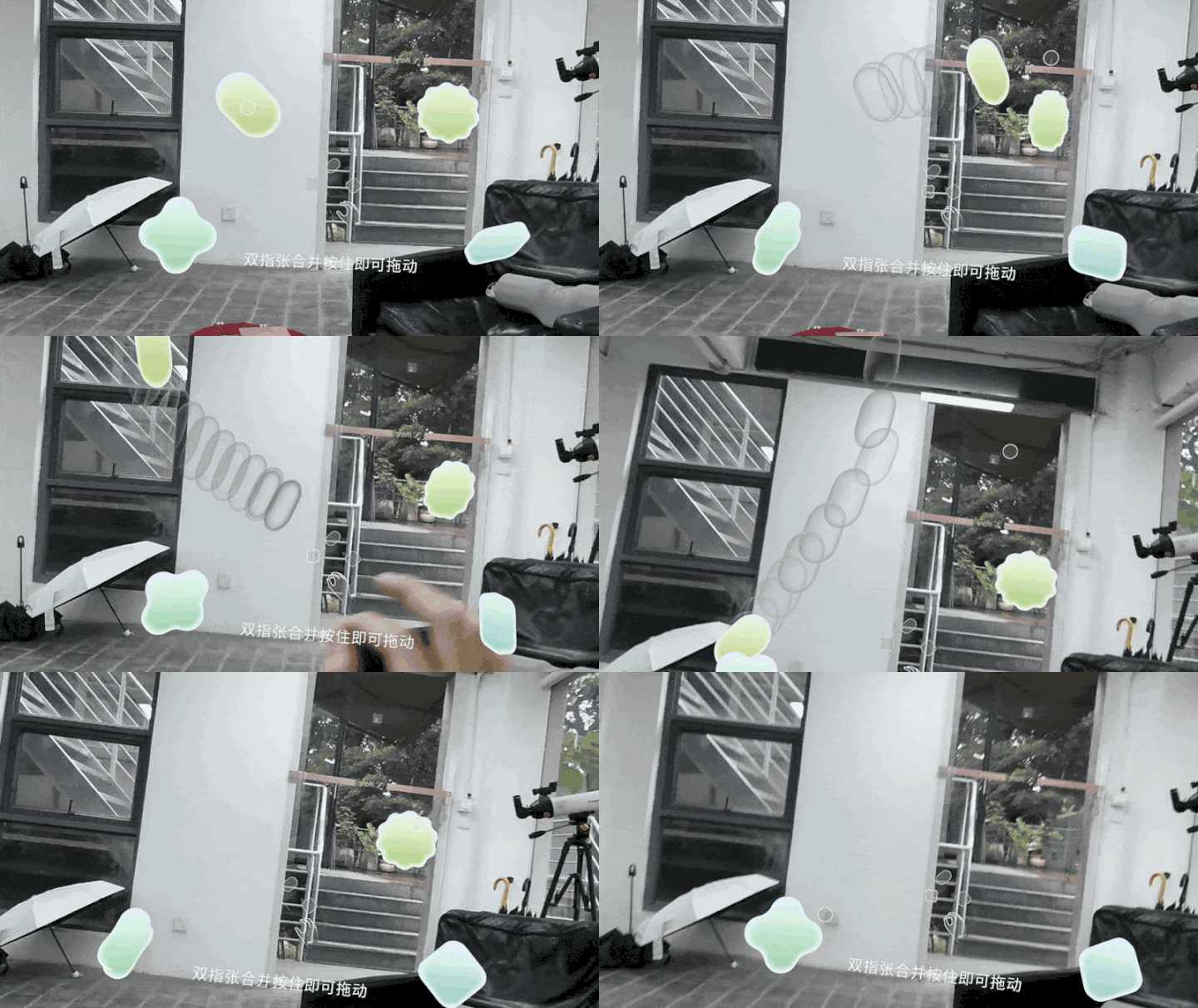
As I used it more, I also began to sense the boundaries of its recognition. For example, when dragging a window, occasionally I need to pinch again for the window to follow; the recognition of releasing the hand is sometimes also a beat slow. When encountering smaller buttons, a bit more patience is needed to aim.
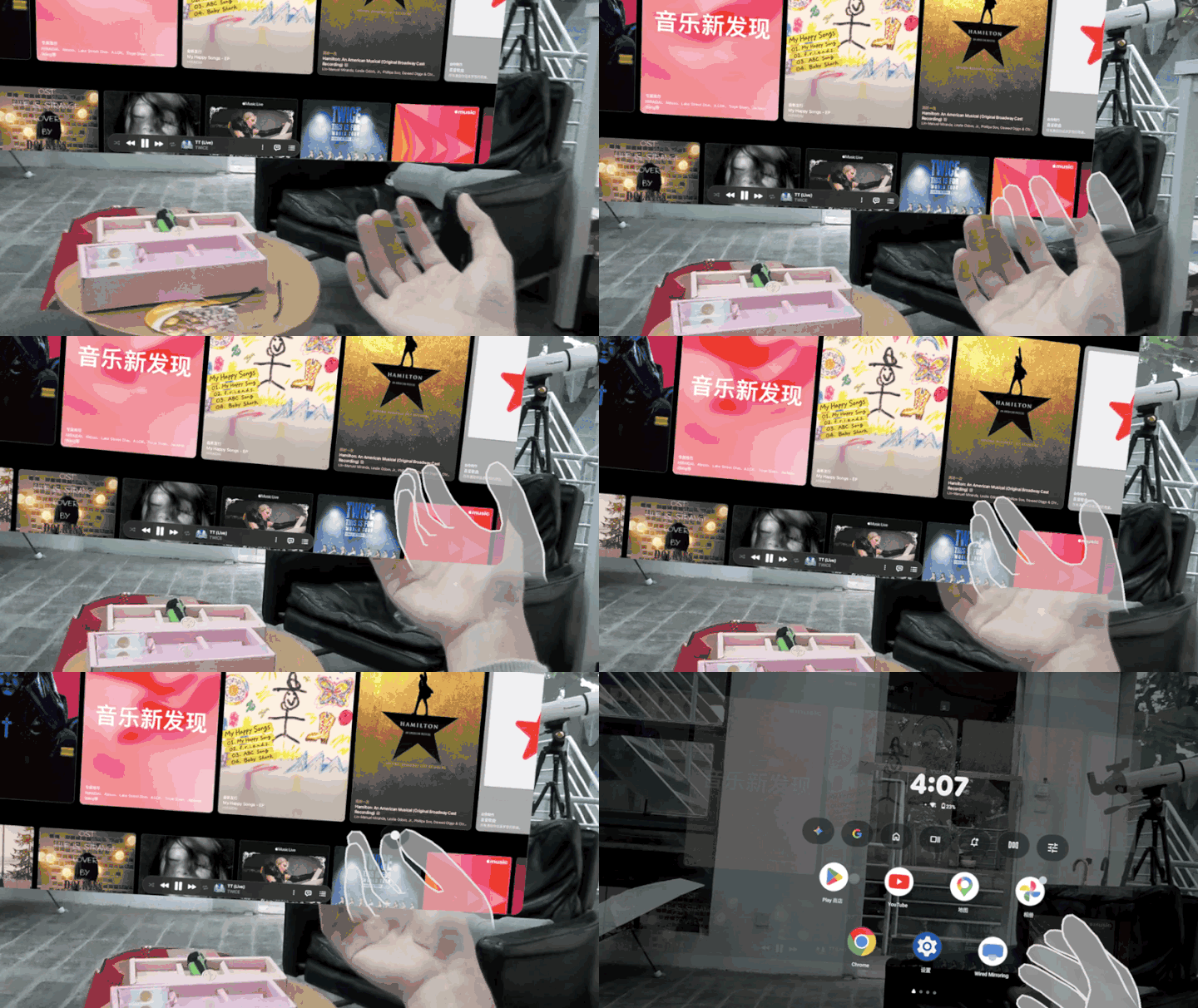
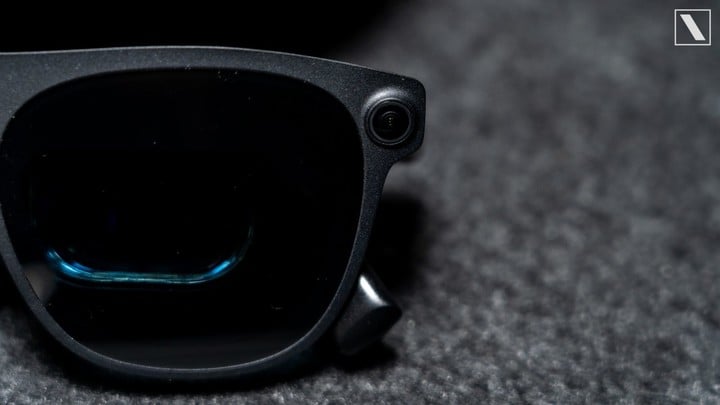
Behind this are also product design trade-offs. AURA has no eye tracking and mainly relies on two forward-facing tracking cameras to recognize hand movements, plus an RGB camera for photos and videos.
For a device that emphasizes a thin and light wearing experience, the configuration and layout of sensors need to be weighed together with size, weight, and power consumption.
In my view, this relatively streamlined configuration also reflects the trade-off between a thin and light form factor and the range of interaction coverage: when operating, you need to keep your hands within the area the camera can see.
Once you understand this, the "three-button" navigation area at the bottom of the screen becomes easier to master. Sometimes lowering your head slightly, or raising your hand a bit so the motion enters the recognition range, makes the operation smoother.
Of course, if the interface position and the gesture recognition range could be made to work together more naturally in the future, that would further reduce the process of users having to actively adapt.
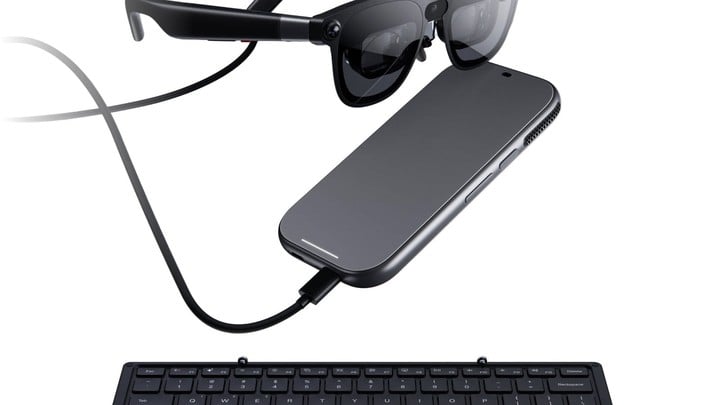
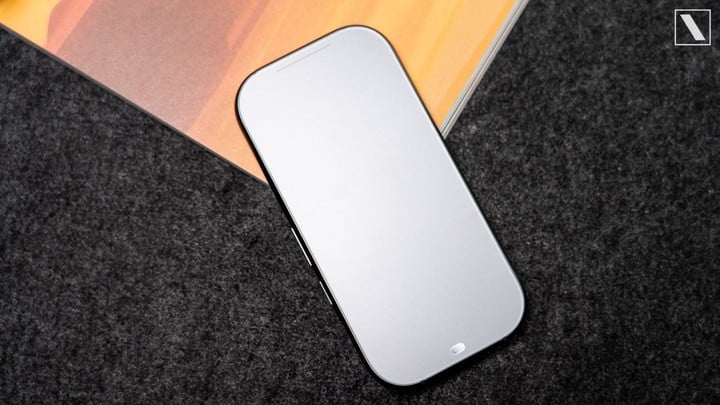
Holding your arm in the air for a long time inevitably gets tiring. At this point, the bundled keyboard, mouse, and the touchpad on the computing box take on very practical significance.
From the usage experience, these input methods also accommodate the current boundaries of gesture interaction capabilities.
Casually selecting content and moving windows with gestures is very intuitive; for continuous text input, precisely clicking small buttons, or processing documents for long periods, the keyboard and mouse better match established habits and also give your hands support.
So later, when I really wanted to open a few web pages and get some work done properly, I would naturally reach for the touchpad or mouse, along with a physical keyboard. When I needed to adjust windows, I would reach out again.
Switching input methods according to the task is handier than always relying on one kind of interaction, and it also makes this large spatial screen easier to fit into daily work.
Wearing it is also an unavoidable issue.
95g sounds very light already, especially compared with headsets like Apple Vision Pro.
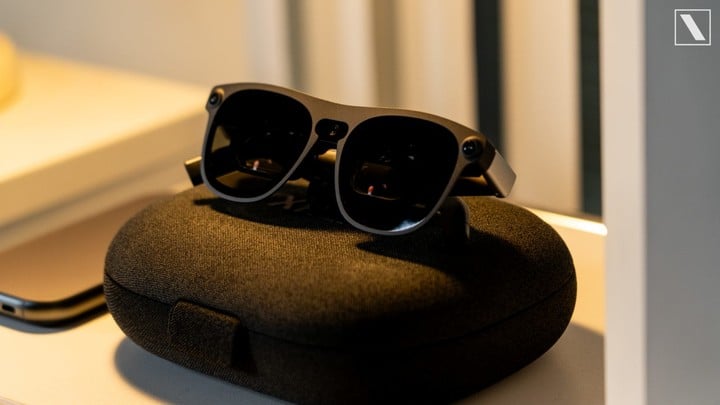
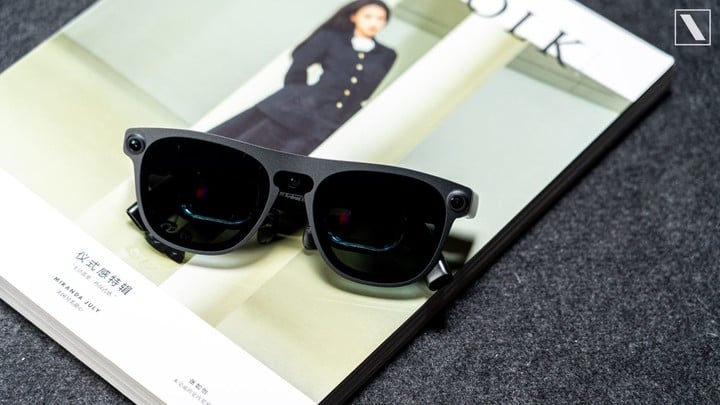
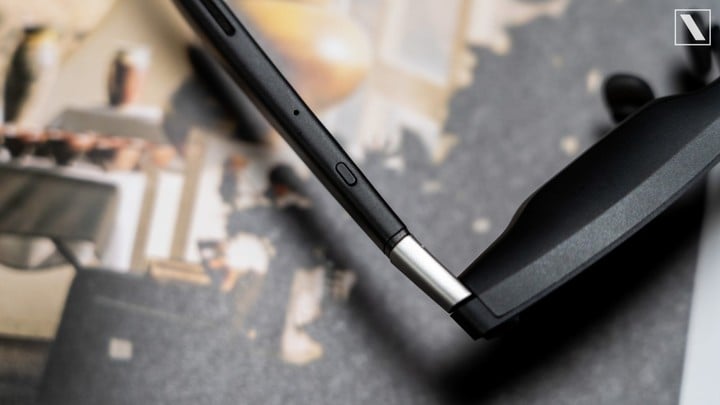
But you have to know that ordinary glasses usually weigh only twenty or thirty grams, and worn on your face, the weight of the AURA is still quite noticeable. A short session is no problem, but if you really wear it for several hours straight, your nose bridge won't be so comfortable.
What's more, it also trails a cable, with a computing box weighing 265g at the other end. Sitting at a desk is fine, but when you stand up and walk around, you always have to be careful whether the cable gets snagged.
Add to that the sunglasses-like appearance and the limited field of view, and it's hard to imagine wearing it out shopping.
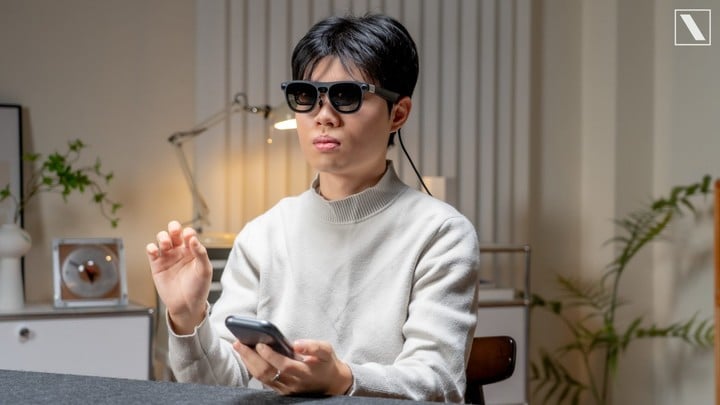
Having gotten this far in the experience, I started to think about a question: the AURA can indeed do a lot of things, but is there anything I would rather wear it to do?
For example, for everyday office work, I can open Feishu, a browser, and several documents at once in front of my eyes, placing the windows in different positions.
But when I really sit down to work seriously, problems like blurry text and imprecise gesture operation crop up one after another. Especially when I need to type frequently and switch windows, I'd still rather go back to my computer.
By contrast, I'd rather wear it to watch movies and play games, such as the aforementioned Minecraft.
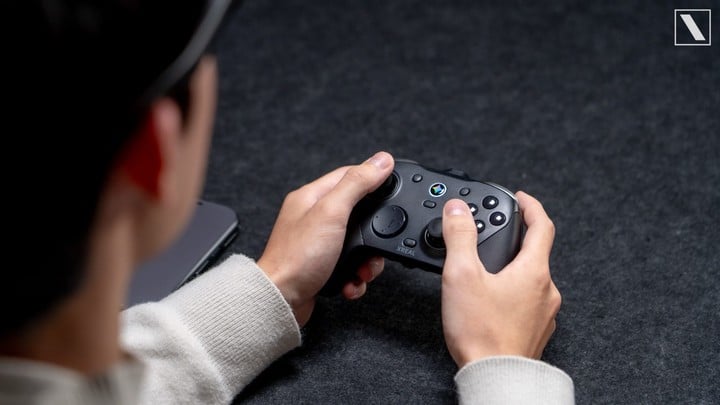
On the gaming ecosystem side, the AURA can connect directly to a controller and can also play PC games via streaming.
However, the Snapdragon Reality Elite in the computing box is ultimately still a mobile platform, so to play large PC or console games, you still have to rely on external devices.
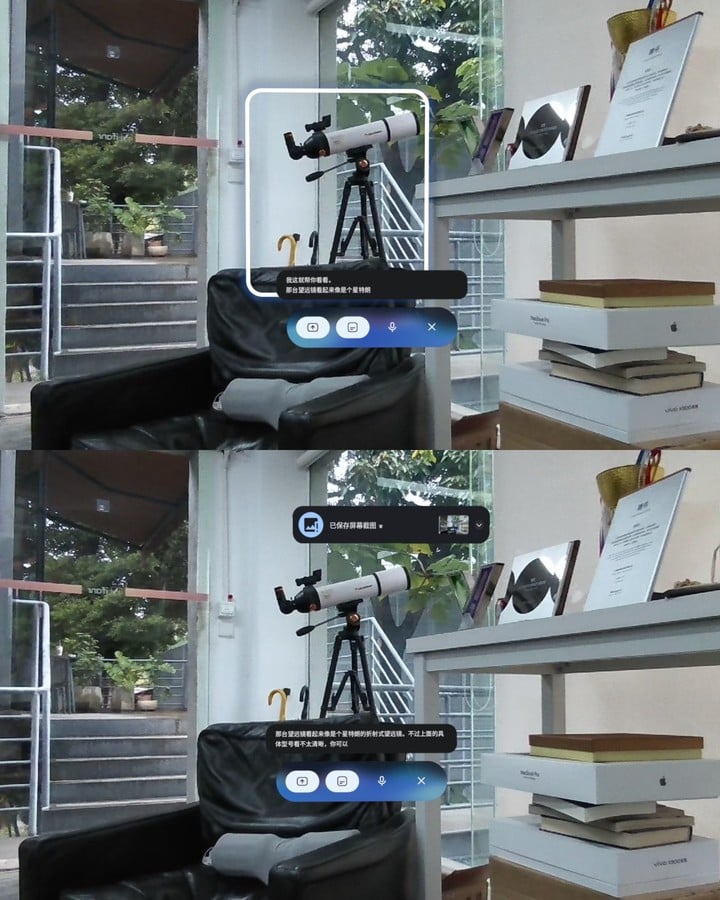
This time, Google and XREAL also emphasized the AURA's AI features, integrating Gemini into the spatial computing experience. Long-press the button above the right temple, or pinch and hold the Home key for a while, to summon Gemini.
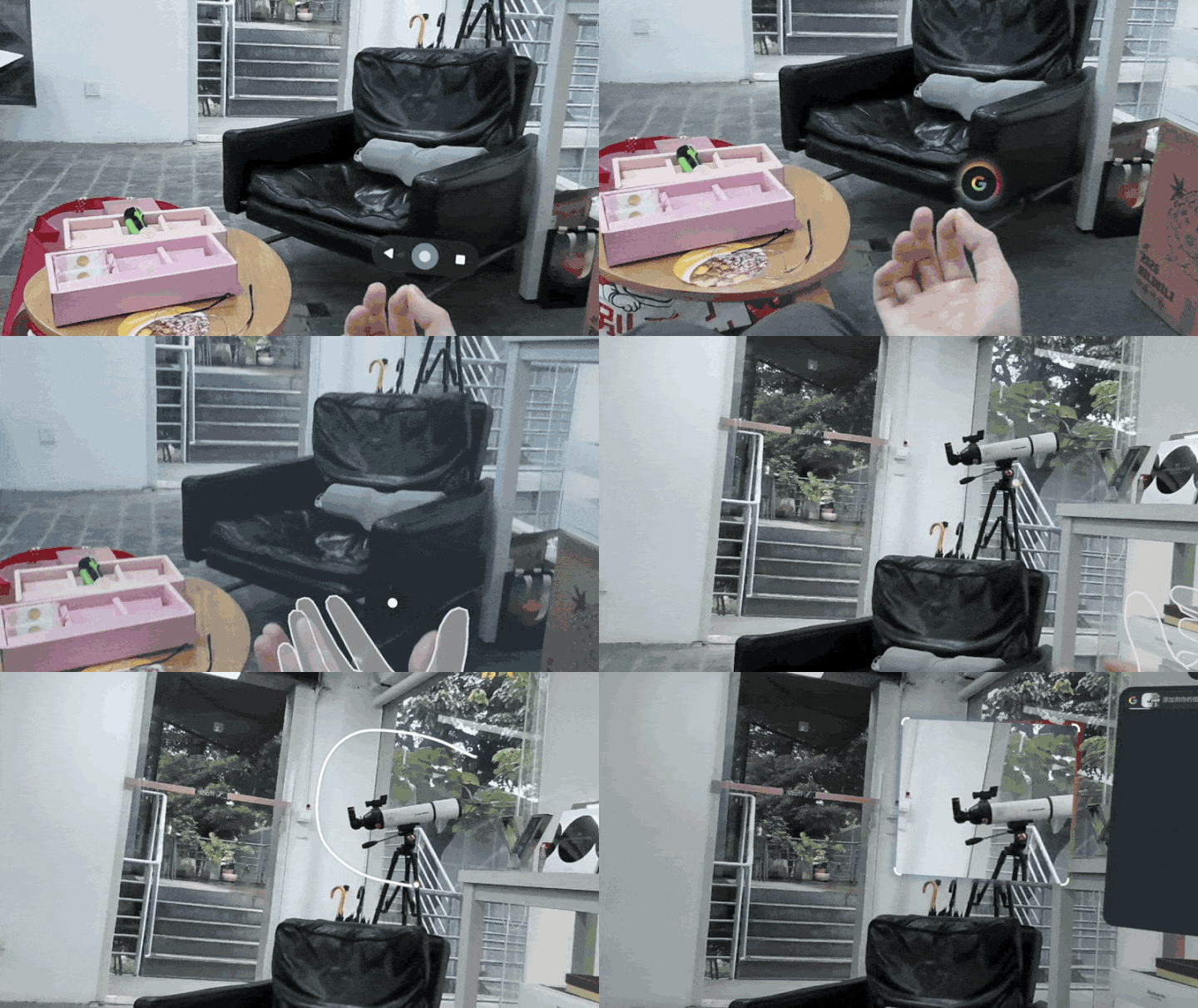
Beyond ordinary voice Q&A, you can also have it identify objects in front of you, answer questions about your surroundings, or even ask it for walkthroughs while playing a game, without taking off the glasses and picking up your phone to search.
The future is here, and the future is promising
After all this time with it, my biggest takeaway from the XREAL AURA is that it delivers the sci-fi parts quite well.
Wearing it, you can directly select and click windows in front of you with your hands, pinch to drag, resize, and even pin windows to any position in the room.
It's the non-sci-fi, everyday experiences we take for granted that aren't quite there yet.
Any sufficiently advanced technology is indistinguishable from magic.
— Science fiction writer Arthur C. Clarke
Judging by the experience at this stage, the XREAL AURA is more like an exquisite piece of "magic." It really does bring the spatial windows from Minority Report into your room, and a price of just over a thousand dollars makes such an experience no longer out of reach.
But when you try to wear it for long periods to read text, work, and walk around, optical dispersion, gesture recognition, and the weight on your nose bridge keep reminding you that this pair of glasses still has a long way to go before truly blending into daily life.
Thinking about it carefully, this isn't hard to understand.
To give a pair of glasses a sufficiently large field of view, a clear image, accurate gesture recognition, and also make it light and comfortable—none of these is easy.
What's trickier is that they often constrain each other: better display quality may require a more complex optical structure; more accurate interaction means you have to consider sensors, power consumption, and weight.
Moreover, technological progress doesn't necessarily translate directly into a better experience.
We've gotten used to the nearly thought-free operations on phones and computers. Tapping a button, dragging a window, finishing an article—these things look simple, but behind them are decades of accumulated hardware, software, and interaction design. To move them onto glasses, a lot has to be figured out from scratch.
But precisely because of this, we still find attempts like the XREAL AURA very valuable.
In the past, when we talked about spatial computing, it was easy to think of headsets like Apple Vision Pro. The AURA shows us another possibility: a device that looks closer to ordinary glasses can also bring virtual windows into real space, letting people operate them directly with their hands.
The addition of Android XR and Gemini gives it even more room for imagination. The glasses can run their own apps, understand the real environment in front of them, and let AI take part in the interaction between people and the digital world.
Spatial computing finally has a chance to shed the "external large screen" positioning and move closer to being a truly independent computing device.
Image | Android XR spatial window pinning demo
The current AURA still has many engineering compromises, but if we waited until display, interaction, weight, and battery life were all perfect enough before willing to put the product in users' hands, we might never know what unexpected troubles and unanticipated joys there are once you actually wear it.
These experiences can only be discovered slowly by actually building the product and putting it on your face.
Perhaps in a few more years, as optics, chips, and interaction technology keep advancing, we'll finally be able to remove that cable, no longer worry about marks pressed into our nose bridge, and no longer have to deliberately raise our hands, lower our heads, and aim at buttons.
By then, putting on a pair of glasses no different from everyday ones, the windows you need will appear before your eyes, you can operate them by reaching out, and turn your head to keep looking at the world around you.
And we'll have long since taken it for granted, feeling that all of this is simply the way things should be.
Those once-astonishing scenes in Minority Report will have truly become utterly ordinary daily life.