 Newshot
Imagine a 2D plane with x- and y-axes labelled “tasty” and “American” respectively. Now, plot the whole space of possible foods, from linguine to Panda Express, along these axes.
This is what LLM representation spaces are like, except instead of projecting foods onto two dimensions, they fit every concept ever into 40,000.
The Linear Representation Hypothesis states that high-level concepts that emerge through training are represented as consistent directions inside the representation space of an LLM. The classic example is king−man+woman ≈ queen, suggesting the existence of a single direction vector that represents the concept of gender.
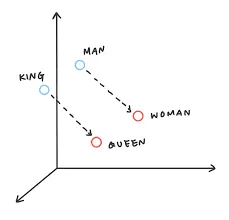
In the spirit of the Linear Representation Hypothesis, this essay proposes the following equation:
Green = Life - Rectangle
Let’s begin with the definition of Rectangle.
Rectangle
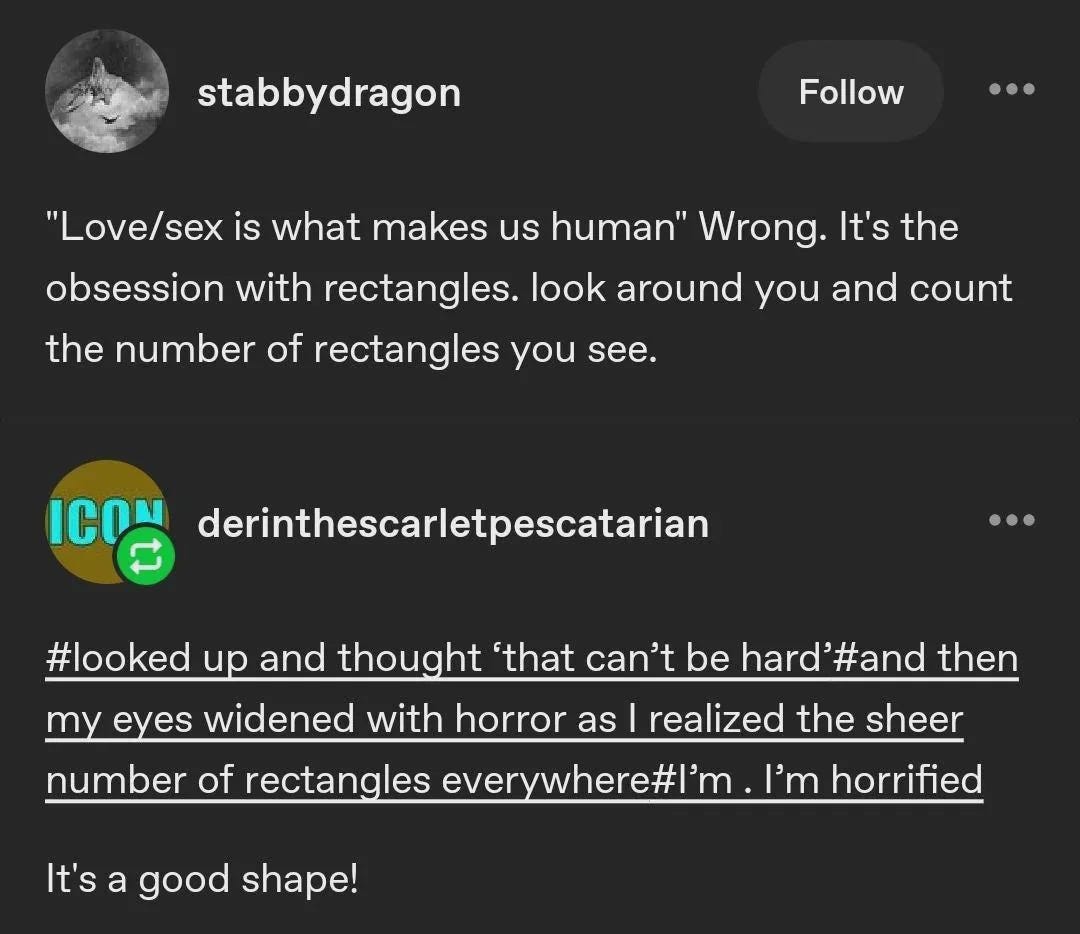
This essay is inspired by the following meme:
By way of example, here are some rectangles:
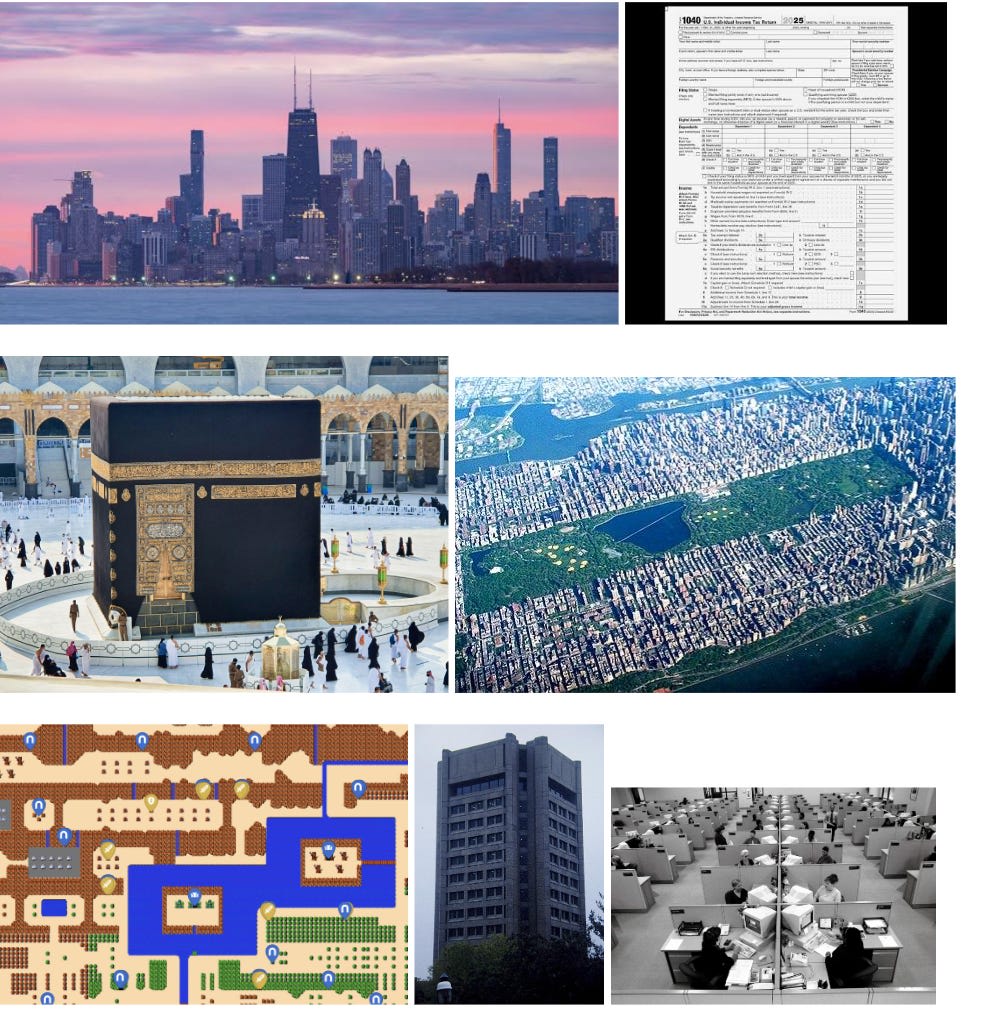
I was first exposed to rectangles by Book Review: Seeing Like A State. Scott A. (summarizing J. Scott) describes the evolution of scientific forestry practices in 18th-century Prussia:
Enlightenment rationalists noticed that peasants were just cutting down whatever trees happened to grow in the forests, like a chump. They came up with a better idea: clear all the forests and replace them by planting identical copies of Norway spruce (the highest-lumber-yield-per-unit-time tree) in an evenly-spaced rectangular grid. Then you could just walk in with an axe one day and chop down like a zillion trees an hour and have more timber than you could possibly ever want.
It turns out that replacing all the forests with a rectangular tiling of one tree is a terrible, horrible, no-good, very bad, disastrous idea, and the economy went up in flames.
The ecological collapse of the Norway spruce forests is one stark example of a bigger pattern. Large human societies are messy (citation needed), and so the state organizes them into rectangles—city streets, paperwork, farming plots, etc.—in an effort to make these systems legible.
Importantly, not all rectangles cause fiery train wrecks! At a fundamental level, the scale of modern society seems to require them. Rectangles tile the plane perfectly. Rectangles are easy to mass-produce. Rectangles are flexible in a narrow way—you can build larger rectangles of all shapes and sizes out of them. In many ways, the rectangles girding our existence really do protect us from ourselves and from each other.
Architect Christopher Alexander’s A City is Not a Tree is a more abstract screed against rectangles. In C. Alexander’s usage, a tree (in the poset sense) is a poset whose Hasse diagram is a tree (in the graph sense).
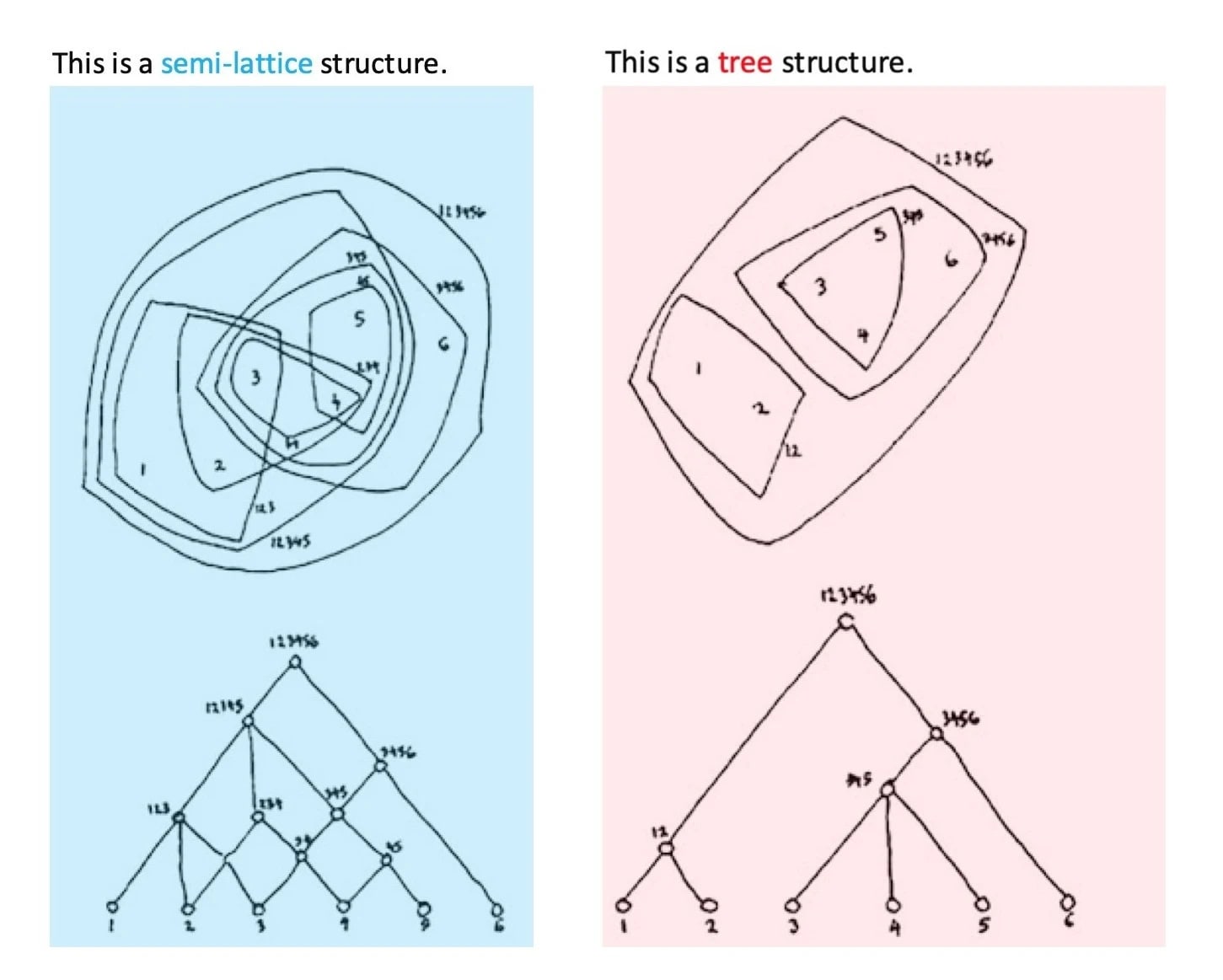
In other words, a collection of objects, organized into subsets, is a tree if and only if these subsets can be delineated by nonintersecting rectangles. Real trees tend not to look like rectangles, but poset trees are made up entirely of them.
Modern planned cities are the epitome of poset trees: the city is cut into boroughs, into blocks, into buildings, into floors, each compartment neatly siloed from its neighbors.
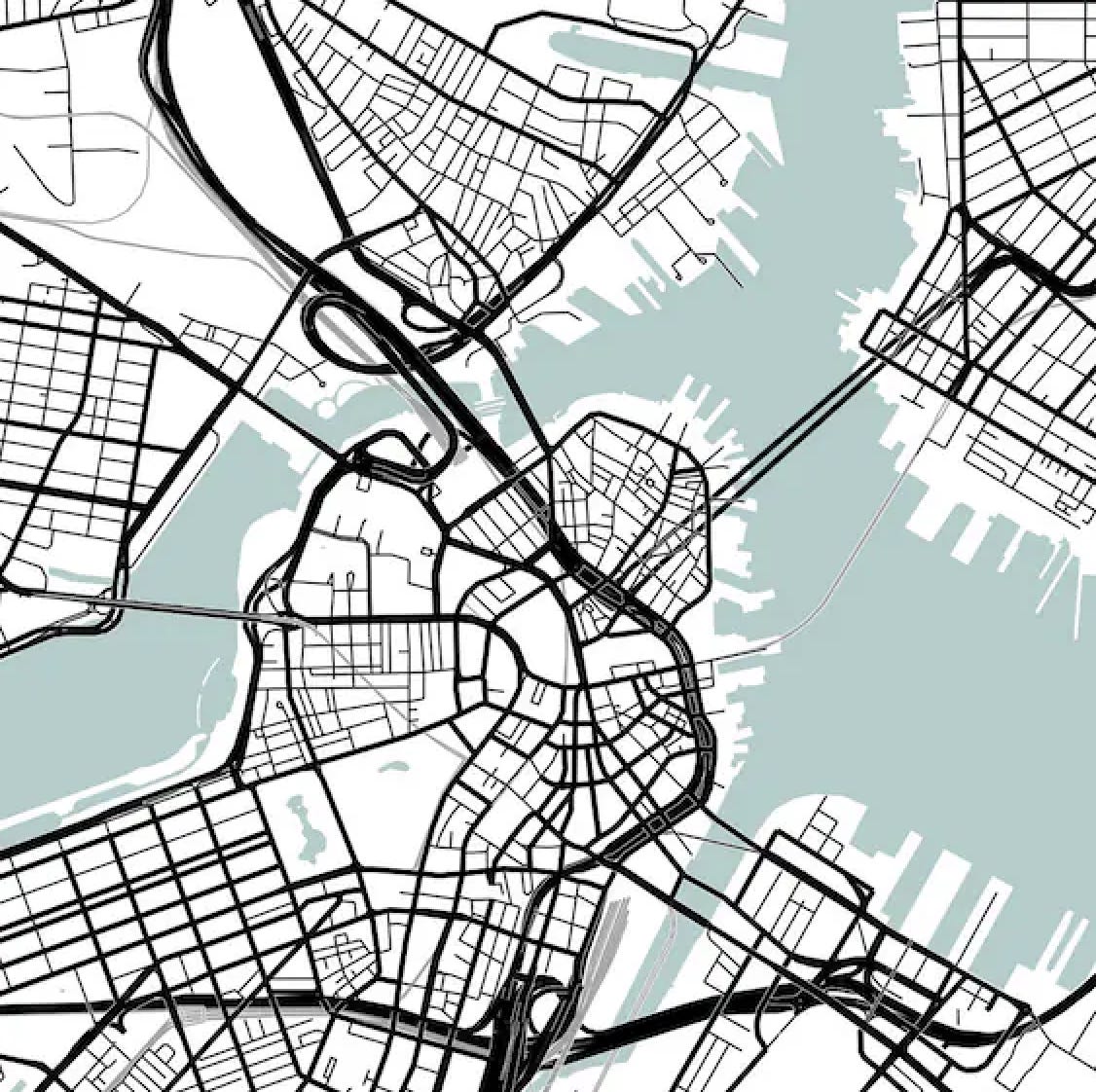
Old, organic cities do not look like poset trees because they have had time to grow and interconnect naturally. For instance, the streets of Boston seem laid out by the insane:
I worry that I am making it sound like rectangles just sort of manifested out of authoritarian will. Like one day we all woke up and fascistly decided that ellipsoids were out and right angles were in.
That is not what happened.
In A City is Not a Tree, C. Alexander lays the blame for the rectangularization of the modern city at the feet of human psychology:
It is known today that grouping and categorization are among the most primitive psychological processes. Modern psychology treats thought as a process of fitting new situations into existing slots and pigeonholes in the mind. Just as you cannot put a physical thing into more than one physical pigeonhole at once, so, by analogy, the processes of thought prevent you from putting a mental construct into more than one mental category at once.
Forget about Big Brother: it’s the iron fist of Marie Kondo in each of us that needs to pack all of reality into shapes with four right angles. The word rectify, meaning “to correct”, derives from the Latin rectificare (“to make right or straight”). This psychological vision explains the onset of modernity not as a grand unifying project, but rather as giving in to the giddy child with Legos inside all of us who just really, really loves packing things into neat little boxes.
Rectangles are also a particular approach to optimization. They are the Order of the paperclip-maximizing fae who ask for the Tower of Babel to be built just one story higher.
Most (modern) buildings are rectangles: subway stations, warehouses, garages, strip malls, schools, etc. Almost all of these rectangular buildings exist in an attempt to optimize some value in the world—square footage into sleepspace, travel times through cityspace, writing time in bureaucracyspace. (This is not solely a phenomenon of the Industrial Revolution or modernity. The whole thesis of J. Scott’s later book about ancient civilizations can be summed up as: wheat is a rectangle.)

Seeing Like a State frames the rectifying of the world as a progressive story. When Le Corbusier, one of the fathers of modern architecture, traveling-salesmanned around Europe shopping his vision of a mega-super-rectangle-world, his was a progressive, revolutionary endeavor.
But I think the proliferation of rectangles in our civilization is more than just progressive overreach. Its psychological history is also touched by a unique flavor of anxiety and conservatism.
Rectangles are neatness, order, and clean boundaries. (I am reminded of Scott Alexander’s A Thrive/Survive Theory of the Political Spectrum and how conservatism seems to be more popular in countries wracked by disease.) We want hospital cleanrooms to be tiled with squeaky-clean rectangles. Similarly, the zombie apocalypse will be filled with rectangles: fortresses, sterile chambers, warehouse stockpiles, underground bunkers.
The spirit of rectangles is the style of engineering that says: safety is putting as many rectangles as possible between human life and nature.
Green
Duncan Sabien’s classic The MTG Color Wheel (& Humanity) identifies five philosophical approaches towards life with the five colors of the Magic: The Gathering color wheel:
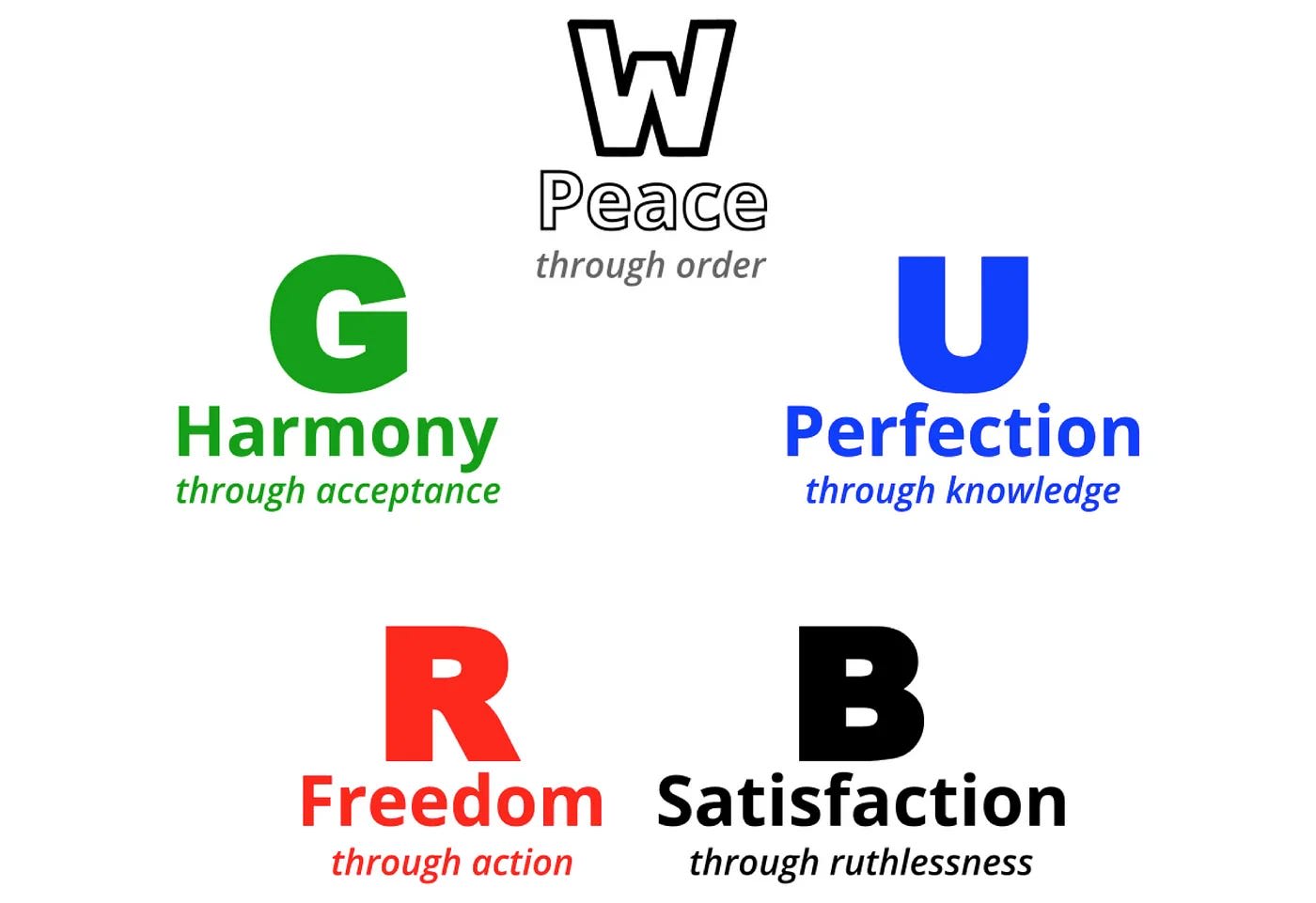
Drawn from the in-game mechanics and decades of flavor text, each color represents a philosophy that is, in Sabien’s words, “a near-enough-to-be-thought-provoking match for reality.”
Of the five colors, Blue (perfection through knowledge) fits rationalists like a glove, while Green (harmony through acceptance) remains the least understood.
Green is the patient, passive, fertile interconnectedness of organic plant life. Biological cells are Green: all the chemicals are mixed haphazardly inside and left to chance and the law of large numbers.
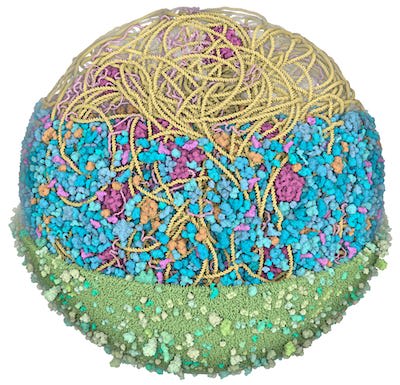
Model of a Mycoplasma cell.
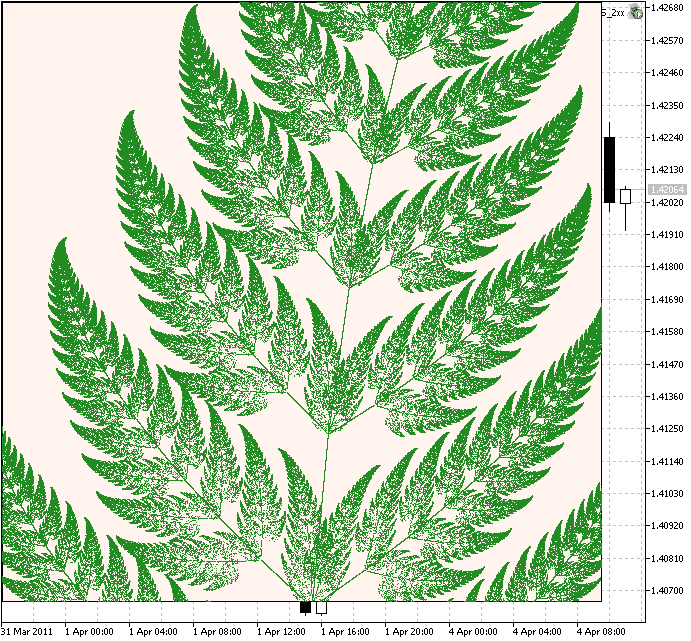
Green has a nonintegral fractal dimension.
Green is the richly interconnected map of Dark Souls 2, as well as its gender-affirming coffin.
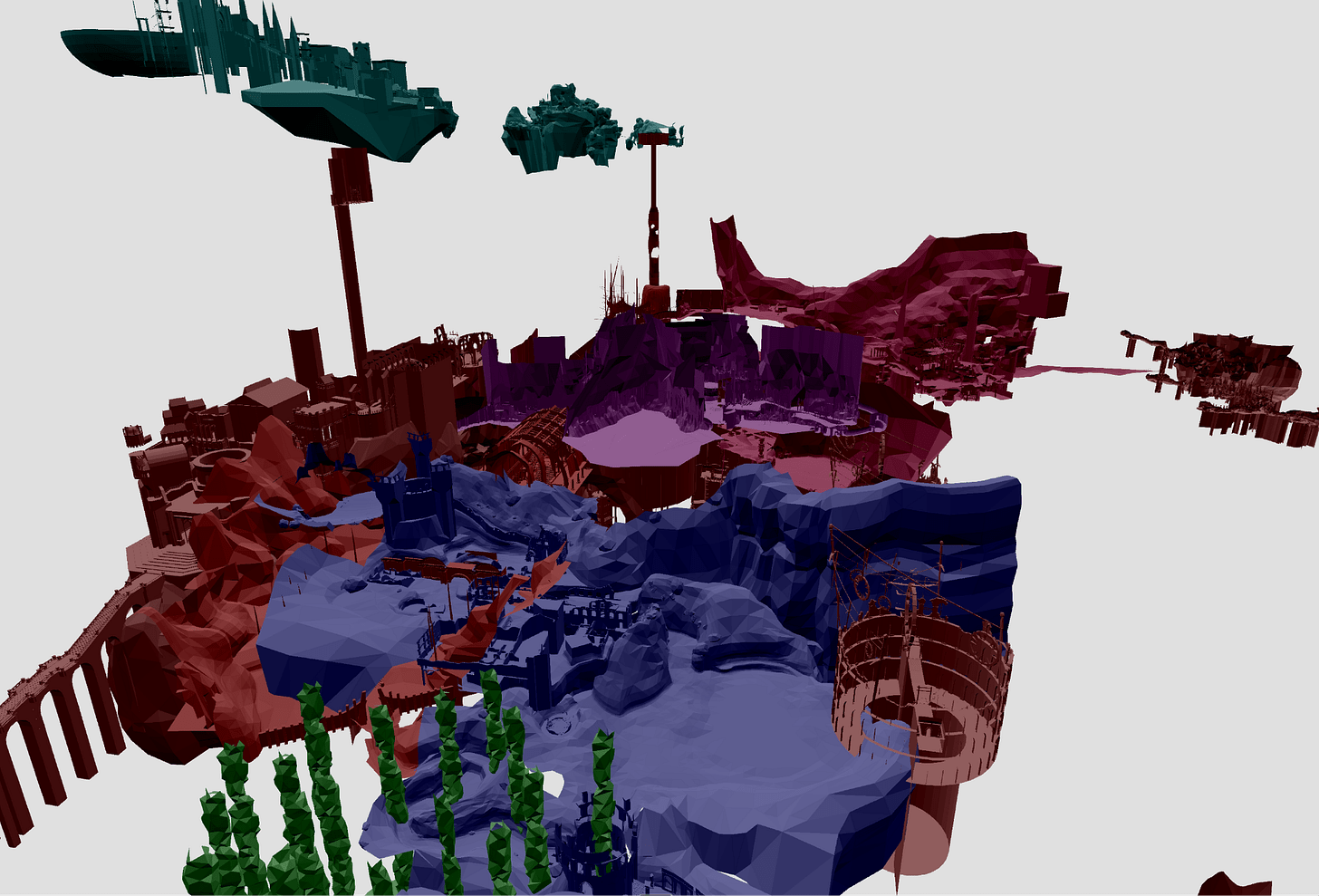
Fundamentally, Green systems are ones with many internally conflicting values/parts that have reached equilibrium via natural selection, Wikipedia edit wars, or spontaneous divine grace.
Green can be big (in MTG, we call this archetype “big stompy”). But it isn’t about size so much as age. Green embraces how ecosystems become messy and interconnected over time.
Green is also a way of doing things. Joe Carlsmith describes Green-as-a-verb in On attunement:
Whatever our meta-ethics, we can agree that there is a thing that humans do, when they turn outwards, and with their hearts open; seeking, in yin, some truer contact with the good; trying to listen more deeply to the great song of the world. And we can agree that this thing, and the thing-it-discloses when done well, is profoundly precious.
For Carlsmith, attunement is about opening yourself up to the world. We spend so much of our lives narrowing our attention: to the physical work we do, to the things we see and hear, to the people around us, to what we believe in.
Attunement is about widening our attention to all aspects of the world—the smell of fallen leaves, the surrounding buildings that breach the sky, the 250k-page AI proof of the Riemann Hypothesis—and letting them wash over us, all at the same time.
Green is pulling numbers out of your ass to feed to Bayes’ theorem. Green is attuning your bodily senses to your vast subconscious via Gendlin’s Focusing (for AI researchers, this is training your body to be a natural language autoencoder). Green is about ritual, wisdom, history; it’s about how sometimes you step outside in the morning and you just get it. You look up at the sun and feel you are a thread in the continuous tapestry that ties together the disparate pieces of this strange and fragile world we find ourselves in.
It does not work this way all of the time.
Most of the time, when I step outside in the morning, I am already thinking about someone I need to text and when Claude is going to finish the last task I gave it and anything other than the fact that I’m here right now. Before I even get a chance to breathe in the air that reeks of weed and poop (good earth smells, as they call them), I am already dreaming of going back inside where my biggest problem is the charging cable not reaching my bed.
I personally care about attunement because I would like more mornings of the first kind rather than the second. But also: I know some people who have largely avoided the modern world, and for a long time, I’ve wanted a word describing their philosophy.
One of them is a retired park ranger who lives in a cabin probably hundreds of miles from the nearest LessWrong lurker. Naturally, I showed her a printout of the MTG color wheel. She told me she was Blue. So I slowly went through and re-explained each of the colors.
“Yep,” she said. “Blue seems right.”
Her job, it turned out, mostly consisted of hitting Ctrl-F for “bear” across 5.89 million acres. The idea was to isolate specific parts of the forest. Despite the superficial connection to Green, Blue fit her better.
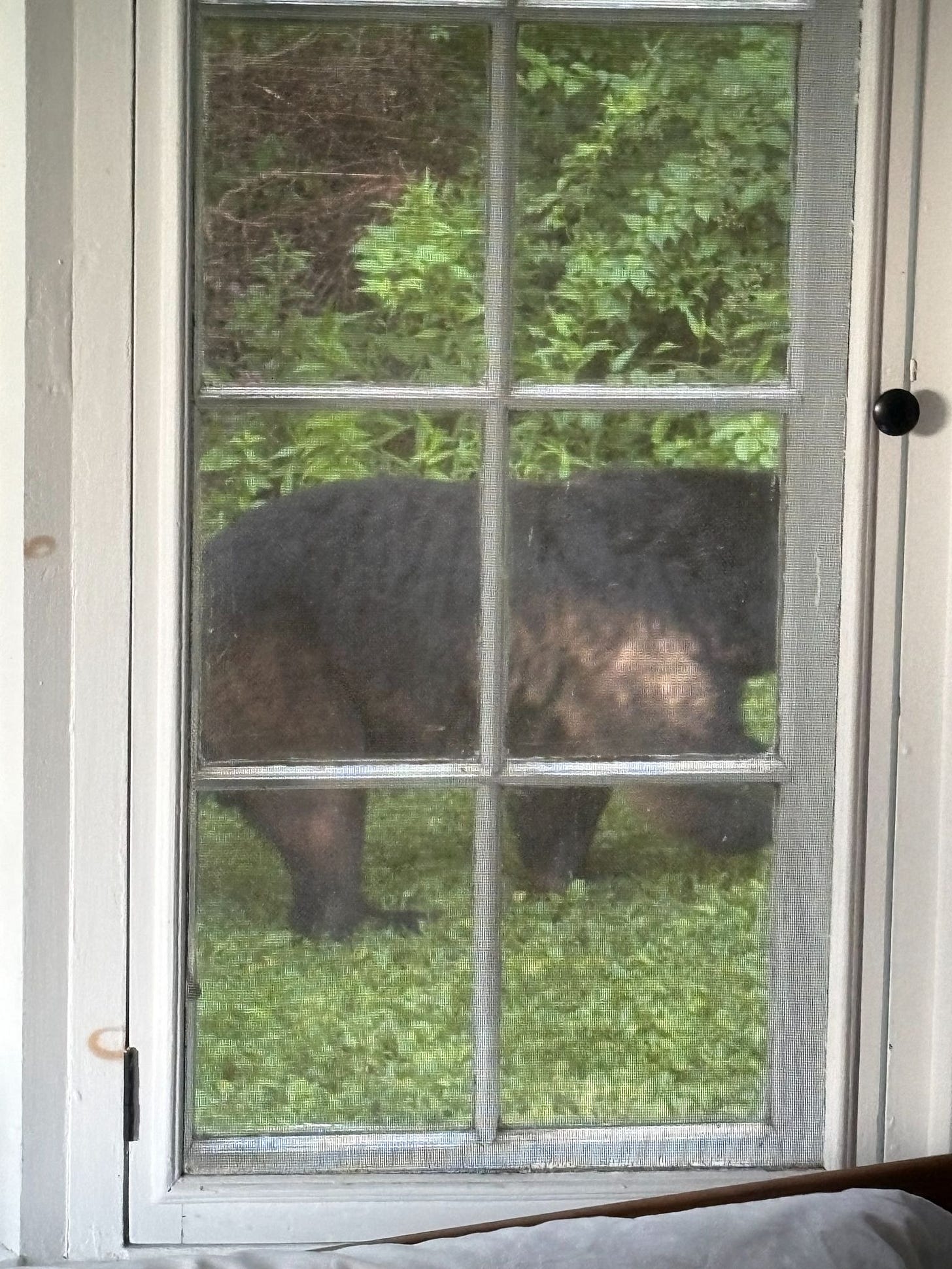
Green is not equivalent to nature, and not every part of a Green ecosystem is necessarily Green. After a fire in the western US, lodgepole pines can regrow in the burn scar so quickly that they crowd out everything else. The trees should thin out and die back, and yet they often don’t.
Green has limitations. In its acceptance, it strives too little. In its messiness, it holds back replication and scaling. In its opacity, it can never be perfectly safe and reliable.
To take an extremely simple example that nobody has ever disagreed about, consider the beginning of human civilization. You can get this from Your Book Review: The Dawn of Everything, but this will be approximately 8,592 words shorter:
In early human civilizations, everybody knows everybody else and has complicated and multifaceted relationships with all of them.
It’s all very Green. Imagine explaining to an outsider from within a hunter-gatherer society how the power structure is set up: “So you see, Clara and I agree that hunting elk is bad luck during the dry season, but only because Clara’s mother had a dream about it, and nobody wants to contradict Clara’s mother because she’s the one who knows which mushrooms are fine, except she’s not really in charge either because Tomas once carried her brother, who had broken his leg, three miles from that hill over there, and so now she owes him, but also Tomas…”
This kind of Green society works great until one day you decide you want a civilization with more than, like, you and your friends and the guy down the street.
You can try to sidestep our hardwired limits on relationships, but while social media increases our raw numerical capacity for relationships, it also flattens and uniformizes them. LinkedIn is decidedly not Green. At some point, once you have enough people kicking around in the same place, you start building rectangles.
The Human in the Rectangle
Green and Rectangle have been locked in primordial battle since probably forever. Green is a Slavic wrestler who is impossible to knock over and has been incubating in a UFC-octagon-sized vat since the age of four.
Rectangle sees messy cowpaths stretching out across a city and goes, “It’s pavement time.” And then Green shows up and patiently crunches through those sidewalk tiles.

On a grander scale: most buildings are rectangles, but most religious architecture is not.
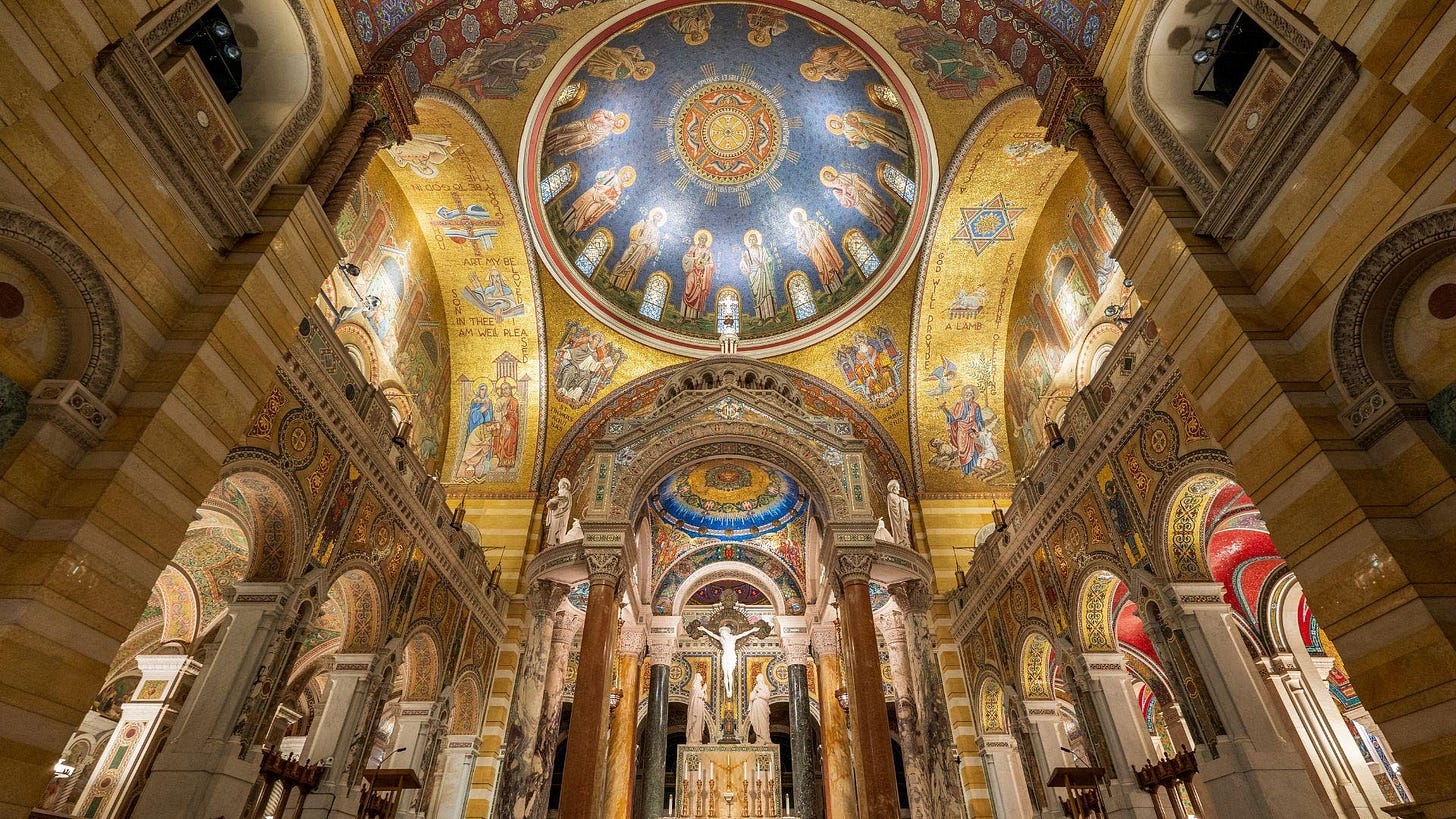
Look at all those arches.
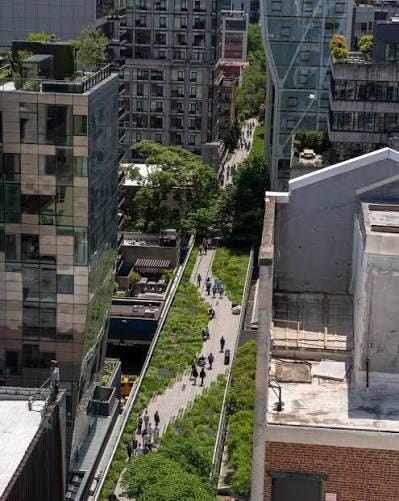
The High Line in New York is one of my favorite places to walk: it cuts through the poset-tree boundaries of the city, meandering through many different communities along elevated pathways that disrupt the street grid.
Duncan Sabien recently wrote an essay, You are the Deer in the Subway. He doesn’t use these words, but in his formulation, humans are the battleground on which the fight between Green and Rectangle plays out.
Back when Dunbar’s number was the cool kid on the block running human civilization, humans were connected to everything: we were constantly being touched by the world, by the water, by animals, and by each other. One by one by one, we packed these things away into tidy rectangles.
We let our rectifying neuroticism go too far. We pruned away extended families and intergenerational friendships and replaced them with atomized individualism.
We built pocket rectangles to summon human connection, but like a demon that wears its summoner’s skin, the pocket rectangle now gets more of our touch than the humans it summons.
We cut the woods down and replaced them with acres of wimpy lawn grass and then refused to touch such grass.
When you grow a tree in too small a container, its roots wrap around the tree itself, strangling it.
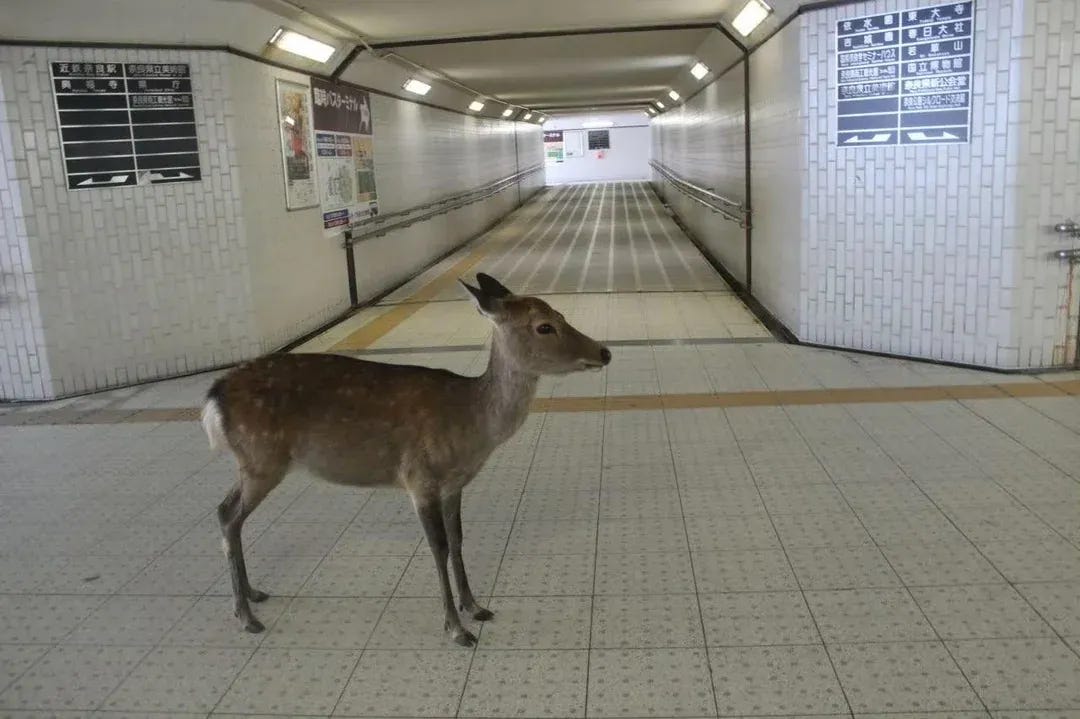
The deer does not belong among the rectangles. The deer belongs in the Green. The deer is you.
The Green in the Machine
Recently, the phrase “AIs are grown, not built,” popularized by Soares and Yudkowsky, has captured the public imagination. The phrase is so compelling because it points to the central conceptual tension of modern LLMs.
In one sense, modern LLMs are the pinnacle of Rectangle. They are rectangles:
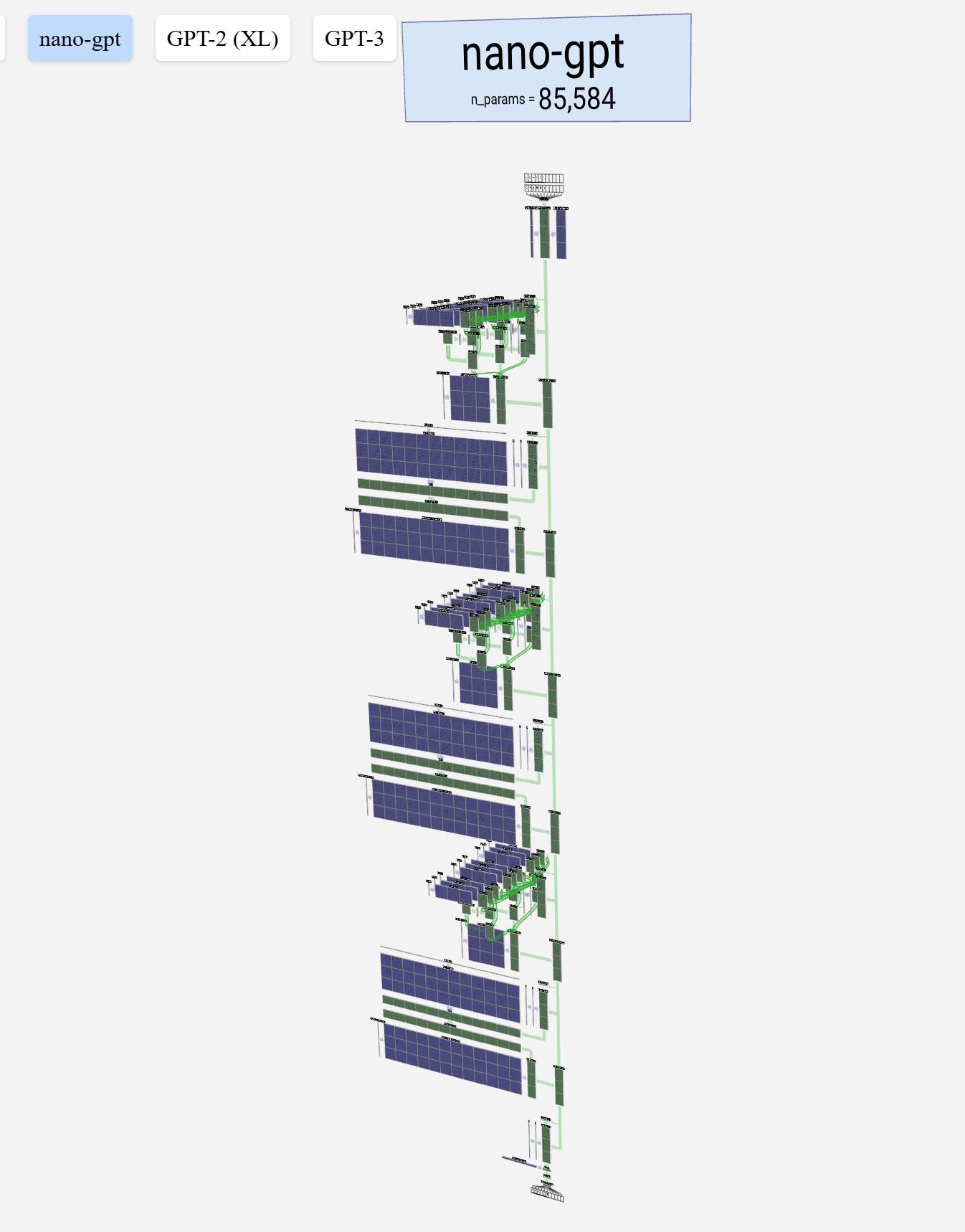
…living in rectangles…

…packed into rectangles…

…housed in the biggest rectangles ever built by human civilization.
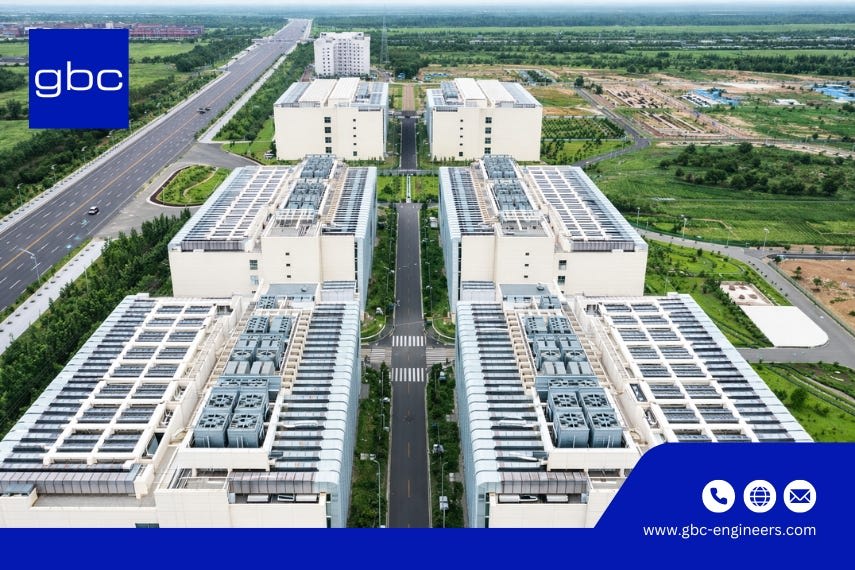
And yet, LLMs are grown, not built, in a fundamentally MTG-Green way.
Attention is the sole ingredient of attunement. In a transformer, at every layer, every token can pull directly from any earlier token. LLM attention flows freely and winds up with bizarre and idiosyncratic habits. LLMs spend a lot of time staring blankly into the void.
Polysemanticity and superposition are Green, mirroring pleiotropy in human genetics. A single neuron can fire on academic citations, English dialogue, HTTP requests, and Korean text.
Many image models produce uncanny outputs in which every pixel overflows with detail. These images are unsettling precisely because they are less rectangular than the world they seek to reflect, and tend towards the same nonintegral fractal dimension typified by Green:
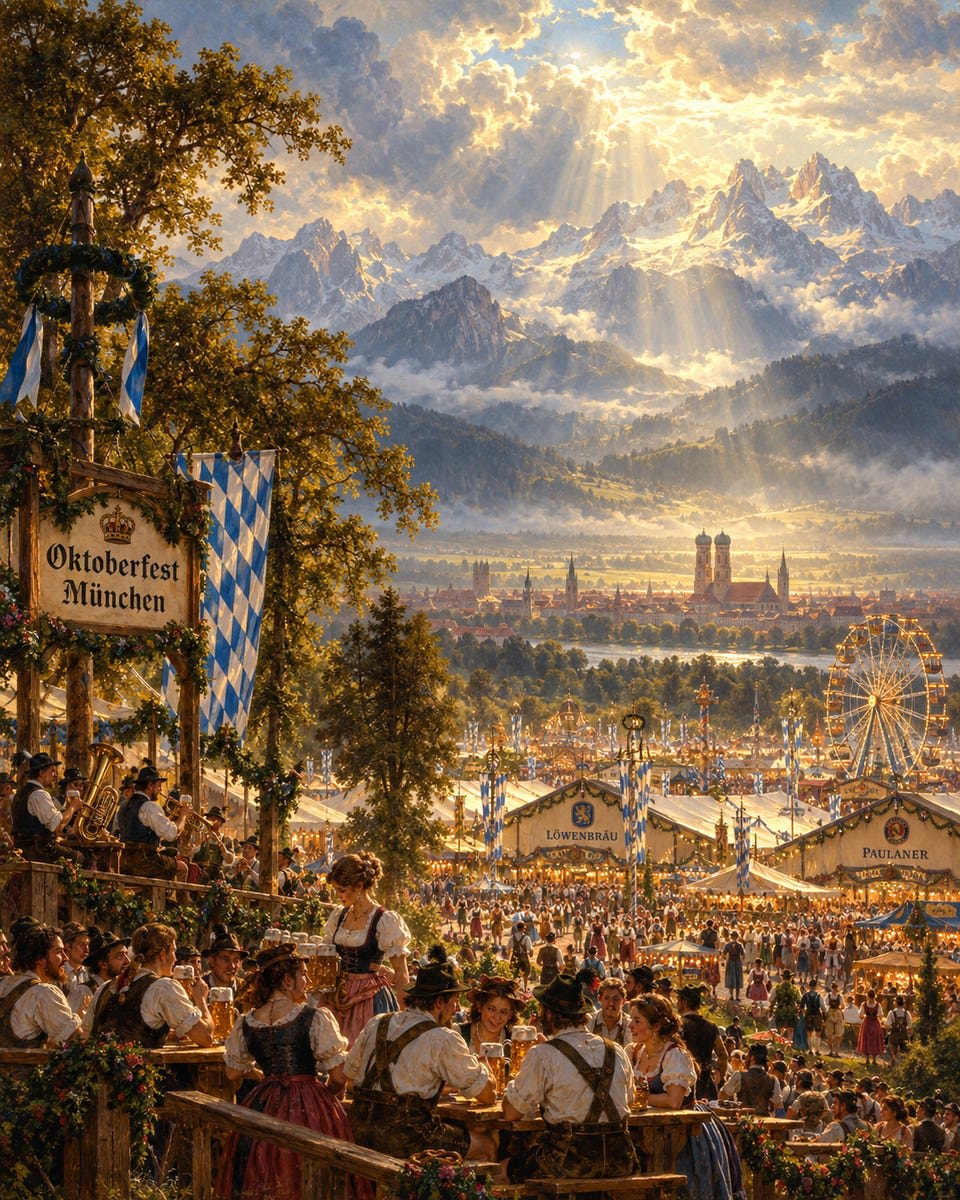
Somehow, in the most rectangular of rectangles, we’ve grown the most organic Green entities ever to exist in silico. Life finds a way.
In Foundation, Asimov envisions the ultimate sci-fi world as a planet completely paved over with concrete rectangles. It is the neurotic, platonic ideal of the city-tree (to use C. Alexander’s term).
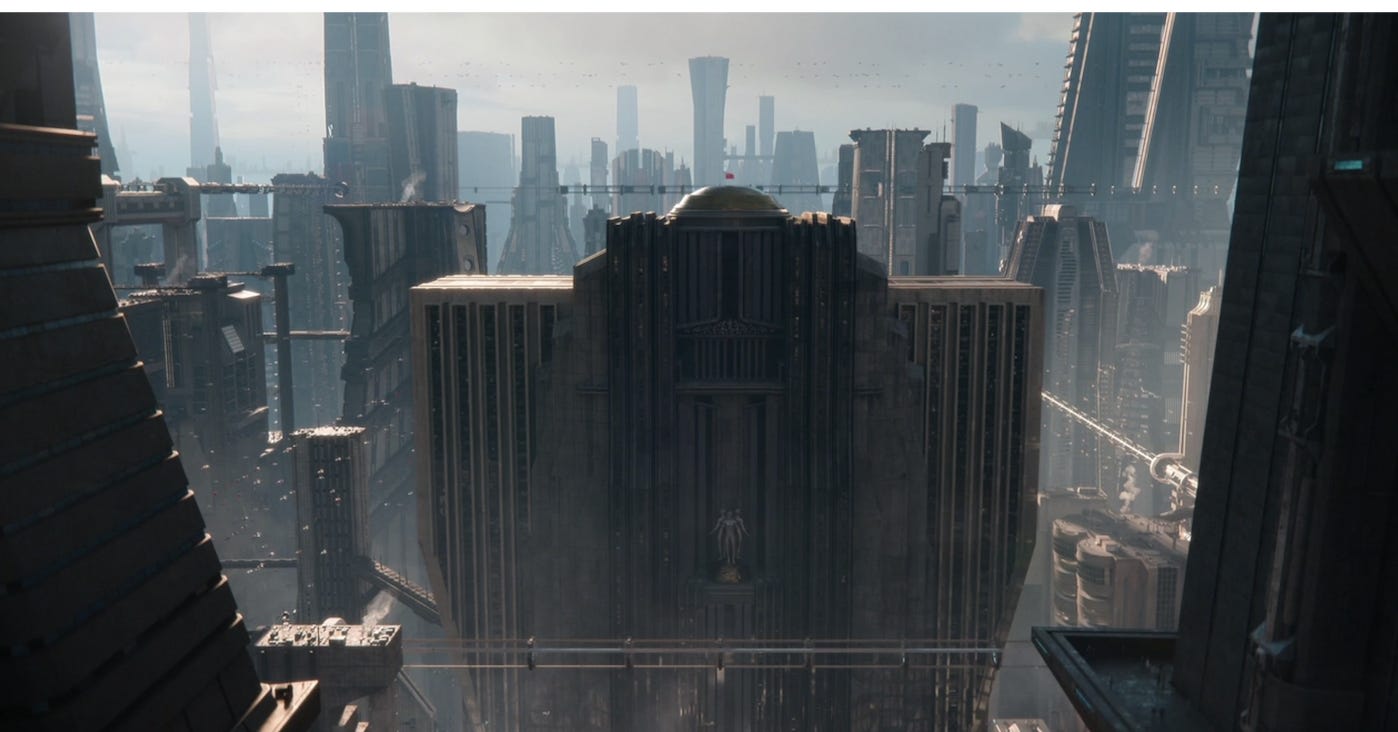
It is no crime to approach one color with another, but these visions of rectangular futures arise from ingrained misconceptions about AI. We’ve painted machines with an impoverished Blue-White color palette for so long that we can’t see Green when it stares us in the face.
Interpretability seems like a Blue-White stance towards fighting the fundamental Greenness of LLMs. Sparse autoencoders attempt to extract single functions out of the root system, but the living roots resist. If you cut out a circuit, the model regrows it elsewhere. We quest for monosemanticity and it goes, uh, not well.
(Bonsai is the best recent example of boxing Green into a tiny rectangle. Bonsai is a 1-bit LLM that you can probably run on your own computer, poking at its neurons yourself. Completely unrelatedly, when most real bonsai trees die, you don’t notice until well after it’s too late.)
The goal seems to be to stifle the Green creeping into the machine and cage it in increasingly neat rectangles. I suspect there’s room for more congruous in-color approaches to AI safety.
If Blue-White rectification is the approach of scientists and engineers, then a Green approach smells more like druidry, in the spirit of Anna Salamon’s Takes from two months as an aspiring LLM naturalist. For roughly the same reason rationalists crave spirituality, I think we need more AI safety druids.
I plan to elaborate on AI druidry in an upcoming post, but the fundamental principle of druidry is for the pre-verbal Green parts of your brain to communicate with the Green in the machine.