 Newshot
You’ve railed against RLHF.
My job was stolen by RLVR.
Welcome to RLLW.
I think LessWrong and the blogosphere around it host the most important public conversations in the world, and there aren’t enough dedicated writers to produce the long-form content about rationality and AI we all crave. RLLW is my attempt to train a few. In the first cohort, I am working with two undergraduate apprentices, who will each write one post every two weeks.
Sam Worthington: Sam goes to Princeton and co-directs Princeton AI Alignment. He hopes to maximize his EV by getting himself into increasing amounts of trouble. He also writes here.
Jaisen Soundar: Jaisen goes to Georgia Tech and does technical AI safety research. He hopes to make a positive impact on the field through his writing.
The first round of essays
- Green = Life − Rectangle (Sam) asks what’s up with all these rectangles everywhere and why AIs don’t seem to fit in them.
- Moderately cursed questions of AI safety (Jaisen) Explores four questions in AI safety that people think about but rarely discuss openly.
Philosophy: Microdosing the Spirit of Inkhaven
I had planned to frame this announcement as an answer to Ben Pace’s call for better writing on LessWrong, but that call was unfortunately rebutted soundly by Ben Pace.
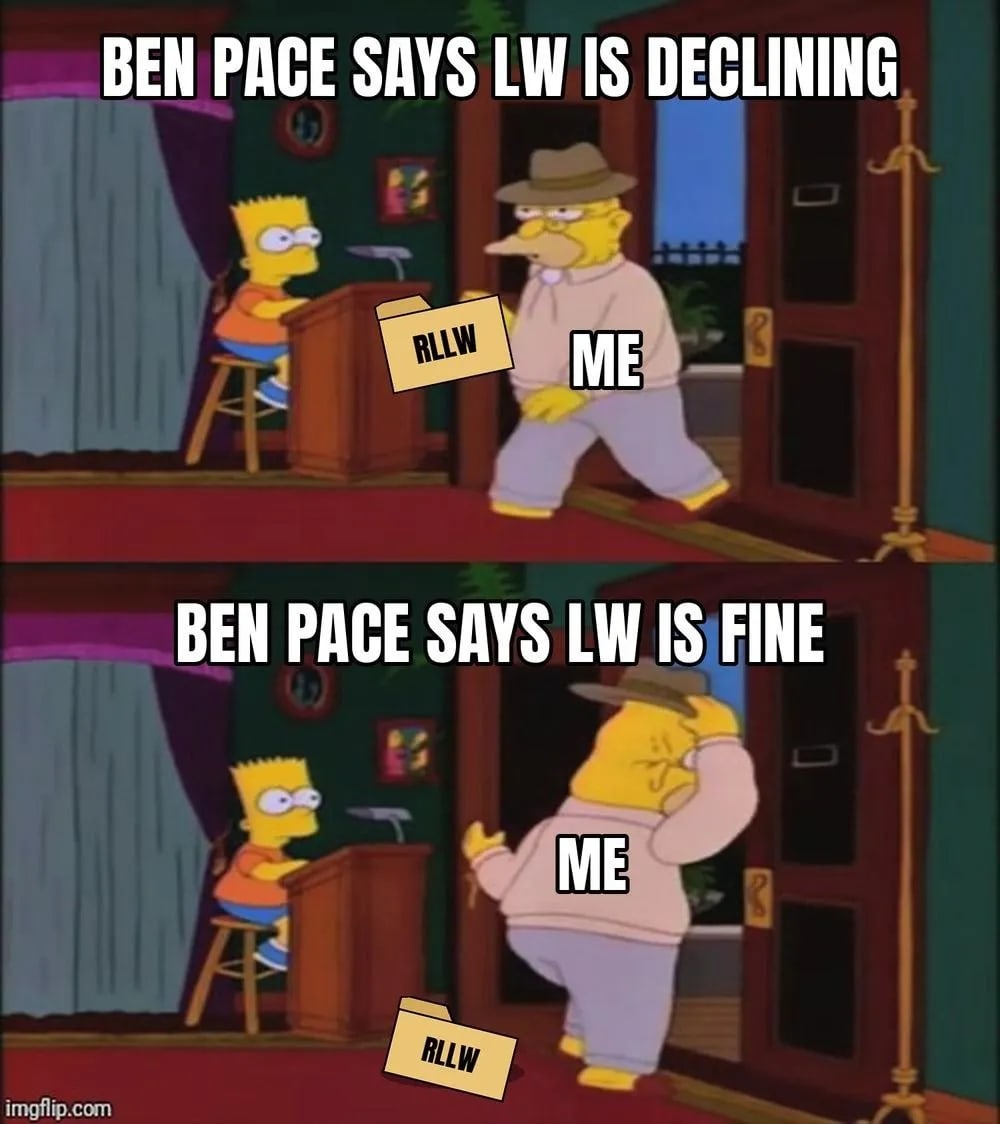
In this section I ramble about a couple of different things I’m trying, especially in contrast to Inkhaven. We’ll post once every two weeks for two months instead of every day for a month. More details:
- Each two-week sprint is broken into a Babble week and a Prune week.
- Iterated Distillation and Amplification is a useful frame for skilling up on writing. Amplify by spending a lot more time perfecting pieces; distill/quantize to produce quality work more quickly once you’ve trained your taste to the next level. Inkhaven is mostly a distillation cycle for training a Flash model of yourself. Newbie writers should start with an amplification cycle.
- Writing practice is mostly compound exercises, and I’ll try to inject isolation exercises. Every Prune week will have a main focus, like Omit Needless Words or Microhumor.
- Cowriting is a clumsy beast, and LW dialogues never quite took off. I am trying out a new model, importing the technology of writing math papers with my graduate students: I provide a fuzzy vision of the final piece, they write the thing, I keep polishing until it’s to my liking.
- We write in a “composite first person”: the authorial “I” refers to either or both authors, as convenient. This is useful because writing is mostly mining one’s own experience, and the composite “I” has twice as many experiences to mine. And because I have to take only half responsibility for all my cringe takes.
Please read the essays!