 Newshot
Article title: The Great GTA 6, the "Not Fun" GTA 6
Body:
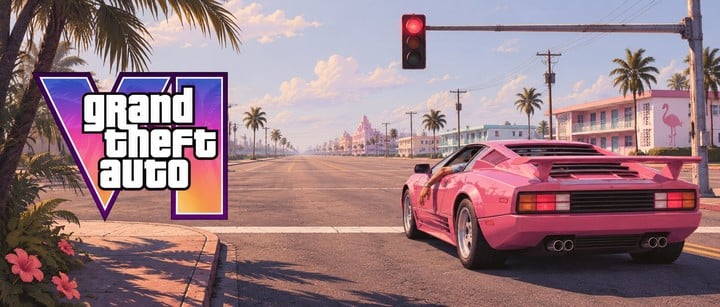
The Great GTA 6, the "Not Fun" GTA 6
2026-11-22 09:34
Leonida's magnetic field has been off lately—
On the narrow two-lane road there are no road-raging drivers cutting you off against traffic; an old lady rides her mobility scooter at a leisurely pace; people get up early to work out, shower, and eat white-people meals and fat-loss salads; the sunny good guy with a eight-pack follows a strict nine-to-five schedule, all so he can make it in time to buy flowers and prepare a candlelit dinner with his girlfriend.

Chance encounters, all law-abiding citizens; roaming the world, mostly family-loving good men.
If this were The Sims rather than GTA 6, it would most likely be well received; but this happens to be Grand Theft Auto, it's Vice City, a formerly free and lawless criminal playground, so it's inevitable that it takes some backlash in its reputation.
In Vice City, Be a Law-Abiding Citizen
If you read enough gaming news, you're surely familiar with all the achievements GTA 6 has racked up over the past 72 hours.
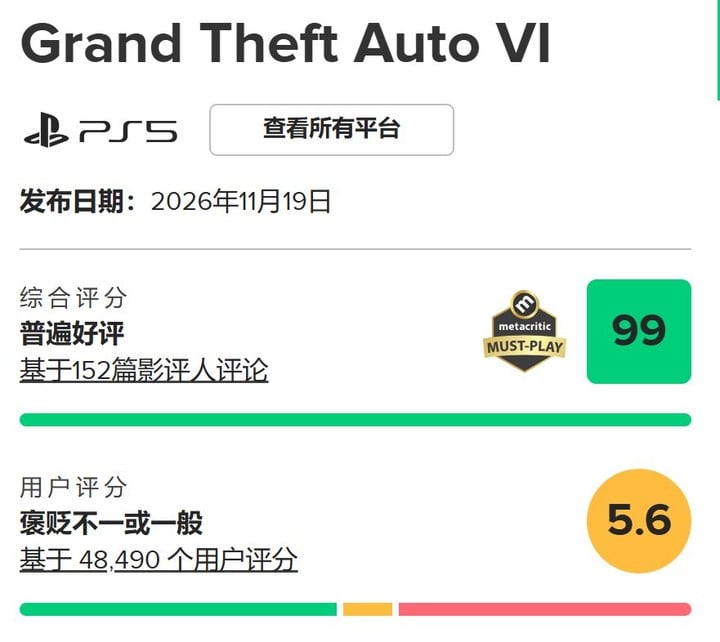
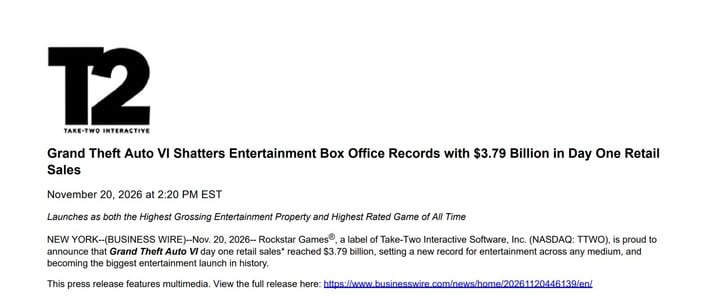
For instance, 152 outlets gave it an average score of 99, surpassing Ocarina of Time to top the all-time gaming charts; and of course, there's the myth of 32.5 million pre-orders and $3.79 billion in first-day retail sales, easily breaking records in the human entertainment industry.
But if you go into GTA 6 expecting to witness the "greatest masterpiece in history," you'll likely hit a落差 soon enough. [Translator's note: 落差 = a sense of落差/dissonance; rendered below]
But if you go into GTA 6 expecting to witness the "greatest masterpiece in history," you'll likely encounter a sense of dissonance before long.
After the first few hours of marveling at the visuals, a kind of real-world, grind-like, hard-to-swallow sluggishness seeps in from all sides, making you realize a simple fact—
The era of the GTA series as a "guilt-free playground" has come to an end.
Looking across the series, GTA games have always alternated between two tracks: one is the main mission line of heists, shootouts, car chases, and gang wars, full of "protagonist aura" criminal spectacle; the other is the daily experience of driving around, browsing shops, changing clothes, and shooting the breeze with street passersby.
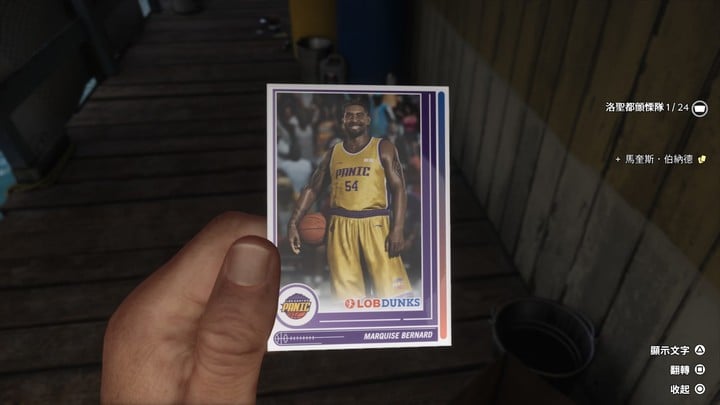
In previous entries, the former dominated, while the latter was just a diversion between big battles.
GTA 5, the one most players know best, is roughly a wildly off-kilter Hollywood crime comedy: Michael, Franklin, Trevor—a retired robber living under an assumed name, a young man trying to escape street life, and a dangerous, hot-tempered outlaw; utterly different in background and personality, yet brought back together by money, betrayal, and fate, turning Los Santos upside down.
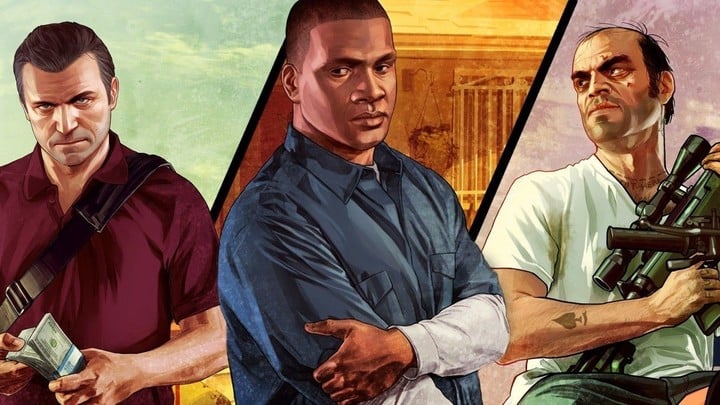
In this Coen Brothers and Guy Ritchie-style crime story, though there's no shortage of dark humor and social critique, as a player what you experience is mostly combat thrill—the racing heart and trembling hands when caught in a gold heist or tangling with intelligence agencies.
But in GTA 6, the daily-life track seems to have taken over.
In Leonida, no one asks you "what is the American Dream," and there's no restlessness of being about to be swept into some big event. The protagonist before you, Jason, is just an honest guy who comes home to paint walls and fix the ceiling, carefully budgets his haircut, buys roses, stuffs the fridge with food, and prepares a little romance to welcome Lucia out of prison—while his credit score is so bad he can't even get a bank card.

And the realism and immersion that countless media reviews have praised seem to make the oppression of real life even worse.
One example: in past GTA games, cars parked on the street and passing by were public resources to take as you pleased—smash the window, hit the gas, and all problems were solved.
But Jason's life is full of constraints and frustration, just like reality.
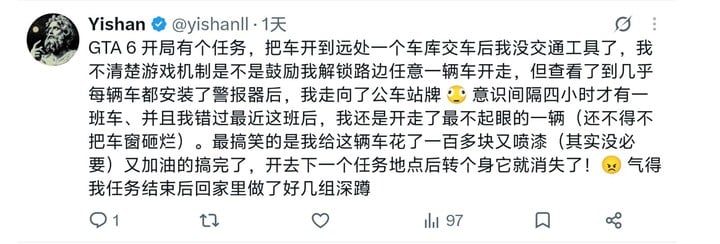
Early on, Jason has no professional car-thieving tools, and modern cars parked on the street generally have anti-theft alarms and trackers; before unlocking lockpicks and key cloners in the mid-to-late game, most of what you can steal are beat-up old clunkers, extremely loud and very likely to draw passersby reporting you and incorruptible patrol officers.
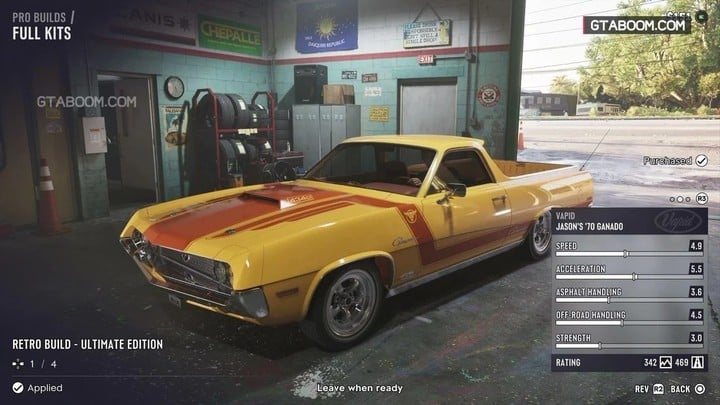
So our protagonist can only keep driving that 1970 Ganado, older than himself, to the repair shop for restoration and a paint job, so as not to look too shabby in front of Lucia—as humble as you and me going to work.
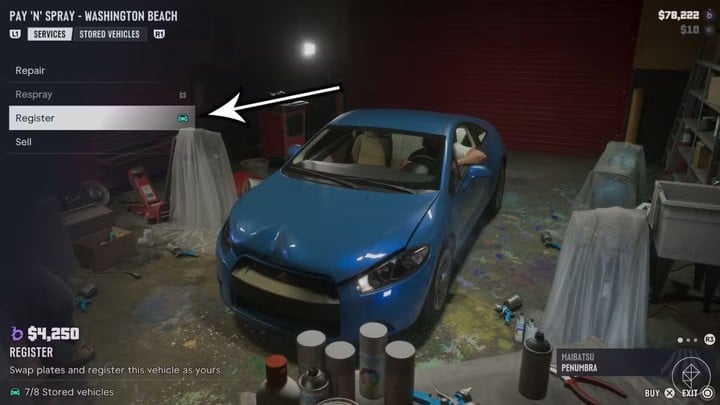
If you think that's not miserable enough, just consider this: once you accidentally bump or scrape the car, getting bodywork and paint at a roadside shop costs hundreds of dollars at a time. A couple of crashes and the budget you worked hard to save for a surprise for your girlfriend is basically wasted on repairs.
And so, controller in hand for GTA 6, under the blazing sun of Leonida, we dutifully stop at red lights, check the mirrors when changing lanes, take detours when we see police cars, and meekly tuck our tails and play the good citizen.
A Playground, or a Documentary?
At this point you might want to say: hey friend, if you can't break traffic laws, can't you still commit crimes?
True, crime is indeed a major joy of the GTA series. Objectively, the game doesn't stop players from venting their frustrations through wrongdoing, but the problem is that GTA 6 also realistically adds a mechanism where committing a crime is easy but covering your tracks is hard.
Take car theft again: if you want to steal a black high-end car equipped with an electronic anti-theft system and a location tracker, you not only need to prepare professional tools in advance, but after succeeding you also have to find a way to bypass tracking and go around in circles to find a dealer willing to take it.
As for crimes in broad daylight, under GTA 6's redesigned wanted system, police will remember the suspect's clothing, appearance, weapons, and vehicle based on witness testimony, surveillance footage, and other information. Even if you shake the police cars, to avoid being investigated again you must change clothes, change cars, and change your route.
More importantly, passing the technical hurdle doesn't mean passing the conscience hurdle.
The overly realistic graphics and animations give the passersby you used to casually shove aside or run over richer behaviors and emotions. Some will fight back, some will beg for mercy (even confessing where their secret stash is), and those you injure will clutch their wounds and struggle in agony, blood spurting.
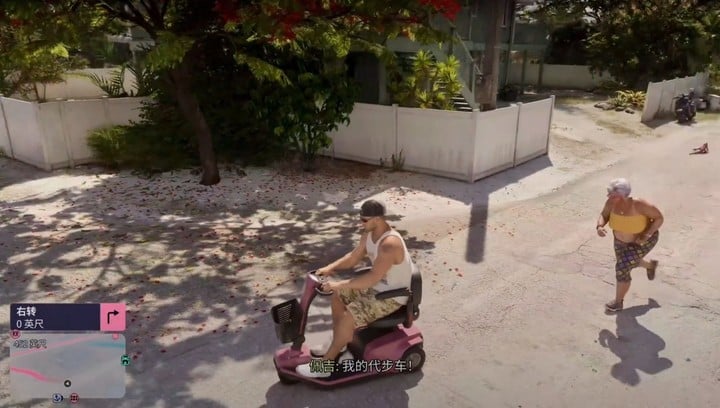
On X, one player recalled his first car theft: he floored the gas, ran a few red lights, and then knocked down a passerby on a crosswalk. At the moment he watched the passerby scream in pain, he suddenly realized this felt completely different from GTA 5—
He described it as a "uncanny valley effect" mixed with a subconscious sense of "negative karma."
In a sense, past GTA games were exhilarating because the game and the real world were strictly separated. Rough models, exaggerated physics engines, and mechanical NPCs all hinted that everything was just a game.
In this detached game world, NPCs were not much different from the zombies in Plants vs. Zombies; they were just objects unrelated to morality. Precisely because of this, players could do whatever they wanted without any burden, and obtaining resources and clearing wanted levels could be simplified into pure numerical calculation.
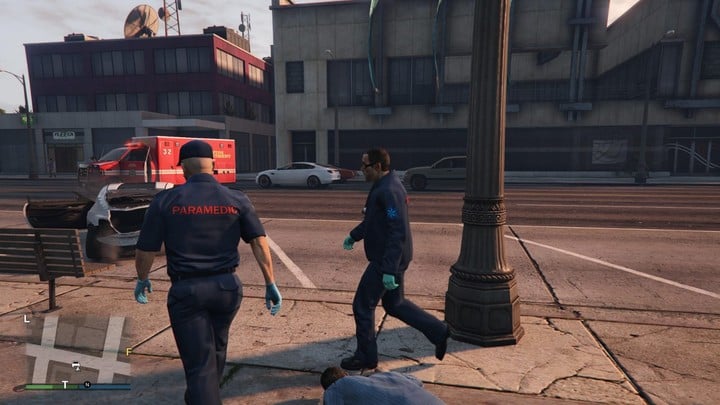
The real world left a projection of Los Santos but added no real constraints—that was the source of GTA's relaxation, joy, and pleasure.
But a world as real as GTA 6's is bound to break the game boundary and disable that "distancing" barrier that kept it clearly separate from reality.
If the "realism" of earlier GTA games was more about experiencing the real feel of the real world's freedom scale in a game—a hedonic experience—then in GTA 6 (and perhaps the earlier Red Dead Redemption 2), the new "realism" is about adding more life details, letting players collide head-on with all kinds of passersby and cruel reality.
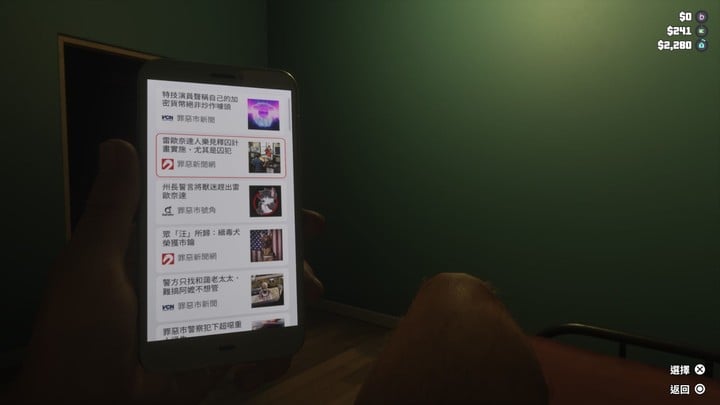
In a half-real, half-fake world, the social and moral norms internalized in us also gradually take effect. The surveillance from the "superego" almost imperceptibly makes us no longer willing to commit crimes, or even subconsciously stop at red lights.
At this point, the game transcends "hedonic experience" and steps into the realm of "eudaimonic experience," adding elements of growth, reflection, relationships, and meaning.

Article title: The Great GTA 6, the "Not Fun" GTA 6
Body: As we have seen, once the game's sandbox is opened up, the moral views, gender views, class consciousness, and cultural biases that were previously kept outside also begin to seep into the game. So it is understandable why political and gender topics such as "Is this a DEI game?" and "Is Jason a simp?" quickly took over the surrounding public discourse.
On the positive side, this step is of great significance in terms of artistic value: it proves that an interactive medium can make people re-examine life within a virtual everyday, and GTA 6 thus sheds its positioning as pure entertainment; but it is obvious that this change comes at a heavy price—
the game has lost the magic of "compressing reality."
A Map That Is Too Precise
Borges wrote a short story, "On Exactitude in Science": in a fictional empire, cartographers valued their craft so highly that, to make maps more precise and fit in more detail, they drew ever larger maps, until they finally drew a map the same size as the empire. But such a large map could not be used for navigation, so later generations could only throw the map into the desert and let it weather away.
Or one could say that today's GTA 6 is drawing infinitely close to this 1:1 map.
Starting from the details in Red Dead Redemption 2 that change with temperature, and the hunting animations for plucking feathers and skinning animals, Rockstar has had an almost obsessive fascination with "extreme realism." By the time it reached Leonida, this obsession was fully unleashed: every hand-holding, every police deployment, every carefully calculated expense precisely replicates the operating logic of modern society.
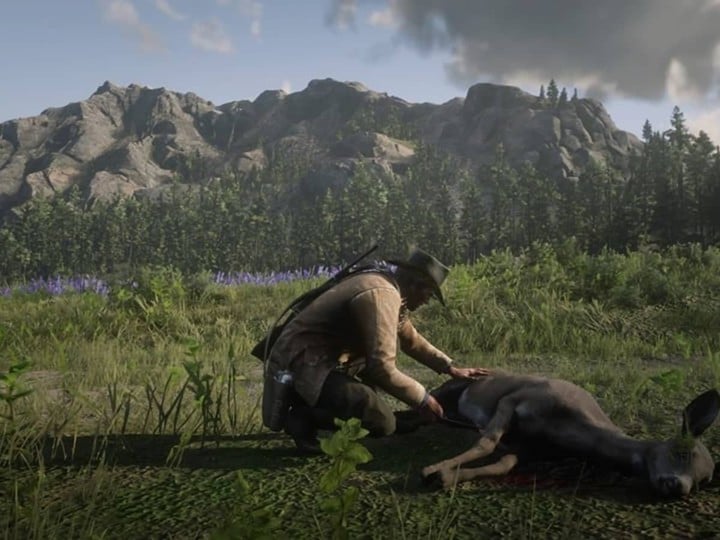
The problem is that the very meaning of a map lies in its "simplification" of reality. Looking at a map is for ignoring the details of buildings and mountains and forests, and finding the path to a destination. Once it becomes precise to the point of a 1:1 restoration, it becomes reality itself.
Understanding this means understanding the polarization between critic scores and player scores on Metacritic.
The reason the press unhesitatingly gave it a 99 is that, from the perspective of industrial standards, narrative ambition, and technological marvel, GTA 6 truly stands at the highest peak in the history of human video games. At its peak, more than 10,000 creators participated in it, building every aspect of Leonida down to the smallest detail.
For reviewers who care about the upper limit of a game's expressive power, it is an interactive documentary, dissecting contemporary America's economic anxiety, underclass struggles, and absurd reality with impeccable detail.
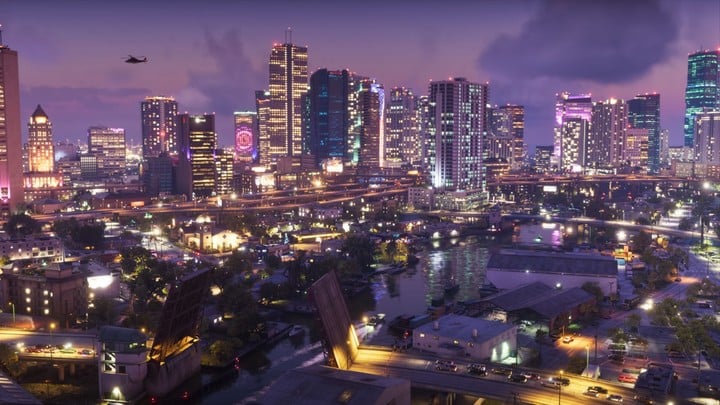
But an ordinary player sitting on the couch has already faced KPIs during the day, been stuck in traffic on the commute, and has a Huabei bill on their phone due on the 10th of every month; spending a few hundred yuan on a ticket to Leonida was originally meant to briefly "escape" for two hours to that sun-scorched lawless land and enjoy a cost-free bout of madness.
At this point, GTA 6 hands over a paint roller and a car repair quote, pats you on the shoulder, and says: welcome to a more realistic America—paint the wall first, then figure out how to scrape together the $5,000 household fund.
When the friction of the virtual world becomes as great as that of reality, so-called "immersion" easily slides into "virtual labor." The more carefully you obey traffic rules and weigh the pros and cons in the game, the more the exhaustion outside the screen follows you like a shadow.
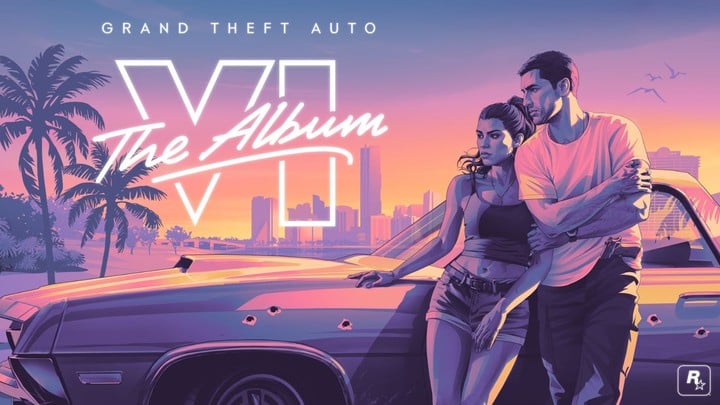
That said, as the story progresses into the middle and late stages, when Jason and Lucia are completely swept into Vice City's underground storm, hails of bullets and earth-shattering heists still arrive as expected, and Rockstar remains the storytelling master on this planet most skilled at creating dramatic tension.
It is just that this long buildup of "first be a wage slave, then be a master thief" has completely rewritten the underlying tone of GTA.
After 13 years of waiting and more than a billion dollars of investment, Rockstar has proven that video games are fully capable of rebuilding on screen a parallel universe indistinguishable from reality. But the reason "wish-fulfillment fiction" feels good is precisely its unreality; a world that is too real must, at certain levels, be "anti-fun."
So my personal way of looking at GTA 6 is like looking at Dream of the Red Chamber: I know it is a masterpiece, with high artistic attainment and a strong sense of its era, and I can fully understand its literary quality or social achievement, but I just don't really want to open it.
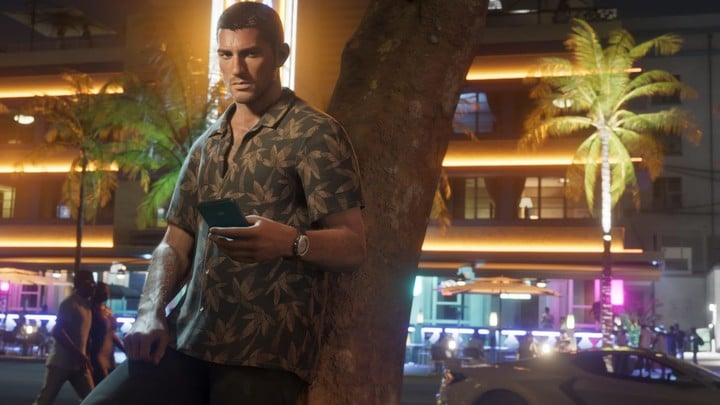
GTA 6 is a magnificent blockbuster fully worthy of outside recognition, an Opus Magnum, but it perhaps cannot become a deep-rooted desire that drives a person to play day and night.
Of course, no matter how realistic it gets, it has not completely stripped players of their "subjectivity"—
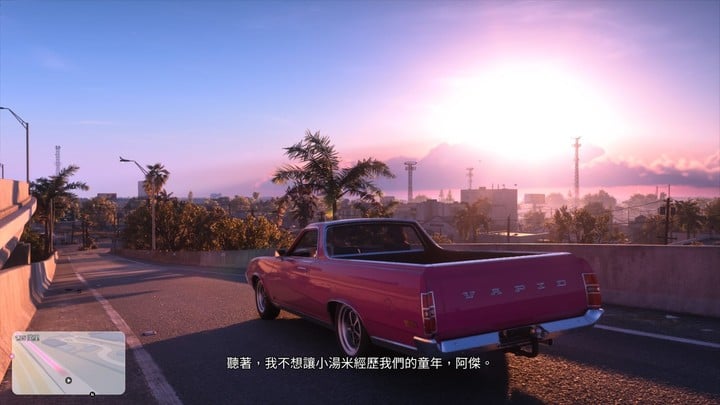
when Jason sits in an old car waiting at a red light under the setting sun, at least you know that if you want to, the next second you can still floor the accelerator.