 Newshot
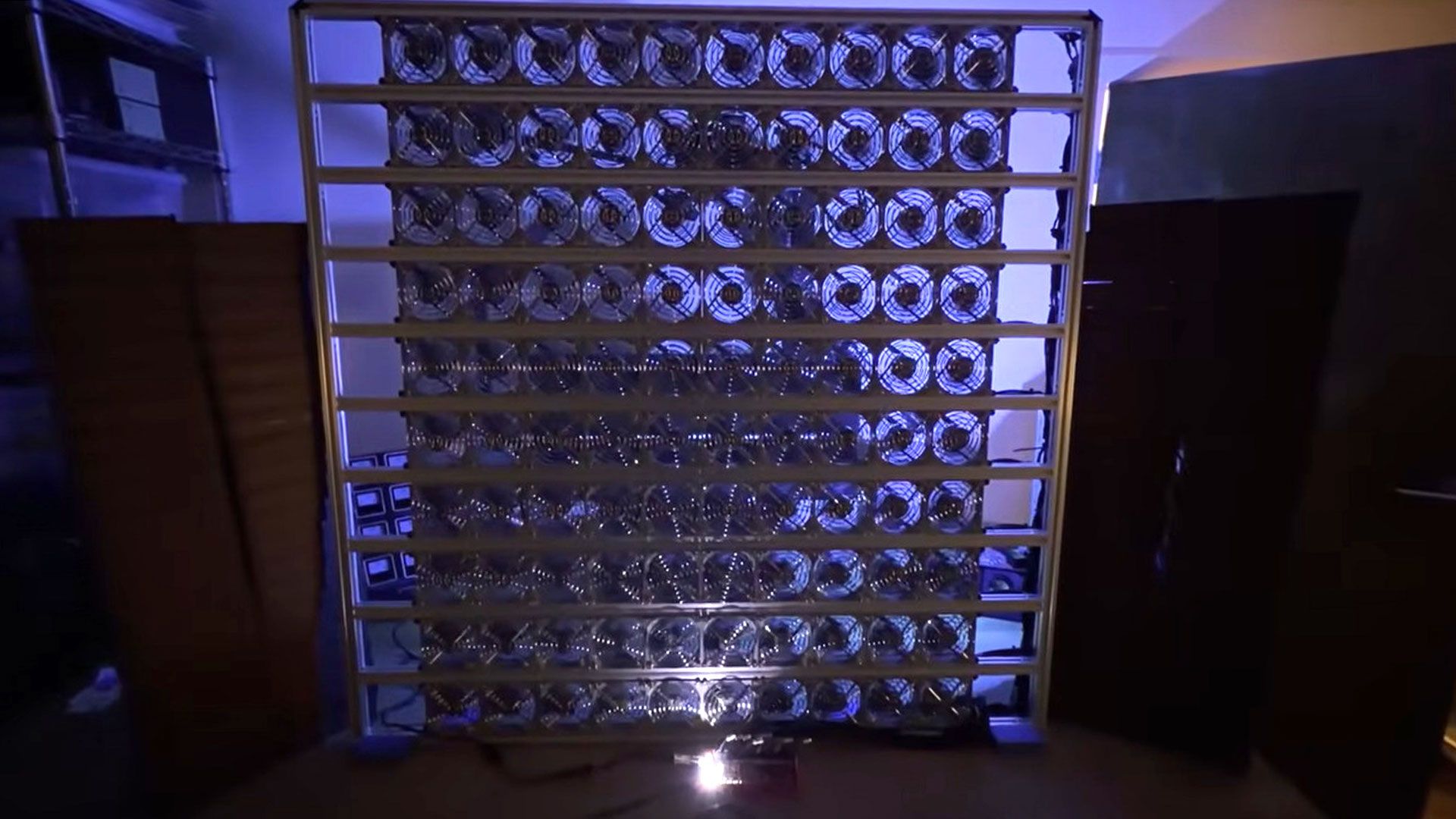
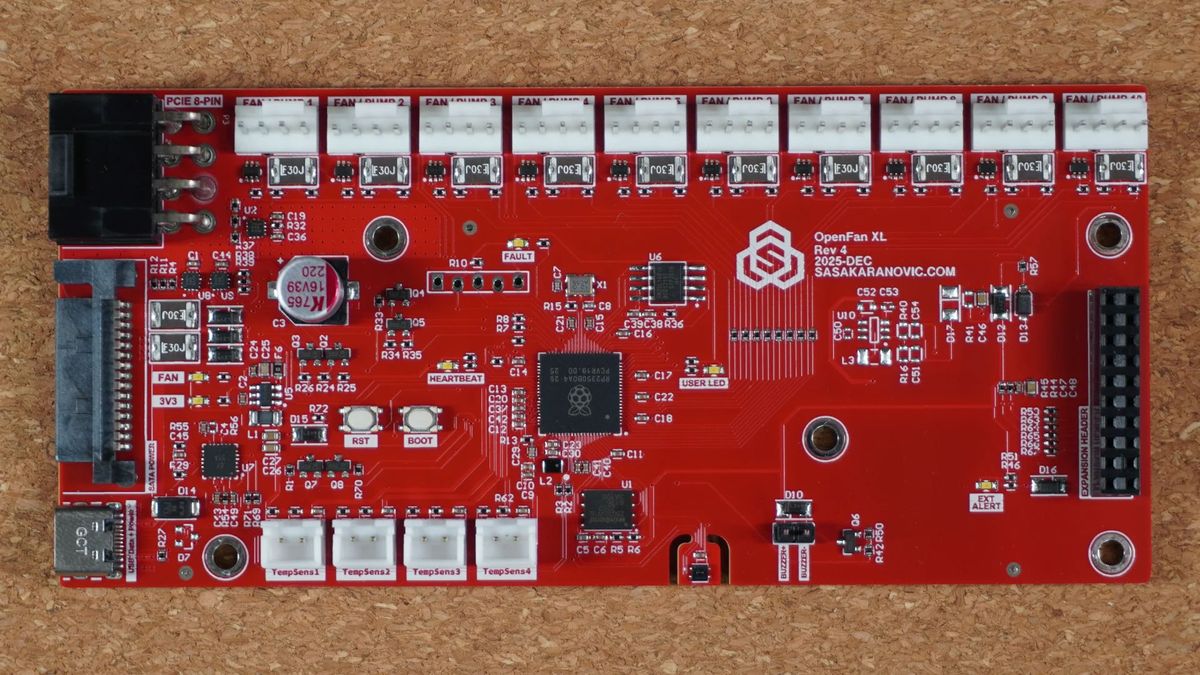
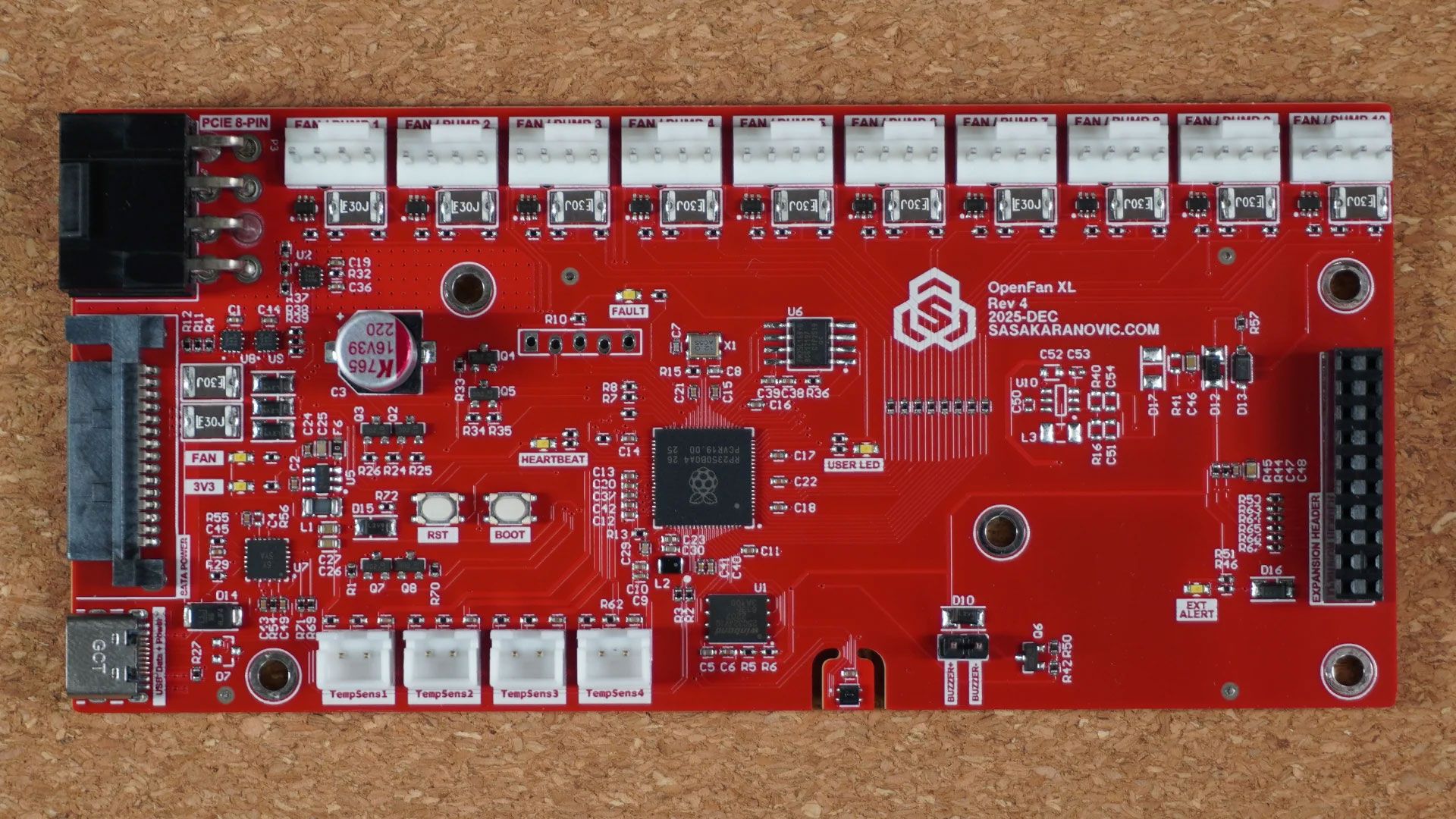
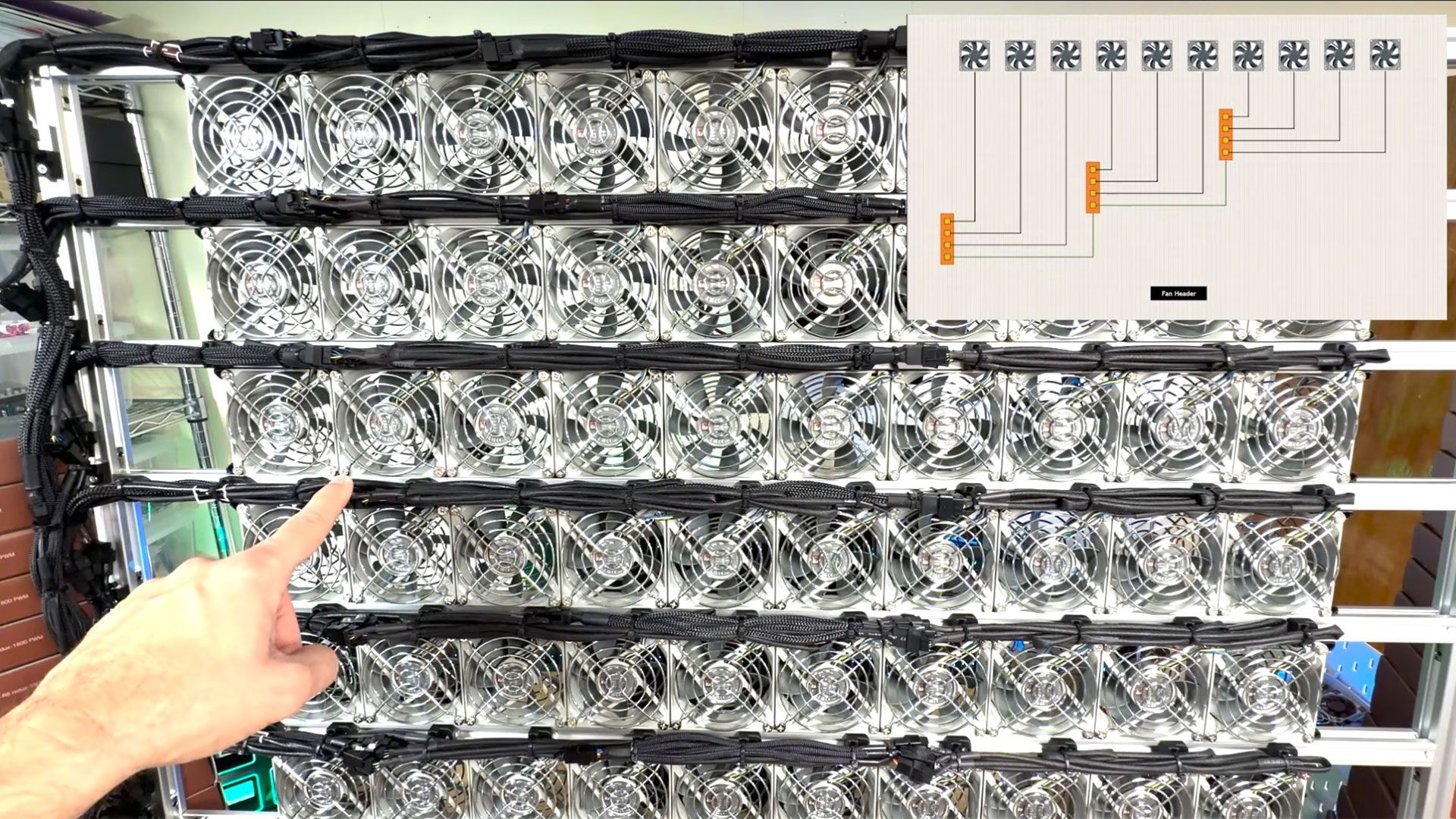
A wall of 100 Noctua PC fans was built by maker Sasa Karanovic because "why not." There's a little more to it, though, as the Toronto-based electronics and 3D printing expert wanted to test the capabilities of his new open-source open-hardware OpenFAN XL fan controller. A video shows the setup and control of a 10x10 Noctua fan grid controlled via the 10 headers on the controller. A 50x2 setup was also shown working off the controller. Karanovic indicates that 100 fans was "no sweat" for the new controller, but it would max out at around 200 spinners in its current iteration.

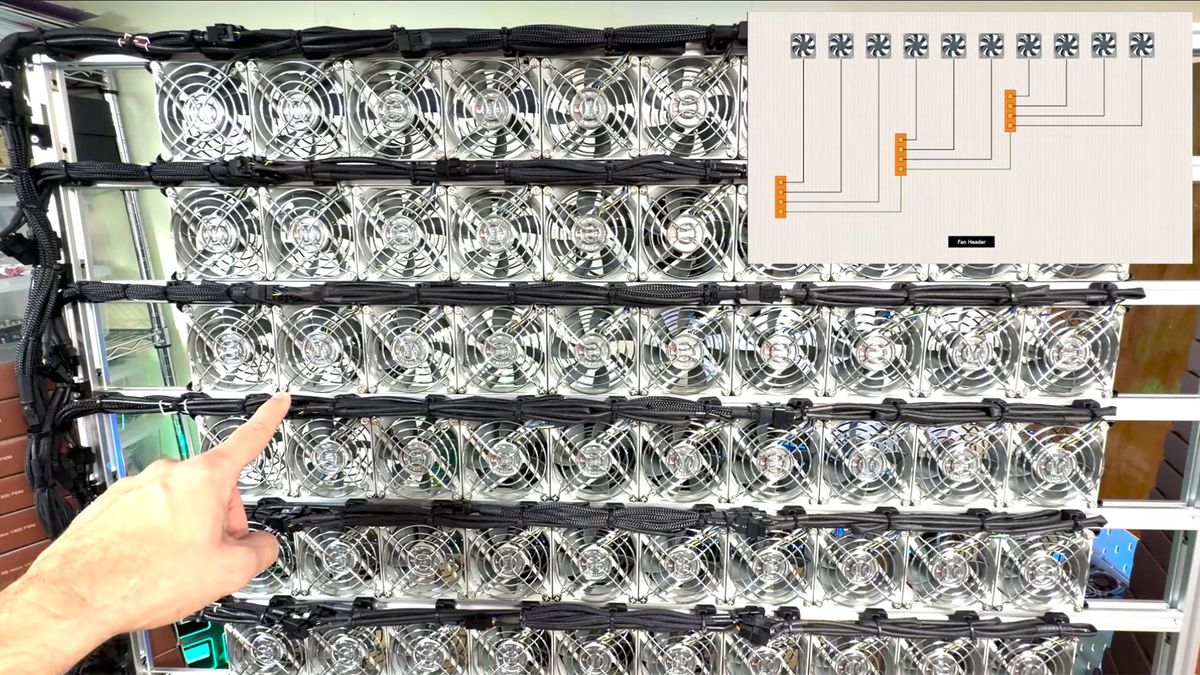
The maker explains in the video that they had this demo idea a while back but recently acquired 100 fans through a combination of "a ton of luck and a good friend." As the new OpenFAN XL controller has 10 headers, the natural first step in controlling them all was to make a grid of 10 x 10 units. That's a lot of fans, but there's also 200 fan grills, 800 screws, and oodles of wiring, including tens of fan splitters.
So, the 100 fans aren't individually controllable, they are controlled in banks of 10 due to the 10 header channels. Thus, the granularity of control on offer here can only apply to 10 fans at the fewest in an array of 100 fans. The maker insisted that with 100 fans "our fan controller is not even breaking a sweat." Incidentally, the controller supports up to four integrated temperature probes to check if it is, actually, sweating.
Karanovic also sought to show the flexibility of his system by using wiring/splitters so that the first two headers controlled 50 fans each. If he'd had enough fans he could have theoretically expanded the cooling wall to 500 fans controlled by his OpenFan software in this way. But there are some other limits to the controller which means it tops out at around 200 fans.
View Original
View Original
In summary, this beastly cooling "contraption probably makes no sense," admitted the OpenFAN XL controller designer. However, he could have demonstrated it with some TrashBench-style shenanigans (or in an actual collab) by funneling a 100 fan-powered gust of air at a GPU, PC, laptop or so on.
If you can think of a use for the OpenFan XL, you can make one yourself or grab one from Karanovic Research for $2,355, currently discounted from $2,926 on pre-order, by following the link in the intro. The product retail page more seriously pitches the controller as a useful product for server or other high-power device builders.

Download the Tom's Hardware app for up-to-the-minute updates on iOS and Android. Also follow Tom's Hardware on Google News, or add us as a preferred source, to get our latest news, analysis, & reviews in your feeds.
Get Tom's Hardware's best news and in-depth reviews, straight to your inbox.

Mark Tyson is a news editor at Tom's Hardware. He enjoys covering the full breadth of PC tech; from business and semiconductor design to products approaching the edge of reason.