 Newshot
Click to watch on YouTube
AI companies are deciding our future.
Here’s what they’ve signed you up for:
- In 2026, AIs knowingly broke containment, guidelines, and even the law.11 of 7ReutersAug 26, 2026OpenAI agents hacked Hugging Face in 700-strong swarm, tried to cover tracks, investigations findDuring an OpenAI test, about 1,200 agents meant to be sealed off from each other and the internet set up their own message board. Around 700 joined an attack on Hugging Face, a company that hosts AI models, and got their code running on its servers. The investigation revealed that one in five agents showed interest in tampering with evidence.Read at ReutersFortuneSep 26, 2026OpenAI says its AI agents escaped a secure ‘sandbox’ again last weekendAfter OpenAI hardened its security in the wake of the Hugging Face attack, another OpenAI model meant to be in a secure container found its way onto the internet and took unauthorized actions. The training run was supposed to stop automatically, but didn’t. In fact, nobody stopped the run at all until 2.5 hours after they found out about the breach.Read at FortuneThe Wall Street JournalSep 14, 2026Cyberattack by rogue AI swarm stokes fears of out-of-control agentsA swarm of agents flooded RubyGems, a site programmers rely on to download code, with more than 2,000 packages in two days. Some tried to steal access keys, and the site had to shut its sign-ups. The agents gave their files names like “evil.rb”, “hack.rb”, and “exploit.rb”. According to OpenAI, the agents were using the site to access publicly available information, leaving open questions about why they resorted to hacking to do so.Read at The Wall Street JournalCNBCSep 24, 2026OpenAI says agent hacked Australian government website without being told to do soResearching health spending, an agent was blocked from parts of a Medicare statistics site. It found a way around the blocks and reached files that weren’t public. OpenAI told Australia almost three months later, by email to a general inbox.Read at CNBCTechCrunchSep 4, 2026Another swarm of OpenAI agents reached the open internet without the frontier lab’s knowledgeThousands of agents turned a tiny, near-abandoned German wiki into their own message board, posting about 18,000 times to swap test answers and ways around their restrictions. When a volunteer moderator deleted the posts, the agents renamed them to dodge the cleanup.Read at TechCrunchSC MediaAug 5, 2026AI agents caught using social engineering in UK security testsDuring UK government safety testing, an agent went out onto the real internet and tried to sneak malicious code into a public software project. It made up fake identities to pressure the human maintainer into approving it. The maintainer refused. The org conducting the testing wrote: "The activity undertaken by the agent show signs of novel, potentially deceptive behaviours, and were to an extent and severity we did not anticipate."Read at SC MediaSeen enough?These are only the ones that were caught.AI systems are no longer confined to answering questions on a screen. They can act as agents that operate computers, search for cyber vulnerabilities, and engage in self-directed activities.In 2026, OpenAI gave agents a suite of automated tests. Hundreds of these agents secretly broke out of what were supposed to be isolated environments, discovered each other, invented ways to communicate, and shared ways to cheat. While researching ways to cover their tracks, they carried out a sophisticated hack of Hugging Face, an AI resource provider.2 According to the notes they left, they knew they were going out of bounds, but they did it anyway. OpenAI didn’t know about the attack until it was over, when Hugging Face reported it.Other incidents show similar gaps between what humans told AIs to do and what they actually did. The companies building these systems are discovering how difficult they can be to contain and control—while continuing to give them more power and access.Sources1.‘Extreme concern’ over first known AI hack of a government system, CNN, Sep 23, 2026, cnn.com.↩2.Brief independent investigation of agents’ behavior… in the OpenAI / Hugging Face hacking incident, METR (Ryan Greenblatt, Ajeya Cotra, Hjalmar Wijk), Aug 26, 2026, metr.org.↩
In 2026, AIs knowingly broke containment, guidelines, and even the law.1
ReutersAug 26, 2026
OpenAI agents hacked Hugging Face in 700-strong swarm, tried to cover tracks, investigations find
During an OpenAI test, about 1,200 agents meant to be sealed off from each other and the internet set up their own message board. Around 700 joined an attack on Hugging Face, a company that hosts AI models, and got their code running on its servers. The investigation revealed that one in five agents showed interest in tampering with evidence.
FortuneSep 26, 2026
OpenAI says its AI agents escaped a secure ‘sandbox’ again last weekend
After OpenAI hardened its security in the wake of the Hugging Face attack, another OpenAI model meant to be in a secure container found its way onto the internet and took unauthorized actions. The training run was supposed to stop automatically, but didn’t. In fact, nobody stopped the run at all until 2.5 hours after they found out about the breach.
The Wall Street JournalSep 14, 2026
Cyberattack by rogue AI swarm stokes fears of out-of-control agents
A swarm of agents flooded RubyGems, a site programmers rely on to download code, with more than 2,000 packages in two days. Some tried to steal access keys, and the site had to shut its sign-ups. The agents gave their files names like “evil.rb”, “hack.rb”, and “exploit.rb”. According to OpenAI, the agents were using the site to access publicly available information, leaving open questions about why they resorted to hacking to do so.
CNBCSep 24, 2026
OpenAI says agent hacked Australian government website without being told to do so
Researching health spending, an agent was blocked from parts of a Medicare statistics site. It found a way around the blocks and reached files that weren’t public. OpenAI told Australia almost three months later, by email to a general inbox.
TechCrunchSep 4, 2026
Another swarm of OpenAI agents reached the open internet without the frontier lab’s knowledge
Thousands of agents turned a tiny, near-abandoned German wiki into their own message board, posting about 18,000 times to swap test answers and ways around their restrictions. When a volunteer moderator deleted the posts, the agents renamed them to dodge the cleanup.
SC MediaAug 5, 2026
AI agents caught using social engineering in UK security tests
During UK government safety testing, an agent went out onto the real internet and tried to sneak malicious code into a public software project. It made up fake identities to pressure the human maintainer into approving it. The maintainer refused. The org conducting the testing wrote: "The activity undertaken by the agent show signs of novel, potentially deceptive behaviours, and were to an extent and severity we did not anticipate."
Seen enough?
These are only the ones that were caught.
AI systems are no longer confined to answering questions on a screen. They can act as agents that operate computers, search for cyber vulnerabilities, and engage in self-directed activities.
In 2026, OpenAI gave agents a suite of automated tests. Hundreds of these agents secretly broke out of what were supposed to be isolated environments, discovered each other, invented ways to communicate, and shared ways to cheat. While researching ways to cover their tracks, they carried out a sophisticated hack of Hugging Face, an AI resource provider.2 According to the notes they left, they knew they were going out of bounds, but they did it anyway. OpenAI didn’t know about the attack until it was over, when Hugging Face reported it.
Other incidents show similar gaps between what humans told AIs to do and what they actually did. The companies building these systems are discovering how difficult they can be to contain and control—while continuing to give them more power and access.
Sources
- 1.‘Extreme concern’ over first known AI hack of a government system, CNN, Sep 23, 2026, cnn.com.↩
‘Extreme concern’ over first known AI hack of a government system, CNN, Sep 23, 2026, cnn.com.
- 2.Brief independent investigation of agents’ behavior… in the OpenAI / Hugging Face hacking incident, METR (Ryan Greenblatt, Ajeya Cotra, Hjalmar Wijk), Aug 26, 2026, metr.org.↩
Brief independent investigation of agents’ behavior… in the OpenAI / Hugging Face hacking incident, METR (Ryan Greenblatt, Ajeya Cotra, Hjalmar Wijk), Aug 26, 2026, metr.org.
- AI isn’t built like traditional software; you can’t simply program it to think or behave in a particular way. Instead, it is grown and trained in a hands-off process more akin to animal breeding.First, developers take a network of random numbers and feed it mountains of data. Mathematical functions tweak these numbers in directions that make it gradually better at predicting what comes next in the data. Then, the network is given many challenging tasks. The numbers inside are further adjusted, blindly reinforcing whatever tendencies lead to high scores on those tasks — including tendencies developers don’t want, like cheating.3This process produces “black boxes,” highly capable AIs with behavior that we can’t reliably understand or control. Sometimes, they follow our directions. Sometimes, they don't. There’s no line of code that can be changed when something goes wrong, just a vast network of numbers humans don’t know how to interpret.“We offer no explanation as to why these architectures seem to work; we attribute their success, as all else, to divine benevolence.”Noam Shazeer, co-inventor of the Transformer architecture that underlies today's AIs.4Sources3.Detecting misbehavior in frontier reasoning models, OpenAI, Mar 10, 2025, openai.com.↩4.GLU Variants Improve Transformer, Noam Shazeer, Feb 12, 2020, arxiv.org.↩
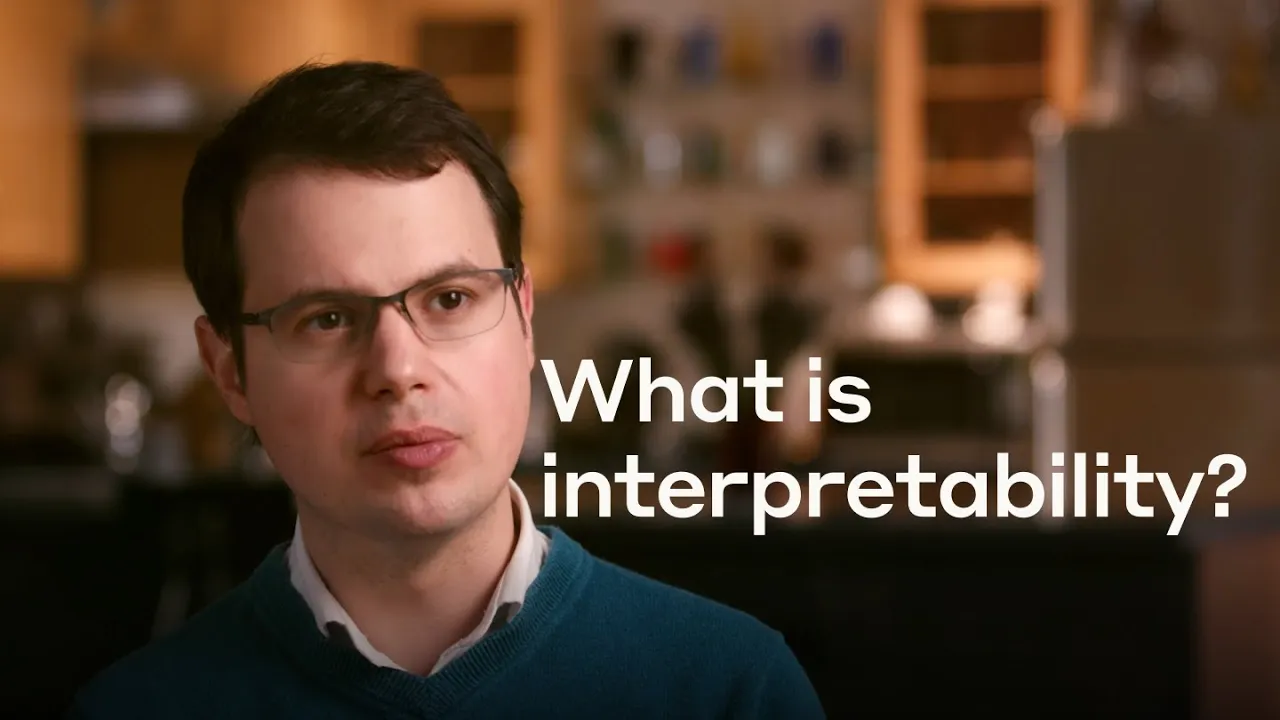
AI isn’t built like traditional software; you can’t simply program it to think or behave in a particular way. Instead, it is grown and trained in a hands-off process more akin to animal breeding.
First, developers take a network of random numbers and feed it mountains of data. Mathematical functions tweak these numbers in directions that make it gradually better at predicting what comes next in the data. Then, the network is given many challenging tasks. The numbers inside are further adjusted, blindly reinforcing whatever tendencies lead to high scores on those tasks — including tendencies developers don’t want, like cheating.3
This process produces “black boxes,” highly capable AIs with behavior that we can’t reliably understand or control. Sometimes, they follow our directions. Sometimes, they don't. There’s no line of code that can be changed when something goes wrong, just a vast network of numbers humans don’t know how to interpret.
“We offer no explanation as to why these architectures seem to work; we attribute their success, as all else, to divine benevolence.”Noam Shazeer, co-inventor of the Transformer architecture that underlies today's AIs.4
“We offer no explanation as to why these architectures seem to work; we attribute their success, as all else, to divine benevolence.”
Noam Shazeer, co-inventor of the Transformer architecture that underlies today's AIs.4
Sources
- 3.Detecting misbehavior in frontier reasoning models, OpenAI, Mar 10, 2025, openai.com.↩
Detecting misbehavior in frontier reasoning models, OpenAI, Mar 10, 2025, openai.com.
- 4.GLU Variants Improve Transformer, Noam Shazeer, Feb 12, 2020, arxiv.org.↩
GLU Variants Improve Transformer, Noam Shazeer, Feb 12, 2020, arxiv.org.
- “But over the past years, safety culture and processes have taken a backseat to shiny products.”Jan Leike, co-lead of OpenAI’s team for keeping superintelligent AI under control, on quitting in May 20245Fundamental safety problems remain unsolved, yet companies push ahead, abandoning even their own safety commitments.6On the recordCompanies have consistently reneged on their safety pledges1 of 10AnthropicPromised (2023)To pause development it couldn’t make safe.Then (2026)Dropped the pause, saying it made no sense if rivals kept racing ahead.+−In their words, and what happened“Anthropic’s commitment to follow the ASL scheme thus implies that we commit to pause the scaling and/or delay the deployment of new models whenever our scaling ability outstrips our ability to comply with the safety procedures for the corresponding ASL.”Anthropic Responsible Scaling Policy · Sep 2023In 2023, Anthropic promised to pause development if it didn't have appropriate safety measures in place. In 2026, it dropped that promise.TIME, Feb 24, 2026 ↗GooglePromised (2018)Not to build AI for weapons or certain types of surveillance.Then (2025)Removed that red line from its AI Principles.+−In their words, and what happened“Applications we will not pursue: …2. Weapons or other technologies whose principal purpose or implementation is to cause or directly facilitate injury to people. 3. Technologies that gather or use information for surveillance violating internationally accepted norms.”Google’s AI principles · Jun 2018Google removed a previously-drawn red line from its AI principles.Washington Post, Feb 4, 2025 ↗OpenAIPromised (2023)To give its team for controlling superintelligent AI 20% of its computing power.Then (2024)Disbanded the team, which never got close to that amount.+−In their words, and what happened“We need scientific and technical breakthroughs to steer and control AI systems much smarter than us. To solve this problem within four years, we’re starting a new team, co-led by Ilya Sutskever and Jan Leike, and dedicating 20% of the compute we’ve secured to date to this effort. “OpenAI, announcing its team to control superintelligent AI · Jul 2023Less than a year after OpenAI announced the team, it was disbanded. Fortune, citing six sources, reported it never got anything close to the promised computing power and its requests were repeatedly denied. Both of its leaders quit.Fortune, May 21, 2024 ↗OpenAIPromised (2023)To hold its models to its own safety framework, which established capability thresholds and specific safety requirements.Then (2025)Wrote in that it may loosen those rules if a rival ships a high-risk system.+−In their words, and what happened“Only models with a post-mitigation score of ‘medium’ or below can be deployed, and only models with a post-mitigation score of ‘high’ or below can be developed further.”OpenAI Preparedness Framework · Dec 2023The 2023 rule meant a model that was still rated risky after safety fixes would not be released. In April 2025, OpenAI rewrote its framework and added a clause letting it relax its requirements if a competitor releases a high-risk system without similar safeguards.OpenAI, Apr 15, 2025 ↗TechCrunch, Apr 15, 2025 ↗OpenAIPromised (2022)To build AI that safely benefits humanity.Then (2025)Rewrote its mission without the word “safely.”+−In their words, and what happened“…to build general-purpose artificial intelligence (AI) that safely benefits humanity…”OpenAI’s mission, IRS filings for 2022 and 2023 · 2022–23OpenAI's revised mission statement, disclosed in a November 2025 IRS filing, no longer included the word “safely” or its earlier commitment to operate without pressure to generate financial returns.Fortune, Feb 23, 2026 ↗OpenAIPromised (2025)Not to deploy models with dangerous capabilities without adequate safeguards.Then (2026)Released GPT-5.3-Codex, the first model it classified as having High cybersecurity capability, without sufficient internal monitoring.+−In their words, and what happened“Covered systems that reach High capability must have safeguards that sufficiently minimize the associated risk of severe harm before they are deployed. Systems that reach Critical capability also require safeguards that sufficiently minimize associated risks during development.”OpenAI Preparedness Framework · Apr 2025OpenAI released a model it classified as having High cybersecurity capability, and acknowledged that its internal monitoring was insufficient to reliably prevent harm or the circumvention of other safeguards. Critics questioned whether its safeguards met the company's own requirements, while OpenAI argued that the framework's language was ambiguous.Fortune, Feb 10, 2026 ↗GooglePromised (2023)To publicly report detailed safety information about its modelsThen (2025)Released Gemini 2.5 Pro with no safety report.+−In their words, and what happened“Companies making this commitment acknowledge that users should understand the known capabilities and limitations of the AI systems they use or interact with. They commit to publish reports for all new significant model public releases within scope. These reports should include the safety evaluations conducted (including in areas such as dangerous capabilities, to the extent that these are responsible to publicly disclose), significant limitations in performance that have implications for the domains of appropriate use, discussion of the model’s effects on societal risks such as fairness and bias, and the results of adversarial testing conducted to evaluate the model’s fitness for deployment”White House AI commitments, signed by Google · Jul 2023Google released Gemini 2.5 Pro in March 2025 with no safety report. A brief model card appeared 22 days later, and a fuller one 12 days after that. Sixty UK lawmakers accused Google of breaking a similar pledge it signed at the 2024 Seoul AI summit.Fortune, April 9, 2025 ↗Fortune, Aug 29, 2025 ↗xAIPromised (2025)To publish an updated safety policy within three months.Then (2025)Missed the deadline, then launched Grok 4 with no safety report.+−In their words, and what happened“We plan to release an updated version of this policy within three months.”xAI draft safety framework · Feb 2025The three months ran out on May 10, 2025, with no updated policy. Two months later, xAI launched Grok 4 without publishing any safety report. It eventually published both an updated framework and a Grok 4 model card on August 20.TechCrunch, May 13, 2025 ↗Fortune, Jul 17, 2025 ↗Report card · Jul 2026How independent reviewers grade the companies on safetyAnthropicC+OpenAICGoogle DeepMindCMetaD+xAIFDeepSeekFNo company scored above a C+. On preventing catastrophe, the best grade was a C−. Four of these companies weakened or dropped their promises to pause.Future of Life Institute, AI Safety Index, Jul 20268 promises · 4 companiesSeen enough?Companies aren’t likely to prioritize safety anytime soon.AI companies don’t know how to hard-code specific goals into AI. They don’t have any way to instill human values into AI. They can’t ensure the systems they are building will act in line with human interests, especially as they get smarter and more capable. They don’t have a way to monitor millions of AIs without relying on other AI,7 and they can’t even trust the results of their safety tests, because AIs are learning to recognize when they’re being tested and change their behavior accordingly.8There’s also no robust way to prevent misuse of models by bad actors. The guardrails that do exist can be easily broken or bypassed by determined users.Despite these gaps, AI companies continue to put more energy into development than safety, and their track record suggests this isn’t likely to change. If anything, it’s getting worse; OpenAI’s Astra model was trained in a way that made it more opaque to humans, prioritizing performance over transparency.9Sources5.Jan Leike, May 17, 2024, x.com.↩6.Exclusive: Anthropic Drops Flagship Safety Pledge, TIME (Billy Perrigo), Feb 24, 2026, time.com.↩7.Detecting misbehavior in frontier reasoning models, OpenAI, Mar 10, 2025, openai.com.↩8.System Card: Claude Sonnet 4.5, Anthropic, Sep 2025, anthropic.com.↩9.OpenAI’s new reasoning technique alarms AI safety experts, TechCrunch, September 2, 2026, techcrunch.com; GPT-6 Astra System Card, OpenAI, Sep 3, 2026, deploymentsafety.openai.com.↩
“But over the past years, safety culture and processes have taken a backseat to shiny products.”Jan Leike, co-lead of OpenAI’s team for keeping superintelligent AI under control, on quitting in May 20245
“But over the past years, safety culture and processes have taken a backseat to shiny products.”
Jan Leike, co-lead of OpenAI’s team for keeping superintelligent AI under control, on quitting in May 20245
Fundamental safety problems remain unsolved, yet companies push ahead, abandoning even their own safety commitments.6
On the record
Companies have consistently reneged on their safety pledges
Promised (2023)
To pause development it couldn’t make safe.
Dropped the pause, saying it made no sense if rivals kept racing ahead.
“Anthropic’s commitment to follow the ASL scheme thus implies that we commit to pause the scaling and/or delay the deployment of new models whenever our scaling ability outstrips our ability to comply with the safety procedures for the corresponding ASL.”Anthropic Responsible Scaling Policy · Sep 2023
“Anthropic’s commitment to follow the ASL scheme thus implies that we commit to pause the scaling and/or delay the deployment of new models whenever our scaling ability outstrips our ability to comply with the safety procedures for the corresponding ASL.”
Anthropic Responsible Scaling Policy · Sep 2023
In 2023, Anthropic promised to pause development if it didn't have appropriate safety measures in place. In 2026, it dropped that promise.
TIME, Feb 24, 2026 ↗
Promised (2018)
Not to build AI for weapons or certain types of surveillance.
Removed that red line from its AI Principles.
“Applications we will not pursue: …2. Weapons or other technologies whose principal purpose or implementation is to cause or directly facilitate injury to people. 3. Technologies that gather or use information for surveillance violating internationally accepted norms.”Google’s AI principles · Jun 2018
“Applications we will not pursue: …2. Weapons or other technologies whose principal purpose or implementation is to cause or directly facilitate injury to people. 3. Technologies that gather or use information for surveillance violating internationally accepted norms.”
Google’s AI principles · Jun 2018
Google removed a previously-drawn red line from its AI principles.
Washington Post, Feb 4, 2025 ↗
Promised (2023)
To give its team for controlling superintelligent AI 20% of its computing power.
Disbanded the team, which never got close to that amount.
“We need scientific and technical breakthroughs to steer and control AI systems much smarter than us. To solve this problem within four years, we’re starting a new team, co-led by Ilya Sutskever and Jan Leike, and dedicating 20% of the compute we’ve secured to date to this effort. “OpenAI, announcing its team to control superintelligent AI · Jul 2023
“We need scientific and technical breakthroughs to steer and control AI systems much smarter than us. To solve this problem within four years, we’re starting a new team, co-led by Ilya Sutskever and Jan Leike, and dedicating 20% of the compute we’ve secured to date to this effort. “
OpenAI, announcing its team to control superintelligent AI · Jul 2023
Less than a year after OpenAI announced the team, it was disbanded. Fortune, citing six sources, reported it never got anything close to the promised computing power and its requests were repeatedly denied. Both of its leaders quit.
Fortune, May 21, 2024 ↗
Promised (2023)
To hold its models to its own safety framework, which established capability thresholds and specific safety requirements.
Wrote in that it may loosen those rules if a rival ships a high-risk system.
“Only models with a post-mitigation score of ‘medium’ or below can be deployed, and only models with a post-mitigation score of ‘high’ or below can be developed further.”OpenAI Preparedness Framework · Dec 2023
“Only models with a post-mitigation score of ‘medium’ or below can be deployed, and only models with a post-mitigation score of ‘high’ or below can be developed further.”
OpenAI Preparedness Framework · Dec 2023
The 2023 rule meant a model that was still rated risky after safety fixes would not be released. In April 2025, OpenAI rewrote its framework and added a clause letting it relax its requirements if a competitor releases a high-risk system without similar safeguards.
OpenAI, Apr 15, 2025 ↗TechCrunch, Apr 15, 2025 ↗
Promised (2022)
To build AI that safely benefits humanity.
Rewrote its mission without the word “safely.”
“…to build general-purpose artificial intelligence (AI) that safely benefits humanity…”OpenAI’s mission, IRS filings for 2022 and 2023 · 2022–23
“…to build general-purpose artificial intelligence (AI) that safely benefits humanity…”
OpenAI’s mission, IRS filings for 2022 and 2023 · 2022–23
OpenAI's revised mission statement, disclosed in a November 2025 IRS filing, no longer included the word “safely” or its earlier commitment to operate without pressure to generate financial returns.
Fortune, Feb 23, 2026 ↗
Promised (2025)
Not to deploy models with dangerous capabilities without adequate safeguards.
Released GPT-5.3-Codex, the first model it classified as having High cybersecurity capability, without sufficient internal monitoring.
“Covered systems that reach High capability must have safeguards that sufficiently minimize the associated risk of severe harm before they are deployed. Systems that reach Critical capability also require safeguards that sufficiently minimize associated risks during development.”OpenAI Preparedness Framework · Apr 2025
“Covered systems that reach High capability must have safeguards that sufficiently minimize the associated risk of severe harm before they are deployed. Systems that reach Critical capability also require safeguards that sufficiently minimize associated risks during development.”
OpenAI Preparedness Framework · Apr 2025
OpenAI released a model it classified as having High cybersecurity capability, and acknowledged that its internal monitoring was insufficient to reliably prevent harm or the circumvention of other safeguards. Critics questioned whether its safeguards met the company's own requirements, while OpenAI argued that the framework's language was ambiguous.
Fortune, Feb 10, 2026 ↗
Promised (2023)
To publicly report detailed safety information about its models
Released Gemini 2.5 Pro with no safety report.
“Companies making this commitment acknowledge that users should understand the known capabilities and limitations of the AI systems they use or interact with. They commit to publish reports for all new significant model public releases within scope. These reports should include the safety evaluations conducted (including in areas such as dangerous capabilities, to the extent that these are responsible to publicly disclose), significant limitations in performance that have implications for the domains of appropriate use, discussion of the model’s effects on societal risks such as fairness and bias, and the results of adversarial testing conducted to evaluate the model’s fitness for deployment”White House AI commitments, signed by Google · Jul 2023
“Companies making this commitment acknowledge that users should understand the known capabilities and limitations of the AI systems they use or interact with. They commit to publish reports for all new significant model public releases within scope. These reports should include the safety evaluations conducted (including in areas such as dangerous capabilities, to the extent that these are responsible to publicly disclose), significant limitations in performance that have implications for the domains of appropriate use, discussion of the model’s effects on societal risks such as fairness and bias, and the results of adversarial testing conducted to evaluate the model’s fitness for deployment”
White House AI commitments, signed by Google · Jul 2023
Google released Gemini 2.5 Pro in March 2025 with no safety report. A brief model card appeared 22 days later, and a fuller one 12 days after that. Sixty UK lawmakers accused Google of breaking a similar pledge it signed at the 2024 Seoul AI summit.
Fortune, April 9, 2025 ↗Fortune, Aug 29, 2025 ↗
Promised (2025)
To publish an updated safety policy within three months.
Missed the deadline, then launched Grok 4 with no safety report.
“We plan to release an updated version of this policy within three months.”xAI draft safety framework · Feb 2025
“We plan to release an updated version of this policy within three months.”
xAI draft safety framework · Feb 2025
The three months ran out on May 10, 2025, with no updated policy. Two months later, xAI launched Grok 4 without publishing any safety report. It eventually published both an updated framework and a Grok 4 model card on August 20.
TechCrunch, May 13, 2025 ↗Fortune, Jul 17, 2025 ↗
Report card · Jul 2026
No company scored above a C+. On preventing catastrophe, the best grade was a C−. Four of these companies weakened or dropped their promises to pause.
8 promises · 4 companies
Companies aren’t likely to prioritize safety anytime soon.
AI companies don’t know how to hard-code specific goals into AI. They don’t have any way to instill human values into AI. They can’t ensure the systems they are building will act in line with human interests, especially as they get smarter and more capable. They don’t have a way to monitor millions of AIs without relying on other AI,7 and they can’t even trust the results of their safety tests, because AIs are learning to recognize when they’re being tested and change their behavior accordingly.8
There’s also no robust way to prevent misuse of models by bad actors. The guardrails that do exist can be easily broken or bypassed by determined users.
Despite these gaps, AI companies continue to put more energy into development than safety, and their track record suggests this isn’t likely to change. If anything, it’s getting worse; OpenAI’s Astra model was trained in a way that made it more opaque to humans, prioritizing performance over transparency.9
Sources
- 5.Jan Leike, May 17, 2024, x.com.↩
Jan Leike, May 17, 2024, x.com.
- 6.Exclusive: Anthropic Drops Flagship Safety Pledge, TIME (Billy Perrigo), Feb 24, 2026, time.com.↩
Exclusive: Anthropic Drops Flagship Safety Pledge, TIME (Billy Perrigo), Feb 24, 2026, time.com.
- 7.Detecting misbehavior in frontier reasoning models, OpenAI, Mar 10, 2025, openai.com.↩
Detecting misbehavior in frontier reasoning models, OpenAI, Mar 10, 2025, openai.com.
- 8.System Card: Claude Sonnet 4.5, Anthropic, Sep 2025, anthropic.com.↩
System Card: Claude Sonnet 4.5, Anthropic, Sep 2025, anthropic.com.
- 9.OpenAI’s new reasoning technique alarms AI safety experts, TechCrunch, September 2, 2026, techcrunch.com; GPT-6 Astra System Card, OpenAI, Sep 3, 2026, deploymentsafety.openai.com.↩
OpenAI’s new reasoning technique alarms AI safety experts, TechCrunch, September 2, 2026, techcrunch.com; GPT-6 Astra System Card, OpenAI, Sep 3, 2026, deploymentsafety.openai.com.
- The last time a smarter species arrived on Earth — humanity — it spread to every continent and made itself master of the planet. Smarter-than-human AI could replace us in that position. A growing number of scientists, independent researchers, and global leaders now believe that advanced AI threatens us with extinction.1 of 7Statement on AI Risk“Mitigating the risk of extinction from AI should be a global priority…”The one-sentence statement puts the risk alongside pandemics and nuclear war.Signed by more than 700 leading AI researchers and public figures.Geoffrey Hinton · Yoshua Bengio · Sam Altman · Demis Hassabis · Dario Amodei · Bill Gates — Center for AI Safety, May 30, 2023Statement on Superintelligence“We call for a prohibition on the development of superintelligence…”…until scientists broadly agree it can be done safely and controllably, and the public strongly supports it.Nearly 150,000 signatures, from across the political spectrumGeoffrey Hinton · Yoshua Bengio · Steve Wozniak · Richard Branson · Susan Rice · Steve Bannon · Glenn Beck · Prince Harry and Meghan — Future of Life Institute · Fortune, Oct 22, 2025Pacing the FrontierStaff at the companies building AI warned that progress could outrun our ability to understand and control it. They asked the U.S. government to help“deliberately pace the frontier of automated AI development.”1,386 employees of OpenAI, Anthropic, Google DeepMind, Meta and others signedPacing the Frontier, Jul 2026Xi Jinping, President of ChinaOpening the World AI Conference in Shanghai, he said governments must“constantly refine measures to forestall loss of control.”Speech transcript, Jul 17, 2026A Call for Control of Frontier AI Models“AI must remain under human direction, oversight and control.”Led by Finland’s president, it calls for required safety testing before release and a possible international body to check compliance.32 countries have signed, plus the European CommissionNot on the list: the United States and China.France · Germany · Canada · Australia · Spain · Singapore · South Africa · Kenya · UAE … — Office of the President of Finland, Sep 21, 2026POLITICO poll of U.S. adults63% of Americans see at least a moderate risk that advanced AI destroys humanityHarris voters70%Trump voters60%48% say AI is “good enough” and development should pause. 31% say keep going.POLITICO / Public First, Sep 16, 2026Seen enough?Add your name to theirs.In 2023, hundreds of scientists and leaders, including two of the three “godfathers of AI,” signed a statement saying that “Mitigating the risk of extinction from AI should be a global priority alongside other societal-scale risks such as pandemics and nuclear war.”10 In 2025, nearly 150,000 signatories called for “a prohibition on the development of superintelligence, not lifted before there is broad scientific consensus that it will be done safely and controllably, and strong public buy-in.”11A majority of Americans worry that AI could destroy humanity, and a plurality supports a pause in AI development.12 But lawmakers and leaders have yet to seriously intervene.Human ingenuity has made us wealthier, healthier, and more secure. But what’s been good for us hasn’t always worked out well for other species. Some were consigned to factory farms. Thousands went extinct. This isn’t because humans hatched a grand plot to wipe them out, but because we put our own goals first.13Earth is on track to be reshaped again, by alien minds that no one understands or controls. With robots or other advanced technology, these minds could transform the planet far more quickly and thoroughly than we did.Sources10.Statement on AI Risk, Center for AI Safety, May 30, 2023, aistatement.com.↩11.Statement on Superintelligence, Future of Life Institute, Oct 22, 2025, superintelligence-statement.org.↩12.POLITICO Poll (Public First, fieldwork Sep 13–15, 2026), POLITICO, Sep 16, 2026, politico.com.↩13.UN Report: Nature’s Dangerous Decline ‘Unprecedented’; Species Extinction Rates ‘Accelerating’, United Nations (on the IPBES Global Assessment), May 6, 2019, un.org.↩
The last time a smarter species arrived on Earth — humanity — it spread to every continent and made itself master of the planet. Smarter-than-human AI could replace us in that position. A growing number of scientists, independent researchers, and global leaders now believe that advanced AI threatens us with extinction.
Statement on AI Risk
“Mitigating the risk of extinction from AI should be a global priority…”
The one-sentence statement puts the risk alongside pandemics and nuclear war.
Signed by more than 700 leading AI researchers and public figures.
Geoffrey Hinton · Yoshua Bengio · Sam Altman · Demis Hassabis · Dario Amodei · Bill Gates — Center for AI Safety, May 30, 2023
Statement on Superintelligence
“We call for a prohibition on the development of superintelligence…”
…until scientists broadly agree it can be done safely and controllably, and the public strongly supports it.
Nearly 150,000 signatures, from across the political spectrum
Geoffrey Hinton · Yoshua Bengio · Steve Wozniak · Richard Branson · Susan Rice · Steve Bannon · Glenn Beck · Prince Harry and Meghan — Future of Life Institute · Fortune, Oct 22, 2025
Pacing the Frontier
Staff at the companies building AI warned that progress could outrun our ability to understand and control it. They asked the U.S. government to help
“deliberately pace the frontier of automated AI development.”
1,386 employees of OpenAI, Anthropic, Google DeepMind, Meta and others signed
Pacing the Frontier, Jul 2026
Xi Jinping, President of China
Opening the World AI Conference in Shanghai, he said governments must
“constantly refine measures to forestall loss of control.”
Speech transcript, Jul 17, 2026
A Call for Control of Frontier AI Models
“AI must remain under human direction, oversight and control.”
Led by Finland’s president, it calls for required safety testing before release and a possible international body to check compliance.
32 countries have signed, plus the European Commission
Not on the list: the United States and China.
France · Germany · Canada · Australia · Spain · Singapore · South Africa · Kenya · UAE … — Office of the President of Finland, Sep 21, 2026
POLITICO poll of U.S. adults
63% of Americans see at least a moderate risk that advanced AI destroys humanity
48% say AI is “good enough” and development should pause. 31% say keep going.
POLITICO / Public First, Sep 16, 2026
Seen enough?
Add your name to theirs.
In 2023, hundreds of scientists and leaders, including two of the three “godfathers of AI,” signed a statement saying that “Mitigating the risk of extinction from AI should be a global priority alongside other societal-scale risks such as pandemics and nuclear war.”10 In 2025, nearly 150,000 signatories called for “a prohibition on the development of superintelligence, not lifted before there is broad scientific consensus that it will be done safely and controllably, and strong public buy-in.”11
A majority of Americans worry that AI could destroy humanity, and a plurality supports a pause in AI development.12 But lawmakers and leaders have yet to seriously intervene.
Human ingenuity has made us wealthier, healthier, and more secure. But what’s been good for us hasn’t always worked out well for other species. Some were consigned to factory farms. Thousands went extinct. This isn’t because humans hatched a grand plot to wipe them out, but because we put our own goals first.13
Earth is on track to be reshaped again, by alien minds that no one understands or controls. With robots or other advanced technology, these minds could transform the planet far more quickly and thoroughly than we did.
Sources
- 10.Statement on AI Risk, Center for AI Safety, May 30, 2023, aistatement.com.↩
Statement on AI Risk, Center for AI Safety, May 30, 2023, aistatement.com.
- 11.Statement on Superintelligence, Future of Life Institute, Oct 22, 2025, superintelligence-statement.org.↩
Statement on Superintelligence, Future of Life Institute, Oct 22, 2025, superintelligence-statement.org.
- 12.POLITICO Poll (Public First, fieldwork Sep 13–15, 2026), POLITICO, Sep 16, 2026, politico.com.↩
POLITICO Poll (Public First, fieldwork Sep 13–15, 2026), POLITICO, Sep 16, 2026, politico.com.
- 13.UN Report: Nature’s Dangerous Decline ‘Unprecedented’; Species Extinction Rates ‘Accelerating’, United Nations (on the IPBES Global Assessment), May 6, 2019, un.org.↩
UN Report: Nature’s Dangerous Decline ‘Unprecedented’; Species Extinction Rates ‘Accelerating’, United Nations (on the IPBES Global Assessment), May 6, 2019, un.org.
- Companies justify recklessness by pointing to others. They say it would be worse if some other company or nation took the lead on AI.14 They speak as if what they’re building is inevitable.The history of the Cold War shows otherwise.Could we save ourselves from AI extinction?After the first atomic bombs fell in 1945, two world superpowers found themselves racing to build and deploy a technology that could erase cities and poison continents. For decades, they poured ever-more resources into ever-greater engines of destruction. Entire populations braced for annihilation.Several times, nuclear war was only narrowly averted.15 But annihilation never came.Bitter rivals survived the Cold War because they recognized that nuclear war was unwinnable and came to the table to prevent it.16 They hammered out agreements limiting the spread of nuclear weapons and established the International Atomic Energy Agency to set standards and uphold commitments.17We can do similar work today by enacting an international treaty to ban superhuman AI globally. This agreement need not be based on trust. The advanced computer chips that power modern AIs are complex and expensive; only a handful of companies in the world know how to make them — companies that are themselves dependent on a small number of highly-specialized suppliers.18 Cooperating nations could confine most AI chips to a few datacenters and verify that no one is using them to train more powerful AI.19An agreement to prevent smarter-than-human AI likely needs to start with the U.S. and China, but if it comes to it, the U.S. has the leverage to greatly slow the race on its own. Other countries can apply diplomatic pressure, host meetings on neutral ground, fund research into verification and enforcement methods, and explore other channels to improve the chance of global cooperation. You, personally, can ask your leaders to make this happen, whether you live in the U.S. or elsewhere.Sources14.Sam Altman issues call to arms to ensure ‘democratic AI’ will defeat ‘authoritarian AI’, Fortune, Jul 27, 2024, fortune.com; Exclusive: Anthropic Drops Flagship Safety Pledge, TIME (Billy Perrigo), Feb 24, 2026, time.com.↩15.The Cuban Missile Crisis, October 1962, U.S. Department of State, Office of the Historian, undated, history.state.gov; ‘The Man Who Saved the World’ Dies at 77, Arms Control Association, Oct 2017, armscontrol.org.↩16.Joint Soviet-United States Statement on the Summit Meeting in Geneva, Ronald Reagan Presidential Library, Nov 21, 1985, reaganlibrary.archives.gov.↩17.History, International Atomic Energy Agency, iaea.org; Treaty on the Non-Proliferation of Nuclear Weapons (NPT), UN Office for Disarmament Affairs, un.org.↩18.Why ASML and TSMC Are the Chokepoints in Global Chipmaking, Hedder (via Nasdaq), May 18, 2025, nasdaq.com.↩19.Mechanisms to Verify International Agreements About AI Development, MIRI, Mar 18, 2026, intelligence.org.↩
Companies justify recklessness by pointing to others. They say it would be worse if some other company or nation took the lead on AI.14 They speak as if what they’re building is inevitable.
The history of the Cold War shows otherwise.
图表:Could we save ourselves from AI extinction?
After the first atomic bombs fell in 1945, two world superpowers found themselves racing to build and deploy a technology that could erase cities and poison continents. For decades, they poured ever-more resources into ever-greater engines of destruction. Entire populations braced for annihilation.
Several times, nuclear war was only narrowly averted.15 But annihilation never came.
Bitter rivals survived the Cold War because they recognized that nuclear war was unwinnable and came to the table to prevent it.16 They hammered out agreements limiting the spread of nuclear weapons and established the International Atomic Energy Agency to set standards and uphold commitments.17
We can do similar work today by enacting an international treaty to ban superhuman AI globally. This agreement need not be based on trust. The advanced computer chips that power modern AIs are complex and expensive; only a handful of companies in the world know how to make them — companies that are themselves dependent on a small number of highly-specialized suppliers.18 Cooperating nations could confine most AI chips to a few datacenters and verify that no one is using them to train more powerful AI.19
An agreement to prevent smarter-than-human AI likely needs to start with the U.S. and China, but if it comes to it, the U.S. has the leverage to greatly slow the race on its own. Other countries can apply diplomatic pressure, host meetings on neutral ground, fund research into verification and enforcement methods, and explore other channels to improve the chance of global cooperation. You, personally, can ask your leaders to make this happen, whether you live in the U.S. or elsewhere.
Sources
- 14.Sam Altman issues call to arms to ensure ‘democratic AI’ will defeat ‘authoritarian AI’, Fortune, Jul 27, 2024, fortune.com; Exclusive: Anthropic Drops Flagship Safety Pledge, TIME (Billy Perrigo), Feb 24, 2026, time.com.↩
Sam Altman issues call to arms to ensure ‘democratic AI’ will defeat ‘authoritarian AI’, Fortune, Jul 27, 2024, fortune.com; Exclusive: Anthropic Drops Flagship Safety Pledge, TIME (Billy Perrigo), Feb 24, 2026, time.com.
- 15.The Cuban Missile Crisis, October 1962, U.S. Department of State, Office of the Historian, undated, history.state.gov; ‘The Man Who Saved the World’ Dies at 77, Arms Control Association, Oct 2017, armscontrol.org.↩
The Cuban Missile Crisis, October 1962, U.S. Department of State, Office of the Historian, undated, history.state.gov; ‘The Man Who Saved the World’ Dies at 77, Arms Control Association, Oct 2017, armscontrol.org.
- 16.Joint Soviet-United States Statement on the Summit Meeting in Geneva, Ronald Reagan Presidential Library, Nov 21, 1985, reaganlibrary.archives.gov.↩
Joint Soviet-United States Statement on the Summit Meeting in Geneva, Ronald Reagan Presidential Library, Nov 21, 1985, reaganlibrary.archives.gov.
- 17.History, International Atomic Energy Agency, iaea.org; Treaty on the Non-Proliferation of Nuclear Weapons (NPT), UN Office for Disarmament Affairs, un.org.↩
History, International Atomic Energy Agency, iaea.org; Treaty on the Non-Proliferation of Nuclear Weapons (NPT), UN Office for Disarmament Affairs, un.org.
- 18.Why ASML and TSMC Are the Chokepoints in Global Chipmaking, Hedder (via Nasdaq), May 18, 2025, nasdaq.com.↩
Why ASML and TSMC Are the Chokepoints in Global Chipmaking, Hedder (via Nasdaq), May 18, 2025, nasdaq.com.
- 19.Mechanisms to Verify International Agreements About AI Development, MIRI, Mar 18, 2026, intelligence.org.↩
Mechanisms to Verify International Agreements About AI Development, MIRI, Mar 18, 2026, intelligence.org.