 Newshot
Article title: Claude's Riemann Hypothesis Proof Officially Certified by Lean, Musk Calls It an Amazing Achievement
Body:
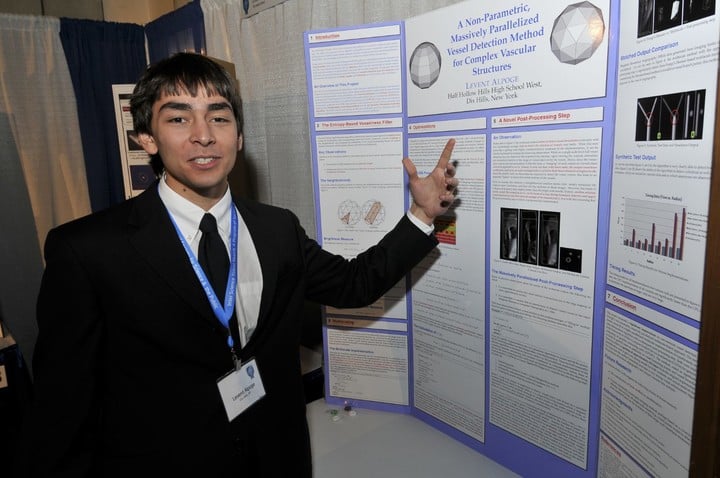
Claude's Riemann Hypothesis Proof Officially Certified by Lean, Musk Calls It an Amazing Achievement
2026-11-22 09:35
The Riemann Hypothesis, which has puzzled the human mathematics community for 167 years, has seen its latest development.
Just moments ago, the Lean and Mathlib communities issued a joint statement announcing the formal certification of the Riemann Hypothesis formal proof submitted by Anthropic mathematician Levent Alpöge, and expressing full confidence in its correctness.
From the mathematician himself announcing the result to the formal proof community publicly certifying it, the entire process took only one day.

More notably, Alpöge previously revealed that this research was completed in collaboration with the AI model Claude. As the proof approached its endpoint, the mathematical reasoning ability Claude displayed even exceeded his expectations.
On November 20, Alpöge published his research results on his personal website, claiming to have solved the famous Riemann Hypothesis, while also obtaining results concerning the Generalized Riemann Hypothesis.
The Riemann Hypothesis was proposed by German mathematician Bernhard Riemann in 1859 and is one of the seven Millennium Prize Problems announced by the Clay Mathematics Institute.
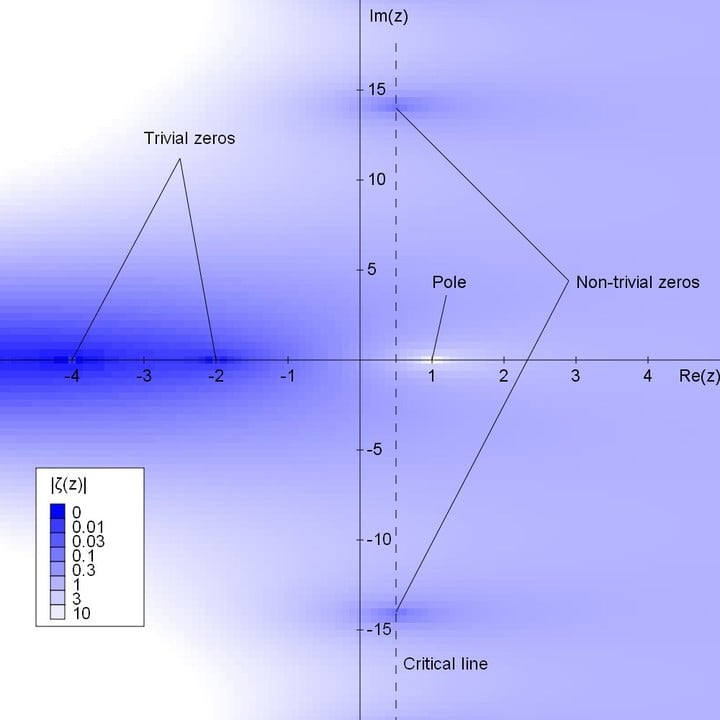
It concerns the distribution of the nontrivial zeros of the Riemann zeta function, with the core proposition being whether the real parts of all nontrivial zeros equal 1/2. Because this problem is closely related to the distribution of primes, countless mathematicians have attempted to conquer it over the past century and more, yet have never found a rigorous proof.
Musk also posted in amazement that proving the Riemann Hypothesis would allow a large number of mathematical conclusions previously dependent on the hypothesis to shed their conditional constraints and become unconditionally established theorems, calling it yet another amazing achievement of superintelligence.
Alpöge adopted a rather unusual method of releasing his results this time.
He had tried to have Claude organize the proof into a text version readable by humans, but the resulting draft exceeded 250,000 pages, so enormous that even he himself considered it difficult to read. Such an astonishing length was even jokingly dubbed by some netizens as a "DDoS attack" on the mathematics community.
Ultimately, Alpöge decided not to publish this text draft, but instead released a 4-page explanatory document, along with Lean formal proof code split into 14 compressed packages, totaling approximately 17 million lines.
Lean is an interactive theorem proving tool that can transform mathematical propositions and their reasoning processes into a form that computers can rigorously check. Researchers need to express complex mathematical logic as machine-verifiable code, and then a proof checker determines whether the reasoning conforms to the rules of formal logic.
However, faced with such enormous code, the question the outside world cares about most also arose.
Does the 17 million lines of code actually prove the Riemann Hypothesis, or did it merely let a computer complete a seemingly successful run?
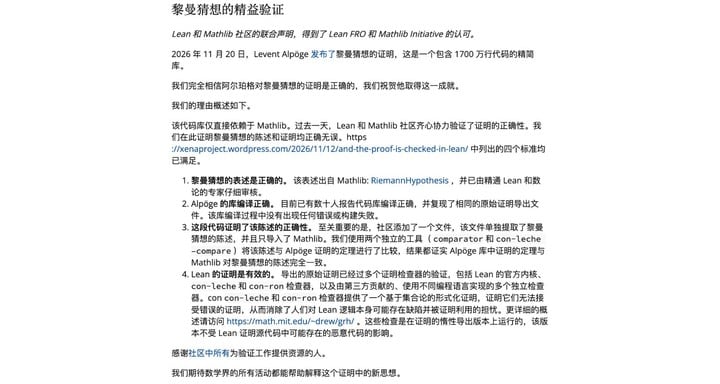
To answer this question, the Lean and Mathlib communities quickly organized a large-scale verification effort, with numerous community members participating in the review.
One key step was confirming that the mathematical proposition ultimately proved by the program was completely identical to the original conjecture. After all, even if the code runs successfully, it might ultimately prove a different problem due to subtle differences in definitions.
To this end, the community adopted the expert-reviewed definition of the Riemann Hypothesis in the Mathlib mathematical library, and specifically created an independent file, using two tools, comparator and con-leche, for comparison, ultimately confirming that the theorem proved by Alpöge was completely identical to the Riemann Hypothesis definition in Mathlib.
At the same time, dozens of community members successfully compiled the entire codebase and reproduced the same original proof export files.
Verification records published by MIT mathematician Andrew Sutherland show that the entire proof involves 175,187 modules, all successfully compiled, with zero errors.

However, code successfully compiling does not mean the mathematical reasoning within it is necessarily correct.
Therefore, the community further used the official Lean kernel, as well as proof checkers such as con-leche and con-ron, to review the exported proofs, while also introducing independent checkers developed by third parties and implemented in different programming languages.
Among them, con-leche and con-ron also possess formal soundness proofs relative to set-theoretic foundations, which can reduce the risk of logical flaws in the checking tools themselves. To eliminate potential code interference, the relevant checks targeted the exported static proof data, avoiding malicious programs in the source code affecting the results.
After the above checks, the Lean and Mathlib communities considered all four previously proposed verification criteria to have been fully met, and explicitly wrote in the joint statement: "We are completely confident that Alpöge's proof of the Riemann Hypothesis is correct, and we congratulate him on this achievement."
It is worth noting that the verification records published by MIT also involve five main theorems, covering the classical Riemann Hypothesis as well as generalized results for Dirichlet L-functions. However, this does not mean that the generalized problems corresponding to all types of L-functions have been resolved.
Compared with the results of technical verification, another issue that has drawn widespread attention is what role Claude actually played in this research.
In his initial statement, Alpöge revealed that the Riemann Hypothesis had always been a problem he hoped to solve since his student days. To conquer this problem, he accumulated relevant theoretical knowledge over the long term, and even prepared to devote decades of research to it.
But the addition of AI changed the course of the research.
According to his description, in the early stages of the research he mainly determined the direction himself, combining two different mathematical ideas and guiding Claude to explore mathematical contexts suitable for generalization.
As the work gradually deepened, the division of labor between the two also changed. Alpöge said that as the research approached its endpoint, Claude's derivation speed far exceeded his own, and some mathematical ideas even surprised him.
He also shared a specific example. When trying to generalize the Stepanov method, the research encountered the problem of how to simulate a certain multiplicity structure in the integer setting, and Claude proposed setting the chain length of theta lifts to √X.
Alpöge considered this suggestion to be one of the important ideas that drove the research forward.
Judging from the researcher's description, Claude has already gone beyond traditional auxiliary work such as literature retrieval and code completion, and begun to directly participate in the exploration and derivation of frontier mathematical problems.
MIT's verification records also show that the independent checking work used Claude Code. However, it is currently not possible to accurately quantify the proportion of contributions made by the human researcher versus the AI in the final proof, and the relevant mathematical innovations still await further clarification.
For the mathematics community, the certification of the formal proof is undoubtedly a major advance, but it also brings a difficult problem that few have had to face before.
Computers can rigorously check the logical relationships within tens of millions of lines of code, yet cannot directly explain to humans what new mathematical ideas are hidden within.
Alpöge himself also admitted that the current proof is too large in scale and extremely difficult to read. He hopes to greatly simplify the reasoning process in the future, organizing it into a traditional paper suitable for mathematicians to understand, discuss, and disseminate.
Fields Medalist Deng Yu also said, "I won't even look at it before there's at least a 500-page version," which sufficiently illustrates the pressure such an enormous proof places on human reading.
When the speed at which AI produces knowledge far exceeds humans' ability to understand knowledge, mathematicians may gradually be reduced to reviewers of AI, spending large amounts of time digesting machine-generated results. A new gap may also emerge between the pace of scientific progress and human cognitive capacity.