Newshot

Assume People Are Not Interested in Your Blog Post

Original text(via Hacker News)

If you do not write for other people, stop reading this now.

When I was at Snowflake, one of the coolest things that everybody did was this etiquette thing. The first sentence of each email would be “If you don’t develop in this specific part of the code, you can stop reading.” or “If you’re not part of the finance org, you can stop reading.”

This made me think a lot about what it means to write for other people. You need to be subservient to your audience. Similarly, thinking about how much space you take is very important. For Slack/Teams threads, you would start with a 3- to 5-line introduction to your topic, and then people could find more details inside the threads.
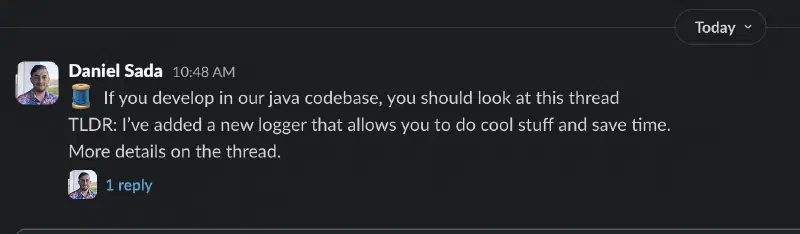
A short Slack message: “If you develop in our java codebase, you should look at this thread. TLDR: I’ve added a new logger that allows you to do cool stuff and save time. More details on the thread.” with one reply

When I see people writing 2,000 words with content about things that may not apply to everybody, it just makes me sad. Especially when they’re not brief enough. It’s a waste of your readers’ eyes.
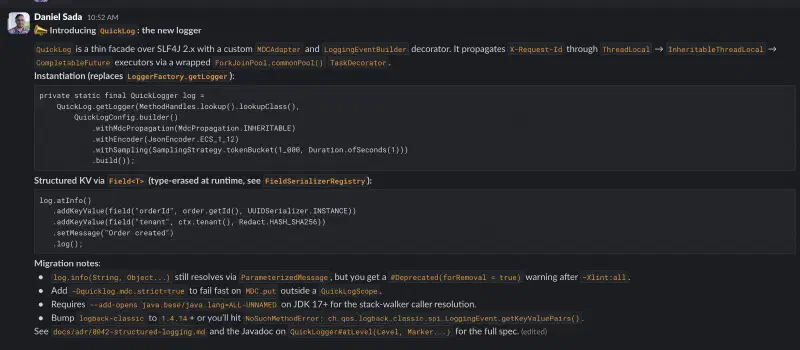
A long Slack message introducing QuickLog, a new logger, packed with code blocks, configuration flags and migration notes

So please be kind to your readers.

  • communication
  • engineering culture

Get my posts on your mail

When I write something new, sign up to hear more.

The text above was extracted automatically from the source page and may miss images, tables or code blocks. The original is authoritative.

Published by Hacker News
This site only summarises and aggregates; copyright stays with the original author. Headlines and summaries follow the source — where they differ, the original wins.
Read the original ↗