 Newshot
- EVs and Transportation
Which car has the largest infotainment touchscreen?
The biggest infotainment screen on the market keeps drivers and passengers connected.
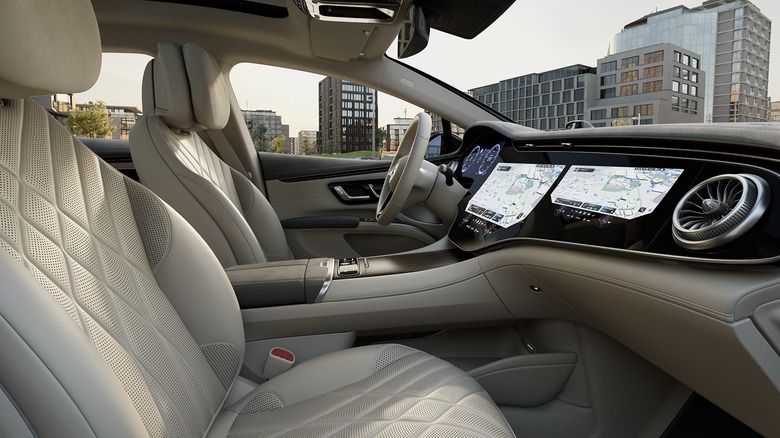
Car infotainment screens are huge right now — both literally and figuratively. New cars have overwhelmingly embraced Android Auto and Apple CarPlay-powered infotainment screens in place of physical buttons, using them to display everything from GPS navigation and music controls to backup camera feeds. As these screens' importance and functionality have grown, so have the screens themselves, with some reaching truly enormous proportions.
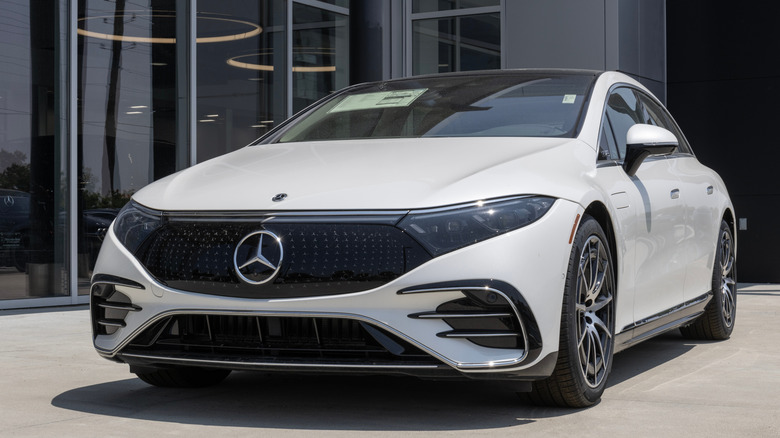
While most infotainment screens are embedded in the dashboard, the biggest screens instead take over the whole thing, stretching nearly from one side to the other. That's the case with the massive 56-inch screen of the Mercedes-Benz EQS 580 4MATIC, the biggest infotainment screen you can get in a car. Technically, it comprises three separate screens (one each in front of the driver's seat, center console and passenger seat), all of which sit under a single, dash-spanning glass panel.
How the Hyperscreen uses its enormous size
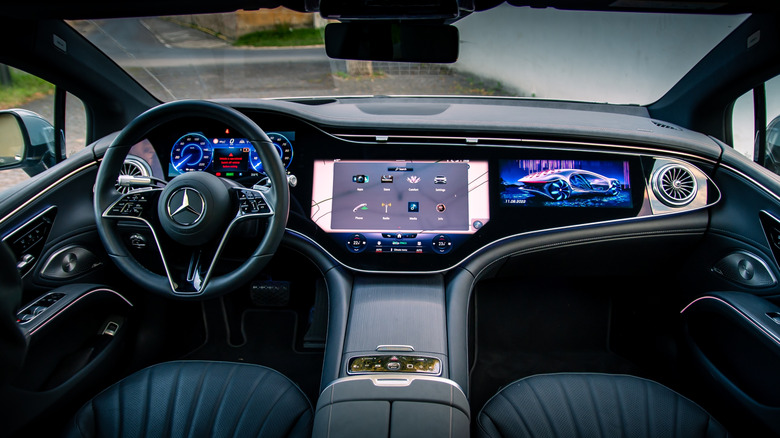
Dubbed the Hyperscreen by Mercedes, the panel packs a huge array of functions, putting standard controls like media volume alongside more specialized features. One of the touted benefits of its massive size is that the Hyperscreen can display every control a driver might need at once, meaning you won't have to scroll through menus to find one. The size lets the screen keep a map and media controls displayed at all times, but there's more to it than screen real estate: Mercedes-Benz also has what it calls a zero-layer interface, which changes the apps displayed at any given time based on factors like the time of day and which apps you use the most often.
The Hyperscreen's dashboard-spanning size also comes in handy by putting a screen right in front of the passenger seat. From there, the passenger can use the car's media features, including watching YouTube videos, without interfering with the driver's display. Passengers can also help navigate by looking up destinations and planning routes on their screen, then sending those to the main navigation display for the driver to follow.
Mercedes-Benz's OS offers seven configurable passenger-seat profiles, letting individual passengers set what appears on their screen by default. To reduce distracted driving, the passenger screen only works when someone is in the seat, and a built-in sensor dims or turns it off if it detects the driver looking at it.
Size isn't the only spec that matters for in-car controls
Whether all that screen real estate really helps when driving is an open question, though. While the Hyperscreen's size offers some advantages, it can also be a huge distraction, even with the automaker's attempts to stop drivers from staring at the passenger screen. And despite Mercedes' claims that its zero-layer interface will keep drivers from navigating complicated menus, some reviewers have found that the all-capacitive controls can be a pain to use in real-world conditions. Given its dash-spanning size, drivers also have to contend with the steering wheel obscuring some of the screen, which isn't a problem for smaller, center-mounted displays
Beyond those issues specific to the EQS 580, it also suffers from problems intrinsic to touchscreens, like their propensity for collecting fingerprints. Some drivers also find touchscreens harder to use than physical buttons, a problem that's multiplied with the EQS since the Hyperscreen replaces almost every physical control. There's plenty of impressive tech behind the Mercedes EQS 580, but bigger might not always be better for infotainment screens.