 Newshot
US Stocks Crash Overnight: Is the AI Bubble Really About to Burst?
2026-11-21 11:30
The years-long AI frenzy is now facing an unprecedented crisis of confidence.
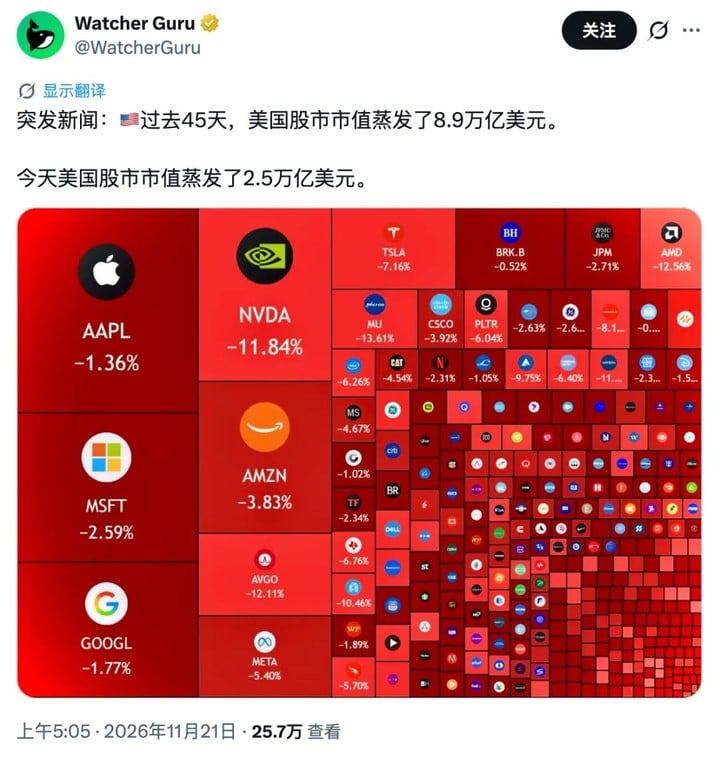
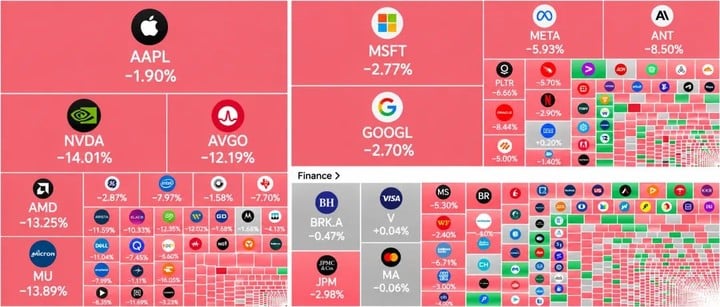
In the early hours of this morning, US stocks suffered a fierce sell-off, with tech stocks plunging across the board. The AI concept stocks that once underpinned the US stock bull market have now become the main force dragging down the entire market.
What is even more telling is that the US stock rout happened right after two major pieces of good news for the AI industry. One was the successful IPO of the world's most closely watched AI startup, and the other was a strong earnings report from the global leader in AI computing power. Yet the market seems no longer willing to pay for the AI growth story.
Let's first look at what an insane trading day unfolded in the early hours of this morning.
According to the final closing data published by Reuters, the Dow Jones Industrial Average fell 949.73 points, or 1.93%, to close at 48,147.33; the S&P 500 dropped 3.70% to close at 6,910.39; and the Nasdaq Composite plunged 5.28% to close at 22,617.73.
Among them, the S&P 500 fell for a seventh consecutive trading day, marking its longest losing streak since February 2020. Both the Dow and the S&P 500 have pulled back more than 10% from their previous record highs, officially entering technical correction territory.

Tech stocks performed even more brutally. The Nasdaq Composite hit an all-time high during the trading session from the evening of October 6 to the early hours of October 7 Beijing time, with year-to-date gains once reaching 18.7%. Yet in just over a month, all those gains were devoured by the market, and the index turned negative for the year.
According to CNN, since that peak, the Nasdaq Composite has shed approximately $8.7 trillion in market value.
Meanwhile, the Nasdaq 100, in addition to closing down 5.6% in the early hours of this morning, fell 10.4% for the full week, marking its worst weekly performance in more than six years and leaving it just one step away from a technical bear market, typically defined by a cumulative decline of 20%.
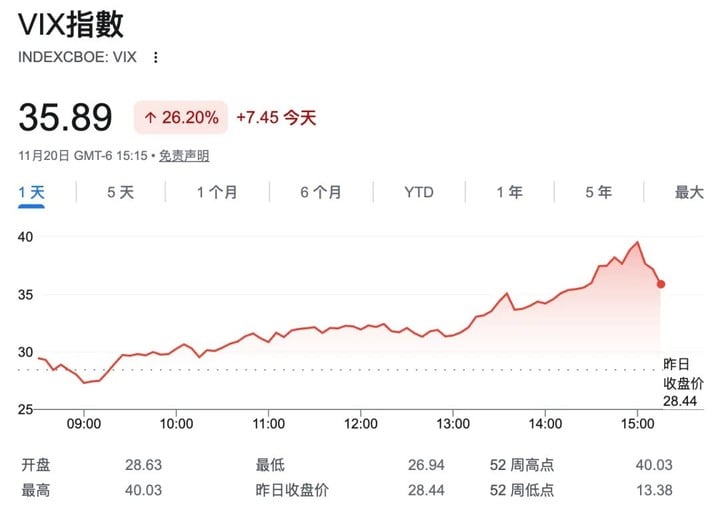
Panic is also spreading rapidly through US stock markets. The VIX, known as the market's "fear index," climbed sharply this week and last closed at 35.89, its highest level in about 19 months.
More noteworthy is that the decline has gone beyond a handful of tech giants.
The Philadelphia Semiconductor Index plunged 10.7% in the latest trading session, with SanDisk down about 16%, Micron Technology down about 14%, and Broadcom and Marvell Technology each falling about 12%. Even cloud computing companies that had once risen on AI computing demand were not spared.
CoreWeave, the AI cloud computing company backed by Nvidia, fell about 12% that day, with its share price dropping back to $39.51, even below its $40 IPO price when it went public in 2025. Another emerging cloud computing company, Nebius, fell about 16%.
A chief investment officer at a US hedge fund, in an interview with the Financial Times, described the market scene as looking like the end of the world. If the broad tech sell-off was surprising, what happened to Anthropic after its listing may be even more symbolic.
On the evening of November 19, Anthropic, the AI company behind Claude, officially listed on Nasdaq under the ticker ANT. The IPO was priced at $83 per share, and first-day trading was warmly received, eventually closing at about 17% above the IPO price in the early hours of November 20 Beijing time.

However, the capital market's enthusiasm lasted only one trading day.
By the early hours of November 21, Anthropic's share price fell sharply, eventually closing at $88.91 per share, only about 7% above the IPO price, giving back almost all of its first-day gains.
Previously, the market had hoped that Anthropic's mega IPO could serve as an important catalyst to boost confidence in the AI sector and help tech stocks escape their recent prolonged slump.
But the actual outcome was the exact opposite. Chuck Carlson, CEO of Horizon Investment Services, acknowledged in an interview with Reuters that many investors, including himself, had expected Anthropic's listing to become a turning point in market sentiment, but that expectation ultimately proved unfounded.
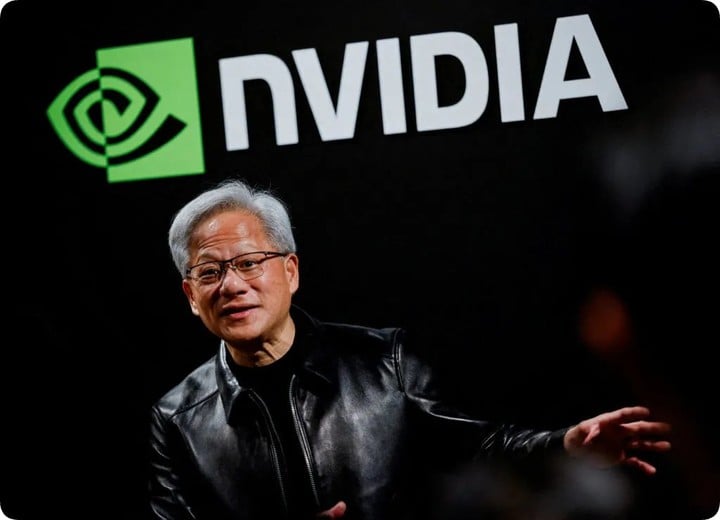
Compared with Anthropic, which has just entered the capital markets, Nvidia's situation may be even more severe.
As one of the biggest beneficiaries of the AI investment boom over the past few years, Nvidia has long been regarded as the most important bellwether of the entire AI supply chain. Global tech giants building data centers, training large models, and expanding AI computing infrastructure all ultimately translate into massive demand for Nvidia chips.
But now, the market confidence supporting Nvidia's high valuation is being hit from multiple sides.
In the early hours of this morning, Nvidia's stock plunged about 14%, its biggest single-day drop in nearly two years, and fell about 23% for the full week, marking its worst week since October 2008.
Measured from the high during the trading session from the evening of October 6 to the early hours of October 7 Beijing time, Nvidia's stock has fallen about 47.5% cumulatively, wiping out as much as $2.7 trillion in market value. Nvidia's crisis first stems from a series of negative developments involving the company's management.
Previously, Jensen Huang left the position of Nvidia CEO due to an extramarital affair scandal. As the related events continued to unfold, the company's corporate governance and management credibility came under market scrutiny.
At the same time, according to Reuters, the US Securities and Exchange Commission is investigating Nvidia's accounting practices, further intensifying investor concerns about the company. As of the time of the report's publication, Nvidia declined to comment, and the investigation has not yet produced any public conclusions.
Jones Trading strategist Mike O'Rourke noted that Jensen Huang and Nvidia are almost synonymous with the entire AI infrastructure buildout boom. When investors begin to doubt the transparency and credibility behind that symbol, confidence across the entire market is shaken.
But what confuses many investors even more is that Nvidia's fundamentals have not deteriorated as dramatically in tandem.
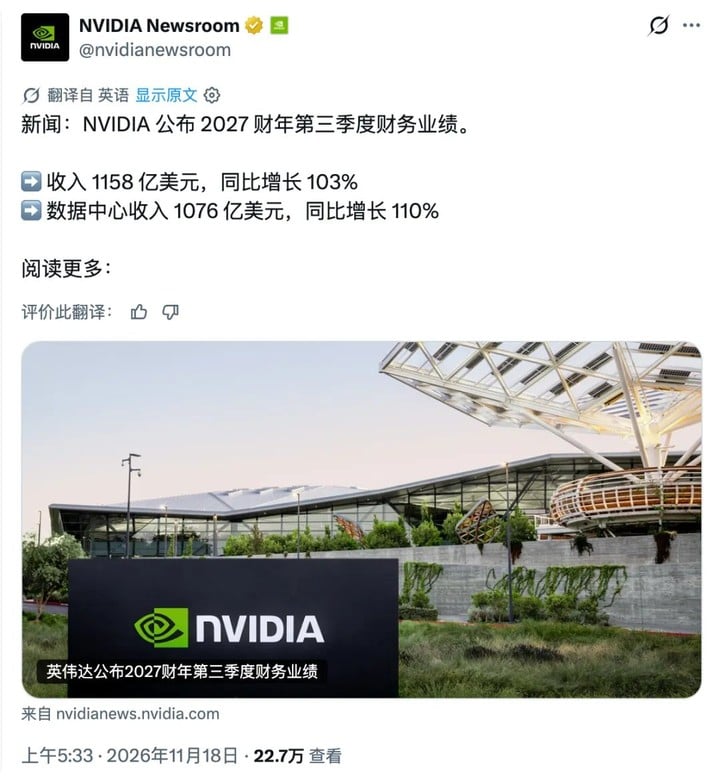
Just this week, Nvidia delivered a strong quarterly earnings report. Yet the impressive results ultimately failed to prevent the stock from plunging. Two major events that should have injected confidence into the AI industry ultimately failed to become turning points for the market.
From Anthropic's cold reception after listing to Nvidia's earnings losing their effect, and then to the collective plunge across the semiconductor sector, these events all point to the same question: when exactly will the hundreds of billions of dollars that tech giants have invested in AI over the past few years be earned back?
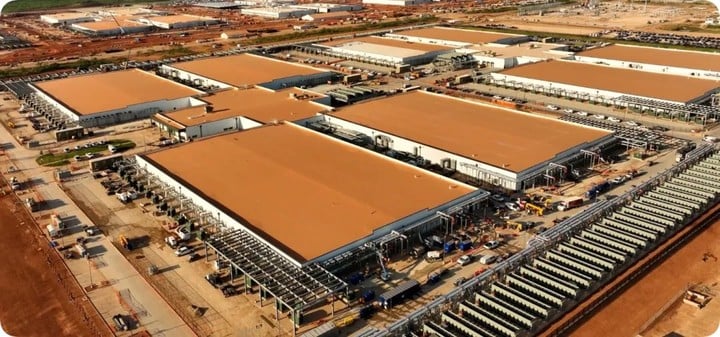
For a long time, AI has been an important growth narrative supporting US stock gains. Tech giants such as Microsoft, Google, Amazon, and Meta have continuously expanded capital expenditure, purchasing GPUs, building data centers, and training more powerful models, driving sustained share price gains for chip, storage, server, power equipment, and cloud computing companies.
The capital market once believed that as long as AI's technical capabilities continued to advance, demand for related infrastructure would keep growing. The problem now is that the pace of buildout and the scale of investment have become quite staggering, while commercial returns remain uncertain.
In particular, as tech giants begin to use more debt financing to support AI infrastructure buildout, investors are not only worried about future profitability but also about whether the enormous funding needs can continue to be met.
The Financial Times noted that the market's feverish enthusiasm for AI is rapidly turning into deep anxiety about the massive capital expenditure and financing scale of tech giants.
Faced with the worst tech stock sell-off in six years, US investment institutions have not formed a unified judgment.
David Kelly, chief global strategist at JPMorgan Asset Management, noted that after the sharp gains of the past few years, a technical correction in US stocks is not surprising. He even used a cold as a metaphor, suggesting the current market may just be a mild cold that does not necessarily signal a more serious systemic problem.
Arun Sundaram of CFRA Research also said he finds it difficult to fully explain the current ferocity of the sell-off based on corporate fundamentals, because investors appear to have entered a state of selling first and considering fundamentals later.
It is worth noting that investors' panic over AI has even spread to prediction markets.
Just as tech stocks were plunging across the board, Polymarket data showed that the predicted probability of "the AI bubble bursting by the end of 2026" suddenly surged to 62%. Although trading probabilities in prediction markets cannot prove that the bubble has already burst, they at least reflect that some market participants' confidence in the AI investment outlook is rapidly wavering.

Looking back at the AI boom of the past few years, the capital market has consistently been willing to pay hefty premiums for stronger models, larger data centers, and ever more massive computing power investments.
However, if the commercial returns of AI continue to lag behind the pace of capital investment, how much of the growth expectations priced into stock prices ahead of time over the past few years can actually be delivered? Historically, the railway, electric power, and internet revolutions were all accompanied by capital frenzy and bubble bursts.
Even after the dot-com bubble burst in 2000, the internet still profoundly changed the world over the following two decades. AI may also be approaching a similar historical juncture: the technological revolution continues, but public markets have already begun to reprice it.
After all, even if AI is destined to change the world, that does not mean every penny paid for it today will be rewarded in the future.
*Investing carries risk; this article does not constitute investment advice