 Newshot
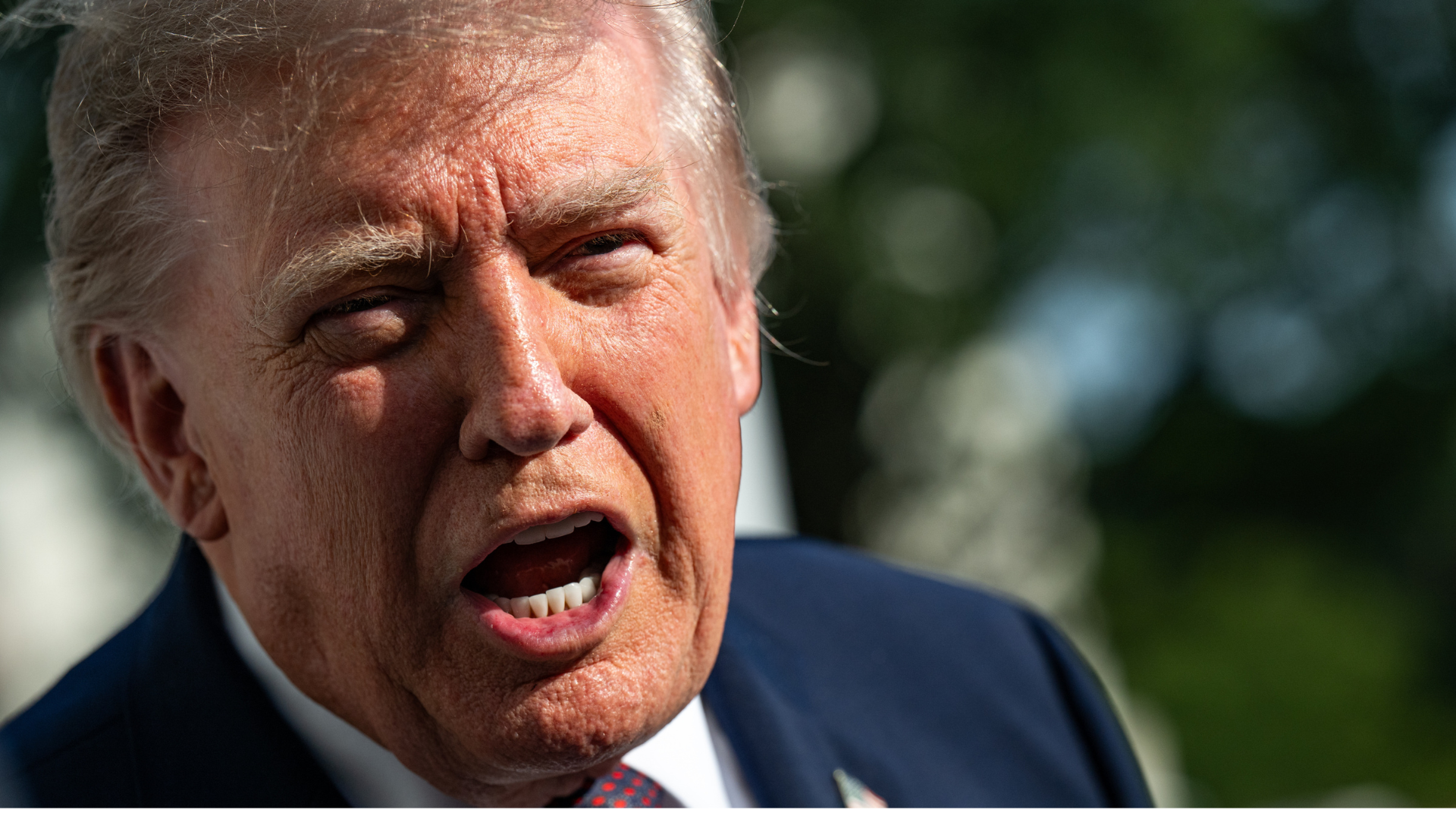
President Donald Trump, who has been pushing for AI development in the U.S., said that he wants to prevent U.S. companies from building data centers in other countries or charge them with a “tremendous tax” if they push ahead with their overseas plans. The move comes as a surprise, Trump said, as he hasn’t even discussed the proposed policy with his cabinet and advisors, reports Axios.

- The data center cooling state of play
- The custom AI ASIC state of play
- America’s AI chip rules keep changing — and the rest of the world is paying the price
- GTC 2026: Ian Buck press Q&A transcript — VP of Hyperscale and HPC speaks out on shelving CPX and shipping LPU decode this year
- Demand for data center CPUs has surged, and AI agents are responsible
“They’re making so much money they don’t know what to do with it,” the U.S. president said. He added that Americans should negotiate with AI hyperscalers that want to establish data centers in communities, as they could help reduce costs and taxes. “They have plenty of money. Take it,” Trump added.
Several states and jurisdictions have started implementing similar solutions, with one Pennsylvania town listing 43 specific demands to approve an AI data center, while New York State recommended the municipalities demand a $1 million community investment per megawatt. Some developers embraced this, with one offering $10,000 per household if its 1,3000-acre facility gets approved, while Elon Musk’s SpaceX is buying out 418 homes near its flagship AI data center.
This is going to be an issue for many Americans, though, especially as AI data center measures put forward in the recently concluded mid-term elections have been comprehensively defeated. In fact, data center moratoriums have already surged past 500 across the U.S., making it harder for developers to push forward with their projects.
One possible reason Trump is considering a ban on overseas data centers for U.S. companies is that Chinese AI labs have been exploiting a loophole in U.S. law. This technicality has allowed them to export data to overseas data centers that use AI chips banned for export to China, like Nvidia’s Blackwell and upcoming Vera Rubin chips. “We’re not allowing data centers to go into other countries because China will take all of them, and we’re not allowing that to happen,” Trump said.
The U.S. House of Representatives passed the Remote Access Security Act (RASA) in January 2026 to close the workaround, but the bill has been in limbo in the Senate since then. The U.S. Bureau of Industry and Security (BIS) is also taking steps to prevent this, with Nvidia warning its clients that their customers should be at least 51% not from China to avoid legal exposure.
Another question is how the Trump administration will implement its “tremendous tax.” Congress is the only federal body with the constitutional power to impose taxes, and with the opposing party controlling both the House and the Senate, it would be doubly hard for the White House to implement its legislative priorities without serious concessions.
Get Tom's Hardware's best news and in-depth reviews, straight to your inbox.
Finally, there’s the issue of data sovereignty and latency. U.S. companies would build data centers in foreign countries because some governments demand that their data remain within their territory. So, if Washington proceeds with the ban, American tech companies could potentially lose this market. Aside from that, keeping data centers in the U.S. would result in longer latency and slower responses, making it harder to serve customers located on the other side of the globe.

Download the Tom's Hardware app for up-to-the-minute updates on iOS and Android. Also follow Tom's Hardware on Google News, or add us as a preferred source, to get our latest news, analysis, & reviews in your feeds.

Jowi Morales is a tech enthusiast with years of experience working in the industry. He’s been writing with several tech publications since 2021, where he’s been interested in tech hardware and consumer electronics.