 Newshot
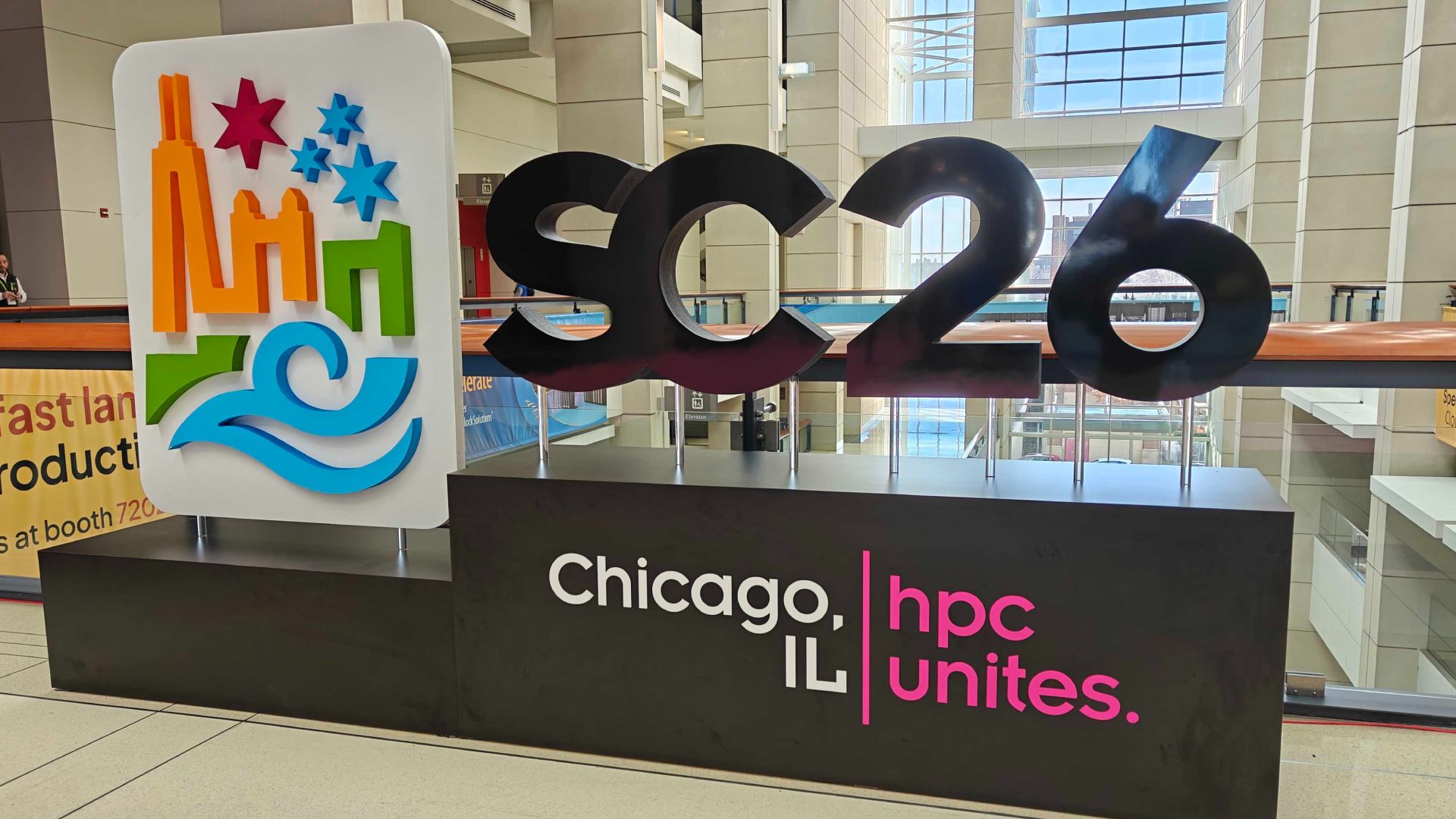
In case you're worried about missing out on all the goodness on Tom's Hardware Premium, we've rounded up everything that we've published this week right here. The main theme for this week has been coverage straight from the show floor at the annual Supercomputing conference (SC26). If you've not yet caught up, you've been missing out, as all of our coverage from the conference is currently free to access. All you need to do is sign up or log in to your Tom's Hardware account to enjoy all of our coverage from the show.
First up, our resident CPU boffin, Jake Roach, has been on the show floor all week, offering us a direct line to all the goings-on at the conference, including an interesting back-and-forth from Nvidia and AMD on their CPUs. AMD claims that its latest EPYC Venice lineup is the best at agentic workloads, while Nvidia's marketing material characterized Nvidia's Vera CPU as being purpose-built for Agentic AI. At SC26, Nvidia CPU chief Ian Finder rebuked Nvidia's own marketing material, stating that the idea that Nvidia could have predicted the Data Center moment was "absurd," instead saying that the company's design know-how helped them develop the processor.
In this interview, we sit down with Finder to find out how Vera came to be, what agentic workloads mean for the CPU industry, and where Nvidia's headed next.
- Nvidia says it’s ‘absurd’ to assume it predicted the agentic moment during Vera’s development – ‘product intuition’ helped drive CPU design, superior memory bandwidth will play critical role in future AI agents, CPU boss claims
Nvidia's Vera CPU was a hot topic at SC26, as the company explained that existing software cannot always take full advantage of the processor without architecture-specific optimization. The company showed that under some workloads, Vera's performance can be optimized by up to 39% when taking its Olympus-based Arm cores into account. However, it remains to be seen how much performance can be gained from Olympus-specific hardware optimization workloads other than matrix multiplication.
- Nvidia claims its Vera CPU can gain up to 39% performance boost via software optimization at SC26 — architectural fine-tuning is needed to fully unleash custom Olympus cores
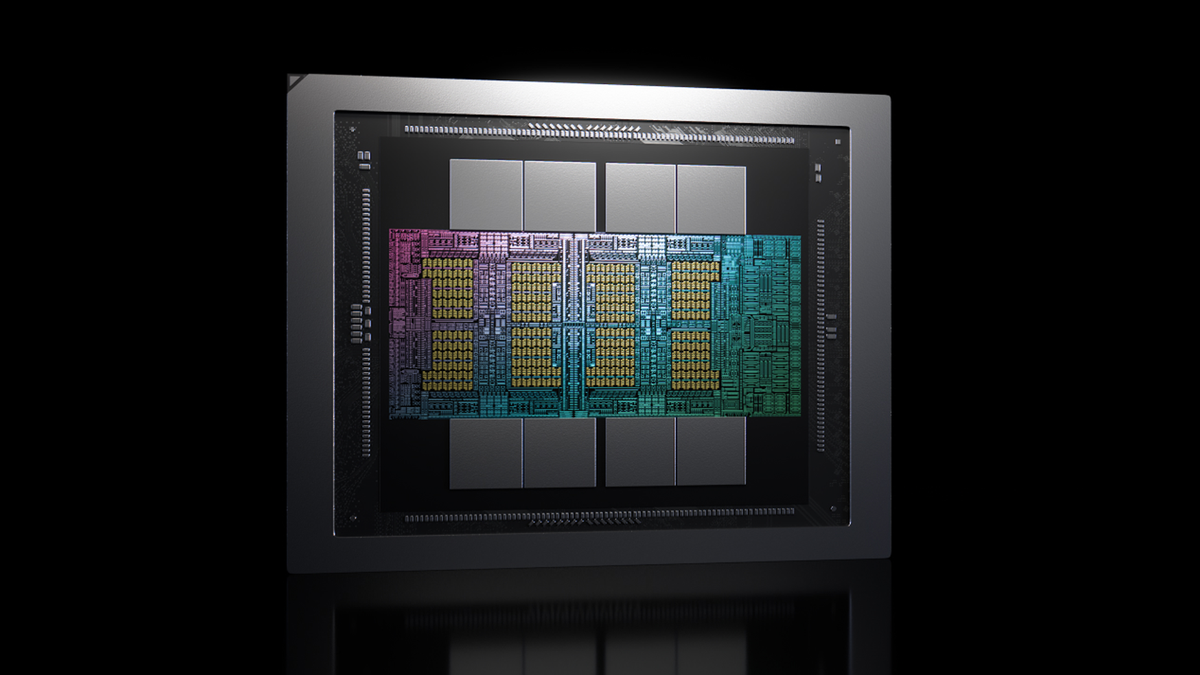
Nvidia also announced a Rubin GPU variant, named Rubin HPC, a chip that the company claims is purpose-built for agentic workflows and scientific simulations that demand processing large datasets. While technical details remain scant, Nvidia says that Rubin HPC sports over 50,000 CUDA cores, or slightly below double the number of cores present in the standard-issue Rubin GPU. We explored all the details and possibilities that the newly announced chip might offer.
- Nvidia announces Rubin HPC GPU with 'record number of CUDA cores' at Supercomputing 2026 — new chip accelerates agentic HPC workloads, arrives in 2028
AMD is now featured in over 40% of the new TOP500 list of supercomputers, with a 14% boost to the company's position. Leading the company is Lux, a supercomputer developed in conjunction with the U.S. Department of Energy. The second supercomputer, Discovery, is expected to debut in 2028, sporting a suite of EPYC CPUs and Instinct accelerators.
Within the TOP500, not much has changed... at the top, with the top 10 systems remaining unchanged, as China's LineShine system in Shenzhen remains at the top of the list, with El Capitan remaining second. We take a look at the entire list and how the focus has seemingly shifted toward AI compute capacity. While the demand for HPC hardware is at an all-time high, it appears as though the vast majority of that hardware isn't being tested against the TOP500 benchmark.
Get Tom's Hardware's best news and in-depth reviews, straight to your inbox.
- AMD grabs over 40% of new TOP500 list for supercomputers, up 14% since last year — new Lux system developed between AMD and Department of Energy debuts at no. 14 with EPYC CPUs and Instinct MI355X GPUs
- China retains fastest supercomputer in the world crown as AI data centers soak up new hardware — Top500 records fewest new systems in 33 years
Despite AI clusters seemingly eating up compute capacity, AMD recognizes that the burgeoning segment will never wholly replace HPC computing, and that high-precision workloads will continue to be necessary. AMD's Scott Tease further suggested that building a heterogeneous compute stack would be the best path forward for tackling complex research problems. This point dovetails nicely into how AMD additionally touted that its MI430X's native FP64 operations will beat out emulated support for the full-precision data types seen in Nvidia's hardware. This is notable, as the company claims that Ozaki FP64 emulation could have cascading effects on memory usage, which is in notorious levels of undersupply.
- Researchers ‘recognize that AI will never replace HPC,’ says AMD executive — high-precision workloads will ‘exist for a very long time’ even as AI usage expands
- AMD attacks Nvidia's FP64 emulation at SC26, touts native double-precision on Instinct MI430X — says Ozaki schemes fit less than 10% of HPC workloads and triple memory use and emulated FP64 is a poor fit for many HPC workloads
Not wanting to be left out of the conversation, Intel's next-generation Diamond Rapids CPUs surfaced at SC26, but not from Intel itself, curiously. On the ground, we saw the chips turn up at the CXL booth and at Bull, where the CPU was shown installed in a server. While there were no demos available, the company did show off demos for Xeon 6+ and its Crescent Island GPU.
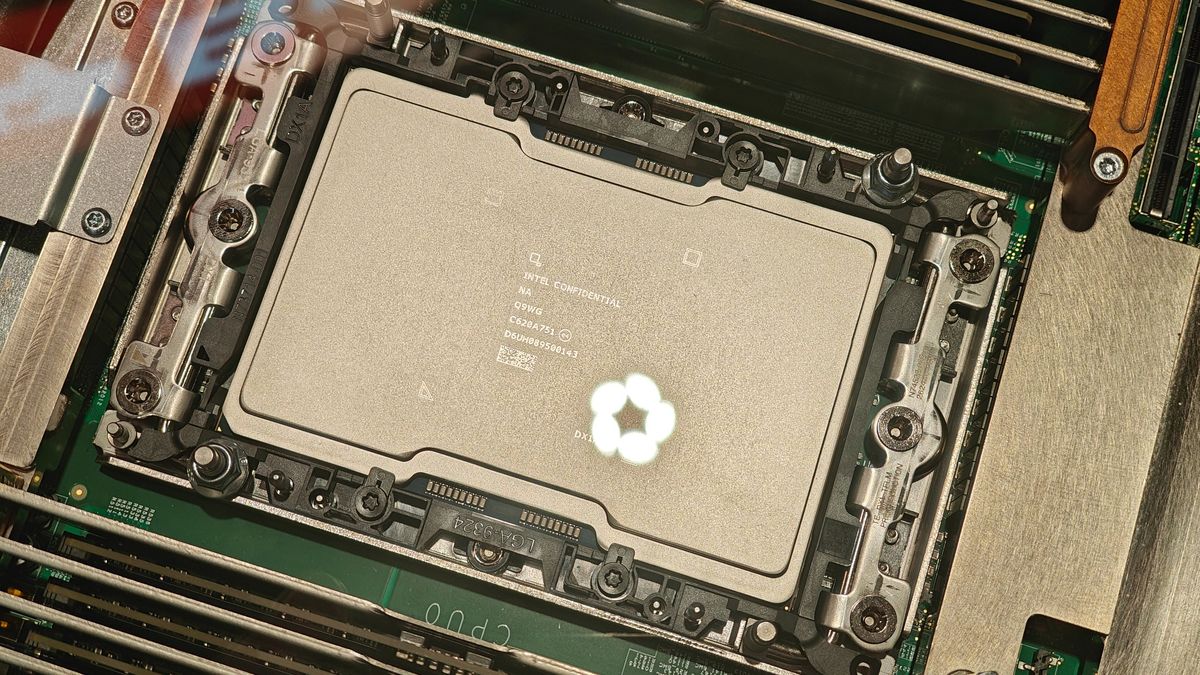
- Intel Diamond Rapids shows signs of life in SC26 demo running live server — next-gen Xeon 7 CPU breaks cover at partner booths, no showcase from Intel
Elsewhere at the show, PCI 6 devices and controllers have started to surface. First, Silicon Motion's SM8466 controller was demoed at the show, armed with PerformaShape 2, which increases the number of quality-of-service sets from 256 to 512, alongside additional boons.
Elsewhere, Phison detailed two new enterprise SSDs: one that comes with a built-in NPU and 64GB of memory, and another that is set to merge pSLC cache, with high QLC capacity on a single controller. We explore what makes these devices notable and why, though the company itself notes that the devices are very much still in development.
- Silicon Motion demos SM8466 PCIe 6.0 SSD controller, expected to ship by 2028 — controller boasts improved quality of service, samples imminent
- Phison details SSD with a built-in NPU and 64GB of 130 GB/s memory to run PyTorch and llama.cpp on-drive — claims up to 100x less data transfer alongside new mixed media pSLC and QLC design
VAST Data explained how petabyte-scale SSDs will outgrow the tried and true RAID parallel filesystems, according to a simulation the company ran on its own 900 PB system, which puts the odds of data loss at a staggering 1 in 11 over a decade. We explain all in detail about how it works.
- VAST Data says petabyte SSDs will outgrow RAID in today’s parallel file systems — simulation of a 900 PB system puts data-loss odds at 1 in 11 over 10 years
As enterprise hardware and the titanic growth of AI superclusters push the limits of our existing material infrastructure, from interconnects to grid energy and raw materials, researchers from The Ohio State University discussed how high-performance networking could soon scale across entire regions. We explore how faster networking connections could spell a future where distributed computing systems communicate across vast distances.
- Power and cooling limits force AI clusters with 100,000+ accelerators to use multiple data centers — Google, Cisco, and Marvell target ‘scale-across’ networking across regions
While we have a few more articles waiting to be published from SC26, we've also been hard at work publishing stories from other corners of the industry. To read these, you'll need to first arm yourself with a Tom's Hardware Premium subscription.

This week, Anthropic debuted on the NYSE, but the frontier AI lab's debut is also colored by the backdrop of what seems like an endless barrage of new vulnerabilities, hacks, and AI-powered action by would-be malfeasants. The conversation around AI safety, sparked by OpenAI's HuggingFace incident, is also being used as a Trojan horse for safety legislation, and against this backdrop, we explore how the companies shaping AI safety might also be the ones warning against using competitors, like capable Chinese open-weight AI models.
- AI safety legislation has a conflict-of-interest problem — Big US labs are warning of risk just as cheaper Chinese open-weight models erode their commercial edge
Anthropic has also been busy bringing up more compute resources, notably publishing how it managed to get its Claude Mythos model to optimize its software stack to work with AMD Instinct hardware in around three days, with little human oversight. What once was a relentless task that took significant man-hours, an AI can now help complete in mere days. Such a feat could endanger Nvidia's highly lucrative CUDA moat, as AI continues to transform the hardware landscape.
- Anthropic says Claude Mythos slashed software work to onboard AMD GPUs from up to 12 months to around three days —writing almost 100% of kernels autonomously chips away at Nvidia's CUDA moat
Intel's acquisition of Quantum computing company Classiq is expected to be completed in the first half of 2027, and following it, Intel is poised to have a chance at becoming the first full-stack quantum computing vendor. The company also plans to manufacture quantum processors on its 18A process, offer foundry services, and eventually sell quantum computers.
- Intel bets on Classiq acquisition to turn Quantum efforts into commercially viable business — deal positions company as leading vendor of qubit chips, acquisition to close by the first half of 2027
An unmanned chip fab might be an unthinkable future today, but it's a future that chipmakers are already planning for. SK hynix, Samsung, and Micron, known rivals in the memory industry, have formed a body to standardize robotic charging, with the aim of having robots from different manufacturers share equipment and therefore cut the costs and complexity of deploying fleets of robotic workers.
- Samsung, SK hynix, and Micron form unlikely alliance to standardize robot charging as chipmakers push toward unmanned chip fabs — standard specs would allow manufacturer-agnostic charging equipment

Don’t miss out on this Tom’s Hardware Premium. Get a full year of access for just $29, or from $7 per-month. Get daily news analysis, deep dives into specialist topics in the semiconductor industry, as well as access to Bench, the largest benchmarking database around.
To read any of the articles we mention above, as well as unlock Bench, you'll need to purchase a Tom's Hardware Premium subscription. Your support goes a long way in helping us to publish deeper, more insightful articles that might not otherwise be covered.

Sayem Ahmed is the Subscription Editor at Tom's Hardware. He covers a broad range of deep dives into hardware, both new and old, including the CPUs, GPUs, and everything else that uses a semiconductor. He has worked as a professional tech journalist since 2015 and has written for Gamespot, IGN, and Dexerto.