 Newshot
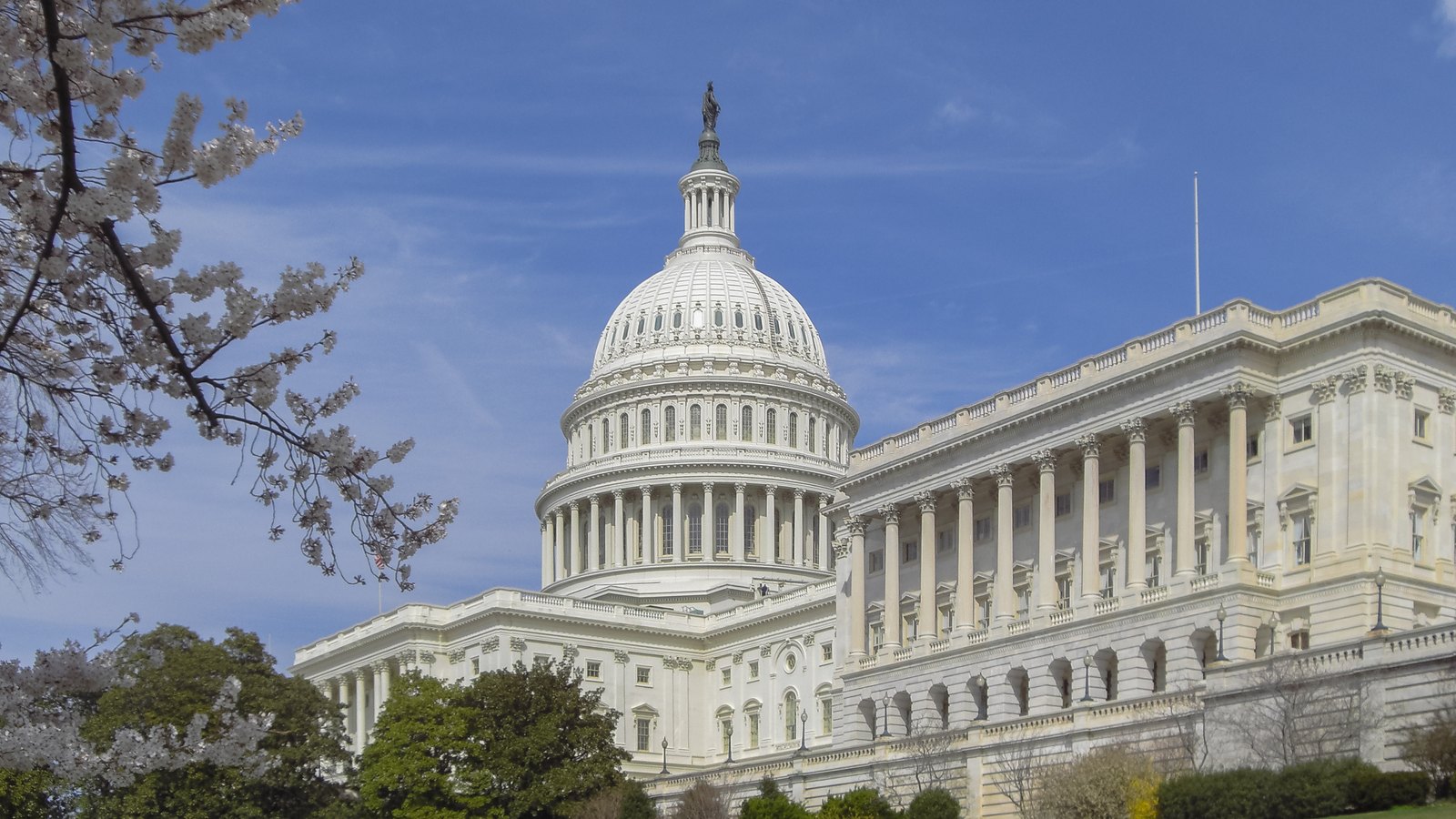
On November 20, 2026, the U.S. House Committee on Homeland Security and the House Select Committee on the Chinese Communist Party released a joint investigative report urging the exclusion of Chinese-developed open-weight artificial intelligence models from federal systems and critical infrastructure, revealing that SpaceX-owned AI coding developer Cursor is actively exploring phasing out People’s Republic of China base models such as Moonshot AI’s Kimi K2.5 to mitigate geopolitical supply-chain risks across research and enterprise software pipelines.
Congressional investigation flags PRC open-weight AI models
House Committee on Homeland Security Chairman Andrew R. Garbarino (R-NY) and House Select Committee on China Chairman John Moolenaar (R-MI) released the 50-page joint report following a bipartisan inquiry launched in April 2026. The probe examined how U.S. software platforms integrate foundation models developed in the People’s Republic of China (PRC), including weights from Alibaba, Moonshot AI, DeepSeek, and MiniMax.
Open-weight models distribute numerical parameters publicly for download, allowing organizations to run and fine-tune systems locally without ongoing commercial API dependencies. However, congressional investigators found that this accessibility has enabled widespread adoption across the domestic economy, introducing unvetted cybersecurity, data-governance, and geopolitical vulnerabilities into critical infrastructure.
The report singled out Anysphere, the startup behind the Cursor code editor acquired by SpaceX in August 2026. According to the committees, Anysphere built Composer 2—Cursor’s flagship programming model—directly on Moonshot AI’s Kimi K2.5 base weights before conducting code-specific pretraining and reinforcement learning. In response to congressional inquiries, Anysphere confirmed it plans to explore phasing out PRC-developed open-weight models to neutralize geopolitical risk, though no formal replacement timeline has been established.
Independent reporting from The Record noted that committee chairs received direct briefings from Anysphere, Airbnb, and DoorDash. Lawmakers warned that foreign open-weight adoption mirrors earlier telecommunications risks, when hardware from Huawei and ZTE required multi-billion-dollar federal remediation.
Enterprise exposure extends across consumer and corporate platforms. Airbnb informed investigators that customized Alibaba Qwen models power customer assistants handling 80,000 daily interactions, alongside fine-tuned models summarizing 250,000 support calls each day. DoorDash reported deploying 25 Chinese model families across internal systems for non-trivial workloads exceeding $5,000 in serving expenses, estimating that replacing deeply embedded foundation models could take up to six months.
Key investigation findings and token cost disparities
The inquiry identified significant market pressures driving American developers toward Chinese open-weight architectures: substantial cost advantages, open customizability, and near-frontier benchmark parity. While proprietary U.S. frontier systems achieve strong reasoning scores, commercial API pricing creates acute budget barriers for high-throughput enterprise and research workloads.
Reporting from AI Weekly highlighted that Chinese open-weight models offer hosted inference from $1.15 to $4.95 per million tokens, compared to $30.00 to $35.00 per million tokens for proprietary U.S. frontier models. For developers and research labs processing millions of queries daily, this tenfold to thirtyfold price gap creates strong incentives to adopt foreign open weights over commercial APIs.
| Model | Developer | Architecture Type | Approximate Cost per 1M Input+Output Tokens |
|---|---|---|---|
| Qwen3-235B-A22B-Instruct | Alibaba Cloud | Open-weight mixture-of-experts | $1.15 |
| DeepSeek-R1 | DeepSeek AI | Open-weight reasoning | $2.74 |
| Kimi K2.6 | Moonshot AI | Open-weight long-context | $4.95 |
| Claude Opus 4.8 | Anthropic | Closed proprietary API | $30.00 |
| GPT-5.5 | OpenAI | Closed proprietary API | $35.00 |
Investigators emphasized that hosting foreign open-weight parameters on domestic servers mitigates direct telemetry to overseas servers, but fails to remediate intrinsic supply-chain risks. Base model weights retain immutable mathematical representations shaped during pretraining, including alignment vulnerabilities and latent triggers that standard AI output verification tools and post-training guardrails struggle to detect.
Model distillation, supply-chain risks, and earlier federal restrictions
A central finding of the inquiry addresses model provenance. Drawing on classified intelligence briefings, the committees reported that major Chinese AI developers systematically advanced their systems through unauthorized model distillation. Chinese developers established distributed proxy networks and fraudulent commercial accounts to extract reasoning traces from leading American frontier systems, replicating advanced reasoning behaviors while bypassing extensive foundational compute investments.
The report notes that Chinese-developed open-weight models expanded from roughly 1% of global public AI workloads in late 2024 to approximately 30% by late 2025. The findings build upon earlier federal actions, including an October 2026 Department of Homeland Security directive excluding DeepSeek software from federal civilian procurement, and a September 2026 joint advisory by the NSA, CISA, and the FBI warning of industrial-scale distillation campaigns targeting domestic AI developers.
The proliferation of dual-use weights also complicates existing export control and AI rules. While federal export controls historically targeted physical semiconductors, unconstrained open weights allow overseas entities to distribute capabilities directly across global networks.
Reactions from lawmakers, industry platforms, and cybersecurity experts
In the report’s foreword, Chairmen Garbarino and Moolenaar cautioned that federal officials and commercial executives cannot overlook the systemic risks of foreign open-weight dependence:
“From Silicon Valley startups to Fortune 500 companies, American businesses are increasingly adopting PRC-developed open-weight models because they are inexpensive, customizable, and competitive with leading American systems… While America is investing billions and racing to build ‘Super Intelligence,’ Beijing is using stolen intelligence to close the gap. We should not wait five years to discover that much of the world runs on AI shaped by the CCP, leaving policymakers with little choice but another costly rip and replace effort.”
An analysis by Unite.AI observed that while Anysphere’s exploratory pivot signals growing awareness of geopolitical risk, migrating high-performance coding tools away from Kimi K2.5 presents practical difficulties. Removing foreign open-weight models without viable domestic open-weight substitutes risks inflating operational expenses and concentrating market power among a few proprietary API providers.
Implications for academic research labs, universities, and compliance offices
The congressional recommendations carry immediate compliance and operational consequences for higher education institutions, academic medical centers, and university research facilities:
- Model Provenance and AIBOM Standards: Lawmakers recommend that NIST establish a standardized AI Bill of Materials. Academic labs performing federal contract work will need to document foundation model lineage, training datasets, and distillation sources within computational pipelines.
- Federal Contract Disqualifications: Proposed statutory rules would bar PRC-developed open-weight models—including derivatives of DeepSeek, Qwen, Kimi, and MiniMax—from federal contract deliverables and sensitive defense research.
- Research Security Oversight: Academic compliance offices and campus research security officer personnel must update software inventories to ensure researchers do not deploy restricted foreign open weights on computing clusters handling export-controlled or sponsored data.
- Grant Funding Compliance: Federal cybersecurity grant funds, including state and local resilience allocations, would be legally barred from subsidizing the acquisition or cloud hosting of Chinese-developed model architectures.
- Institutional Governance Alignment: Compliance teams must integrate foundation model vetting into institutional research security frameworks to maintain strict boundaries between open exploratory research and federally restricted programs.
Next steps, legislative milestones, and proposed implementation timelines
The joint report outlines 12 core policy recommendations that lawmakers plan to advance through legislative vehicles in early 2027:
- National American Open-Weight AI Initiative: Establish a coordinated federal program pooling public supercomputing resources to support trusted domestic open-weight models.
- Global Standards Leadership: Work with international partners to position transparent American and allied models as the baseline for public-sector procurement.
- Provenance and AIBOM Schemas: Direct NIST to finalize machine-readable provenance requirements for federal contractors and critical infrastructure operators.
- Statutory Procurement Restrictions: Codify prohibitions on PRC models across federal information systems, with narrow waivers for defensive evaluations.
- Developer Threat Channel: Authorize threat-sharing mechanisms between AI laboratories and cybersecurity agencies to detect unauthorized distillation.
- Single Sector Partner: Designate an accountable federal agency within the Information Technology Sector to conduct systematic evaluations of foreign models.
- Machine-Speed Defense: Provide DHS and CISA with computational capabilities to counter autonomous cyber threats operating at machine speed.
- Incident Reporting Intake: Establish CISA as the single intake point for AI-related cyber incident reports and authorize an independent safety review board.
- Accountability for Illicit Distillation: Enact civil and criminal penalties targeting proxy networks that extract intellectual property from domestic models.
- Training Data Restrictions: Restrict commercial bulk sales of sensitive American datasets to foreign AI laboratories.
- Balanced Dual-Track Governance: Calibrate regulations to address proprietary and open-weight models without burdening domestic open-source developers.
- Allied Strategic Alignment: Coordinate with allied democracies across Europe and the Indo-Pacific to harmonize foundation model governance.
Key elements of these proposals link to pending measures, including the WIMWIG Act to renew cybersecurity information-sharing authorities and the PILLAR Act to modernize local cybersecurity grants. As congressional hearings resume in 2027, federal agencies are expected to issue preliminary procurement guidance with phased transition windows for contractors and enterprise software vendors.
Sources
- House Committee on Homeland Security: Chairmen Garbarino, Moolenaar Release Joint Investigative Report Urging Removal of PRC Open-Weight Models From Federal Systems, High-Risk Critical Infrastructure, checked 2026-11-21
- The Record from Recorded Future News: US companies’ use of Chinese open weight AI draws rebuke from House chairmen, checked 2026-11-21
- AI Weekly: Cursor Tells House It May Drop Chinese Open-Weight Models, checked 2026-11-21
- Unite.AI: Anysphere Weighs Moving Cursor Away From Chinese Open-Weight Models, checked 2026-11-21