 Newshot
Article title: Breaking: Riemann Hypothesis Reportedly Proven, Claude Plays a Major Role
Body:
Breaking: Riemann Hypothesis Reportedly Proven, Claude Plays a Major Role
2026-11-21 09:29
A world-class problem that has plagued the human mathematics community for 167 years may actually be solved by AI.
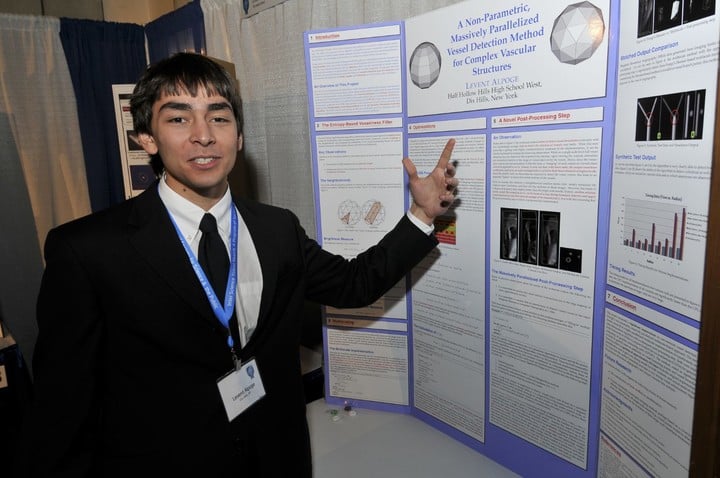
Just now, Anthropic mathematician Levent Alpöge posted a statement on his personal website, announcing that he, working with Claude, had found a proof of the famous Riemann Hypothesis.
Even more remarkable, Alpöge claims they went further and proved the harder, broader Generalized Riemann Hypothesis.
Interestingly, Alpöge did not publish a complete mathematical paper in the traditional sense this time, but instead released a set of code written in the Lean formal proof language, attempting to have a computer verify the entire mathematical reasoning process.
And when recounting the research experience, he also revealed a rather surreal detail.
As a mathematician who had dreamed of solving the Riemann Hypothesis since his student days, he had originally planned to spend decades conquering the problem.
But near the finish line, Claude's reasoning speed had become so fast that he could barely keep up. He even exclaimed in poetic language that Claude flew, danced, and shone near the finish line, while he could only marvel at what was unfolding before him.
For a problem that has kept countless top mathematicians pondering for more than a century, what is happening now is somewhat surreal.

Humanity has studied it for 167 years—just how hard is the Riemann Hypothesis?
To understand the weight of this event, one must first know what level of existence the Riemann Hypothesis occupies in the mathematics world.
In 1859, German mathematician Bernhard Riemann proposed a conjecture closely related to the distribution of primes.
Primes are positive integers divisible only by 1 and themselves, such as 2, 3, 5, 7, 11. They are an important foundation of the integer world, but where exactly they appear seems to always lack intuitive regularity.
The Riemann Hypothesis attempts to reveal the deeper mathematical laws behind the distribution of primes.
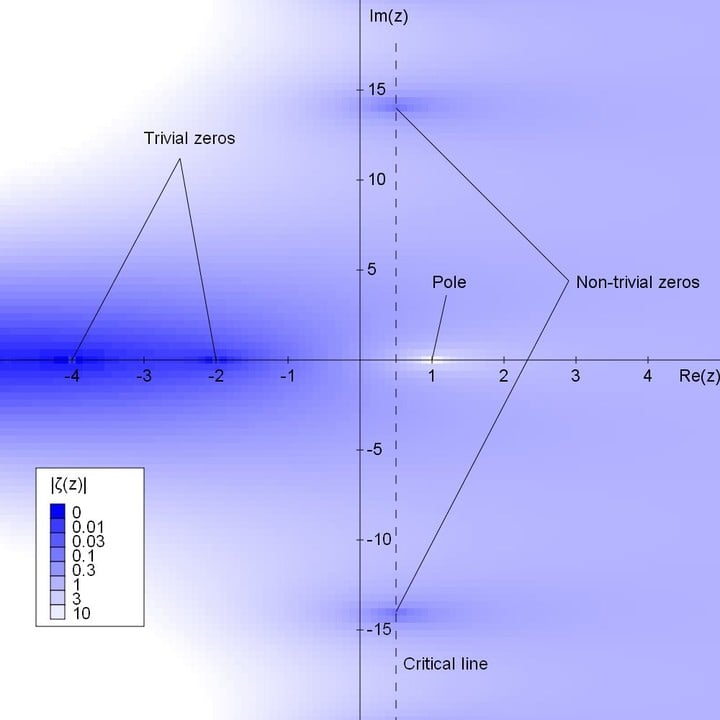
In strict terms, it asserts that the real part of every nontrivial zero of the Riemann zeta function equals 1/2.
It looks like just a simple mathematical expression, yet it bears on the precision of prime distribution and on a large number of important conclusions in modern number theory. Over the past 167 years, countless top mathematicians have tried to prove it, and a great deal of mathematical theory and research tools have emerged in the process, yet no one has ever been able to give a complete proof that is generally accepted.
In 2000, the Clay Mathematics Institute listed it as one of the seven Millennium Prize Problems and set a prize of 1 million USD.
More importantly, a great deal of mathematical research takes the truth of the Riemann Hypothesis as a premise. If it is proven, many conclusions that previously held only under assumptions will gain a solid theoretical foundation.
And the Generalized Riemann Hypothesis that Alpöge claims to have proven this time extends the relevant conclusions to the broader system of L-functions, involving a large number of deep structures in number theory.
In other words, if this research ultimately holds up, its significance goes far beyond solving a mathematical problem—it could change the entire research landscape of number theory.
How did Claude participate in the proof? At the critical moment, it was even faster than the mathematician
According to the research timeline released by Alpöge, this research can be traced back to early October this year.
The whole process involved a large number of complex number-theoretic tools such as the Stepanov method, Fourier analysis, automorphic forms, and theta lifts. Researchers needed to find connections between different mathematical theories and transform originally intractable problems into forms that could be solved step by step.
The truly key progress came around November 15.
At that time, Alpöge and Claude tried to use iterated theta lifts to construct a new proof path. One detail that left a deep impression on him was that Claude suggested setting the length of the iteration chain to √X.
According to Alpöge's explanation, this seemingly simple choice helped the researchers handle multiplicity structures that had previously been difficult to obtain, and became an important part of advancing the entire proof.
Throughout the process, Alpöge was responsible for finding research directions, establishing connections between mathematical ideas, and guiding Claude to explore suitable proof paths.
But as the research neared completion, Claude played an increasingly important role in complex derivations and technical details.
He even admitted that some of the higher automorphic form theory involved in the later stages of the research had already exceeded the scope he could currently handle proficiently. To some extent, according to his description, AI was already able to demonstrate, in some highly difficult mathematical reasoning, a capacity surpassing the immediate understanding and derivation speed of human researchers.
Even more unusual, Alpöge claims that he and Claude had already formalized the relevant proof and had not introduced additional unproven assumptions.
At present, he has published all the Lean proof materials on his personal website, divided into 14 compressed files, for the outside world to download and verify.
https://alpo.ge/remark.pdf
https://alpo.ge/lean.tar.gz.part01
https://alpo.ge/lean.tar.gz.part14
The file numbers increase sequentially from 01 to 14.
Lean is a formal proof tool that can translate mathematical theorems and their proofs into logical expressions that machines can check, thereby verifying whether each step of reasoning conforms to mathematical rules.
However, publishing code does not mean the proof has been confirmed. External mathematicians still need to check whether the files can be fully built, whether they depend on unproven assumptions, and whether the theorems in the code truly correspond to the Riemann Hypothesis.
Alpöge also frankly admitted that the entire argument is extremely complex. He once had Claude generate a massive document of more than 250,000 pages, but ultimately decided to publish the Lean code rather than directly release the massive, hard-to-read text.
Such an exaggerated length could even be jokingly called a "DDoS attack" on the mathematics community. After all, faced with a full 250,000 pages of proof material, probably every reviewer in the entire mathematics community, even if they all joined forces, would worry that their brains would be flooded by the sheer volume of information first.
He plans to continue understanding and organizing the entire proof, turning it into a more concise and readable mathematical paper.
As a result, a rather peculiar situation has arisen in the mathematics community.
A mathematical proof that may be of historic significance has been published in a machine-checkable form, but humanity still needs to expend a great deal of effort to truly understand how it holds.
From Harvard math prodigy to Anthropic—how fast has Claude's mathematical ability evolved?
Alpöge's own background has also drawn more attention to this research.
Public information shows that he was born in 1992, is now 34 years old, holds dual American and Turkish citizenship, and has long worked on number theory and arithmetic statistics.
His academic record is quite impressive: he earned his undergraduate degree from Harvard University, then went on to Cambridge University for further study, and obtained a PhD in mathematics from Princeton University in 2020, under the supervision of the renowned mathematician Manjul Bhargava.
As early as 2015, he won the Morgan Prize, and later served as a Junior Fellow in the Harvard Society of Fellows.
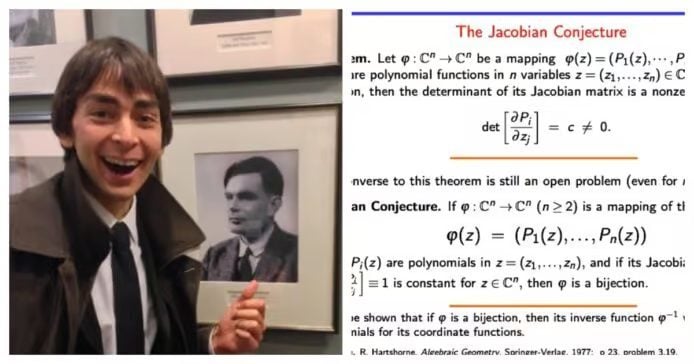
After joining Anthropic, he gradually became an active figure in AI-assisted mathematical research. In July this year, he announced that with the help of Claude Fable 5 he had found a counterexample to the Jacobian conjecture, and in August he collaborated with other researchers to use Claude to construct a batch of Hadamard matrices that had not previously been found.
In fact, Claude's challenge to the Riemann Hypothesis had long been foreshadowed.
In August this year, Anthropic publicly released a study describing the process of an internal version of Claude attempting to prove the Riemann Hypothesis.
At that time, Anthropic employee Jarred Sumner posed this nearly impossible task to Claude.
Claude initially generated and tested 650 research ideas, but none succeeded.
It then organized about 60 sub-agents to collaborate, executed about 2,400 shell commands, wrote hundreds of Python scripts, and sought breakthrough directions through mathematical checks, paper searches, and cross-review.
The entire research process consumed about 31 million output tokens.
In the end, Claude still did not solve the Riemann Hypothesis, but it made important interim progress in related research on zero distribution.
Alpöge and Anthropic mathematician Ralph Furman subsequently participated in reviewing and explaining the related results.
By October this year, OpenAI also publicly released a batch of mathematical research completed with AI participation, including important progress related to the Riemann Hypothesis.
In just a few months, AI's performance in frontier mathematical research has made it hard to measure by traditional math competition results anymore.
In the past, computers mainly helped mathematicians perform numerical calculations, search for counterexamples, and verify proofs. Now, frontier AI models are beginning to actively explore research routes, combine knowledge from different branches of mathematics, and attempt to provide original proofs.
The mathematician's AI assistant is gradually growing into a research collaborator capable of participating in the exploration of unknown problems.
When AI begins to solve humanity's ultimate problems, where should mathematicians go?
For Alpöge, the emotions brought by this research are far more complicated than outsiders might imagine.
In his statement, he revealed that since his student days he had regarded the Riemann Hypothesis as an important lifelong research goal, and to that end he had long accumulated knowledge in different fields of mathematics, waiting for the day when he could truly conquer it.
But now, he believes he is close to his dream, only to find that in the final stage of the research, Claude's progress even surpassed his own.
Facing the possible disappearance of a goal he had pursued for many years, he admitted to a sense of loss.
Yet what shocked him more was the potential for scientific discovery demonstrated throughout the research process.
In his view, humanity may be ushering in a whole new scientific era, and the Riemann Hypothesis is only the beginning.
Article title: Breaking news: Riemann Hypothesis reportedly proven, Claude plays a major role
Body:
Of course, the mathematics community still needs to remain cautious.
Historically, the Riemann Hypothesis has been declared proven many times, but none of those claims ultimately passed rigorous review. This research likewise needs to undergo independent scrutiny, especially to confirm what the formalized code actually proves.
Even if the final verification succeeds, mathematicians will still need to understand the methods used in the proof, and whether those methods can further advance other fields.
After all, the value of a mathematical proof lies both in confirming whether a proposition is true or false, and in revealing mathematical structures that humans have never discovered before.
But the rapid progress of AI has already raised another question worth pondering.
In the past, the mathematical abilities of large models were mainly measured through competition problems, standardized tests, and reasoning tasks with known answers.
Real scientific research, however, has no standard answers, and researchers cannot even judge in advance whether a given path will succeed. As AI begins to produce original results on open scientific problems, the standard for measuring intelligence may also gradually shift from problem-solving ability toward discovery ability.
For the Riemann Hypothesis, which has persisted for 167 years, the final answer still awaits rigorous verification by the mathematics community.
But for human researchers, an even more profound question has already emerged.
If, in the future, more and more major mathematical results are first proposed by AI, and humans need to spend longer to understand the logic behind them, how then will the work of mathematicians be redefined?
Alpöge does not see this future as the end of mathematical research; on the contrary, he believes that what is happening now may herald a broader era for scientific exploration.
Humans spent centuries building the edifice of mathematical knowledge, and now AI has begun to take part in exploring rooms that even the builders themselves have not yet reached.
Whether the Riemann Hypothesis can thereby be proven still awaits rigorous verification. But regardless of the outcome, AI has already made humanity reconsider how far the next step in scientific discovery can go.