 Newshot
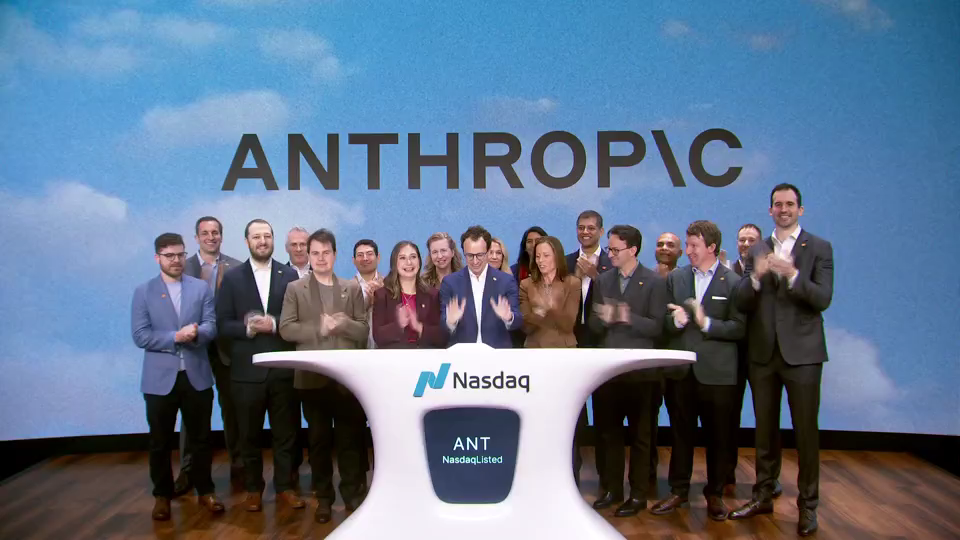
Anthropic’s IPO went better than expected. Demand was hot, Wall Street jumped at its first chance to buy in to a frontier AI model. The stock got a nice bounce.
What a relief for the beaten-down AI industry? Not exactly.
The rest of the tech stock market wasn’t invited to Anthropic’s party on Thursday. The Nasdaq slumped. Again. Friday looks like more of the same: The Nasdaq fell 5.28% and is now down for the year.
Even Anthropic’s stock was down 8.5% Friday — a consequence of getting swept up in the AI malaise that’s been brewing for six straight weeks … and the fact that its underwriters Goldman Sachs and Morgan Stanley aren’t working quite as hard to prop up the stock like they did on Thursday.
Buying shares of Anthropic is a wager on the future of AI, a bet that the AI-fueled economy will someday soon transition from investment in construction sites to profit generated from customers paying for large language models to revolutionize research, medicine, manufacturing and the way the world works. That bet may pay off big time.
But in the here and now, Anthropic’s blockbuster IPO didn’t change the narrative that has been worrying Wall Street since early October: Regulation could be around the corner, AI investment may slow down, valuations are sky high, and some of the early bets placed on the transformative technology may fail to pay off.

What’s got Wall Street worried
AI has been on wobbly footing since October 6, when the market last hit a record. Since then, the AI-spending-will-just-keep-growing-forever narrative has absorbed blow after blow.
CoreWeave. It started when CoreWeave’s bond yields rose to 15% (when the company’s return on investment was only 9%). That sent alarm bells ringing that maybe some parts of the AI industry were valued way too high — particularly neoclouds like CoreWeave that buy computing power at high prices and lease it out to other companies. It’s not a universally bad business, but hasn’t exactly proven to be a sustainable one.
In the early stages of every tech boom, every company is a winner. During the crypto boom, the Long Island Iced Tea Company put “blockchain” in its name and its stock exploded. But, eventually, losers start to emerge.
CoreWeave may not end up in that category, but its bond price collapse warned investors that some AI bets may fail.

The blue tsunami. Another shock to the AI system: Democrats’ sweeping victory in the November 3 midterm elections, including the surprise win for Texas Governor-elect Gina Hinojosa – who called for an extended AI data center moratorium and stricter guardrails around AI. Texas is home to 25% of the country’s planned computing capacity buildout, and Democratic governors who champion AI regulation will oversee 45% of that planned capacity starting in January, according to Goldman Sachs.
That dealt another big blow to AI stocks in the wake of the midterms.
Nvidia. And then there was Jensen Huang’s scandal.
The former Nvidia CEO and president was the driving force behind the circular financing deals that have powered AI’s growth over the past several years. Nvidia acts as a kind of central bank for AI companies, doling out chips in exchange for equity stakes, buying in to massive data center projects and guaranteeing leases that many AI businesses would otherwise be unable to afford.

Huang’s resignation ignited fears on Wall Street that a more conservative leader would replace him — concerns that appeared validated when interim CEO Colette Kress (a skeptic of some of Huang’s riskier deals) announced last week that Nvidia was getting out of the selling-chips-to-China business.
The Nvidia scandal forced the Commerce Department’s hand after taking a mostly lenient approach in the company’s business of selling chips to Southeast Asian companies – even when evidence suggested some of those companies were shipping those chips to China to circumvent export restrictions. Commerce put in place a new rule last week that required sign-off in deals to companies in certain countries, including Singapore — home of Megaspeed, where an executive was wrapped up in Huang’s scandal.
Now swept up in this mess: AMD, an Nvidia competitor that was supposed to be a winner from Nvidia’s scandals. Instead, a short seller issued a report Thursday claiming that AMD’s chips are being sold on China’s black market.
AMD’s stock tumbled nearly 8% Thursday and another 13% Friday, as investors worried it could be the subject of the next investigation.
Reality check
Despite the recent blows, AI hasn’t been knocked down by any means. And this isn’t exactly new: As valuations have gone through the roof in recent years, Big Tech has gone through bouts of Wall Street worry before.
You don’t need to look that far back. Between June and August, the Nasdaq fell 9.7% over fears that AI infrastructure required too much spending (measured in the literal trillions of dollars) and wouldn’t return profits anytime soon. And in 2022, the entire tech sector was effectively in recession, briefly dragging the broader market into bear market territory (a 20% decline).
Now, the Nasdaq is in correction — a decline of more than 10% from a recent peak. It has tumbled 18% over the past six weeks and may be headed further south — but corrections are normal and healthy market functions. The broader S&P 500 also closed in correction, falling for a seventh-straight day.
“We’re climbing a wall of worry,” said Cathie Wood, CEO of tech fund Ark Invest, in an interview on CNBC Friday morning.

If you are wondering why the market is worried about AI, Anthropic spelled it out for you.
It spent more than 90 pages of its IPO prospectus detailing its many, many risk factors. Among them: Both concern that its customers are slowing their spending on frontier AI and worry that it may not be able to buy enough computing power to satisfy demand. It could lose both ways.
And, of course, Anthropic warned that its technology could wipe out humanity.
None of this means AI is a bust. There are many signs it isn’t: Nvidia gave a strong earnings report and raised its outlook last week. And don’t forget: Anthropic had a very strong debut despite Friday’s decline.
Even if Anthropic continues to sink, that doesn’t mean its IPO was a bust. Facebook tumbled 20% in the days following its debut on the public market and lost more than 50% of its value within months. It took the company around 14 months to return to its IPO price. Since then: its stock has gained 1,469%.
The challenges for AI are real and undeniable. But the potential promise of the revolutionary technology hasn’t changed just because of a recent string of setbacks.
“The revenue hurdle to justify the scale of AI investment looks very demanding,” said James Reilly, senior markets economist at Capital Economics. “This doesn’t mean we think the technology is a dud, nor that demand will collapse.”
This story has been updated with additional content.