 Newshot
The Touchscreen Is Its Least Notable Upgrade | MacBook PROLED Review
2026-11-20 12:00
Apple after its leadership change has hardly stood still.
With the iPhone Duo breaking conventions before it and the iPad mini 8 resolutely holding the line (at 60Hz) after it, looking at the MacBook Pro series stuck in the middle inevitably feels a little odd.
To put it briefly, Apple refreshed four of the main products in its Mac lineup in one go over the past month.
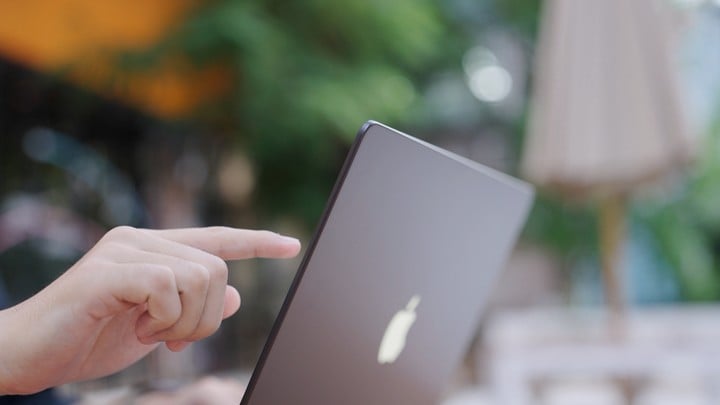
Although each of these updates has its own character, when it comes to the most eye-catching one, it is definitely the new MacBook Pro with an OLED display and the first touchscreen support in MacBook history:

For a company like Apple that has written "tight integration of hardware and software" into its underlying product philosophy, this slightly dismissive approach is itself a statement.
That is why we can see that, although touchscreen operation can work wonders in places like the Final Cut Pro timeline, Xcode Simulator, iPhone Mirroring, and some window operations, beyond those, the new MacBook Pro remains thoroughly dominated by keyboard and mouse interaction.
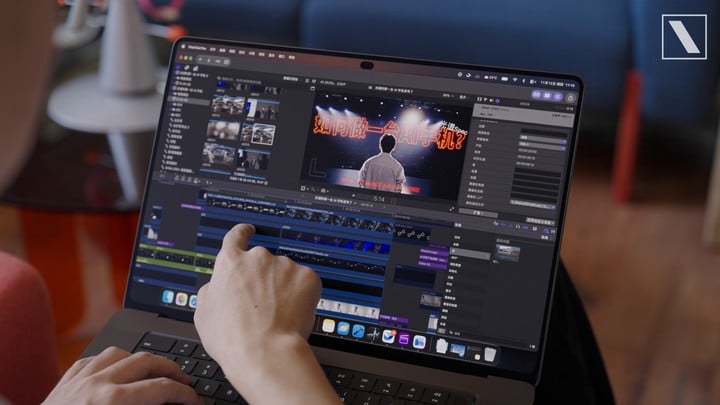
But outside those few advantageous scenarios, what macOS does is merely automatically map finger taps and swipes to cursor clicks and trackpad swipes, giving third-party apps basic touch capability.
As for whether macOS software should further integrate gesture APIs or design dedicated touch interfaces, that is left entirely to developers to decide.
It is precisely this "free-range" behavior, rarely seen from Apple, that led us to conclude:
The touchscreen feature of the new MacBook Pro is essentially a capability acquired incidentally after the screen material was upgraded to OLED. Apple preserved this feature with a rare open mindset, but it has absolutely no intention of changing macOS's underlying logic.
Even more, considering that Ternus previously oversaw hardware engineering-related business for a long time, this approach of "opening up hardware capabilities and letting software adapt as needed" shows a bit of his personal style.
It can be said that the new MacBook Pro's touchscreen support itself has wrongly stolen most users' attention; instead, everything except the touchscreen—OLED, speakers, cooling, storage, and so on—constitutes the new MacBook Pro's formidable product strength itself.
For example, with this top-spec 40-core GPU version of the M5 Max processor, memory bandwidth of up to 614GB/s remains a powerful tool for local AI work, and running a 130B-parameter 4-bit quantized model is completely within reach:
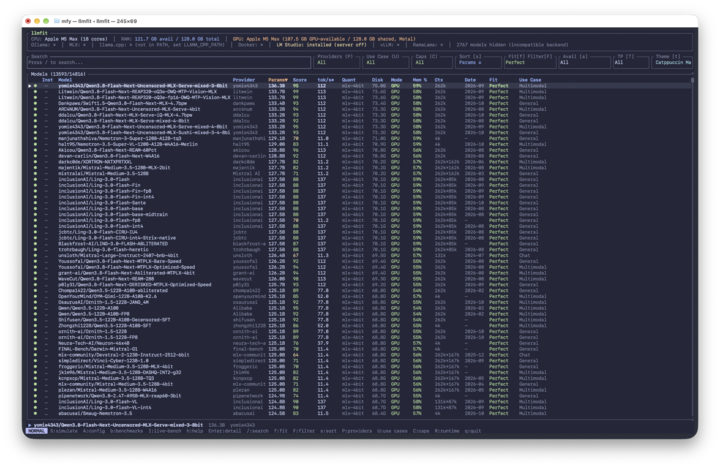
If you are willing to sacrifice some precision and use Q2_K quantization, running some 300B models is also feasible:
![](https://s3.ifanr.com/wp-content/uploads/2026/11/17