 Newshot
Article title: First HarmonyOS AI Phone Released: Huawei's New Sub-brand OSTA Starlight Has a "Reinforcements for the Future Plan"
First HarmonyOS AI Phone Released: Huawei's New Sub-brand OSTA Starlight Has a "Reinforcements for the Future Plan"
2026-11-20 17:17
Now stretch out your left hand and carefully, with a bit of force, feel the inner side of the second joint of your pinky finger. You will most likely feel a groove—the mark left behind from using our pinky as a support point during long periods of phone use.
This tangible mark is more intuitive than the changes phones have wrought on our brains, and it is also a small example of humans using phones while phones in turn shape humans.
Similarly, in Sapiens, the author offers a somewhat counterintuitive view: it appears that humans domesticated wheat, turning it from a wild weed into an agricultural crop with high yields and wide cultivation, which then became one of the main staple food sources in both East and West. But in reality, in order to grow wheat, humans who migrated periodically ten thousand years ago began to settle near water sources, and their daily activities of running to hunt and climbing trees to gather were replaced by repetitive, monotonous agricultural labor.
Wheat leaped from a plant scattered sparsely in the wild to one of the most flourishing species in the plant kingdom, achieving a great result in the biological sense. What we humans got were noodles, baozi, and bread—as well as lumbar spine disease.
We also invest nutrients called time and attention into one app after another on our phones, cultivating enormous, indispensable internet services and internet giants that have become veritable behemoths.
Huawei and We Both Need a New Beam of Light
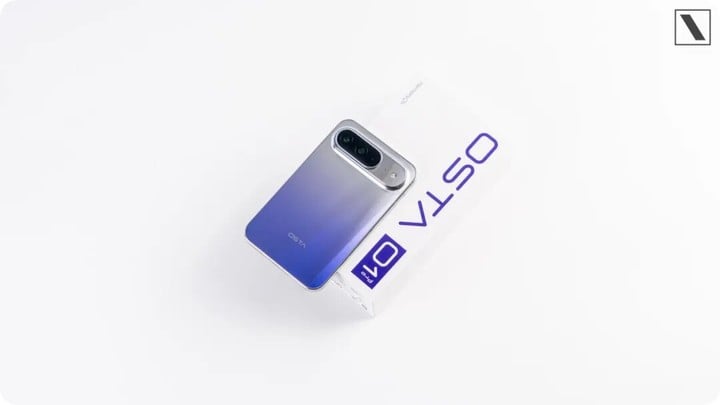
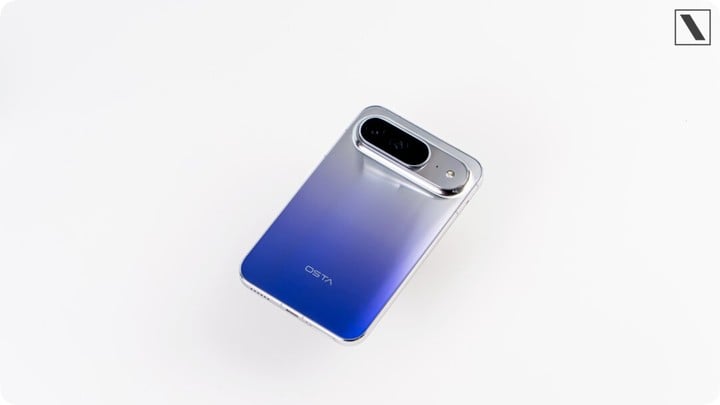
On November 20, 2026, Huawei's new sub-brand OSTA Starlight was officially launched. It has been more than 6 years since the Honor brand separated from Huawei's system and became independent. For the consumer electronics industry, 6 years is a sea change, and coupled with high memory costs, judging purely by market landscape, it seems the market does not need a new brand.
But Huawei OSTA Starlight is not a brand aimed only at the current market to add some shipment volume for Huawei, nor is it a brand that staggers pricing ranges and offline channels with Huawei while focusing on cost-effectiveness and online sales. So what exactly does its emergence mean for Huawei?
Huawei OSTA Starlight is Huawei's "Reinforcements for the Future Plan." The history of consumer electronics will remember 2026, because in this year many leading phone brands need to think about their own survival. On the one hand, industry-wide shipments have fallen sharply due to soaring hardware costs; on the other hand, AI has begun to reconstruct everything, including the way phones are used. Some users have begun to hope to embrace AI on their phones through entirely new interaction methods.
Over the past decade or so, Huawei's terminal products have accumulated hundreds of millions of users. The Mate series in particular has become the mainstream choice for business professionals and is a successful example of a Chinese phone brand breaking through into the high-end segment. At the same time, the Pura series, building on the original P series, has attracted more users with a pioneering spirit, while the core users of the nova series have always been young, fashionable, and energetic.
If among these people there are users who are more individualistic, more pioneering, more fond of exploration, and more inseparable from AI, then they are the typical users of Huawei OSTA Starlight, because OSTA Starlight's positioning is "a HarmonyOS AI all-scenario technology brand for pioneers."
Unlike model series named with words such as Mate, Pura, and nova, the all-caps OSTA is an acronym for Original, Smart, Technology, and Accessible, representing Huawei OSTA Starlight's brand philosophy of insisting on original exploration, embracing intelligent technology, and through breakthrough innovation making AI technology accessible and intelligent experiences ubiquitous.
The premise of setting out in the posture of a pioneer is a vision of technology for all.
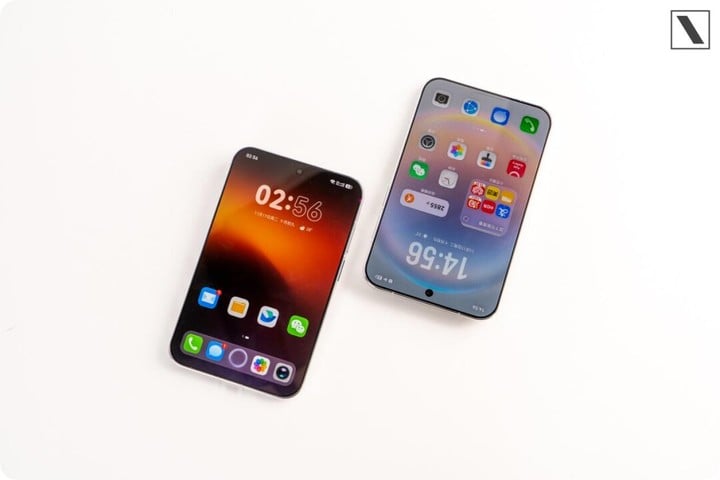
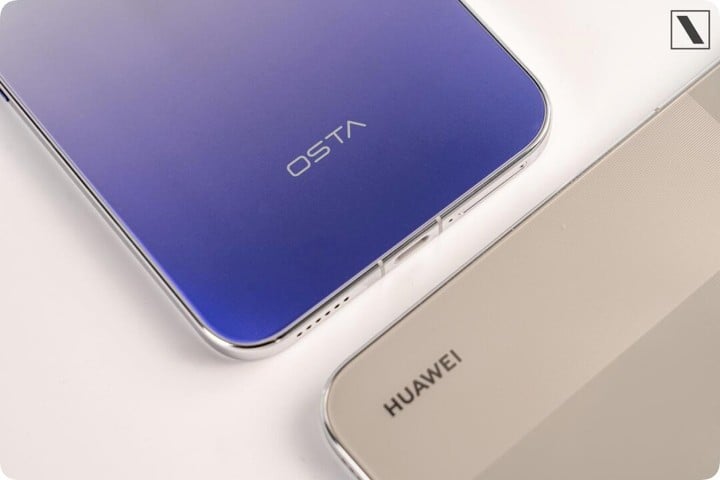
In the system of the main brand Huawei and the sub-brand Huawei OSTA Starlight, the Huawei brand continues to deepen its presence in the mid-to-high-end market, building brand recognition through technological innovation, quality experience, and a mature ecosystem; Huawei OSTA Starlight takes on the role of exploring pioneering technology, entirely new product forms, and AI interaction methods. The two brands share core technology foundations and quality standards such as Kirin chips and the HarmonyOS operating system, and even their price ranges will overlap somewhat. What differs more is the consumer group, product philosophy, and brand expression.
Thus we can see that Huawei's long-accumulated software-hardware synergy capabilities appear密集ly on OSTA O1 Pro, the first new product of the Huawei OSTA Starlight brand. The Kirin 9030S chip carried by OSTA O1 Pro provides on-device computing power support for multimodal perception, AI inference, and high-frequency task processing; at the system software level, HarmonyOS 7 AI Pioneer Edition further integrates AI capabilities into the operating system's底层, enabling it to participate in system perception, task planning, and application scheduling.
Among these, the HarmonyOS system has opened more than 300 system data items to Xiaoyi, with more than 2,100 system skills, enabling Xiaoyi to coordinate and invoke system capabilities and third-party ecosystem services according to user intent.
This technical architecture also changes the way traditional voice assistants work.
Xiaoyi's four-layer progressive all-domain memory architecture and Dreaming dream memory organization capability can accumulate users' interests, habits, and personal goals over the long term. Combined with real-time scene perception, AI can further judge the user's current needs and provide reminders, suggestions, or execution services at the appropriate time.
This changes the previous working mode of phone voice assistants, which passively responded to single tasks, into an assistant with memory that can handle long-term tasks—equivalent to upgrading from an intern to a senior secretary.
At the same time, the HPIC HarmonyOS Personal Intelligent Computing system integrates privacy and security mechanisms into the perception, memory, and execution links, emphasizing local-first, data minimization, and user control.
This HarmonyOS phone born for AI, OSTA O1 Pro, has two technology foundations: the Kirin chip and the HarmonyOS operating system, hardware and software. On top of that, relying on system-level capabilities, the system-level personal AI companion Xiaoyi organizes the originally scattered phone capabilities into an AI phone system that can understand intent, continuously remember, and proactively provide services.
In many people's impressions, Huawei's brand temperament is relatively mature and rational, but in fact, when it comes to exploring new forms, new technologies, and new interactions, Huawei is instead more aggressive and more systematic than all consumer electronics brands. For example, in the "wide" form alone there are wide foldables and wide bar phones, and in "folding" there are two categories, phones and computers, with multiple forms such as large foldables, wide foldables, and tri-foldables...
Similarly, after the HarmonyOS system has accumulated hundreds of millions of users and its ecosystem covers multiple terminal categories such as phones, tablets, and computers, it is time for this future-oriented operating system to fork once, placing AI at the core and creating interactions and functions around AI.
This is the task of the Huawei OSTA Starlight brand and the OSTA O1 Pro phone. The Huawei OSTA Starlight brand is the advance force on the AI battlefield, and OSTA O1 Pro is a reconnaissance company.
For Huawei, and for us who have been reshaped by current app recommendation algorithms and attention mechanisms, we all need such an AI Native device—to connect Huawei's technology system with AI, to unify the most important device form of the present with the possible AI interactions and functions of the future, and to mobilize pioneer users and the Huawei OSTA brand.
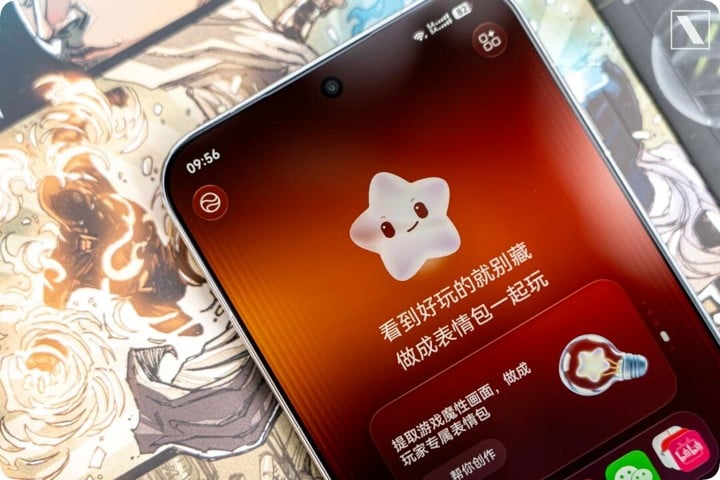
When AI Begins to Take Over the Phone's First Screen
The Huawei Pura X View becoming a dark horse in China's 2026 smartphone market proved that the market has greater enthusiasm for new-form devices than imagined. Therefore, OSTA O1 Pro follows the wide bar form, layered with HarmonyOS 7 AI Pioneer Edition, precisely delivering on the aforementioned "HarmonyOS AI all-scenario technology brand for pioneers."
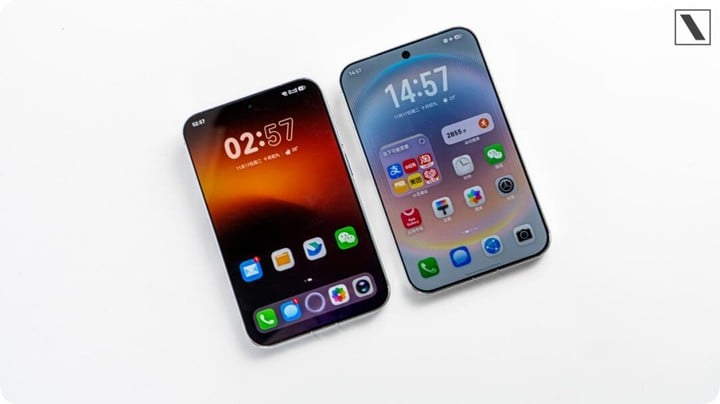
It can be said that when the Pura X View was selling well and the wide bar form became a kind of "social currency," having OSTA O1 Pro inherit the wide bar form was itself an investment.
A wider display area can provide a better viewing experience for comics, videos, games, and some information display scenarios. For users who need to observe multiple interface elements at the same time, the extra horizontal space also has potential value.
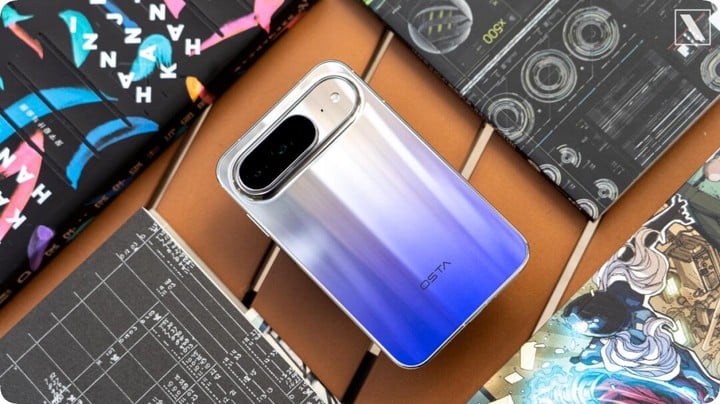
Huawei's "technology shelf" contains some hard currency, such as Kunlun Glass, and behind it a screen with a 120Hz refresh rate, 2160Hz high-frequency PWM dimming, and 6500nits local peak brightness; communication capabilities composed of dual-ring gain antennas, Wi-Fi 7, NearLink connectivity, and eSIM; an imaging module composed of a 200-megapixel main camera, a 50-megapixel periscope telephoto, and a second-generation Red Maple original color camera—all of these have been placed on the OSTA O1 Pro device. This means that even without considering the device's pioneering attempts at AI interaction and functions, it can still be a high-end phone with excellent hardware quality.
At the service guarantee level, Huawei OSTA Starlight and the Huawei main brand are also at the same standard. Purchasing OSTA O1 Pro gives you a worry-free gift package worth 1588 yuan, providing once-a-year protection for the screen, water damage, back cover, and rear camera within 1 year, plus once-in-2-years battery protection, as well as a two-year official warranty. At the same time, two-way mail-in repair is free of logistics fees, and online and offline services at more than 2,600 service stores nationwide are from the same source and of the same quality as the Huawei main brand.
Of course, what truly determines the product direction of O1 Pro is still AI.
The smartphone system and touchscreen interaction together forged today's phone usage habits: users open their phones, find the corresponding app, enter a specific page, and complete tasks through tapping, swiping, typing, and confirming. App stores have given phones almost infinitely expandable functions, and have also given the system more and more mutually independent software entry points.
For example, for an ordinary weekend outing, a user may need to confirm the time with friends in a social app, search for the destination location in a map, search for a restaurant on a life services platform, and then open ticketing and ride-hailing apps to complete the trip arrangements.
Article title: First HarmonyOS AI Phone Released: Huawei's New Sub-brand OSTA Starlight Has a "Reinforce the Future Plan"
Body: Apps each mind their own business, but they require people to invest attention to organize them. Yet while apps mind their own business, they often also want to overstep their roles: payment apps want users to scroll short videos inside the app, lifestyle service platforms want users to watch other people's refined lives inside the app, ride-hailing apps want users to take out a small loan, and navigation to a destination often has only one route—but inside a phone, there are forks in the road everywhere.
The approach of the OSTA O1 Pro is to let AI become the organizer of these functions, keeping human attention on the main task.
The first thing to change is the phone's interaction entry point.
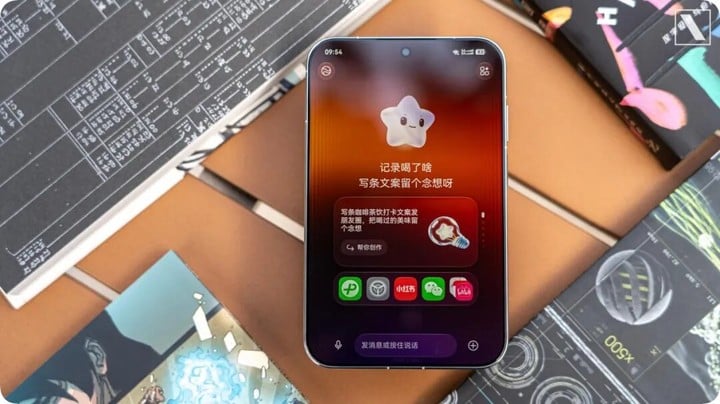
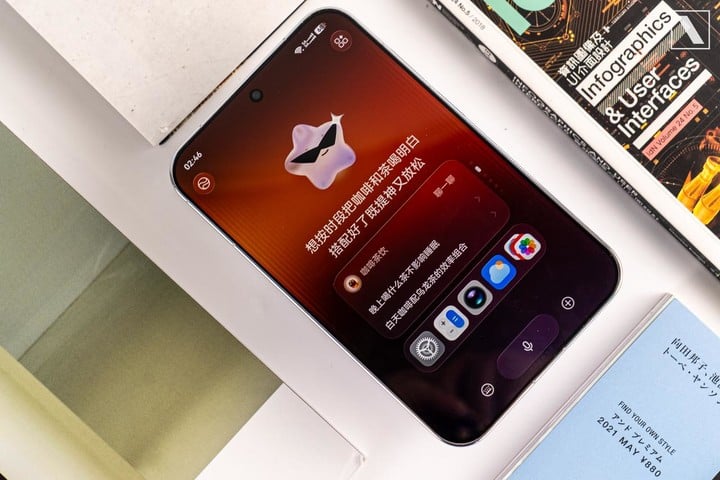
The industry's first system-level AI screen is placed in an important position on the desktop, attempting to proactively present information and services that may be needed based on the user's current state, ongoing tasks, and long-term interests.
This means AI is no longer confined to a standalone app that needs to be opened. When users pick up the phone, they have a chance to see content relevant to their own needs.
For example, a student is in class, a large number of messages have accumulated in a group chat, and an important notification arrives at the same time. Within the range of supported apps, the system can help extract the key content from unread information.
To truly provide personalized services, AI must also solve another problem: memory.
Because AI first needs to remember the user before it can work for the user.
The core mechanism here was also mentioned earlier: Xiaoyi's four-layer progressive all-domain memory architecture, along with the Dreaming memory consolidation capability. Combined, the two can associate and organize information scattered across different times and different apps, gradually forming a sustained understanding of the user's interests, habits, and personal goals.
Sometimes this memory mechanism is a bit more reliable than users themselves. For example, when users save travel guides on Xiaohongshu, mark favorite restaurants on Dianping, or discuss future travel plans with Xiaoyi, this authorized information that meets the supported conditions can all become material for AI to understand user needs. Dreaming further organizes and associates accumulated memories, letting scattered information form more continuous personal knowledge and experience.
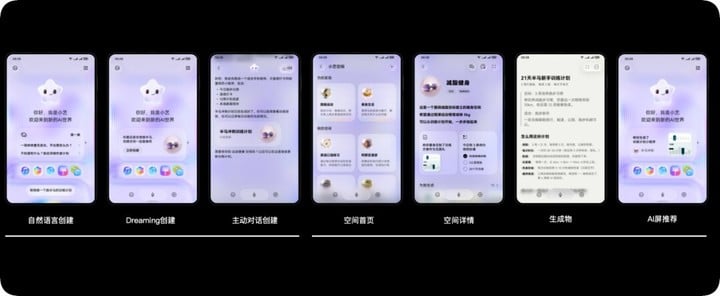
Xiaoyi Space is the most intuitive product manifestation of this memory mechanism.
Memories are often fragmented. Favorites, notes, guides, and other information in different apps are often hard to recall after being marked, but Xiaoyi Space can gather the past and bring it together in one place. A food space can organize personal taste preferences and saved restaurants to form a user's exclusive food map; a viewing space can record watched movies, favorite directors, and works, generating personalized watchlists and viewing reports...
Going further, Xiaoyi Space can also record progress around long-term goals, manage generated results, and provide next-step suggestions based on accumulated memories.
We can create our own reading space, viewing space, travel space, budgeting and finance space, and so on. Every user can be a space-type ability user.
At the same time, the HarmonyOS 7 AI Pioneer Edition can connect Xiaoyi with system skills, ecosystem partners, and third-party services, attempting to enable multi-step tasks across multiple apps to proceed continuously.
This kind of usage scenario is highly individualized and almost omnipotent. For example, a student preparing for the IELTS exam can ask Xiaoyi to generate a one-month study check-in app that organizes daily review plans, study progress, and stage goals; a user preparing to lose fat can get a tool for 12 weeks of training and diet records; a pet-owning user can create a pet-exclusive app that includes vaccination records, physical examination records, and growth photos.
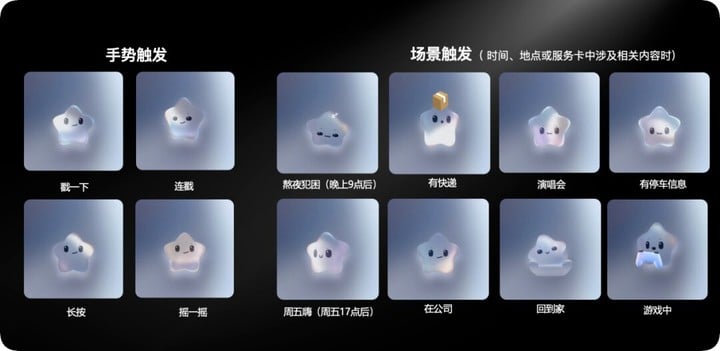
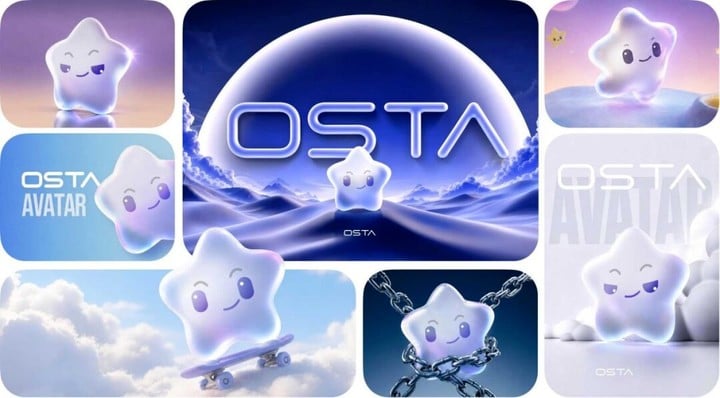
The personal exclusive AI companion Little Starlight provides AI with perceptible emotional expression; the industry's first system-level AI screen is ready as soon as the screen opens, reaching things in one step and providing a more direct interaction entry point; Xiaoyi Space carries long-term memory, personal goals, and continuous service.
Together they form the system-level personal AI of the OSTA O1 Pro and at the same time create a "parallel universe" inside the phone that is different from the app ecosystem, truly achieving "a thousand phones for a thousand people, born only for you."
For users, the past habit of using phones was like using attention to fill one bottomless hole after another; now it is about using attention to plant trees. It may take a relatively long usage cycle to adapt, but between instant gratification and delayed gratification, the latter is more growth-oriented.
When we get used to AI taking over the first screen of the phone, AI's long influence on phones and on ourselves has only just begun.
The Next Phone Must Reunderstand the Relationship Between Humans and Machines
Physical keyboards gradually gave way to multi-touch, the mobile internet made apps the main functional entry point, and voice assistants and large models brought natural language into the phone interaction system. Every generational technological change redistributes the work between humans and machines.
Multi-touch lowered the operating threshold, the app ecosystem expanded the boundaries of functionality, and AI has begun trying to understand needs that are hard to express through fixed buttons and menus.
Today's AI phones still need to answer a question: when the system can proactively understand and predict user intent, what kind of relationship should humans and phones maintain?
The operating logic of the traditional mobile internet has largely unfolded around information and traffic. Users open apps, browse recommended content, make choices, and generate behavioral data. Platforms optimize recommendation mechanisms based on this data and then provide users with content that better matches their interests.
This mechanism has created abundant digital services and has also made users' attention an important commercial resource.
For many people, the phone has become the most frequently used personal device. It knows what we have searched for, what we have bought, where we have been, and also knows which content we are willing to linger on.
This information has long been scattered across different platforms. Each platform has part of an understanding of the user, yet users need to invest time and energy across these platforms to accomplish their own goals.
The emergence of AI offers an opportunity to integrate users' historical memory, current state, and specific goals, and to mobilize related services. Then the user's interaction with the digital world may gradually shift from operating one app after another to managing one task after another.
Users are responsible for clarifying intent and making important decisions, while AI handles the steps suitable for automation. This change may affect how future software is designed. With the development of the AI ecosystem, some services may also directly provide capabilities through AI invocation interfaces, and users do not necessarily need to understand the complete operating process behind each service.
This also means that the degree to which an operating system adapts to AI determines whether the system survives. Who can guarantee that today's so-called smartphone operating systems will not be eliminated like the feature phone operating systems of the previous generation?
Returning to the example from Sapiens mentioned at the beginning of the article, the story of wheat and humans domesticating each other reminds us that the success of a technological system cannot be directly equated with users obtaining a better life.
If the system continuously decides for users what to watch, what to buy, and where to go, or turns every change in users' interests into proactive recommendations, then so-called intelligent services may once again become a more refined attention allocation mechanism.
As AI moves from passive response to proactive service, the user information phones need to perceive becomes richer and richer, and personal privacy and data security therefore become issues that a new generation of AI phones must face. The HarmonyOS 7 AI Pioneer Edition, through the HPIC HarmonyOS Personal Intelligent Computing system, establishes a security system covering data perception, memory, reasoning, and task execution.
This system follows three principles: "local first, data minimization, user controllable."
"Local first" emphasizes prioritizing computing and processing capabilities on the device side and reducing unnecessary data uploads; "data minimization" means that when AI provides services, it obtains as much as possible only the information necessary to complete the current task, reducing the risk of excessive collection and use of personal data; "user controllable" emphasizes users' right to manage the authorization and scope of use of personal information, preventing AI's proactive services from exceeding user expectations.
For AI phones with long-term memory and proactive execution capabilities, the importance of security needs to be raised higher. Pioneer users may accept the learning cost of new experiences, but that does not mean they will take security risks. A sufficiently transparent and trustworthy security mechanism is the bottom line for AI Native phones.
To borrow a popular phrasing from Xiaohongshu, the OSTA O1 Pro, to a large extent, hopes to use AI to help users regain their "subjectivity."
This return of "subjectivity," viewed in isolation, of course consists of individual feature points: the cute Little Starlight, the reliable Xiaoyi, the useful Xiaoyi Space, the complex system capabilities, the reassuring HPIC HarmonyOS Personal Intelligent Computing system, and so on.
In fact, the principle behind their combination is also easy to understand: "all-new AI interaction, system proactive intelligence, long-term companionship and growth." New AI experiences continue to accumulate, users and phones move toward each other, and ultimately the phone understands users better, while users also grow within the phone.
For Huawei OSTA Starlight, the goal is not to have all users mechanically scrolling algorithm-tailored videos late at night, but to let them feel fulfilled, clear, and grow with memories—yet not identical—every day.