 Newshot
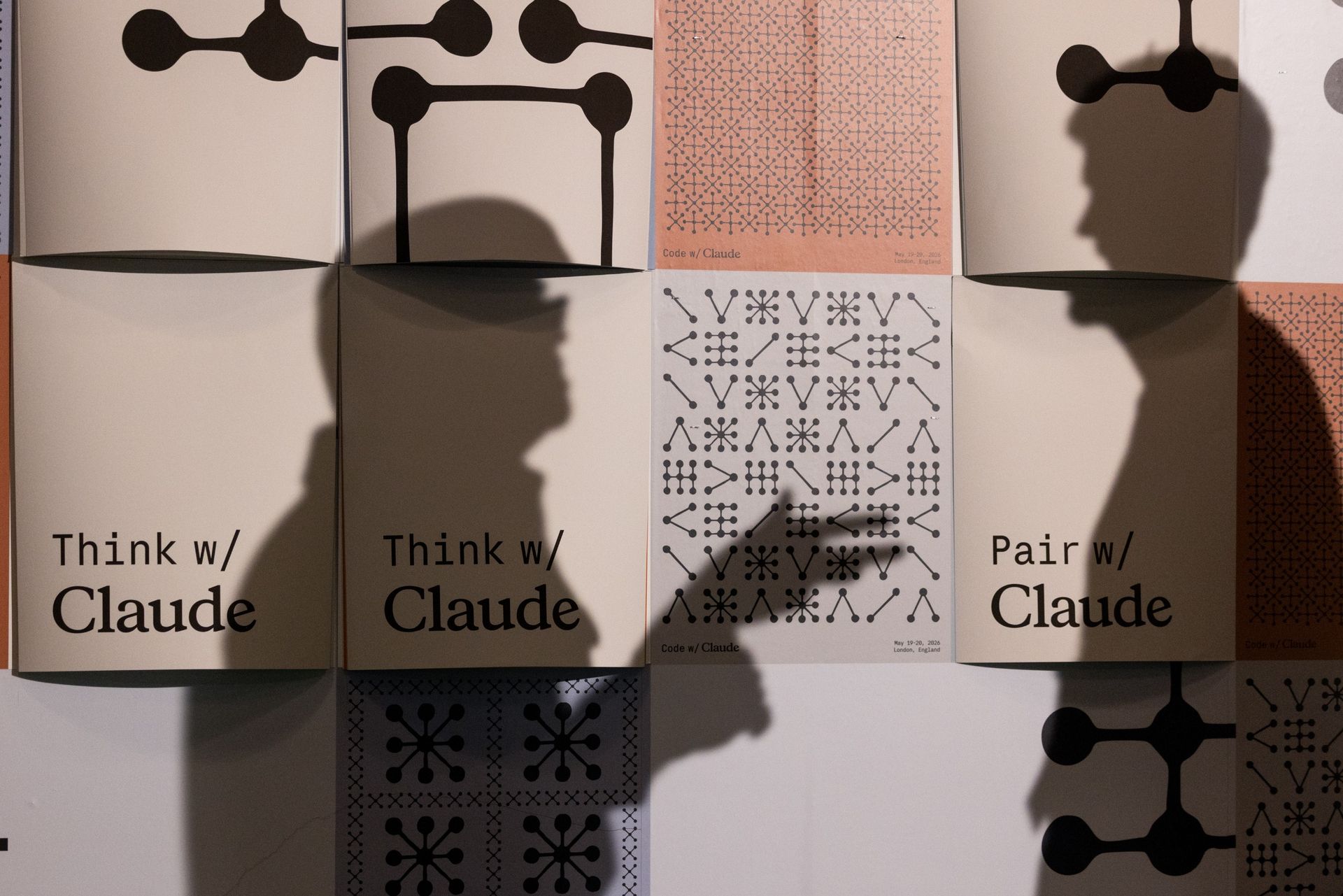
In the same week that Anthropic was floated on the Nasdaq in its initial public offering, a mathematician employed by the company claims to have discovered proof behind one of the world's most famous math problem, the 167-year-old Riemann hypothesis. Levent Alpöge wrote in a paper this week, "I believe I have, working with Claude, discovered a proof of the Riemann Hypothesis."
As you're no doubt already aware, and as Alpöge explains, the Riemann Hypothesis is the classic problem in number theory and one of the most famous unsolved problems in mathematics. Proposed in 1859 by Bernhard Riemann, who gave the problem its name, it is the theory that prime numbers are not in fact random but determined. "The Riemann hypothesis asserts that all interesting solutions of the equation ζ(s) = 0 lie on a certain vertical straight line," the Clay Mathematics Institute explains. "This has been checked for the first 10,000,000,000,000 solutions. A proof that it is true for every interesting solution would shed light on many of the mysteries surrounding the distribution of prime numbers."
As Scientific American notes, the problem is the "North Star for the entire field of number theory, and the most famous open problem in math." Furthermore, the problem was previously thought so insurmountable that experts didn't even bother working on it.
Alpöge not only believes that he has used Claude to discover a proof of the Riemann Hypothesis, but also believes the method could easily extend to the so-called Generalized Riemann Hypothesis and the Extended Riemann Hypothesis, too. "An astounding amount of mathematics is present in the argument, far more than I had imagined would be necessary as a student," he writes.
This would not be the first time that AI has made a significant discovery or finding in a major STEM field. Earlier this year, OpenAI helped create a breakthrough solution for the Navier-Stokes problem, a finding somewhat overshadowed by a plagiarism controversy.
Alpöge's statement is not without reservation. Aside from confirming whether Claude has actually helped crack the Riemann Hypothesis, which will take some time, he admits sadness at the finding. "It is natural to feel that this is an end, in my case a loss of a principal guiding light, but what I saw during the course of progress so amazed me that I believe it is one dawn across science of something far greater."
"In a time of revolution in mathematics, I hope the argument provides a glimpse towards the miracles that lie ahead," Alpöge adds.
Get Tom's Hardware's best news and in-depth reviews, straight to your inbox.
Download the Tom's Hardware app for up-to-the-minute updates on iOS and Android. Also follow Tom's Hardware on Google News, or add us as a preferred source, to get our latest news, analysis, & reviews in your feeds.

Stephen is Tom's Hardware's News Editor with almost a decade of industry experience covering technology, having worked at TechRadar, iMore, and even Apple over the years. He has covered the world of consumer tech from nearly every angle, including supply chain rumors, patents, and litigation, and more. When he's not at work, he loves reading about history and playing video games.