 Newshot
Article title: BYD Unveils Folding Steering Wheel! Debuts on Fang Cheng Bao Tai 9, Starting at 279,900 Yuan!
Body:
BYD Unveils Folding Steering Wheel! Debuts on Fang Cheng Bao Tai 9, Starting at 279,900 Yuan!
2026-11-19 23:01
When you're not driving, are you still willing to sit in the driver's seat?
As tonight's Fang Cheng Bao Tai 9 launch event drew to a close, 熊甜波, general manager of Fang Cheng Bao Auto, threw this question out to the audience.
The front passenger seat has a zero-gravity seat, the second row has a big screen and massage, but the driver's seat—the one holding the steering wheel—still has a steering column jutting out in front of it that can't be moved aside, even after the car is parked. When the family goes out, the driver does the most work, yet when it's time to rest, they can only curl up in the most cramped corner of the car.
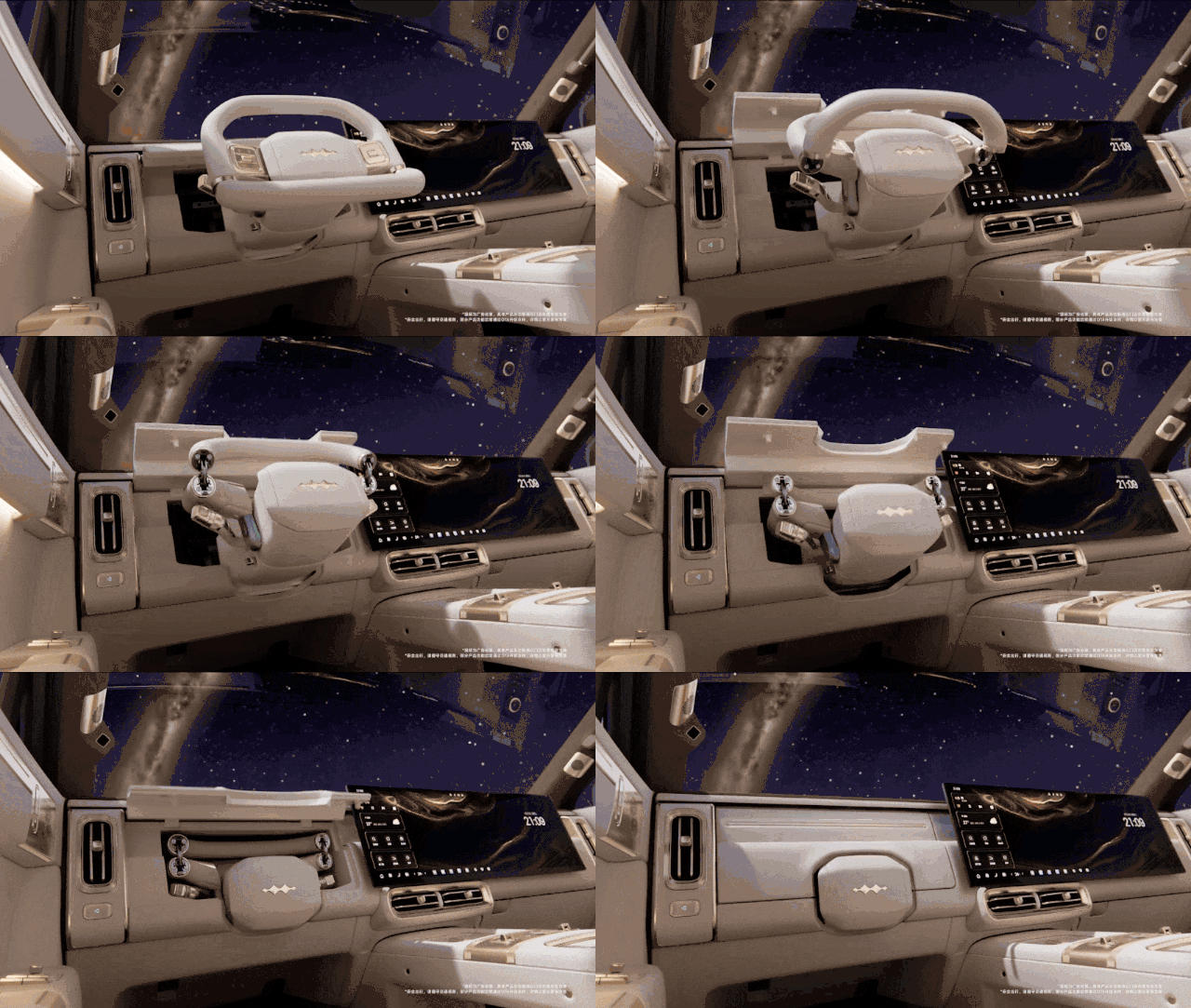
To change this cabin layout that has been used for over a hundred years, Fang Cheng Bao tonight officially unveiled the world's first folding steering wheel, which will enter mass production first on the Fang Cheng Bao Tai 9. That folding steering wheel that had only ever appeared on concept cars is now truly installed in a production vehicle.
Along with this finale technology, the final pricing of the Tai 9 was also announced.
The new car comes in three versions: the four-wheel-drive Max version at 279,900 yuan, the four-wheel-drive Ultra version at 299,900 yuan, and the Folding Smart Cabin version equipped with the folding steering wheel at 329,900 yuan.

Turning a Box into a Family Car
The exterior of the Tai 9 easily brings to mind the earlier Bao 5 and Bao 8—the boxy silhouette, thick cladding, and vertically arranged taillights are all familiar rugged elements.
However, the Tai 9 abandons the Bao 8's DMO platform in favor of the all-new DMS hybrid platform, and the body structure has also changed from body-on-frame to unibody.
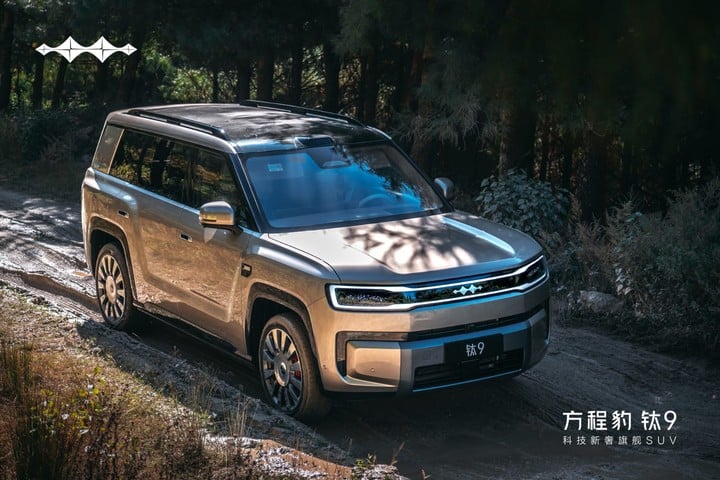
After eliminating the ladder frame and switching to a transverse powertrain layout, the vehicle frees up more cabin space. Combined with a length of 5270 mm, a width of 1999 mm, a wheelbase of 3130 mm, and the flat roofline of a boxy design, the Tai 9 achieves a cabin-to-body ratio of 90%, with vertical space in all three rows at around one meter.
Even with six people fully loaded, the trunk still offers 665 liters of capacity, enough for six 20-inch suitcases, and can expand to 1245 liters with the third row folded down.

The Tai 9's interior uses a 2+2+2 six-seat layout, with considerable thought put into every row. The front passenger seat is equipped with a zero-gravity rocking seat with a 6° swing amplitude; the second row features dual zero-gravity seats that support lateral sliding, and the power armrests remain level even when the seats are fully reclined.
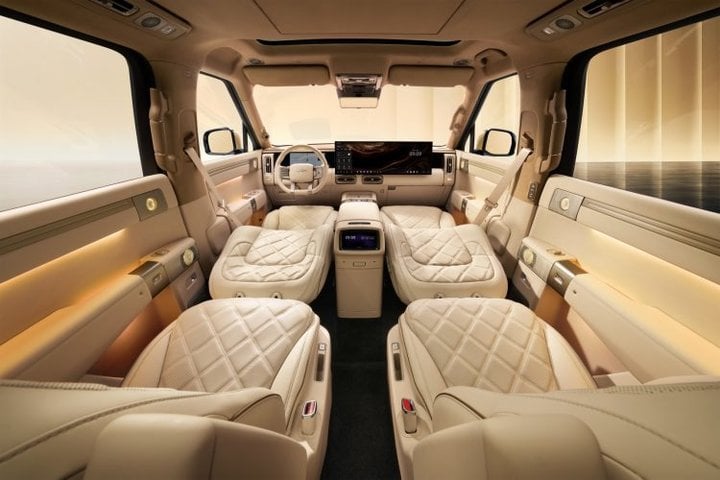
The third row hasn't been relegated to an emergency corner either—independent ventilation, heating, ten-point massage, and four-way power adjustment are all included, with the backrest reclining up to 156°.
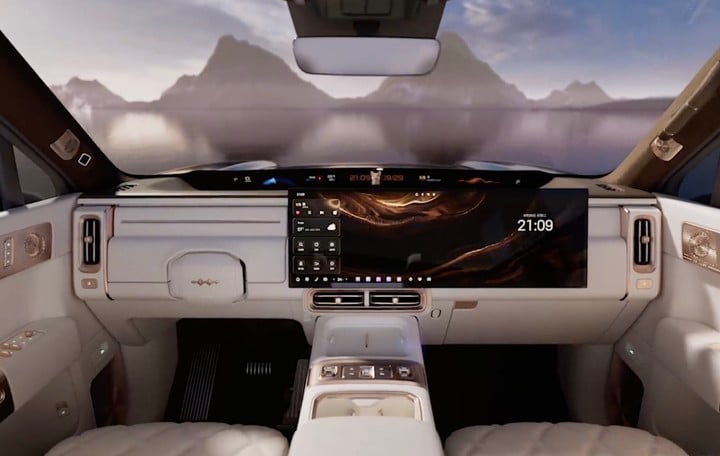
The sensory features in the cabin are also fully loaded: the center console houses a 30-inch seamless 5K large screen with no splicing bezels in the middle of the display, supporting single-person, dual-person, and three-zone free split-screen modes.
The rear row is equipped with a 21.4-inch ceiling-mounted screen and a 6.6-inch detachable control screen. The 31-speaker Devialet audio system also adds independent headrest speakers to the four seats in the first two rows, and wireless karaoke extends to the third row as well.

In addition, BYD's first nano water-ion air conditioning, 22 heating points covering all three rows, graphene far-infrared heating for the driver and front passenger, an 11.3-liter dual-door refrigerator with cooling and heating, and a Givaudan custom fragrance have all been installed in the Tai 9.
Moving to the rear, the power split tailgate extends the vehicle's use scenarios from the cabin to the outdoors.
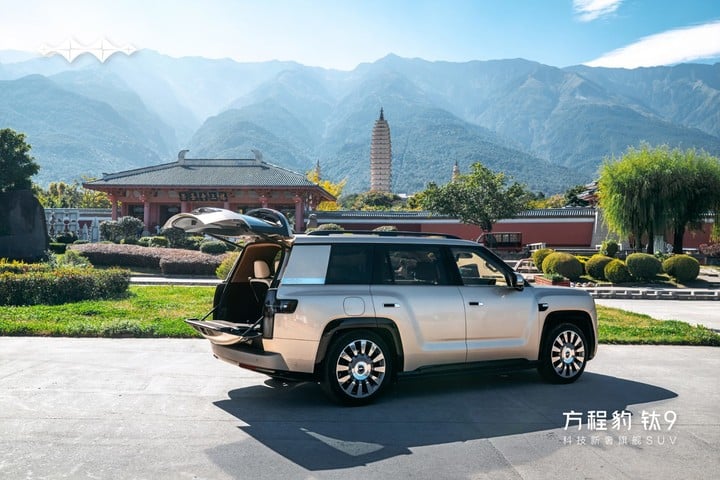
Its lower tailgate can bear 300 kg and can serve as a viewing platform or table when camping. The rear can also be optionally equipped with a power tow hook rated for two tons of towing capacity, and the rear roof even has a reserved powered expansion rail—great for hanging a reading light, clothes rail, or projection screen.
Once on the road, the all-new DMS hybrid platform is the real highlight of this car.
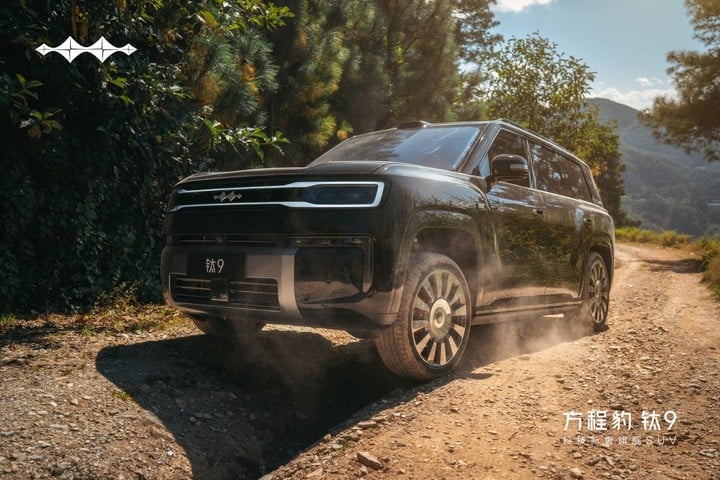
This system consists of a 1.5T plug-in hybrid dedicated engine and front and rear dual motors. The engine produces a maximum power of 115 kW, the front and rear motors each output 200 kW, and the combined motor power reaches 400 kW, propelling this nearly 3-ton behemoth from 0 to 100 km/h in 4.8 seconds.
Thanks to six-piston fixed calipers at the front, the Tai 9's 100-to-0 km/h braking distance is just 34.5 meters.
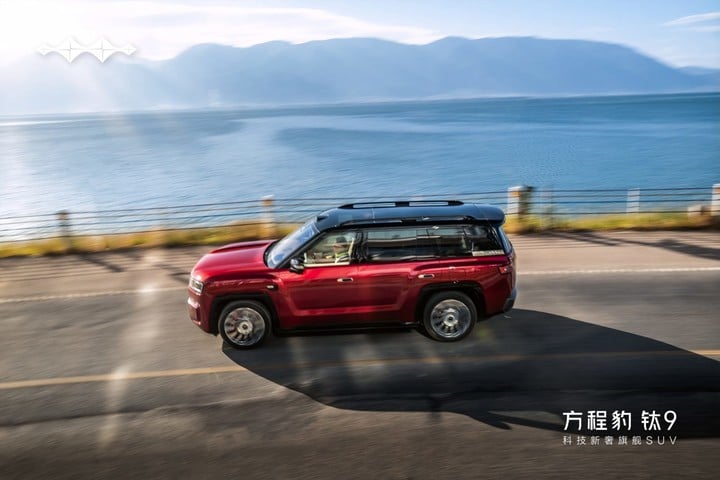
The Tai 9 draws its energy from a 66.48 kWh second-generation Blade Battery, with a CLTC pure electric range of up to 400 kilometers, WLTC fuel consumption of 6.4 liters per 100 kilometers when the battery is depleted, and a combined range of 1,630 kilometers on a full tank and full charge.
In an official real-world test from Mount Tai to Jiuzhaigou, the Tai 9 achieved a measured result of 1,539.9 kilometers, and finally climbed all the way up Jiuzhaigou's winding hairpin turns on a zero charge. Paired with BYD's flash charging technology rolled out this year, the Tai 9 can charge from 10% to 97% in just nine minutes, so driving it as a pure EV day to day shouldn't be a big problem.
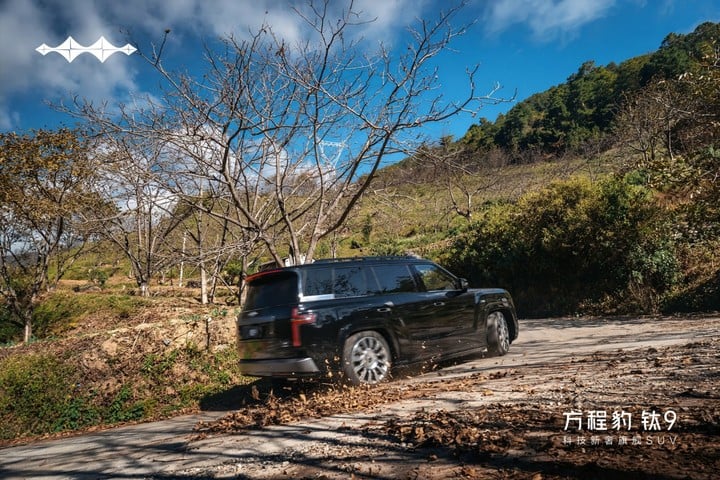
The key breakthrough of this platform in chassis control lies in Fang Cheng Bao's pioneering rear-drive vector control technology, which allows the torque of the rear single motor to be distributed independently between the left and right wheels. The single-wheel escape torque can be amplified 1.2 times, and the torque difference between the left and right wheels can be steplessly adjusted between 0 and 2,600 N·m.
At the same time, paired with the iATS intelligent all-terrain system that can automatically identify ice and snow, sand, and muddy road conditions, even without the ladder frame, the Tai 9 still has good escape capability when encountering rough roads in the suburbs.
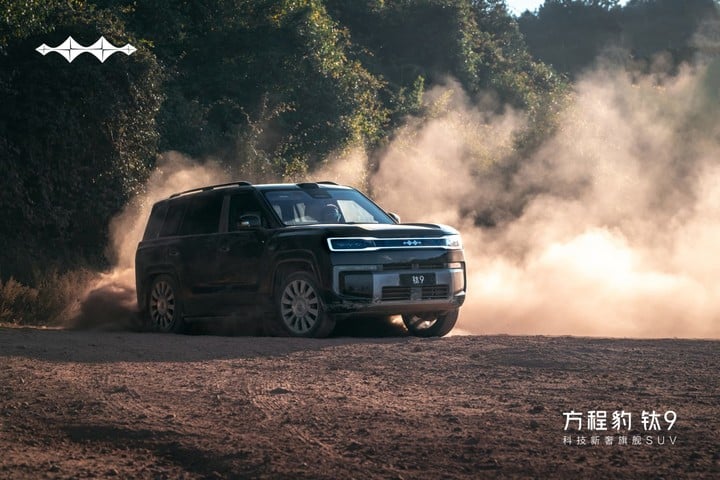
For daily driving, the Yunian-A dual-chamber air suspension can preview the road 15 meters ahead and quickly adjust damping, while the ±7° rear-wheel steering reduces the turning radius of this 5.3-meter vehicle to 4.95 meters. On low-traction surfaces, activating Bao-style turn-around can even achieve a 3.55-meter turning radius.

In terms of assisted driving, the Tai 9 comes standard across the lineup with the God's Eye B assisted driving system featuring a RoboSense 192-line LiDAR.
Additionally, addressing the rear-end safety concerns most associated with six-seat vehicles, the Tai 9 reinforces the interior of the third-row seatbacks with anti-puncture steel plates, equips the entire vehicle with 13 airbags, and has successfully passed rear-end collision and puncture tests at twice the national standard energy level.
Overturning a Century-Old Spatial Layout
After three years and two months since its founding, Fang Cheng Bao's cumulative user base has exceeded 600,000. At this juncture, Fang Cheng Bao, in urgent need of moving upmarket, has positioned the Tai 9 as "new tech luxury."
However, to gain a firm foothold in the flagship market, piling on features alone is far from enough—exterior recognizability and craftsmanship quality often determine consumers' first impression.
"Being stylish is the basic requirement for a flagship car, but having your own style—that's Fang Cheng Bao's personality," said 熊甜波.
Facing the increasingly similar-looking large new energy SUVs on the market, the Tai 9 presents an original design called "Heaven and Earth Cosmology Aesthetics."
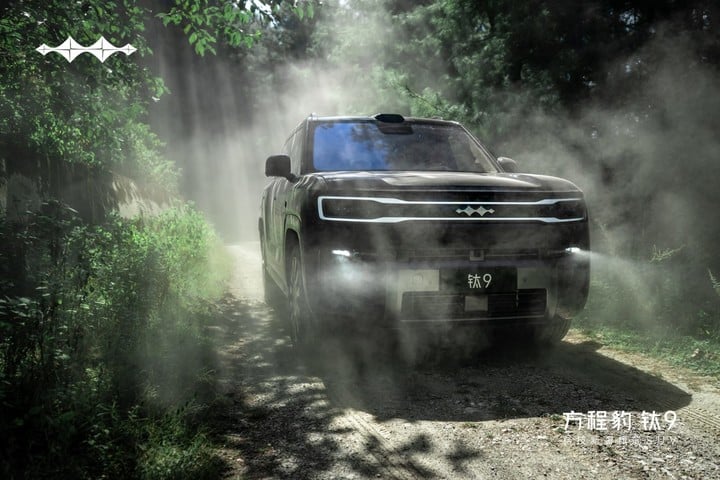
The integrated star-ring headlights on the front face have a circumference of over 4 meters, wrapping Fang Cheng Bao's signature landscape-reflection logo in the center. Inside, they integrate 300 LED beads and more than 9,900 micron-level laser-engraved star points.
At the same time, the side of the vehicle features a floating wheel emblem similar to Rolls-Royce's—the central logo always stays upright as the wheels turn.
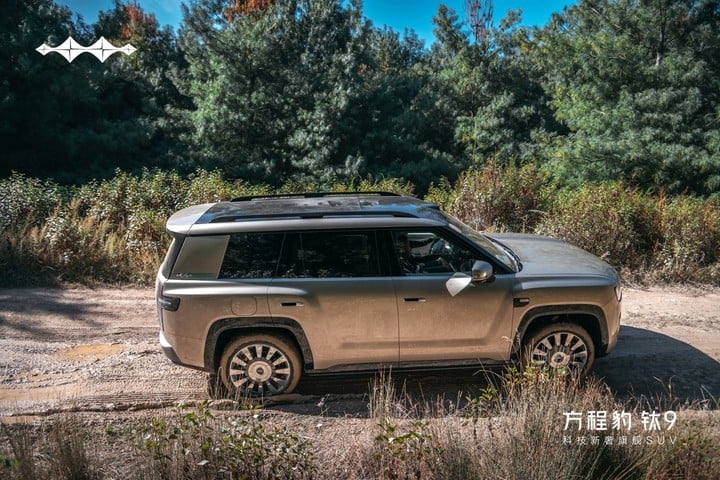
Beyond the visible styling features, Fang Cheng Bao also put effort into the paint finish and cabin details. The Tai 9 uses the same nano-ceramic dual-layer clear coat as the Yangwang U8L, with a certain self-healing capability for minor scratches.
Inside the cabin, Fang Cheng Bao extensively uses suede material—even the back of the second-row ceiling screen has been finely finished. The seat cushion area is layered with five different materials, including 1.3 mm Nappa leather, a ventilated composite layer, and thickened comfort foam.
These materials, which may not be fully reflected on the spec sheet, uphold the baseline of traditional luxury. But what truly sets the Tai 9 apart from conventional flagship frameworks is the world's first mass-produced Folding Smart Cabin.
Article title: BYD Unveils Folding Steering Wheel! Debuts on Fang Cheng Bao Tai 9, Starting at 279,900 Yuan!
Body:

As early as 2016, the concept of a folding steering wheel appeared in the automotive industry, but it stayed on auto show display stands. The obstacle to mass production was precisely the steering column behind the steering wheel.
As long as this iron column remains, the steering wheel has nowhere to hide.
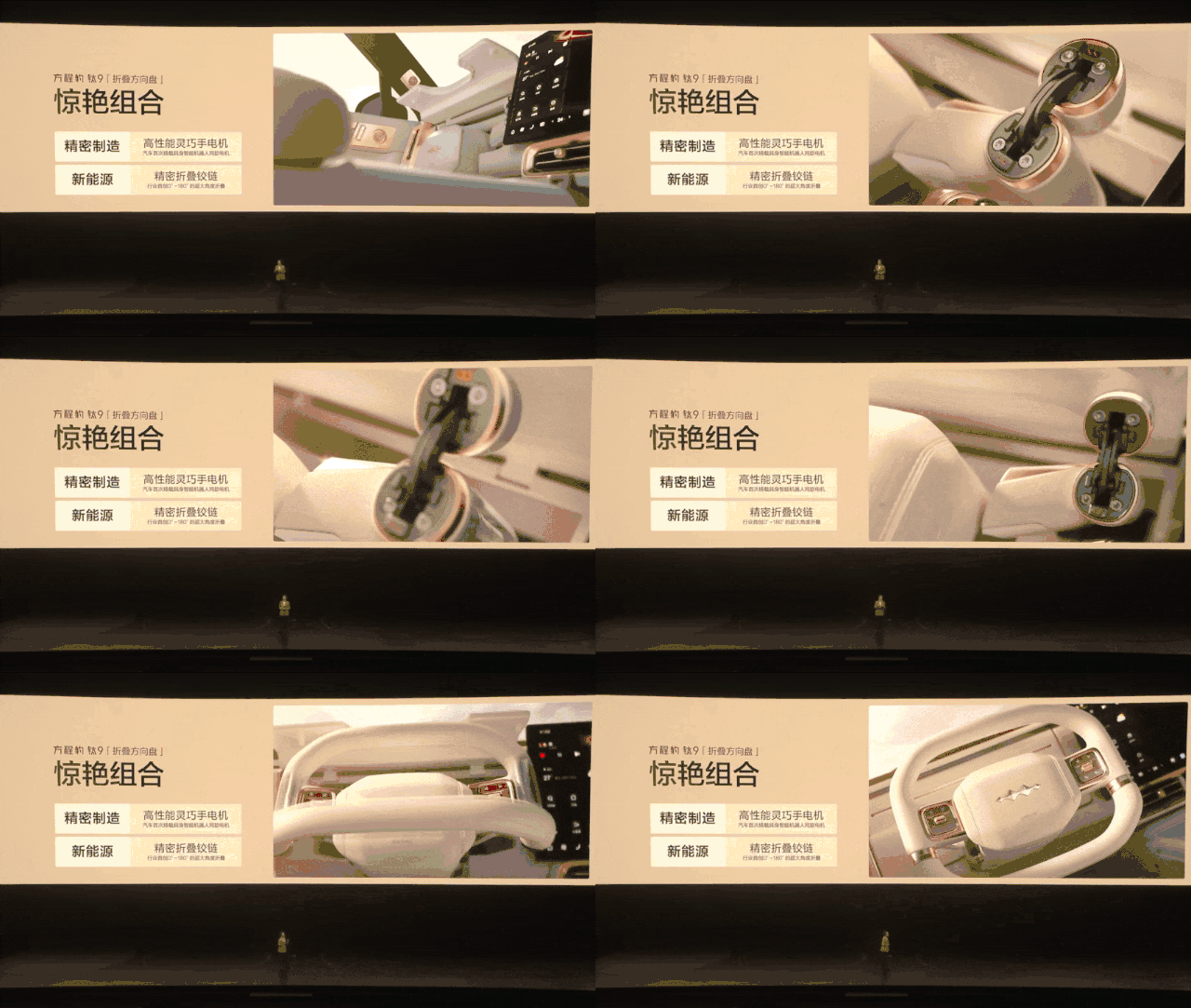
The real turning point came from steer-by-wire technology. After eliminating the mechanical connection, BYD spent more than 3 years, invested hundreds of engineers, and accumulated 272 patents to integrate the folding mechanism, steer-by-wire chassis, and lie-flat seat into a production vehicle.
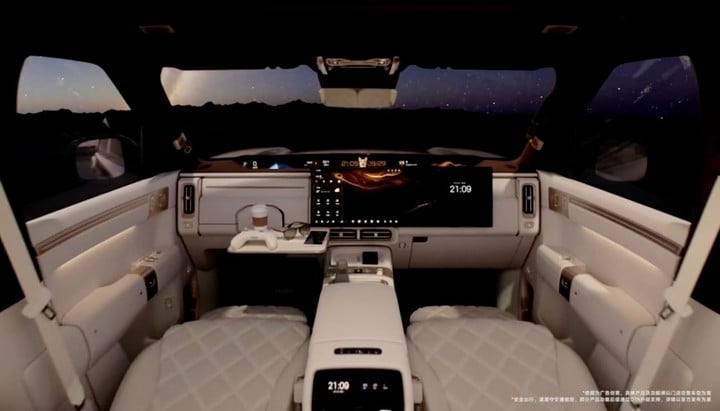
This composite folding mechanism is equipped with an automotive-grade high-performance brushless motor and precision hinges, with a hinge open-close lifespan of 80,000 cycles. In just 10 seconds, the steering wheel can smoothly retract flush with the instrument panel, and it can even fold while parking when remote parking is activated.
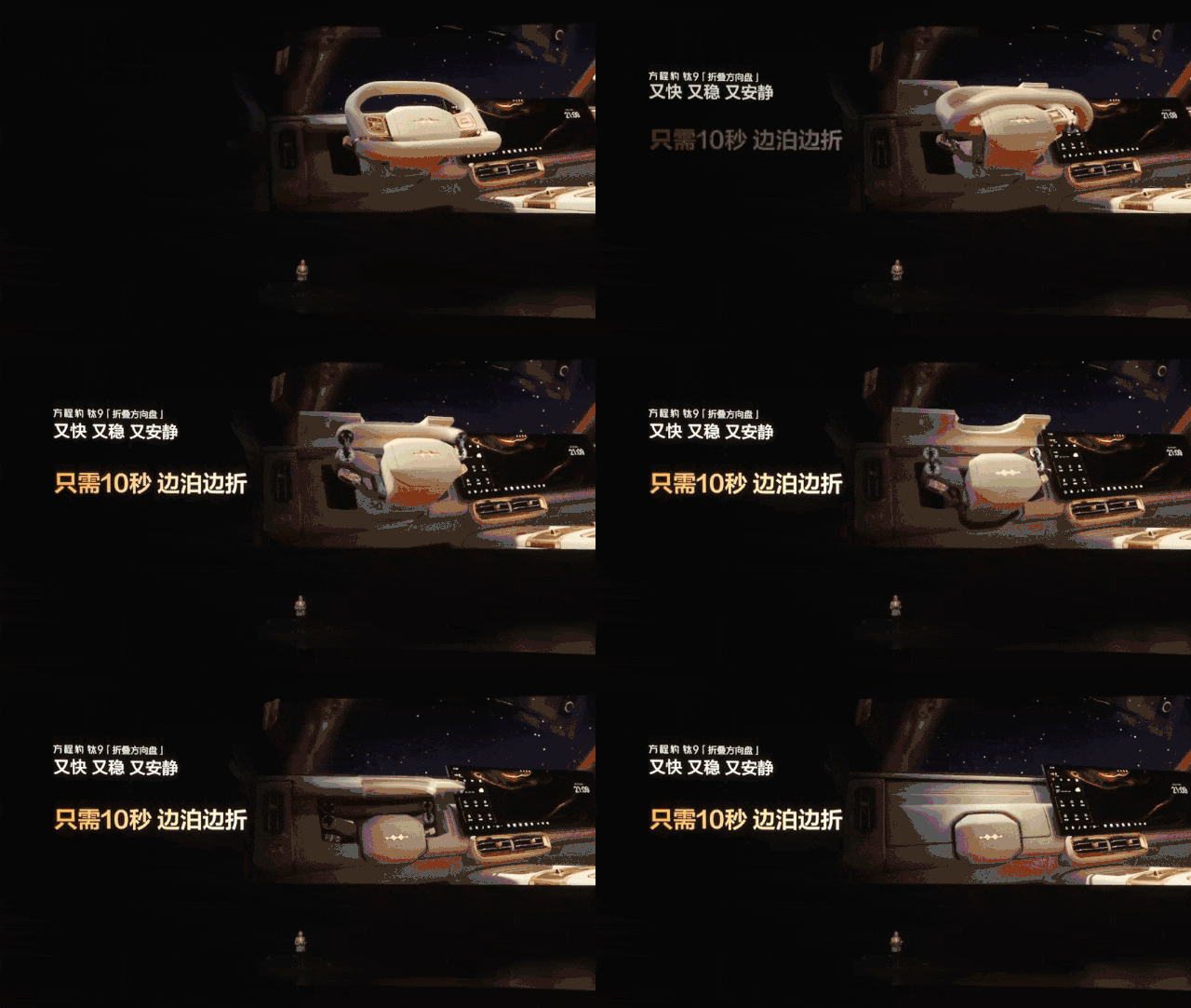
In the deployed state, it still retains the familiar full circular wheel and physical combination switches, so there is not much of an adaptation cost.
In terms of safety, which everyone cares about most, this system is designed with fivefold redundancy in power supply, communication, sensing, control, and actuation. It has also obtained ASIL-D, the highest level of functional safety certification, and has strict driving safety interlocks. In addition, because the mechanical steering column has been eliminated, the risk of column intrusion in a collision is greatly reduced.
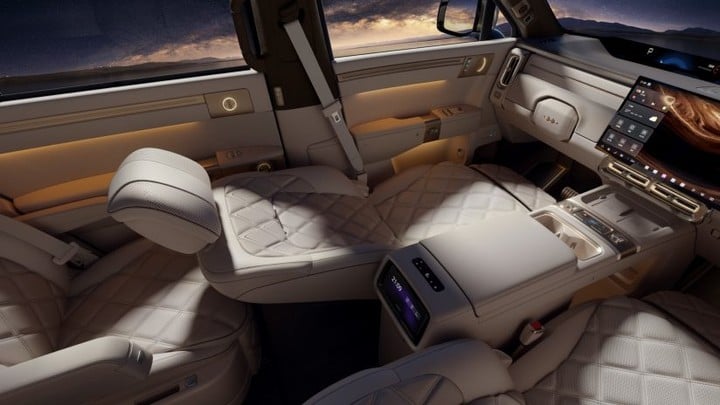
After the steering wheel retracts into the instrument panel, 25 centimeters of longitudinal space immediately opens up in front of the driver's seat, enough to fit a small table. Working with it is BYD's newly developed "lie-flat seat." Press a button, and the seat cushion automatically rises while the backrest reclines to 165° within 20 seconds, providing an experience close to lying flat.
The person who for years could only grip the steering wheel while rushing along the road can finally, when the car is stopped, enjoy a comfortable sleep.
In the more than one hundred years since the birth of the automobile, almost all layout disruptions inside the cabin have taken place somewhere other than the driver's seat. Today, BYD has folded the steering wheel into the instrument panel. What it folds open is only the 25 centimeters in front of the driver's seat, but it also pushes open a door to the future ahead of time.
When L3 and L4 autonomous driving truly become widespread, the steering wheel may completely disappear from the driver's field of view. By then, there may no longer be a fixed driver's seat in the car, no longer a distinction between driver and passenger, and the cabin will become a mobile living room, a quiet study.
We still cannot accurately describe what cars ten years from now will look like, but at least starting tonight with the Tai 9, the person who has always silently held the steering wheel for the whole family has finally been given serious consideration.