 Newshot
Article title: Why Are College Students Choosing to Innovate with HarmonyOS?
Body: Today, with AI coding tools and agent technology rapidly becoming widespread, the barrier to software development is undergoing a subtle shift. As writing code is no longer an exclusive skill for computer science students, more and more young people from design, physics, statistics, and other disciplines are trying to turn the ideas in their heads into runnable applications with their own hands.
A question follows: when technical implementation is no longer an absolute obstacle, what do college students most want to solve with code? The answer is hidden in a national competition that just concluded.
On November 15, the finals of the 2026 "China Collegiate Computing Contest—AI Creativity Competition" came to a close at Nanjing University. Founded in 2018, the competition was co-hosted by Huawei for the first time this year, and the HarmonyOS College Innovation Competition was officially included as an official track. In just a few months, it attracted more than 800 universities, nearly 5,000 teams, and nearly 10,000 students from across the country, who submitted more than 2,800 valid entries.
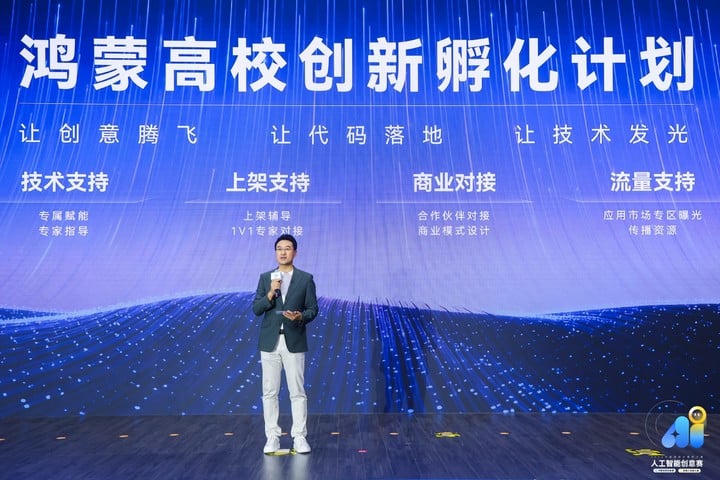
He Gang, CEO of Huawei's Device Business Group, attended the awards ceremony and announced the launch of the "HarmonyOS College Innovation Incubation Program," offering support including 1V1 technical guidance, full-cycle product refinement, business model guidance, practical commercialization, platform technology empowerment, app listing process guidance, exposure in a dedicated App Market section, and official matrix promotion.
Through this incubation mechanism, Huawei hopes to accompany good ideas through the complete lifecycle from the classroom and the competition stage to the real market. "We hope more students will join our competition and give their works a chance to become products that consumers can experience. This is also the next rhythm of HarmonyOS ecosystem development," said He Gang.
Unfolding the "creases" of daily life to find hidden pain points
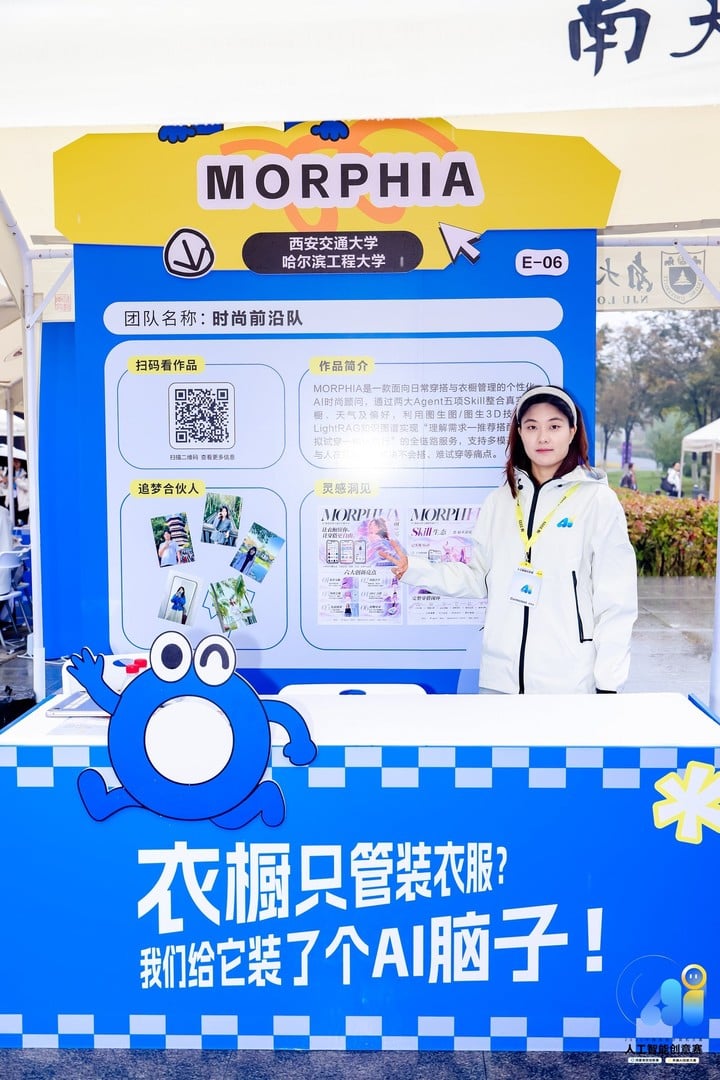
Looking at the backgrounds of the 51 teams in the finals of the HarmonyOS track, one can clearly sense a cross-disciplinary atmosphere that breaks with traditional engineering competitions: "Wanxiang Youxu" was formed across schools by students in product design and the physics strengthening program; "Lingchu Suixing" was led by statistics students; and "MORPHIA," focused on smart outfit matching, brought together graduate students in underwater robotics and software engineering.
When invoking HarmonyOS system capabilities, they displayed a sober sense of "engineering restraint"—not blindly believing in AI taking full control, but using code to preserve respect and choice for vulnerable groups and ordinary people.
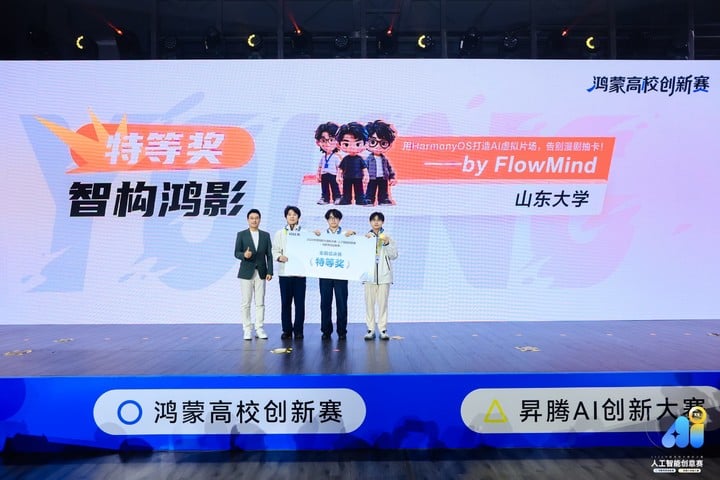
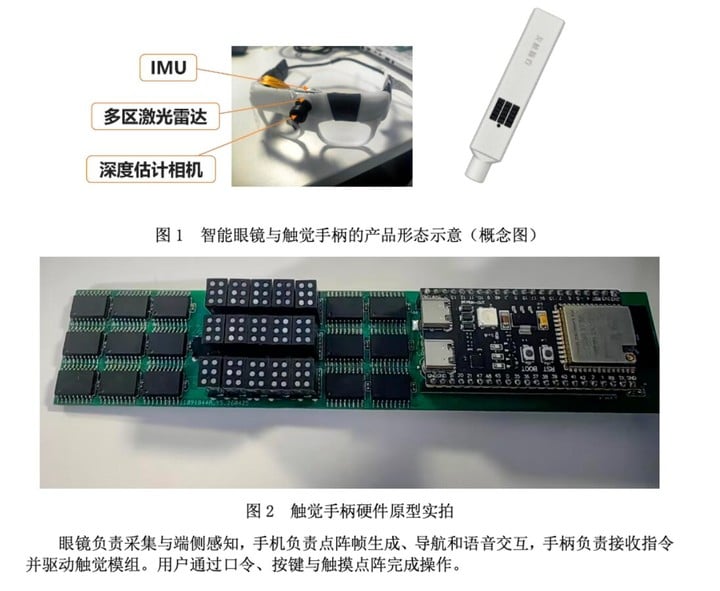
While developing "Lingchu Suixing," the Shandong University team found that existing assistive software for the blind mostly relies on continuous, fragmented voice announcements, which not only struggle to convey three-dimensional spatial relationships but also occupy the "safety channel" visually impaired users need to hear ambient sounds and vehicle warnings.
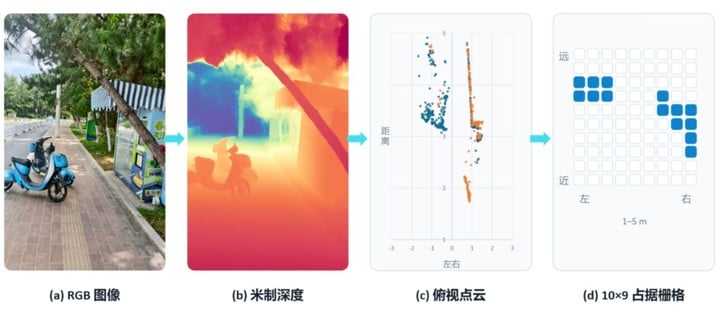
To this end, the team built a collaborative chain of "smart glasses perception + HarmonyOS phone decision-making + handle haptic presentation": after the glasses complete depth estimation locally, the phone-side Agent converts the spatial layout into dot-matrix frames that drive physical contact points on the handle. By touching a dynamic dot matrix similar to Braille with their fingertips, visually impaired people can intuitively judge the distance and direction of obstacles, leaving precious hearing for real road conditions.
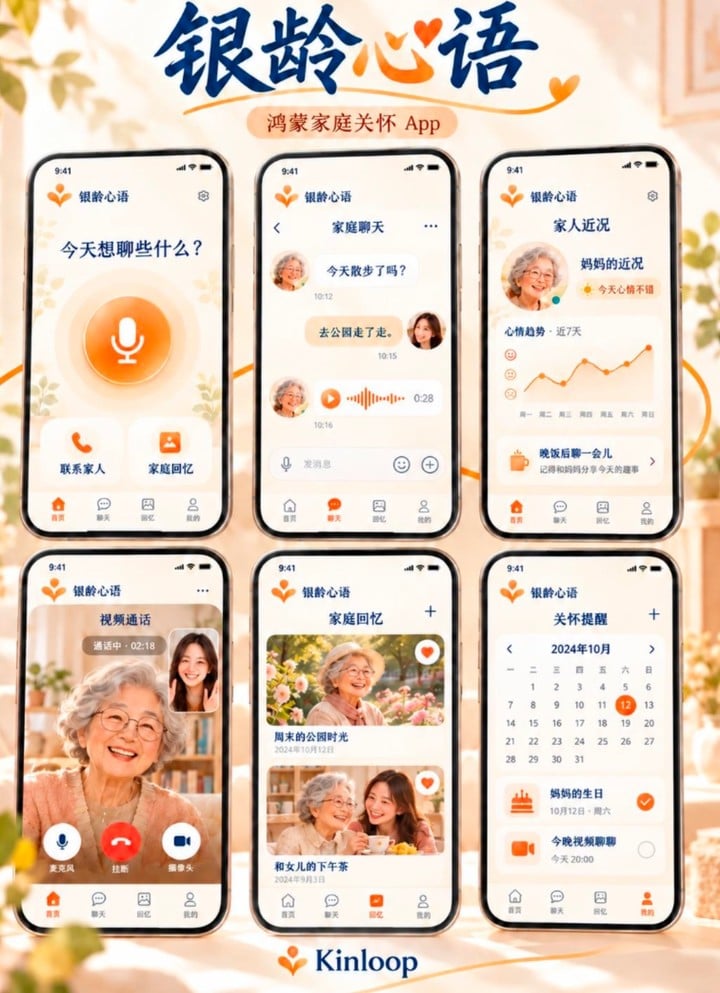
"Yinling Xinyu," created by students from Huazhong University of Science and Technology and South China Normal University, originated when a student discovered that her grandmother was at a loss when faced with the complex menus of mainstream apps.
The team split the same application into two dedicated modes: "Elder" and "Family." The elder side removes cumbersome layers—users only need to speak, and the system invokes HarmonyOS CoreSpeechKit to recognize natural spoken language and organize it into message drafts or "family memories"; the family side can receive unread summaries and emotional cue prompts, making it easier to follow up communication in time.
At the same time, the team set strict "safety policies" for the Agent—all message drafts sent on behalf of the elderly must be confirmed by them a second time before being sent, and emotional cues serve only as care prompts and never replace medical judgment, so that technology truly serves ongoing communication among family members.
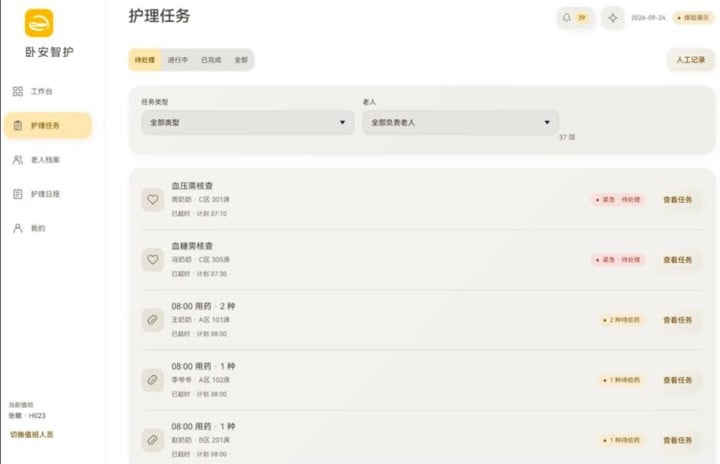
"Wo'an Zhihu" from the Beijing University of Technology team addresses the centralized care scenario of long-term bedridden elderly in nursing homes, focusing on the cumbersome verification and shift-handover omissions caregivers face in daily medication, turning, and cleaning.
When connecting to "Xiaoyi" through the HarmonyOS Agent Framework to generate shift-handover daily reports, the team strictly defined technical boundaries: task priorities and status statistics are calculated entirely by deterministic code rules, and the large model is only responsible for organizing language summaries, structurally preventing AI hallucinations from interfering with care safety.
Running on HarmonyOS 7, "MORPHIA" uses a multi-agent architecture to connect clothing recognition, weather adaptation, and 3D virtual try-on into a closed loop, and also designed a physical "clothing card" compatible with NearLink and low-power Bluetooth (BLE), which can trigger the corresponding clothing in the wardrobe to flash and sound with one tap in the app.
The team deliberately placed a "tightening band" on AI: it only performs deduplication planning based on the user's real wardrobe inventory. If the wardrobe lacks rain gear, it never fabricates items or blindly makes decisions for people, rejecting AI hallucinations.
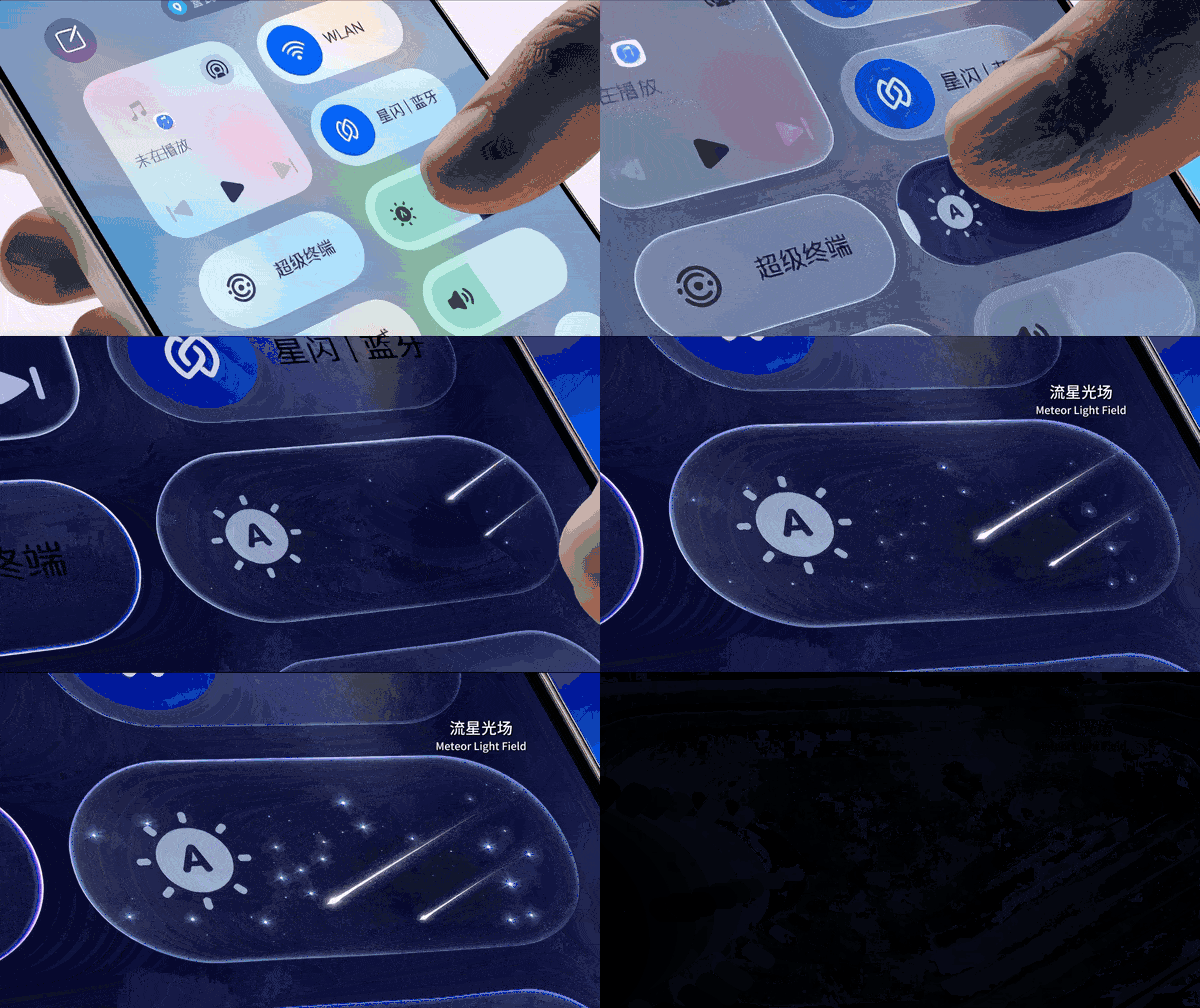
"Wanxiang Youxu," from teams at Guangdong University of Science and Technology and Xi'an Jiaotong University, attempts to smooth the abruptness of sudden pop-ups and harsh light and shadow in digital interfaces.
The team designed 7 interaction imagery concepts for HarmonyOS 7 that follow physical laws: deleting a notification card vaporizes like "mist gently dispersing," locking a card brings a "frozen ice" texture to the edges, and turning on the watch flashlight simulates dawn light brightening gradually from bottom to top, reducing users' visual and cognitive burden with intuitive natural changes.

From competition stage to market, supporting young people's ideas through the full cycle
That students outside computer science can get 3D rendering, on-device speech recognition, and multi-device collaboration running in just a few months is thanks to the HarmonyOS foundation's high level of encapsulation of complex technologies—with the support of the HarmonyOS Agent Framework (HMAF 2.0) in HarmonyOS 7, the system-level "Xiaoyi" open capabilities, and AI-assisted coding tools, the barrier to底层 development is being greatly lowered.
According to statistics from the competition organizing committee, as many as 80% of the entries in this year's competition applied HarmonyOS AI capabilities. Intelligent Agents are no longer an exclusive topic for a few top laboratories, but have become a standard component for college students to solve everyday pain points.
This benefits from the one-stop toolchain provided by HarmonyOS: the DevEco Code assisted programming tool and new quick-start tutorials introduced alongside HarmonyOS 7 compress the basic onboarding time to under 2 hours, even enabling a test run by integrating multiple Kits and writing just 5 lines of code.
As underlying engineering complexity is absorbed by system-level capabilities, these competing students can focus more energy on scenario insight and product refinement. According to ifanr, in the HarmonyOS developer community, an astronomy graduate student with zero programming background has already used AI coding instructions to quickly generate 3D model interaction features, and a senior student integrated the HarmonyOS Agent Framework into a travel notes app in just 10 minutes.
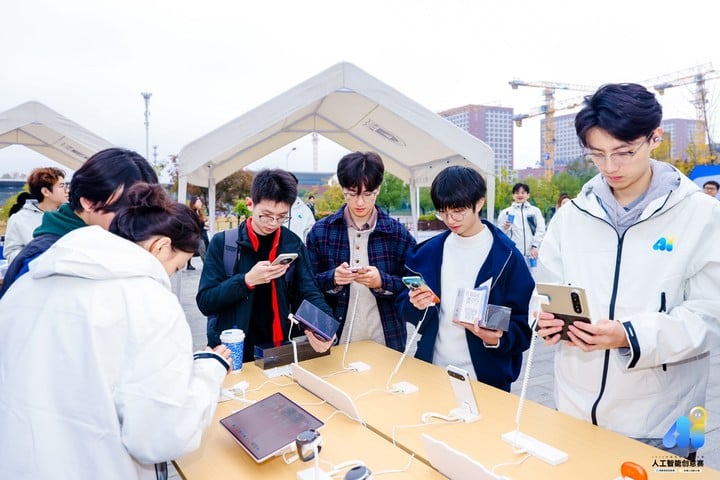
On the stage of this year's national competition, many "small but beautiful" applications with precise angles and complete experiences also emerged, demonstrating productization breakthroughs by interdisciplinary young groups. As He Gang, CEO of Huawei's Device Business Group, said on site, "Having an idea is your ticket in. From the very beginning, we hoped to set no threshold—liberal arts, sciences, engineering, and so on... all majors should participate."
He Gang recalled on site his experience participating in a circuit design competition during college, barely sleeping for three days yet enjoying it. Combining his own experience, he also pointed out a common challenge many university innovation works face after competitions: outstanding creativity, but a lack of a clear path to productization and commercialization.
This is precisely the direct motivation for Huawei's launch of the "HarmonyOS College Innovation Incubation Program." It is Huawei's first innovation and entrepreneurship support project specifically established for the college student developer group since HarmonyOS NEXT launched more than two years ago.
The program will invest 50 million in comprehensive resources over 3 years. For student works that win at the finals and are listed on the App Market, it will establish a connection between college student developers and real consumers, helping student teams bridge the "last mile" from competition stage to market.
Industry-education integration and the trend of the times: innovation blooms in the HarmonyOS ecosystem
In May this year, the HarmonyOS College Innovation Competition was officially listed as a "competition item in the National Ranking of Discipline Competitions for Ordinary Universities" by the China Association of Higher Education, marking the formal integration of cutting-edge industry technology standards into the university talent evaluation system. This ecosystem layout is stepping right into the policy tailwind of the national digital transformation of education.
With the Ministry of Education's release of the "AI + Education" Action Plan, promoting interdisciplinary AI teaching and strengthening young students' agent application innovation and high-quality employment has become an important direction for university education. To sow the seeds of technology directly on campuses, Huawei has also built a bridge connecting academic theory and frontline industry standards through the HUAWEI Student Developers (HSD) campus developer program covering more than 300 universities and more than 430 "HarmonyOS Campus Open Classes" that have reached over 90,000 college students cumulatively.
Accumulation at the campus level has also found a real outlet in the rapid expansion of the HarmonyOS industry side. According to the "HarmonyOS Ecosystem Talent White Paper 2025," the HarmonyOS ecosystem will face a talent gap of one million in the next 3 to 5 years, with new employment demand reaching 1 million to 3 million people; while Maimai Gaopin's "2026 Spring Recruitment Workplace Insight Report" shows that the recruitment index for HarmonyOS development positions rose 86.02% year-on-year, with the supply-demand ratio dropping to 0.92, presenting a situation of "more positions than people."
For college students, every line of HarmonyOS code polished in the national competition is directly translating into future career competitiveness.
Beyond the competition stage, a deeper industry-education integration is unfolding in universities across the country. To date, through the "Intelligent Base" and industry-education integration projects, Huawei has jointly built more than 800 HarmonyOS-related courses with more than 650 universities nationwide, attracting more than 460,000 student developers to register and join.
Why Are College Students Today Choosing to Innovate with HarmonyOS?
At the award ceremony, 陈云松, Deputy Secretary of the Party Committee of Nanjing University, mentioned in his speech that Nanjing University is building an “AI general education core curriculum” so that students in all majors can not only use AI but also understand and apply it flexibly, thereby promoting the deep integration of the “education chain, talent chain, innovation chain, and industry chain.”
吴飞, Director of the Competition Expert Committee and Dean of the Undergraduate School at Zhejiang University, also pointed out that the competition adheres to “promoting learning, teaching, and innovation through competition,” allowing students to gain skills while solving real problems and accelerating their transformation from “book-oriented” to “creative” talent.
During the competition, Huawei and Nanjing University also further clarified their cooperation in research breakthroughs and joint talent training in HarmonyOS system innovation fields such as spatial computing, 3DGS, and user experience.
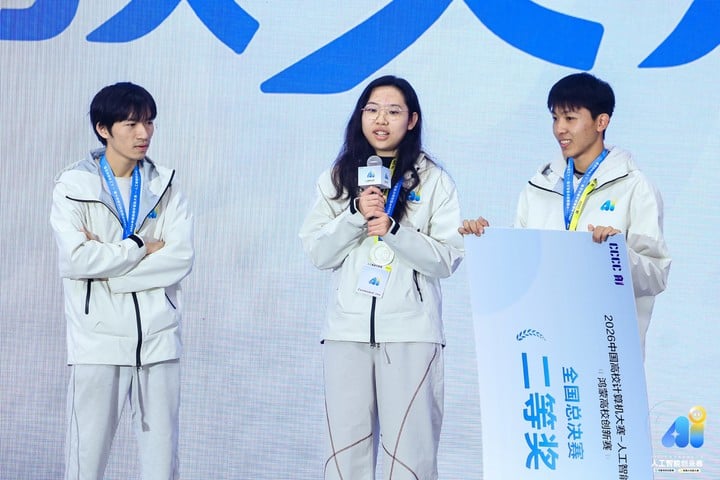
At the finals site, Huawei Terminal BG CEO何刚 also disclosed a key milestone figure: “The HarmonyOS ecosystem is growing vigorously. Today it is 99.8 million terminal devices, and in a few days it should exceed 100 million.”
HarmonyOS, now entering the “100 million era,” is in an explosive period in which all-scenario intelligence and AI Agent are reshaping interaction experiences. Compared with highly rigid traditional mature platforms with established landscapes, the fast-growing HarmonyOS ecosystem leaves broad blank spaces and incremental dividends for young developers in cross-device collaboration across phones, tablets, PCs, and wearables—
Student teams do not need to repeatedly engage in involution in the stock market; instead, relying on the HarmonyOS technology foundation, they can directly address real-life pain points and bring excellent ideas into more people’s real lives.
In China today, the prosperity of any leading commercial application is no longer surprising. The true vitality of an operating system lies precisely in whether it is willing to support the ecosystem of long-tail applications and encourage young practices that focus on marginalized groups and are full of restraint and warmth.
As the underlying threshold for innovative development is leveled and incubation channels are significantly broadened, every small act of kindness originating from campuses will take root and sprout in this soil called HarmonyOS, and welcome a true flourishing of innovation in the AI era.