 Newshot
Article title: Jianmeng Seedance 2.5 Major Upgrade: AI Video Generation Finally Has Its Own 4K Production Line
Body:
Jianmeng Seedance 2.5 Major Upgrade: AI Video Generation Finally Has Its Own 4K Production Line
2026-11-18 12:00
At the pinnacle of the visual media world, there is always a place for the big screen.
So there is a simple, brutal test for judging whether a visual craft has made it: does it dare to go onto the big screen? Film stock passed this test back in the day, digital cinema cameras passed it too, and 3D animation likewise passed it. Each time a new technology passes, it means it has earned its ticket into the mature visual effects industry.
Over the past two years, AI video generation has seen one entrant after another take the stage, each more impressive than the last. But when it comes to the real crucible of commercial production, clients want native 4K, directors want one-take shots, brands change requirements at the drop of a hat, and production teams still have to walk a tightrope between cost, timeline, and final delivery.
Recently, ifanr noticed that Jianmeng Seedance 2.5 has launched a 4K version, bringing capabilities such as up to 30-second single generation, full-modality reference, video editing and extension up to a higher image quality specification.
The coming-of-age ceremony for AI video should begin with having a 4K production line.
Under the client's microscope, AI video faces the 4K gauntlet
In the past, when trying out AI video models, I always liked to give them scenes busy enough. Giant monsters, armies of thousands, apocalyptic cities, and preferably some explosions and camera movement—even a ten-second clip could carry the momentum of a blockbuster trailer.
But on closer thought, what really gives commercial production teams headaches might be a label on a bottle of perfume, a product image reused across different channels, or a shot the director suddenly asks to modify.
So when trying out Seedance 2.5 4K, I wanted to put it into four specific commercial scenarios to see how much the image quality upgrade can actually change real work.
Brand TVC, the delivery standard hidden in product close-ups
Suppose a client wants to shoot an ad for a high-end mechanical wristwatch. The camera starts from an extreme close-up of the dial, sweeps past the diamond hour markers and the date window, and finally pulls back slowly to reveal the complete watch resting in a private study.
The whole film has no intense action, yet the difficulty is all hidden in the details. The facets of the metal bezel, the sunburst pattern on the dial, the reflections that shift as the camera moves, and the digits in the date window all need to stay clear, accurate, and continuous.

For a brand TVC that needs to be delivered in 4K, generating directly in 4K means skipping the post-production upscaling step and avoiding the image quality issues that a second enlargement might introduce.
And the image quality upgrade goes beyond resolution. Seedance 2.5's 4K mode supports the 10bit BT.709 color format. Compared with common 8bit video, it can provide more delicate color gradations, reduce the color banding that easily appears in skies, gradient lighting, and similar scenes, make transitions more even, and leave more room for post-production color grading.
Especially for brand advertising, clients casually asking to adjust the product's color tone, the warmth or coolness of the image, or the overall mood is routine. Preserving more color information in the early stage naturally leaves more room for adjustment during post-production.
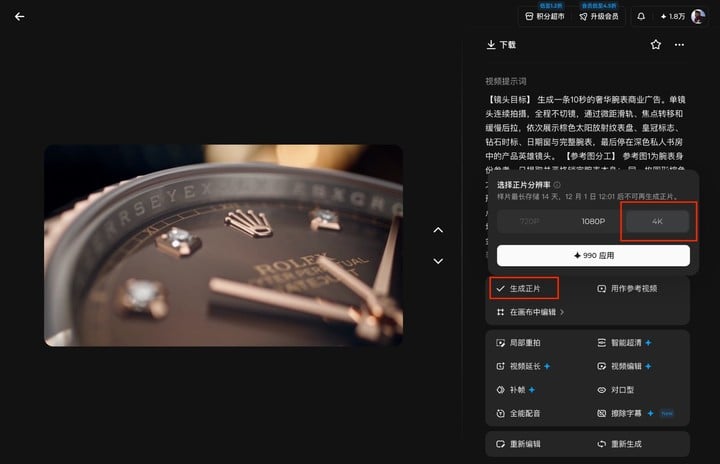
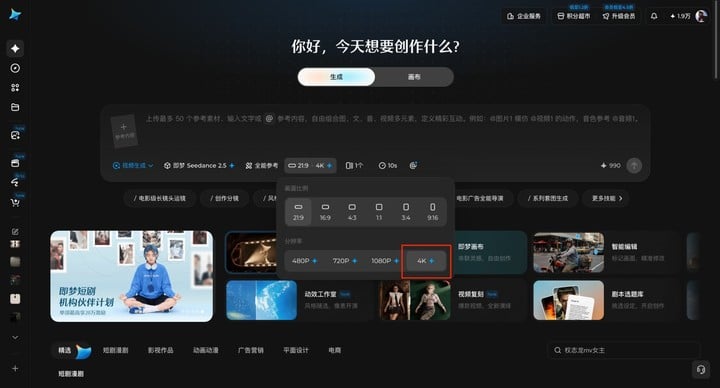
In actual use, I'd sooner recommend that budget-sensitive folks first use Seedance 2.5 (sample mode) at 480P to lock down the shot, composition, and pacing, and once they're happy with the creative, then choose "Ultra HD 4K" under "Generate Final Cut."
After all, client revision requests may never end, and there's no need to pay the 4K generation cost for every trial and error.
High-ticket e-commerce, one creative concept delivering six formats
When a model turns in a coat, the fabric texture, stitching, and drape need to be continuous and convincing. A wristwatch or a bottle of perfume may need to appear on a product detail page, in a vertical ad video, and on an in-store screen.

I also designed a 10-second high-end skincare ad referencing Estée Lauder Advanced Night Repair, focusing on testing the consistency of amber glass, metal reflections, liquid texture, and the brand label across continuous transitions. These details need to withstand close-up display on a product detail page and also suit the viewing distance of a large offline screen.
For e-commerce content teams, it's almost unheard of for one creative concept to serve only one channel.
A brand may need a horizontal ad, a vertical feed video, a square product video, or even ultra-wide in-store display material. Different platforms have different aspect ratio requirements, while the same product needs to stay visually consistent.
Seedance 2.5 4K supports six aspect ratios—horizontal, vertical, square, and ultra-wide all have corresponding 4K output dimensions—so teams can build versions for different channels around the same creative concept.
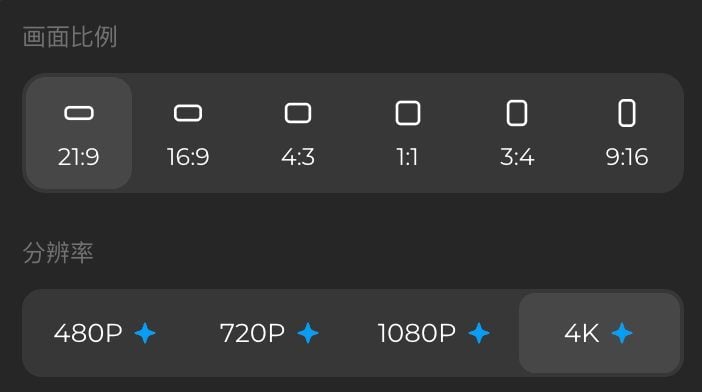
High resolution also leaves some room for post-production.
For example, a 3840×2160 horizontal video, in theory, if you crop one quarter of the original frame's area, still has 1920×1080 pixels, which can be used for localized close-ups, recomposition, and similar operations. Of course, the actual result still depends on the original detail, product position, and image composition.
Film concept previsualization, can 30 seconds carry a whole scene
Imagine a breakout scene in a late-night office building. The protagonist crosses the open office area, goes down a corridor, and enters the stairwell, with the camera following all the way.
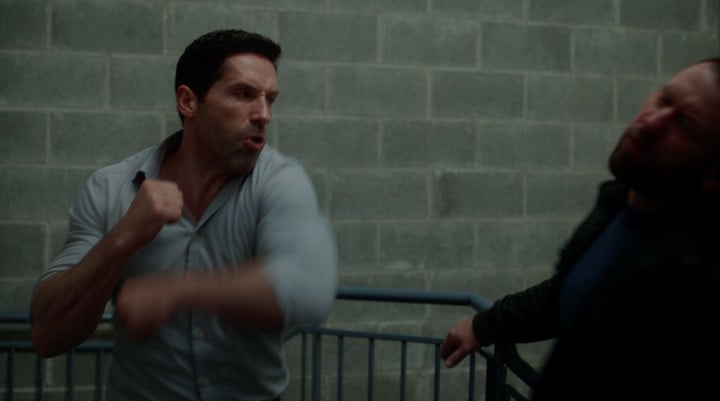
What the director really needs to judge is how the character moves, where the pursuers appear, how the camera is staged, and whether the rhythm of the whole scene holds up.
If the camera is aimed at a snow leopard on the Himalayan snowline, the test becomes something else entirely. As the camera slowly approaches, the gray-white underfur, black markings, slender whiskers, and nose-tip texture in backlight all need to be clearly distinguishable.

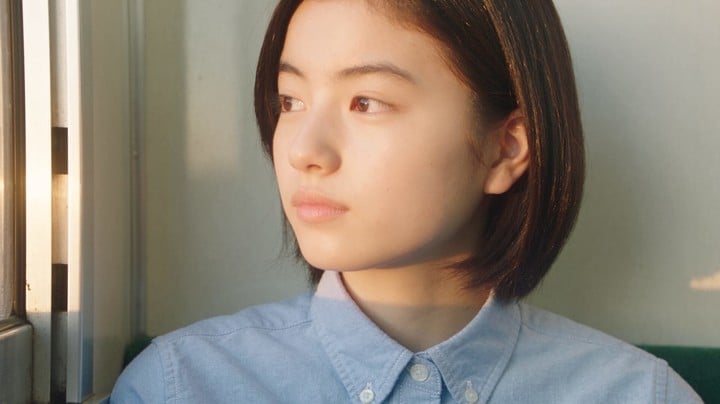
Switch to a tram close-up from a Japanese youth film, and the difficulty hides in the character's face.
A girl looks out the window, blinks lightly, and a faint smile appears at the corners of her mouth. Sunlight slowly sweeps across her cheek. Her eyelashes, skin pores, and the stray hairs by her ears all need to withstand close observation, while avoiding facial drift and excessive skin smoothing.
Now, Seedance 2.5 extends the up-to-30-second single generation capability to 4K, letting creators attempt a continuous shot at a higher image quality specification.
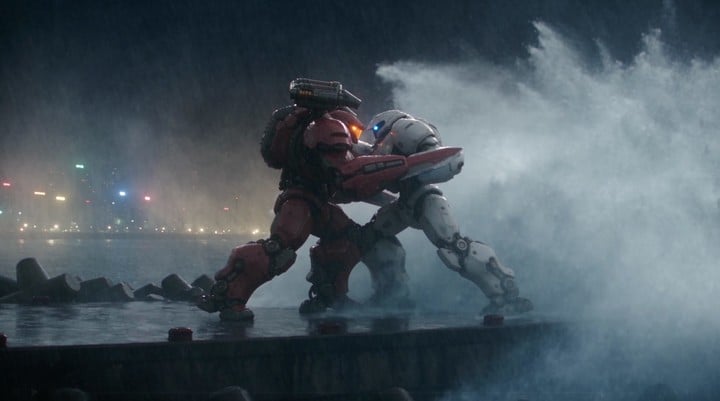
The longer the duration, the tougher the test. Whether character positions are reasonable, whether movements stay continuous, whether the spatial relationships of the scene change, and even whether hair and skin texture remain stable through lighting changes—all need to be checked from beginning to end.
Offline large-screen display, when the image has nowhere to hide
A peacock slowly fans its tail against a pure black background, the edges of its feathers filling a massive OLED screen, the fine eye-shaped patterns showing different colors as the light changes.
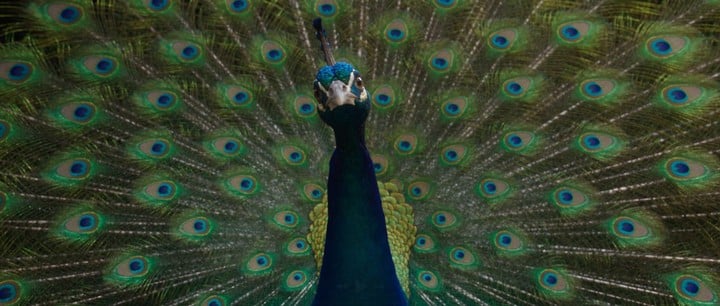
I also designed two sets of demo shots better suited to testing 4K image quality. One is an emerald-green giant wave about to break in backlight, observing whether the water flow on the wave wall, the bubbles, and the splashing droplets can be clearly separated;

the other is looking up at the dome of a colorful cathedral, testing whether the dense mosaic tiles, the carved stone columns, and the light and shadow passing through the stained glass can all retain their detail at the same time.
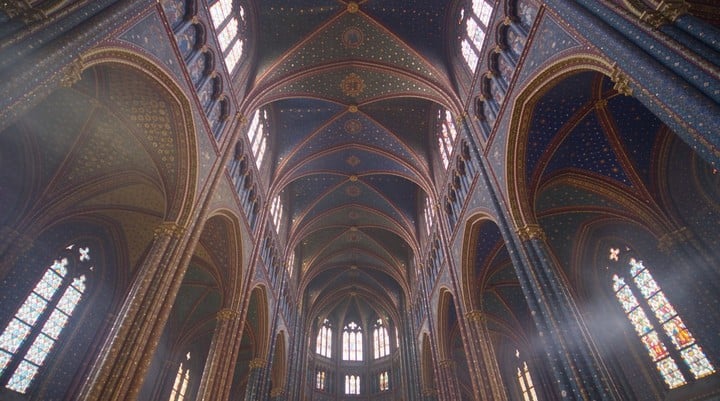
When the image moves from a phone screen to an exhibition hall, an outdoor ad screen, and a brand launch event, the details the audience sees are magnified accordingly. Edge blur, missing texture, and reflection errors that were originally not very noticeable can all be directly exposed.
3840×2160 horizontal footage can match screens with 4K playback requirements, and the ultra-wide aspect ratio also provides more options for specific displays.
Looking at these four gauntlets, 4K really does give AI video the opportunity to enter more commercial scenarios.
But real requirements are more complex. Brands may ask to enlarge the product a bit, e-commerce teams may need a few more aspect ratios, directors may adjust character movements on the fly, and display clients may change the screen size at the last moment.
Most of these requests go beyond the scope of a single video generation. For commercial production, being able to deliver the first version is only the beginning of the work; being able to withstand repeated revisions is what truly means a technology has a chance to enter the production workflow.
The coming-of-age ceremony for AI video begins with getting a 4K production line running
The term "production assembly line" easily brings to mind the Model T rolling continuously out of Ford's factory.
However, when Ford experimented with a moving assembly line at the Highland Park plant in Michigan in 1913, the first thing workers passed along and assembled in sequence was just the flywheel magneto on the car.

即梦 Seedance 2.5 Gets a Major Upgrade: AI Video Generation Finally Has Its Own 4K Production Line
The team then followed the same playbook, gradually applying this method to the engine, transmission, and chassis, and then linking each step into a single line. Model T assembly time was ultimately cut from about 12.5 hours to 93 minutes—making it the patron saint of cost reduction and efficiency gains.
Cars could be built long ago; what changed was that what one process completed could directly enter the next process. The time saved then ran through the entire manufacturing process.
The setbacks AI video suffered in the past also often occurred between steps. Fortunately, existing 4K video can now enter first-frame reference, editing, and extension stages, and single generations of up to 30 seconds leave room for continuous storytelling.
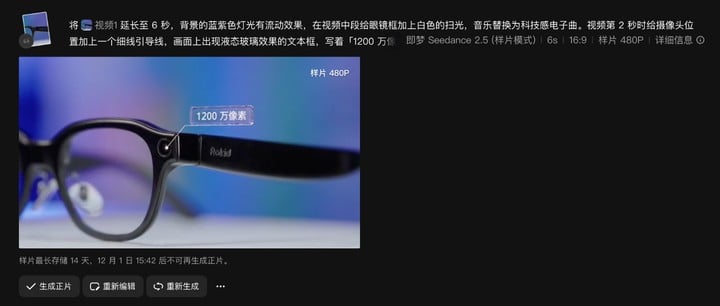
To this end, I also shot 4K footage with a pair of black smart glasses for a production test, extended it to 6 seconds, modified the background lighting effect and score, and at the 2nd second added a guide line to the camera and a liquid glass text box labeled "12 megapixels".
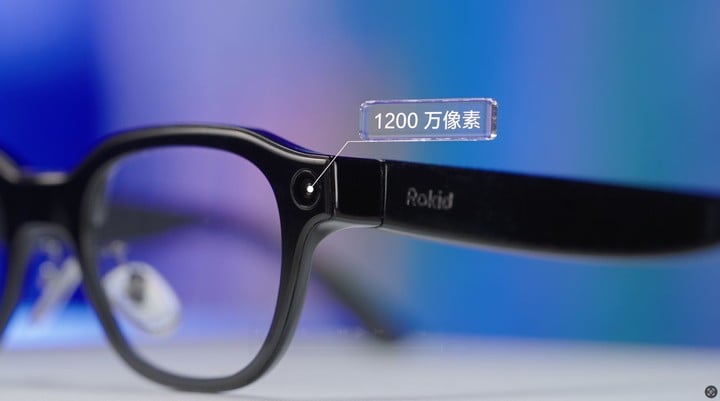
4K thus begins to run through asset input, generation, modification, and delivery. For creators, only when content made in the previous stage can enter the next stage does it take on the meaning of a "production line".
Other recent updates to 即梦 also correspond to different tasks in the production process.
Seedream 5.5 can prepare and modify image assets, while Seedance 2.5 Flash is suited for faster experimentation with product motion, marketing materials, and multiple candidate versions.
Short Drama Studio puts scripts, assets, storyboards, video generation, and post-editing into a unified project, while Motion Effects Studio provides a way to create motion effects through text descriptions and code compilation.
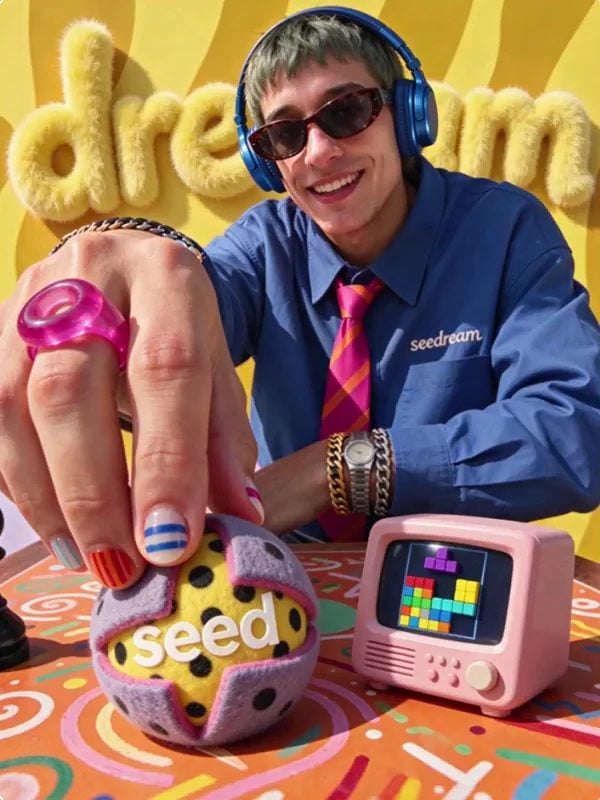
When the object of production shifts from one person's single video to advertising and marketing content that enterprises produce continuously, teams also need to consider how these capabilities enter daily production.
The recently launched "即梦企业解决方案" from 即梦 targets enterprise teams that want to apply AI content generation to production workflows. Teams that need it can sign up through "Enterprise Services" in the upper right corner of the 即梦 official website; note "爱范儿" to get priority contact.
![](https://s3.if