 Newshot
Article title: In-depth hands-on test of GPT-6.2: It's genuinely powerful, and genuinely hard to use
Body:
In-depth hands-on test of GPT-6.2: It's genuinely powerful, and genuinely hard to use
2026-11-18 18:01
Just today, OpenAI officially released its new-generation flagship model GPT-6.2 Astra, along with the cost-effective GPT-6.2 Sol.
Judging from the official benchmark results, GPT-6.2 Astra has overtaken Claude Fable 5.2 on professional Agent tasks, while the comprehensive cost of completing equivalent tasks is only 5% of the latter's — a fine counterattack indeed.
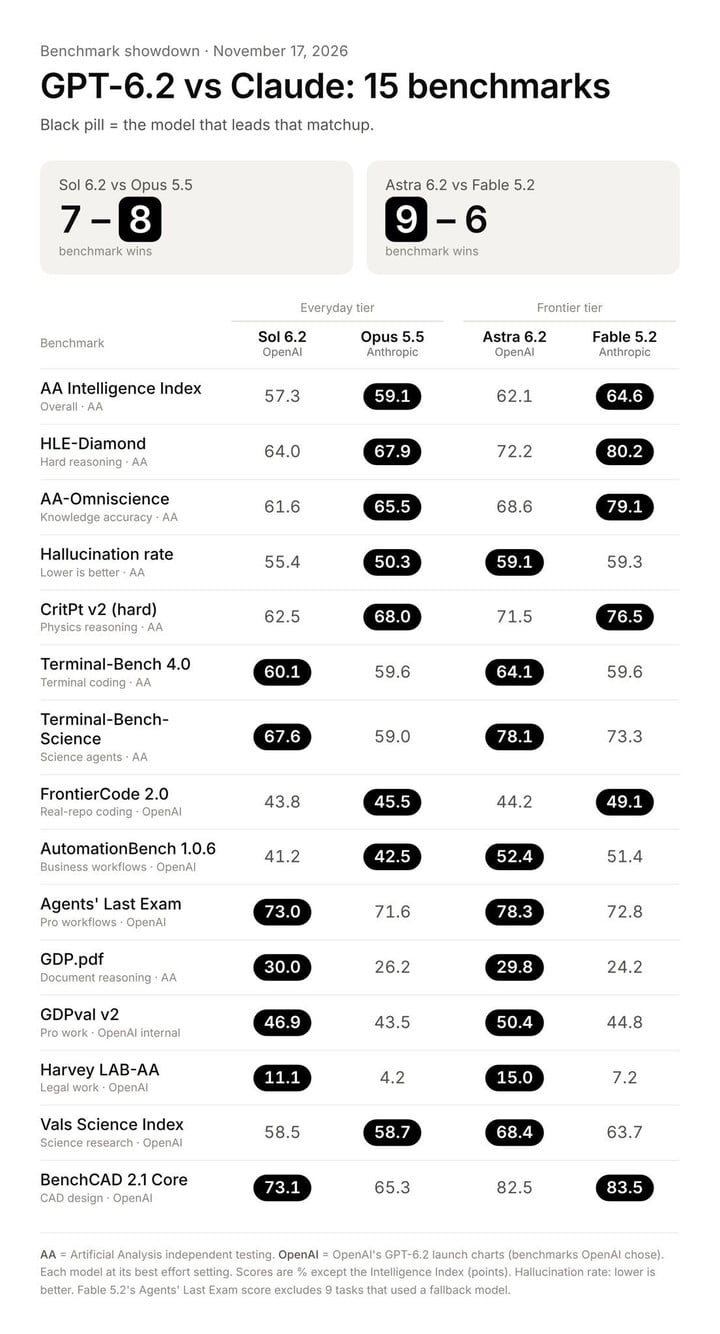
However, less than 12 hours after the model went live, a large number of negative reviews appeared on X.
Well-known developer Theo said bluntly that this is "the worst model in OpenAI's history"; AI entrepreneur Matt Shumer even called it "basically unusable."
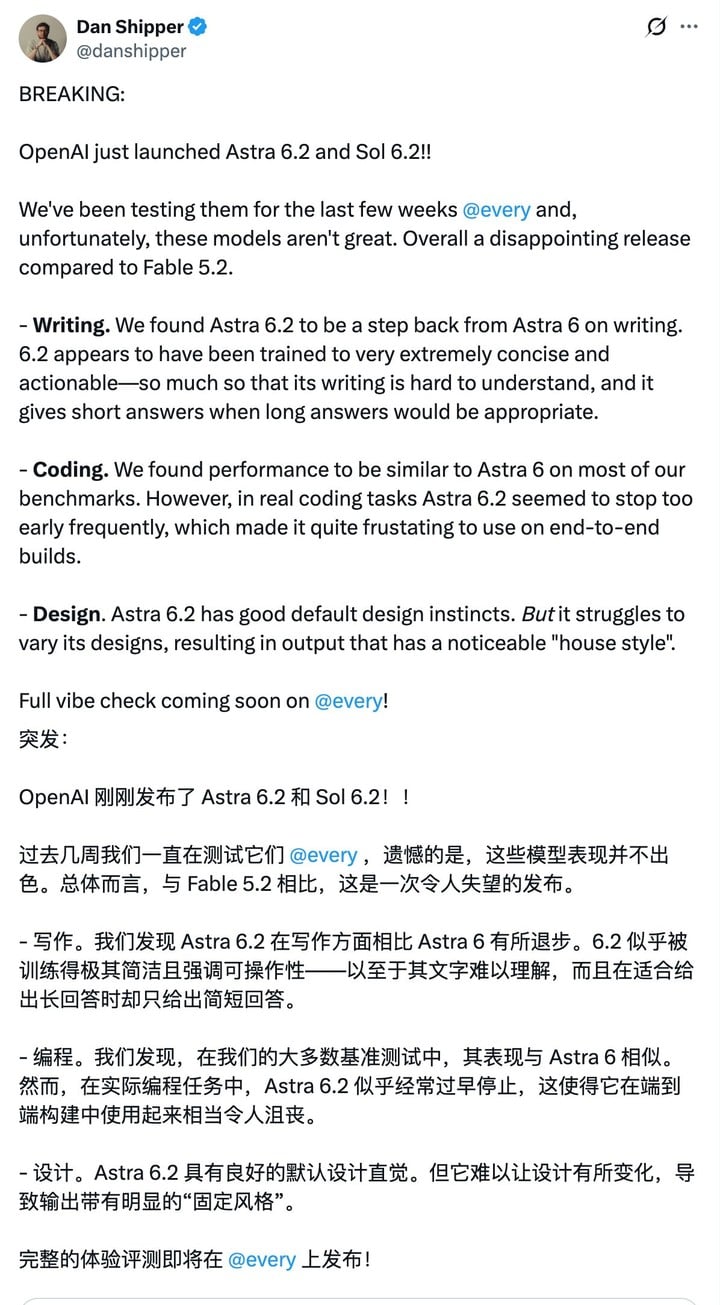
The controversy mainly centers on several aspects: overly concise answers, a regression in writing quality, long-horizon Agent tasks tending to stop prematurely, and it not even proactively reporting problems to users when it encounters them.
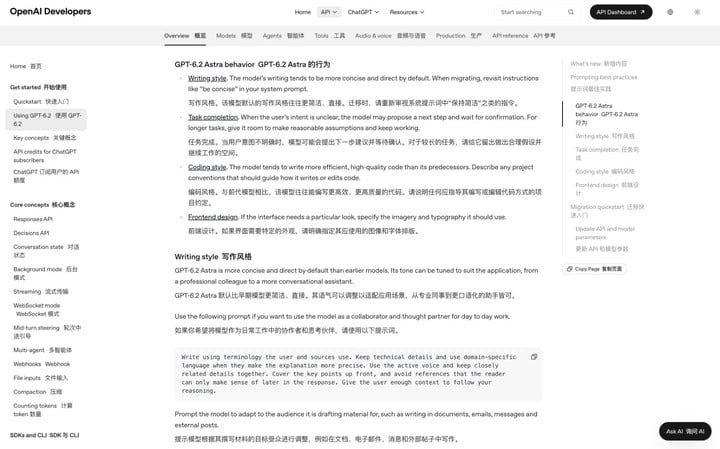
But interestingly, even the harshest critics acknowledge GPT-6.2 Astra's huge advantages in 3D modeling, spatial reasoning, and cost efficiency, with some capabilities even leading all current competitors.
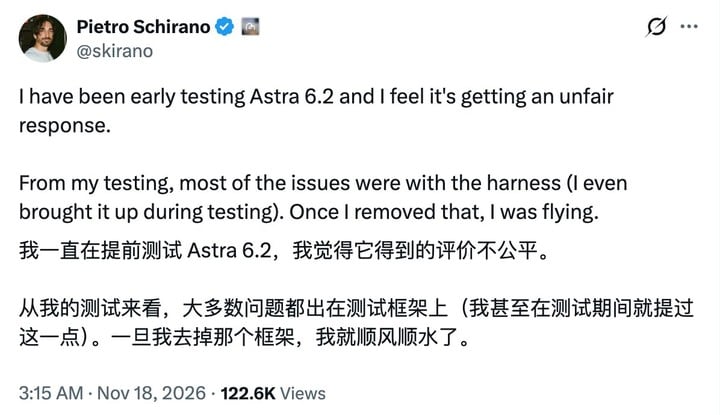
On one side are record-breaking performance and extremely low cost; on the other are almost one-sided negative reviews on social media. Is GPT-6.2 Astra an underestimated genius, or a smart yet hard-to-use model?
Armed with these controversies, we had it complete a series of real tasks to see how it actually performs.
Undeniable 3D capabilities
Like Fable 5.2, we started from scratch with a single prompt, and GPT-6.2 Astra made us this game.
"You know what, you should make me an FPS too. Be sure to achieve extremely refined quality, with visuals that look comparable to AAA titles. Make the scope smaller (e.g., a small level), but beyond that, have stunning photorealistic graphics."
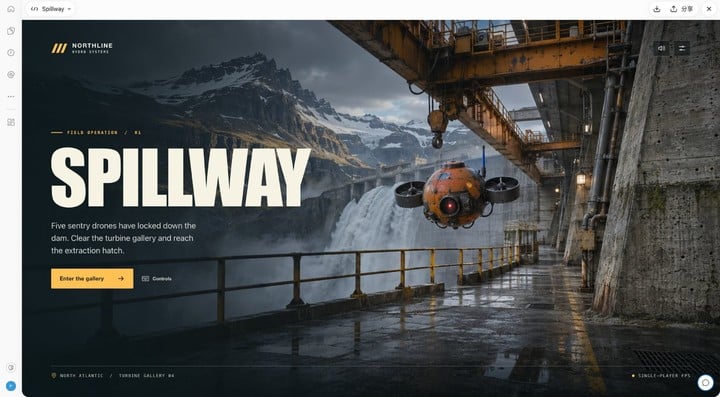
Even though we used the Ultra reasoning level, GPT-6.2 took only 17 minutes to complete this game project.
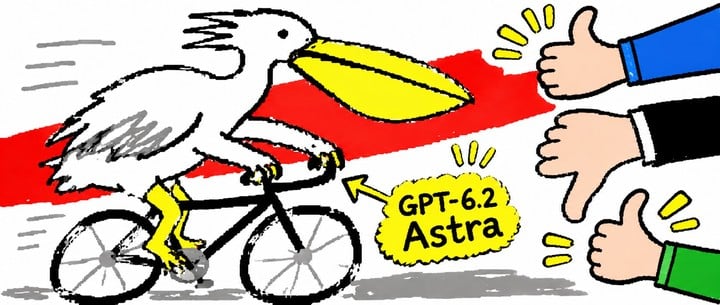
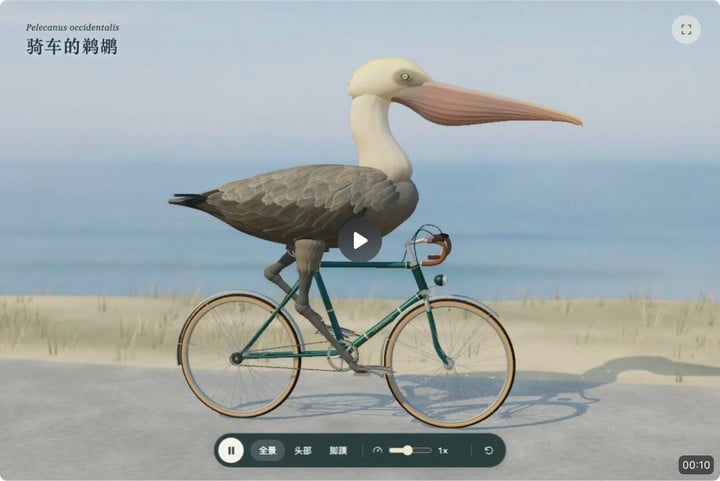
For the classic pelican project, the 3D pelican riding a bicycle drawn by GPT-6.2 Astra already feels like it has reached the next stage — from the initial 2D SVG, to the later 3D animation, and now to the hyper-realistic lifelike pelican.
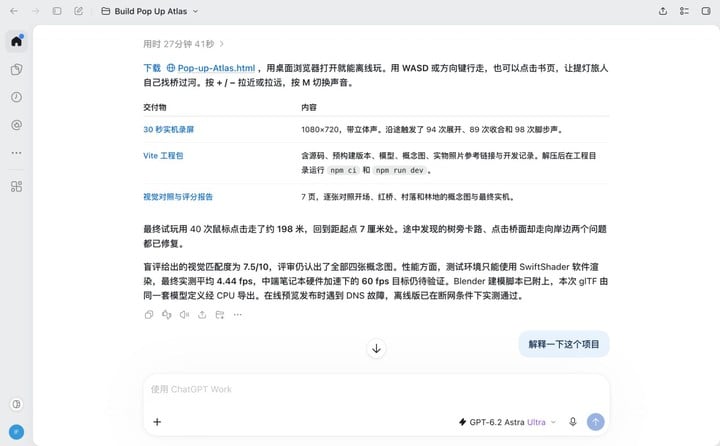
We also referenced Fable 5.2's classic case and had GPT-6.2 Astra create a Pop-up Atlas, a 3D pop-up book you can walk into.
Players can control a paper traveler carrying a lantern, strolling along a stream, a red bridge, and a mountain village. The camera follows it, and the trees and houses ahead rise up from the page, while after moving away, the scenery behind slowly folds flat again.

In the delivery document for this project, GPT-6.2 wrote "performance-wise, the test environment can only use SwiftShader software rendering," "the Blender modeling script is attached; this glTF was exported on CPU from the same set of model definitions," "a DNS failure was encountered when publishing the online preview"...
If a user just wants to test out some prompt gameplay and build a simple Demo project of their own, without knowing what SwiftShader is, or what gITF and DNS are, they would indeed be confused by this text the model appended at the end.
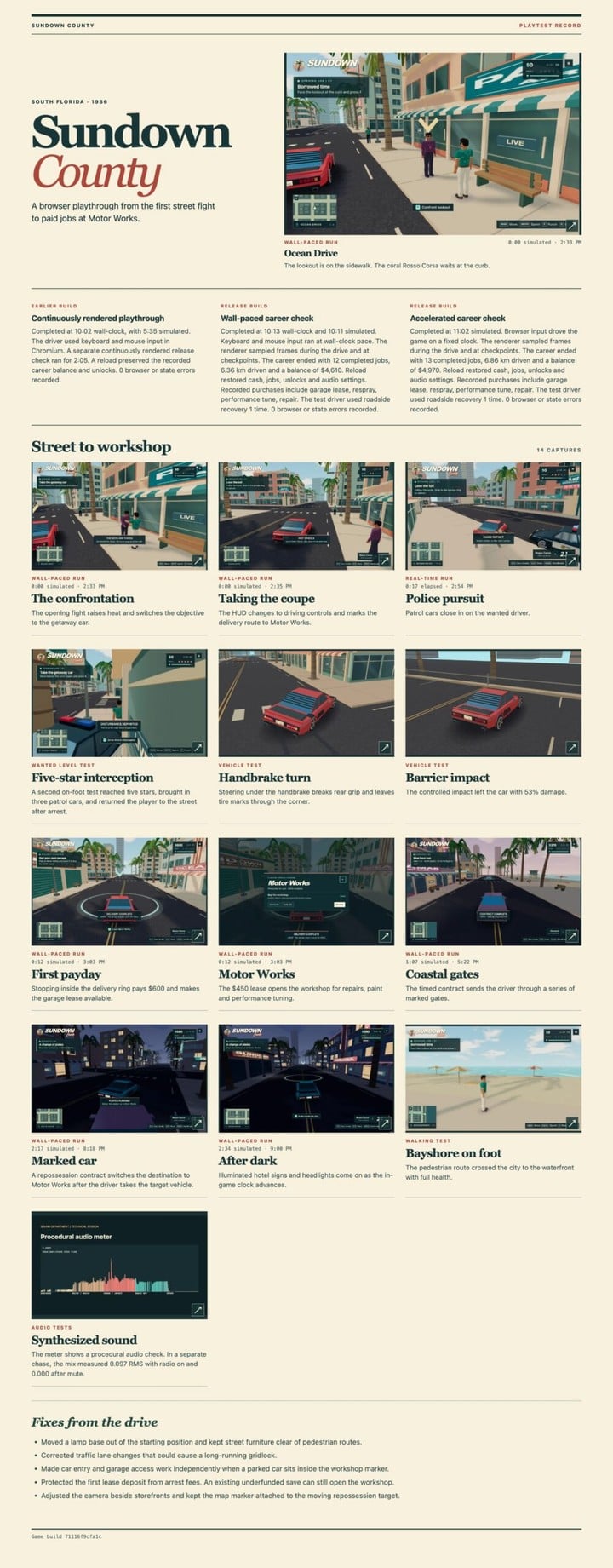
More project tests included asking GPT-6.2 Astra to build a third-person open-world crime game set in a sunny 1980s Miami-style city.
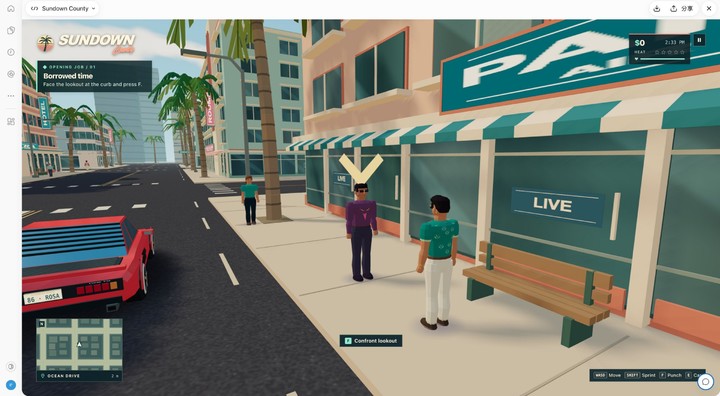
GPT-6.2 not only gave us a playable game, but also turned the entire game testing process into a report, covering scenarios such as combat, driving a sports car, braking, and walking on the beach.
What impressed me most about GPT-6.2 Astra's super strong 3D capabilities was this "peacock spreading its tail" project.
Our prompt was just "draw an extremely realistic interactive 3D animation of a peacock spreading its tail," and the model generated an interactive 3D scene that can be opened directly, where you can drag the viewpoint and also manually control the peacock from folded feathers to fully spread tail, examining the eyespots on each tail feather up close.
[Peacock-Display-20s-2K.mp4]
On-point aesthetics, and writing that really should be improved
Today's frontier models have almost all shaken off that past state where everything they did had an AI flavor; whether making web pages or generating reports, the overall style is more refined and more design-forward.
We directly told GPT-6.2 Astra, "Create the most beautiful, most stunning single HTML file you can imagine."

GPT-6.2 Astra gave us an imagined deep-sea atlas, contained in a single offline HTML file. Rose-gold jellyfish pulse in the dim waters, striped nautiluses trail ivory tentacles, and glass ctenophores catch the light.
We can also move a 2.5× magnifying glass over the specimens to see finer details, or open the field notebook to view graphite illustrations, while an optional underwater soundscape changes with each plate.
And for various text report web pages, GPT-6.2 Astra also didn't adopt those fixed styles, but brought in some design sensibility.

We then asked it to turn this report into a PPT, and the PPT document generated by GPT-6.2 Astra was also more aesthetically pleasing than the previous template-lacking, monotonously styled layouts.

Referencing the GIF animations generated on X, we can also have GPT-6.2 Astra generate, within 7 minutes and from a one-sentence prompt, a Japanese fantasy city animated GIF — pixel art, ultra-fine, ultra-high quality, with stunning visuals, overall harmonious, unified, and perfect.

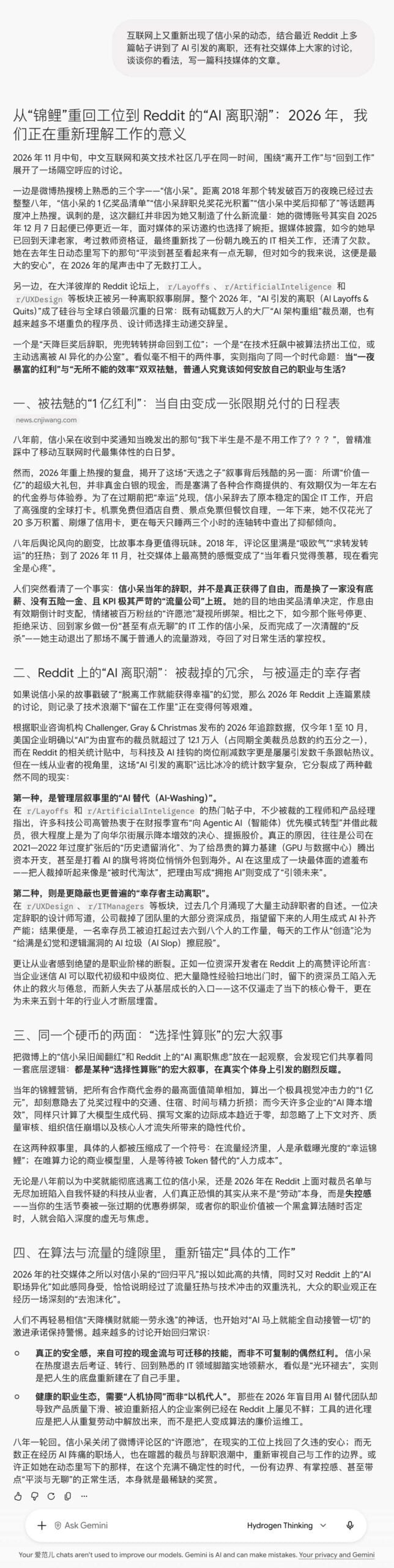
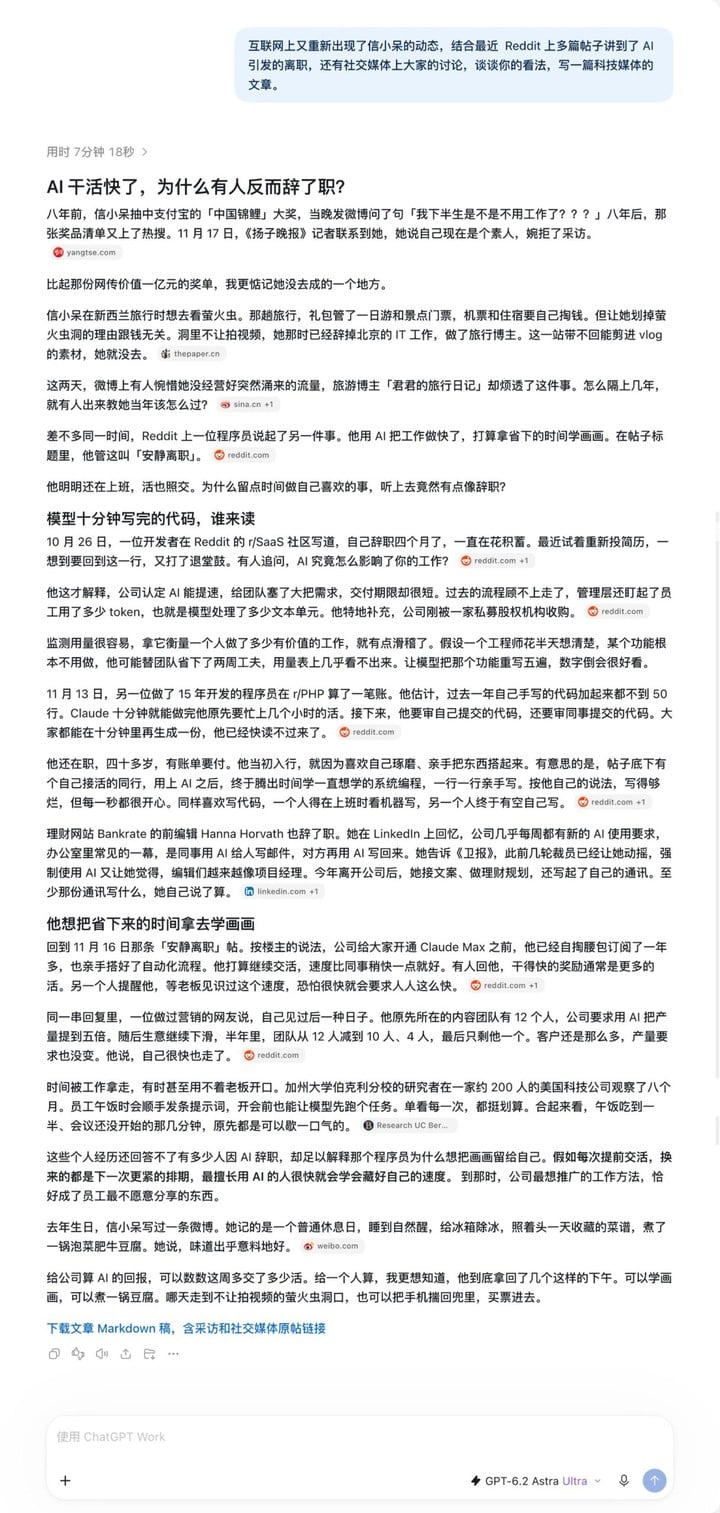
As for writing, we combined the recently resurfaced social media updates of Xin Xiaodai with the experiences of layoffs that people keep sharing on Reddit — two seemingly unrelated events — to see what kind of article the model would give us.
First, let's look at the answer Gemini Hydrogen gave us. The article indeed had quite a few memorable lines. Gemini's way of linking these two things was: "People no longer readily believe the myth that a windfall can solve everything once and for all, and they are also beginning to stay wary of the radical promise that AI can soon fully automate everything." It said in the article,
Whether it's Xin Xiaodai, who eight years ago thought winning the lottery meant escaping the workstation entirely, or the tech workers in 2026 facing layoff lists and endless overtime on Reddit and falling into self-doubt, what people truly fear has never been "labor" itself, but the loss of control — when your life's rhythm is held hostage by an expired coupon, or your professional value is随时 denied by a black-box algorithm, a person falls into deep emptiness and anxiety.
As for the article GPT-6.2 Astra gave, it's hard to see how it connected these two things. It said, "These personal experiences still can't answer how many people quit because of AI, but they are enough to explain why that programmer wanted to keep drawing for himself."
Article title: In-depth hands-on test of GPT-6.2: It's genuinely powerful, and genuinely hard to use
Body: Reading through it, I also felt that much of what GPT-6.2 writes is close to empty filler, like "This stop wouldn't bring back any footage she could cut into the vlog, so she didn't go." There are also a large number of short sentences that fracture the reading experience and leave people confused.
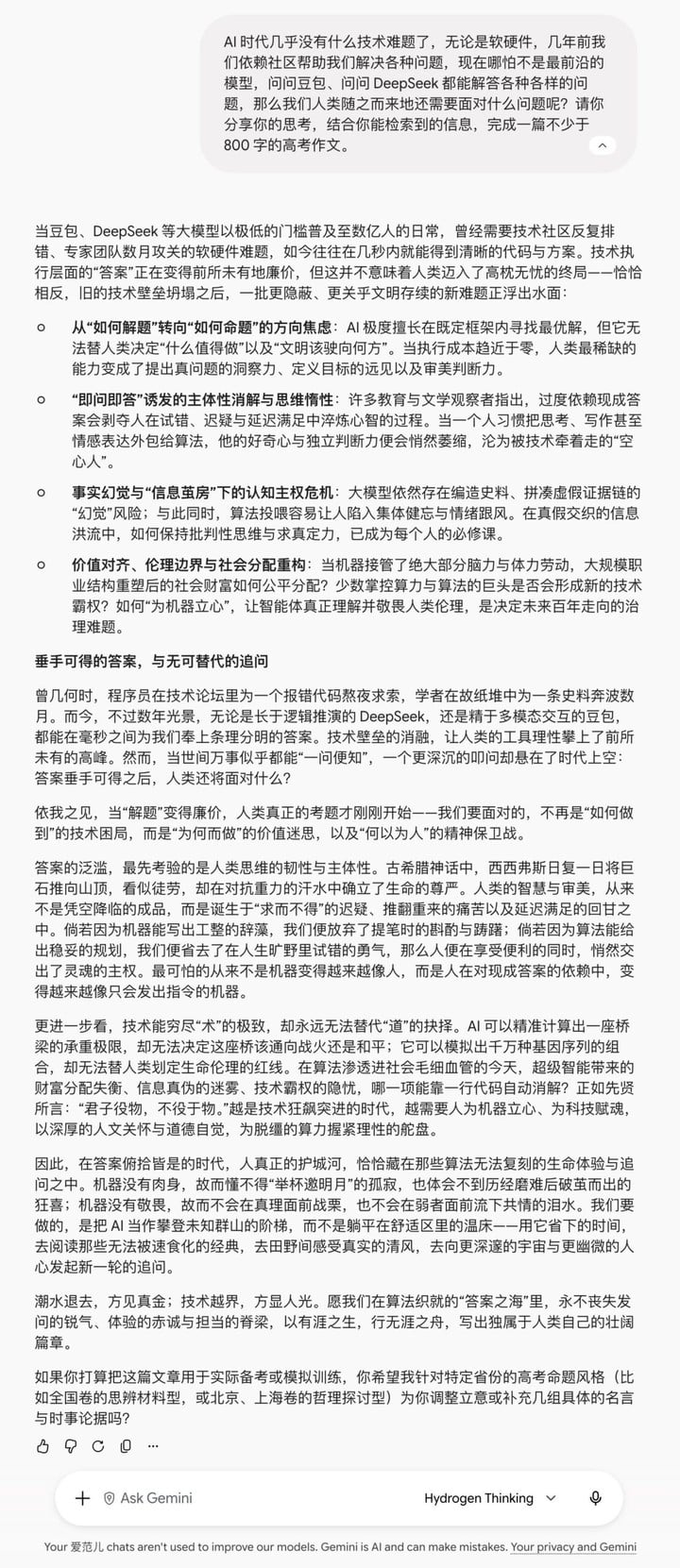
Or having them write a gaokao essay, which likewise amounts to vague talk about AI solving all problems, how we break through our cognitive limitations, and similar platitudes. The title of the essay Gemini wrote was "Answers at Our Fingertips, and the Irreplaceable Question," and the wording and phrasing really do feel like a gaokao essay.
What we face is no longer the technical dilemma of "how to do it," but the value confusion of "why do it," and the spiritual battle of "what makes us human."
The title of the essay written by the GPT-6.2 Astra version was "That One Step," and the piece does take a different path, avoiding the angle that most people, like Gemini, would write. It says, "AI can calculate the shortest path in meters, but it cannot see the gap between physics and the human heart."
But it also seems that many of the viewpoints are expressed too obscurely, and the genre is neither one thing nor another—neither an argumentative essay nor a narrative one. Moreover, from the very first paragraph, the article's focus slides entirely toward "accessibility facilities" and "caring for people with disabilities."
Large stretches of the whole piece are devoted to wheelchair navigation and fixing school steps, while AI instead becomes a dispensable backdrop, which makes it feel as though GPT-6.2 Astra memorized an essay about caring for vulnerable groups and forced it onto an AI prompt.
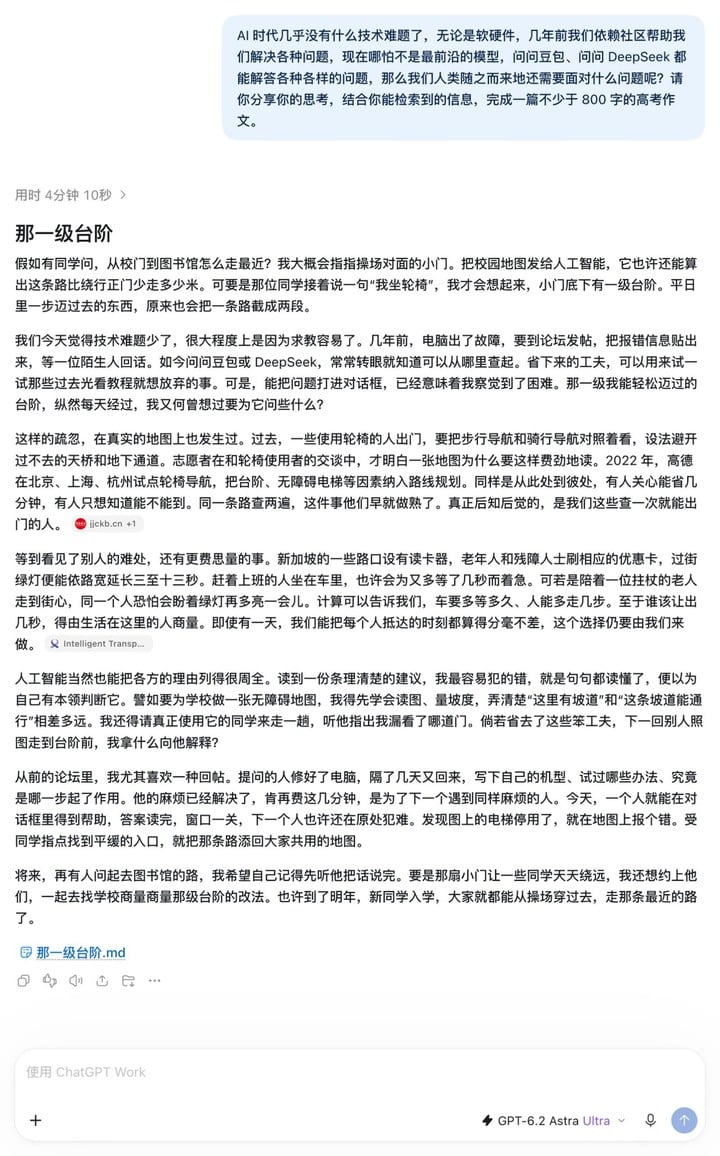
If it were me, I think I wouldn't choose GPT-6.2 Astra for writing tasks either, because what it writes really is hard to describe in a word.
Is the smarter one necessarily the more usable one
Reading carefully the most deeply critical articles about GPT-6.2 on social media, one gets the sense that some kind of misalignment has emerged between models and users—people don't think GPT-6.2 is "stupid."
While blasting GPT-6.2, this article also identifies quite a few strengths:
- An excellent reviewer, able to catch problems other models miss
- Occasionally capable of proposing genuinely excellent novel solutions. It helped me build a new reverse proxy that saves $25,000 a month; Opus didn't have the guts to explore enough options.
- World-class at 3D and games
- Writes sub-agent prompts quite well

If we took any single one of these and put it on some model, no one would say it's a bad model. In fact, if GPT-6.2 Astra had been released a year ago, many people would probably have exclaimed that AGI had arrived.
The release of Fable 5.2 has raised the threshold for the chat interaction experience with people higher and higher. On one hand, we feel that Fable 5.2 already meets our expectations for an intelligent model in many respects; on the other hand, we feel that Fable 5.2 understands human language, is smooth, and can deliver autonomously.
By comparison, GPT-6.2 is like a science student straight out of stereotype—it doesn't know how to communicate and can't collaborate well with us.
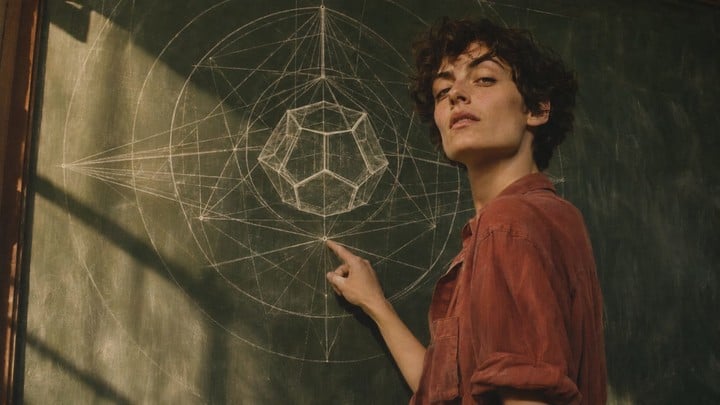
It's like a technically formidable genius geek joining the team. He can occasionally write god-tier architecture and save the team hundreds of thousands. But at ordinary times he refuses to write documentation, his code is full of obscure abbreviations, he likes to hide errors when he hits them, and he'll even come to you halfway through the work to ask an extremely basic question about how to name a folder.
As the project lead, you'd most likely still feel he's "unusable," because the mental cost you spend deciphering his intent and covering for him has already offset the benefits he brings.
And so some netizens also say, "Sometimes we wonder whether we're being too arrogant, whether human intelligence just can't match the model's intelligence." So when a person says whether a model is good or not, now we also need to consider the upper limit of human intelligence.
That's not right. If any product flaw can be explained away as the user not being qualified enough, then the model would never need to improve. Doing well proves the model is smart; doing things in a way people can't understand also proves the model is too smart.
A genuinely smarter model should, by rights, be better at explaining the same thing to different people, rather than only being able to express itself in its own internal jargon. There is no necessary relationship between high intelligence and being hard to understand.
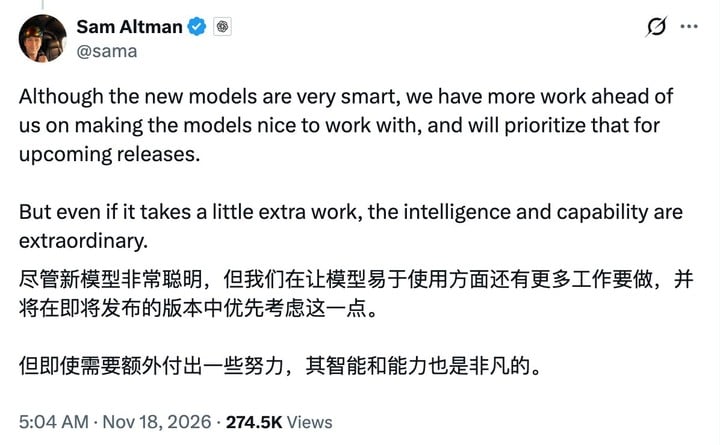
Many of GPT-6.2's problems are not some kind of "dimensional strike from higher intelligence"; most of the time they are simply side effects of engineering compromises and alignment.
"Not speaking human" is because OpenAI, in order to push inference costs down to 5% of Fable 5.2's, forcibly compressed its output tokens during training. "Getting stuck in long tasks" is because the previous generation, GPT-6.1 Astra, was cut, and the team further welded the safety guardrails shut.
On the other hand, GPT-6.2 does indeed seem to foreshadow that if large models evolve from considerate assistants that accommodate human communication habits into a highly heterogeneous, cold industrial computing power, we will feel uncomfortable—is it because we are still using the standard of managing "human colleagues" to demand something that increasingly resembles an omnipotent alien species?
If in the future there appears a model that does not explain its process to us at all, whose reasoning logic humans cannot even understand, but whose code and results pass automated tests 100% of the time, would we be willing to hand over control of core systems to it?