 Newshot

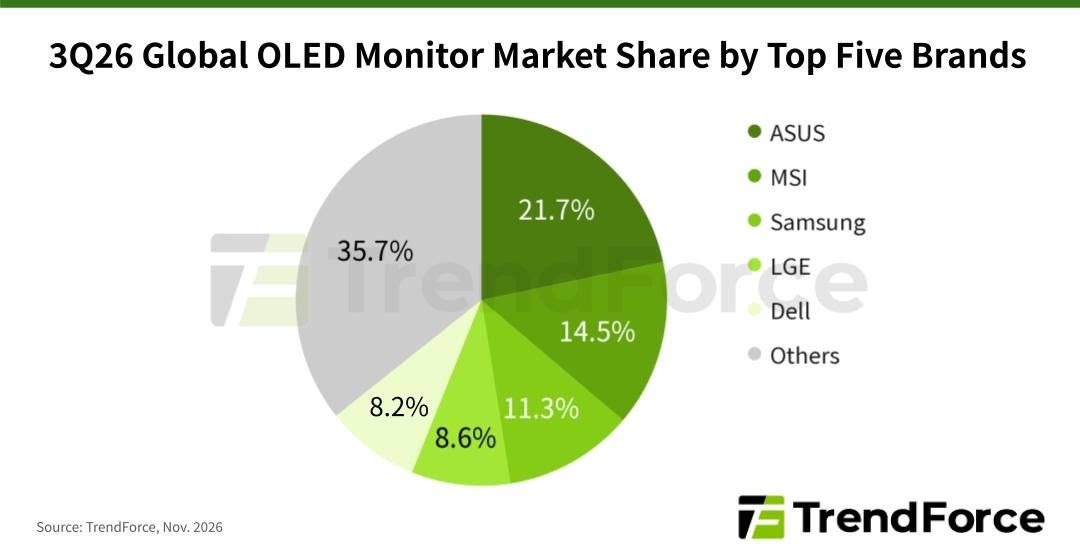
Global OLED monitor shipments doubled year over year in the third quarter of 2026, according to the latest market research from TrendForce. Shipments also increased 13% sequentially, reflecting strong demand for OLED displays and improving panel availability. While the market's rapid growth is impressive regardless, there are good reasons why OLED monitors are becoming increasingly popular: they're getting cheaper, better, and considerably easier to justify.
ASUS maintained its position as the world's largest OLED monitor vendor, accounting for 21.7% of shipments. MSI climbed into second place for the first time, capturing 14.5% of the market, while Samsung slipped to third with 11.3%. Both Taiwanese vendors have been particularly aggressive in the gaming monitor market, where increasingly competitive pricing has helped make OLED technology accessible to more buyers, while ubiquitous advertising with tech-conscious gamers has made them highly visible. According to Omdia, mainstream 27-inch QHD 240Hz OLED gaming monitors have seen price cuts exceeding 40% in 2026.
Price isn't the only obstacle that OLED manufacturers have been addressing, though. Earlier generations of OLED monitors had some fairly significant compromises, particularly their relatively limited brightness and unconventional subpixel arrangements that could cause colored fringing around text. Newer tandem OLED panels offer improved brightness and color reproduction, while RGB-stripe OLED layouts bring much cleaner text rendering. These improvements are making OLEDs considerably more attractive as everyday desktop monitors, rather than merely excellent gaming displays with major caveats.
There's also an interesting macroeconomic angle to OLED's growth. The AI industry's insatiable appetite for memory and storage has made upgrading a gaming PC considerably more expensive. DRAM component prices have increased severalfold, while NAND flash and hard drive availability have also been squeezed by demand from AI data centers—though there are early signs of some relief, at least on the flash memory front. Graphics cards, especially (but not exclusively) at the high end, are increasingly difficult to find at anything resembling reasonable prices.
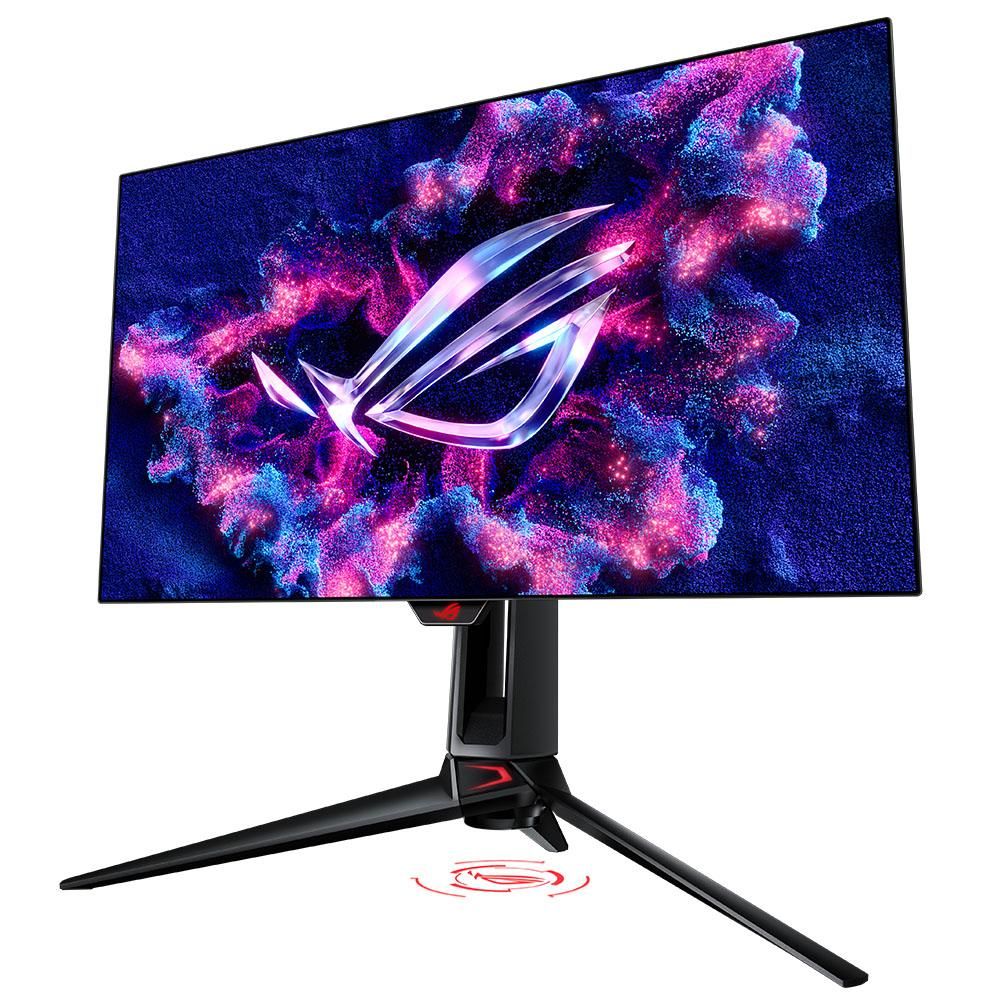
Monitors, meanwhile, aren't directly subject to the same supply pressures affecting DRAM, NAND, and discrete GPUs. That makes upgrading a display an appealing alternative for gamers who aren't particularly interested in spending a small fortune on an entirely new PC. An OLED monitor can substantially improve the gaming experience without requiring a new graphics card, memory kit, or storage drive. The contrast, response times, and color gamut of OLEDs far outstrip even the best LCDs, and that's to say nothing of their superior HDR reproduction thanks to the inherent self-emissive nature of OLED panels.
With OLED prices falling and the technology's longstanding limitations becoming less noticeable, a new monitor is becoming one of the more compelling upgrades available to PC gamers. Indeed, several of our picks for the best gaming monitors, including the best overall, best 4K, and best ultrawide, are based on OLED technology. Though concerns about burn-in and limited lifespan remain, there's no question that OLED is the best display technology we have right now.

Download the Tom's Hardware app for up-to-the-minute updates on iOS and Android. Also follow Tom's Hardware on Google News, or add us as a preferred source, to get our latest news, analysis, & reviews in your feeds.
Get Tom's Hardware's best news and in-depth reviews, straight to your inbox.

Zak is a freelance contributor to Tom's Hardware with decades of PC benchmarking experience who has also written for HotHardware and The Tech Report. A modern-day Renaissance man, he may not be an expert on anything, but he knows just a little about nearly everything.