 Newshot
When conversing with someone, there are two forms of curiosity you can use: epistemic and empathetic.
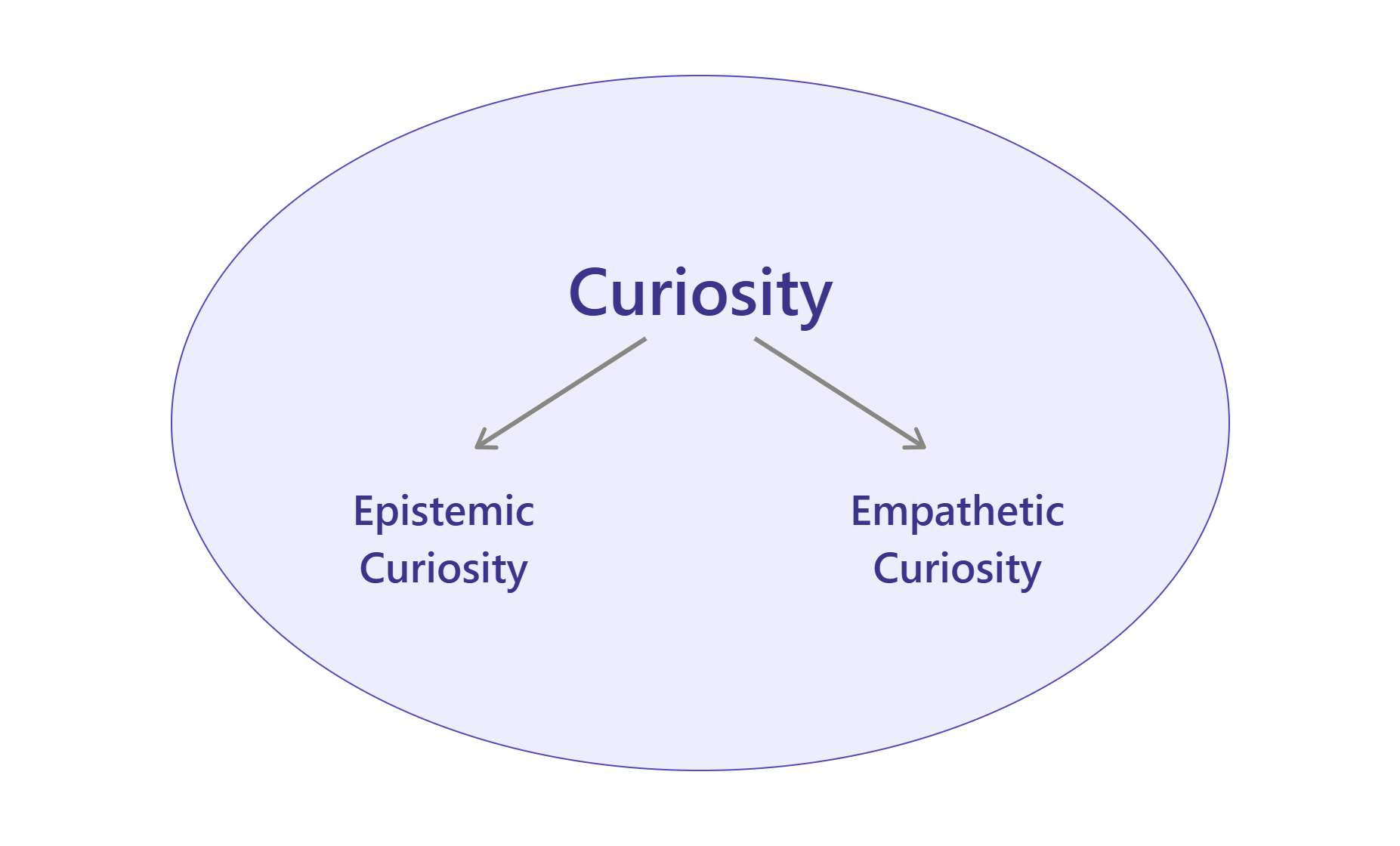
Epistemic curiosity is an exploration of ideas by asking people ‘why’ they think something or ‘how’ they came to a conclusion.
Empathetic curiosity seeks to understand the subjective thoughts and feelings people have based on their experiences.
Both forms of curiosity, however, can be used as defense mechanisms against being vulnerable.
When talking with a friend this week, we discussed how, sometimes, I use epistemic curiosity to endlessly ask people what they think about a topic. By making the conversation all about them, I get to avoid talking about myself. Why would I do that? It's because if I talk about myself, and they don’t like me, that rejection makes me experience the uncomfortable feeling of anxiety.
My friend, on the other hand, admitted to often using empathetic curiosity, by repeatedly asking emotional questions to let people open up to her. Why? So that she can avoid talking about herself. Because again, if someone rejects who she is deep down, that will produce negative feelings.
I’ve found that slowing down, and saying vulnerable things about myself, is making people feel closer to me. This felt terrifying at first, because they could reject my vulnerable self (this fear is likely due to evolutionary reasons of not wanting to be ostracized/abandoned, and left alone to die). But when you tolerate the feeling of anxiety and say vulnerable things anyway—ie: act courageously—you begin to develop a thicker skin and the confidence of “so what?”
So what if this new friend rejects me? I’ll go find someone else who likes me for who I am.
So what if this romantic interest rejects me? It means they’re not the one for me.
While being curious can help your conversational partner feel seen and heard, when you use it as a defense mechanism to avoid being vulnerable yourself, mutual connection can’t be forged.
Recently, I've been employing both forms of curiosity, and I've been sharing vulnerable parts of myself. The result? In the last week I’ve built more genuine connection with people than I have in years.