 Newshot
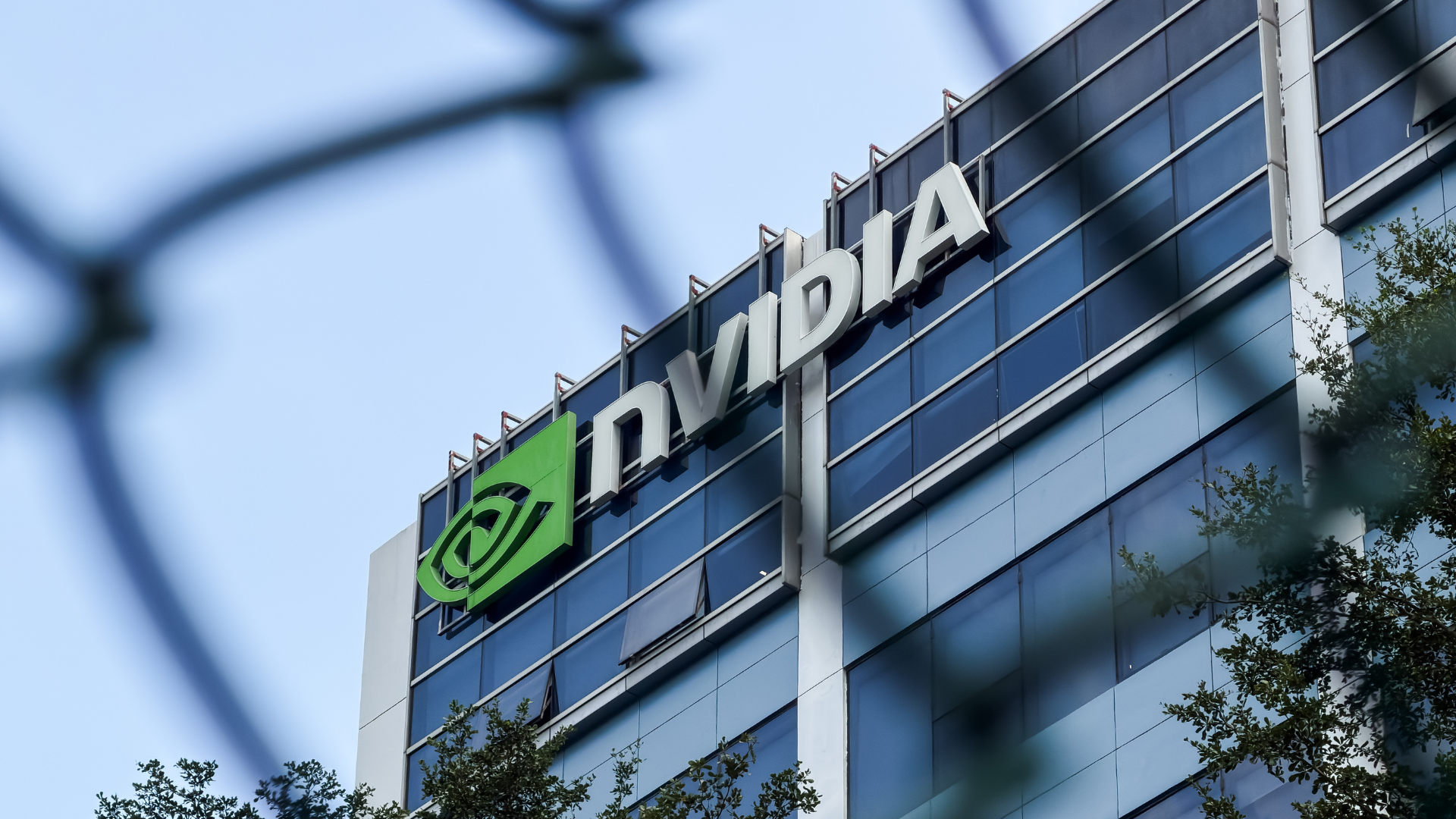
Less than a week after Jensen Huang resigned from the company, Nvidia's board has created its own National Security and Export Control Oversight Committee. According to its announcement, the new standing committee will provide high-level oversight of Nvidia’s “national security policies, export control compliance, and global trade risk management,” with its National Security Team and Global Trade Compliance Team reporting directly to the group and to interim CEO Colette Kress.
- While the U.S. flip-flops on chip sanctions, China is building its own chip supply market
- The state of China's decade-long semiconductor push
- Huawei Ascend NPU roadmap examined
- China's CXMT targets 30% DRAM memory market share by 2030 with sixth mega-fab
- China's latest round of rare-earth export controls explained
“Nvidia recognizes that advanced silicon technologies and the emergence of artificial and superintelligence present unprecedented challenges for national security,” Nvidia chairperson Harvey Jones said. “As the world’s leading advanced computing company, Nvidia has both a responsibility and an opportunity to lead the industry in addressing these challenges. We are committed to working constructively with government and industry partners to help establish and advance a robust framework that uses every tool at our disposal to safeguard national security while supporting continued technological innovation.”
The rumors of Jensen Huang’s affair with Alice Huang, an alleged Chinese spy, have thrown the company into turmoil, especially after his admission and subsequent apology. People have begun digging into details about Ms. Huang, revealing that she was at the center of a tangled web of companies and was reportedly instrumental in importing around $7.5 billion of banned Nvidia chips into China. A deeper investigation also revealed that her husband, Kang Wei, was behind her rise to prominence and seemingly accepted her relationship with the billionaire. It remains unclear if the couple made these shrewd business moves purely for profit or if they were under the control of a hidden third party, but it has certainly exposed the company to additional scrutiny.
The chairpersons of the House committees on China, Foreign Affairs, and Intelligence have since invited Jensen to a closed-door briefing to discuss Nvidia’s “security protocols against foreign adversary espionage,” while President Donald Trump mentioned that the FBI is looking into Jensen Huang’s relationship with Ms. Huang. The U.S. first applied export controls to Nvidia’s most advanced chips, the A100 and H100, in 2022, forcing the company to create the China-market A800 and H800 GPUs that complied with Washington’s performance limitations.
However, the White House lowered the bar once more in 2023, which resulted in the even more watered-down H20, which, nonetheless, remained in high demand. Even though the Trump administration did not implement Biden’s AI diffusion rule, which threatened to outright ban several countries from buying Nvidia AI chips, the president eventually banned the export of H20 chips to China from April to June 2025.
Even before Trump’s total Nvidia AI GPU ban, there have already been multiple reports of smuggling, with one semiconductor analysis firm tracking more than 1.5 gigawatts of banned AI chips exported to China and estimating that up to 1.5 million Nvidia GPUs were smuggled in recent years. Despite that, the former Nvidia chief has always denied the allegations, saying that “There’s no evidence of any AI chip diversion.” Whether the allegations are true or not, it seems that the company is taking the situation seriously and taking steps to plug any leaks. As for Jensen Huang, he may be out of the company, but he still has to face Congress and all ongoing investigations.

Download the Tom's Hardware app for up-to-the-minute updates on iOS and Android. Also follow Tom's Hardware on Google News, or add us as a preferred source, to get our latest news, analysis, & reviews in your feeds.
Get Tom's Hardware's best news and in-depth reviews, straight to your inbox.

Jowi Morales is a tech enthusiast with years of experience working in the industry. He’s been writing with several tech publications since 2021, where he’s been interested in tech hardware and consumer electronics.