 Newshot
Article title: How did this Insta360 "magic photo paper" cure my dusty photo album?
Body:
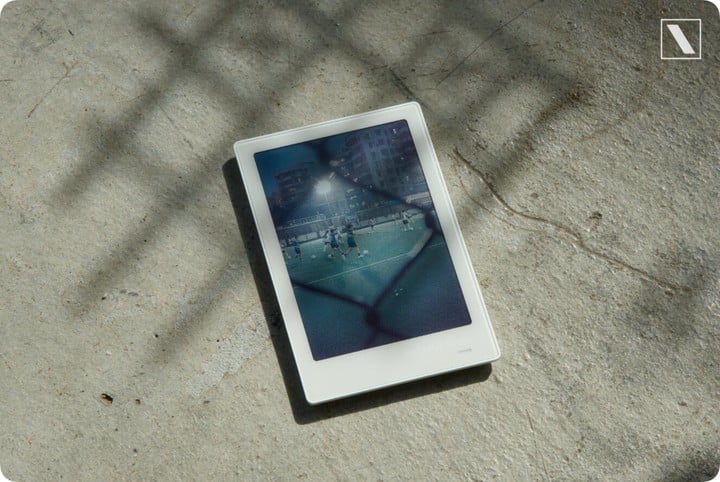
How did this Insta360 "magic photo paper" cure my dusty photo album?
2026-11-16 20:00
When I watched Harry Potter as a kid, besides the flying broomsticks, what I envied most was actually the Daily Prophet and the magic newspapers in the wizards' hands.
I always felt that if only such a "magic photo paper" existed in real life—with both the warm, gentle texture of paper and the ability to update its photos at any time, keeping the sunset by the sea, the moment of clinking glasses, or a stray kitten encountered on the street always within reach—how wonderful that would be.
Growing up, we got phones with hundreds of GB of storage and inexhaustible cloud albums. But oddly enough, the more photos we take, the lower the chance any of them gets looked at again.
The vast majority of photos fulfill their mission the moment they're taken and posted to social platforms, then sink to the bottom of the album and gather dust.
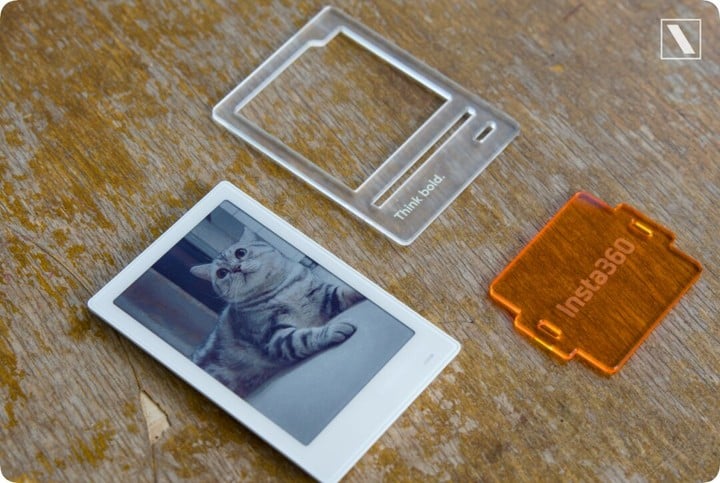
To bring these sleeping photos back into reality, Insta360 launched a crossover new product—the Insta360 Toast e-ink photo paper.
A color e-ink photo paper that "raises a glass" to memories
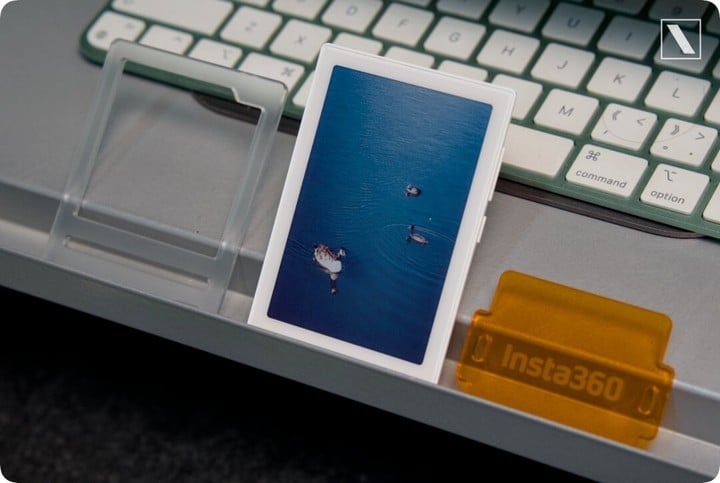
When you first get your hands on it, it's easy to see why Insta360 gave it a punny name: Toast.
On one hand, this small 3.7-inch square tile with a clean white border looks a lot like a freshly baked slice of toast; on the other hand, "Toast" in English also means "A Toast To"—raising a glass to the moments you love in life.
The wide white border also makes it look like an "electronic Polaroid," but the difference is that it doesn't consume expensive physical photo paper—the photos inside can be switched freely an unlimited number of times, saving a great deal of cost.
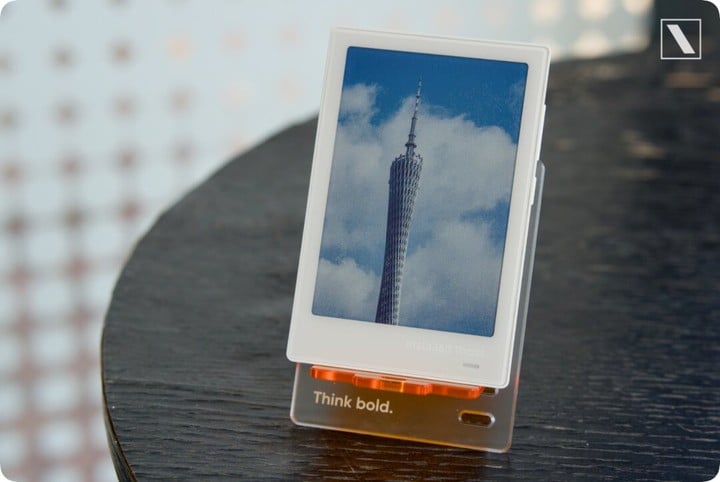
Unlike phone OLED screens or traditional plug-in digital photo frames, the Toast screen itself doesn't emit any light at all—it relies entirely on reflecting ambient light to present the image.
It uses six-color e-ink—red, yellow, blue, green, black, and white—combined with Insta360's self-developed color algorithm, offering considerably more image depth and a film-like texture than the common four-color e-ink screens on the market.
Thanks to a body that's light and compact enough, plus built-in magnets, a stand, and a hanging hole, you can tuck it into almost any corner of your life.
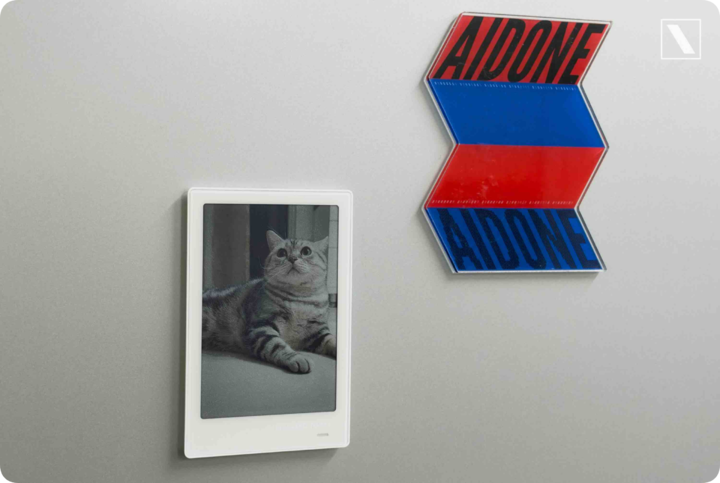
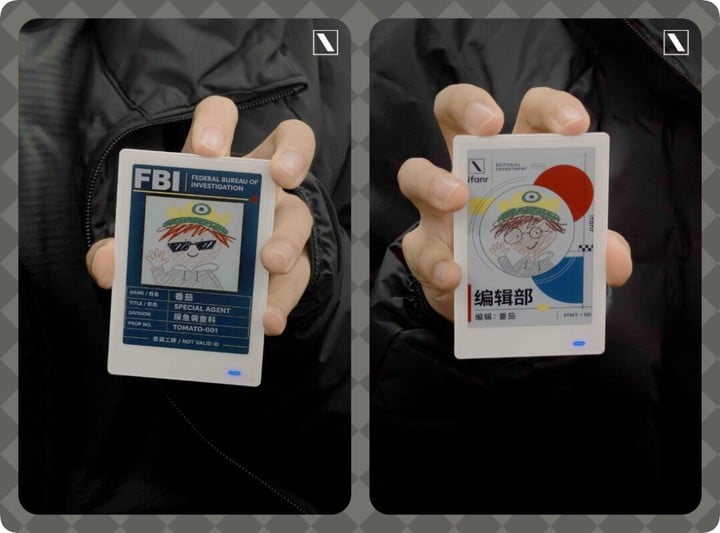
During the day at the office, I habitually stand it under my monitor as desk decor or a cyber work badge:
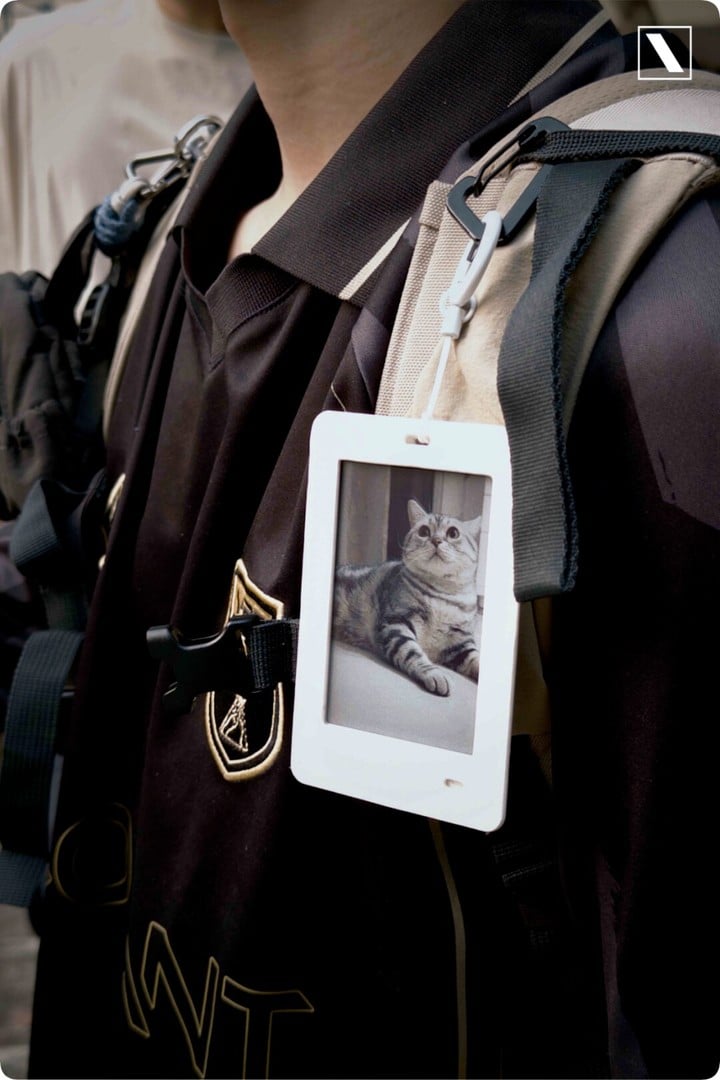
On weekends out with a backpack, I slip it into a card holder with a lanyard and hang it on my bag—it becomes a one-of-a-kind "electronic ita-card" in my daily OOTD:
Beyond that, the process of changing its image also has a fair bit of blind-box ritual to it.
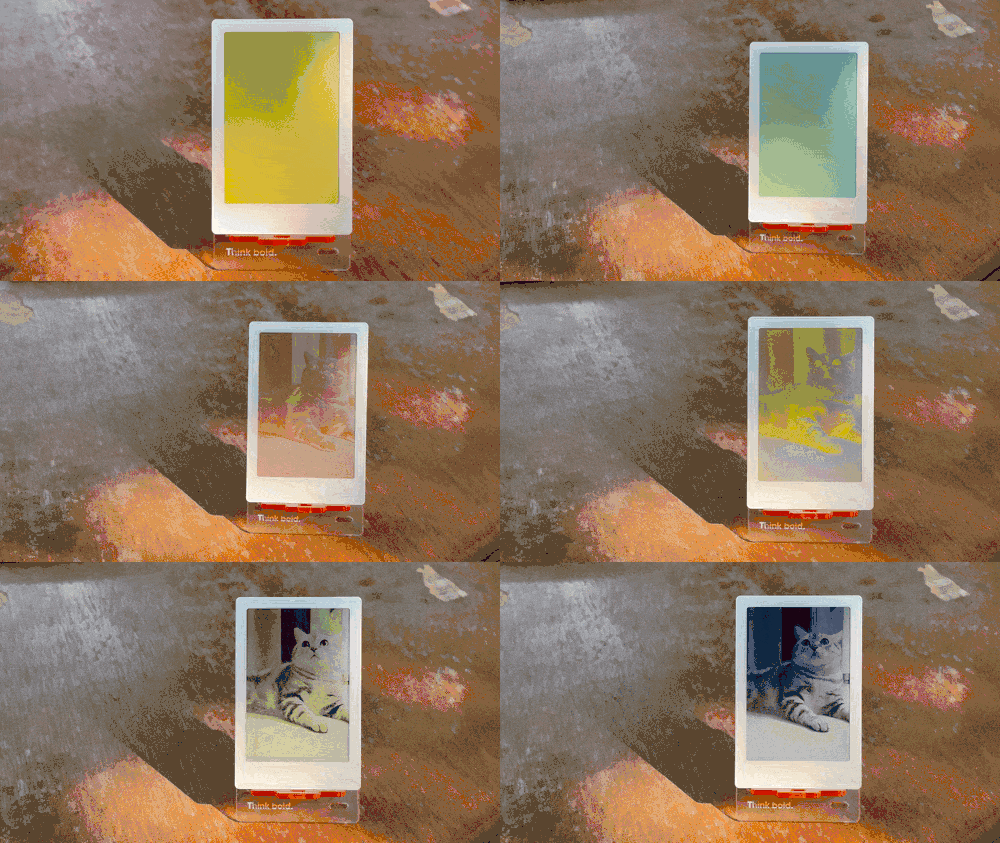
Just open the Insta360 App, pick a photo, and send it over—the pigment particles in the e-ink screen begin to rearrange—
accompanied by a brief yellow flicker of about 25 seconds, a photo with a paper-print feel freezes on the screen.
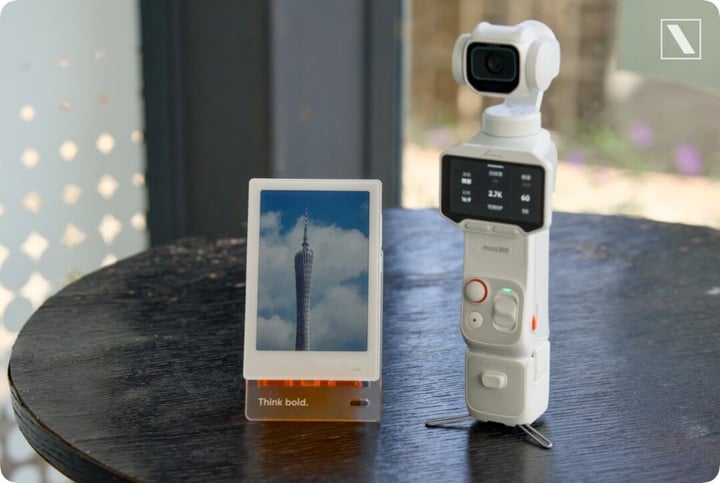
If you happen to be an Insta360 camera user, you can even skip the photo transfer and sync footage straight from Insta360+ cloud with one tap.
Even better, as long as you connect the Toast to Wi-Fi, it instantly becomes a "physical AirDrop" that ignores distance. Besides storing 30 photos locally, it also comes with official cloud storage that holds 200 images.
Last weekend I went on a road trip with a friend, and I put the Toast in the car. Every time we reached a new place, my friend would upload snapshots from their phone, and this e-ink screen in the car would receive images from different corners.
Whenever the screen started flickering yellow, I'd start wondering, "What new photo will be developed this time?"
Even when we're far apart in different cities, if you come across a cat basking in the sun on the road or eat at a great restaurant, you can casually push it to the Toast far away—the indicator light at the other person's desk corner blinks white a few times to finish fetching, and they receive this unobtrusive little surprise.
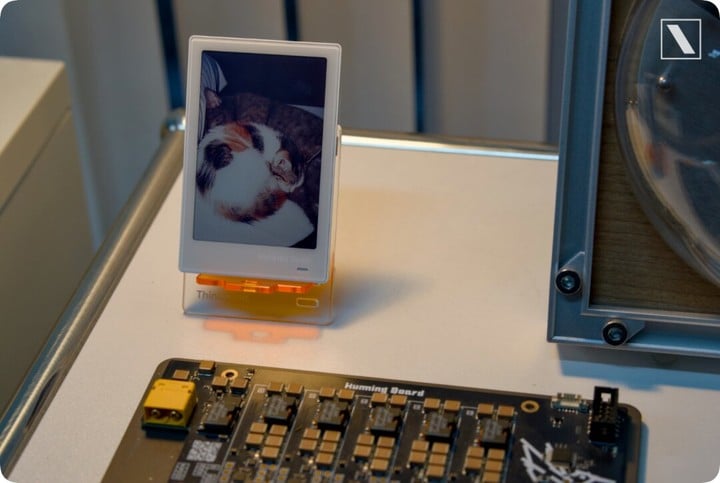
As for battery life, you can absolutely forget where you put the charging cable.
The e-ink screen only draws power during those few dozen seconds when refreshing the image, and costs nothing to display statically—even if you change the image every day, a full charge can last nearly 195 days.
Even when the battery is completely drained, the Toast will leave the last image on the screen, continuing to display as a physical piece of photo paper.
In an era of runaway AI, why do we need a "physical photo paper" even more?
Why would a major company that started out making action cameras suddenly swerve this year to make a "slow" little e-ink gadget?
Broaden your view and you'll find that this year, consumer electronics markets at home and abroad are going through a clear "e-ink resurgence."
Besides Kindle launching new color e-ink products and sparking a retro trend, on domestic social platforms, magnetic mini e-ink devices like "阅星瞳" and electronic badges have started going viral among young people;
on overseas Kickstarter and independent hardware communities, TRMNL—which focuses on open-source e-ink desktop dashboards—and various minimalist electronic photo frames have frequently become hits.
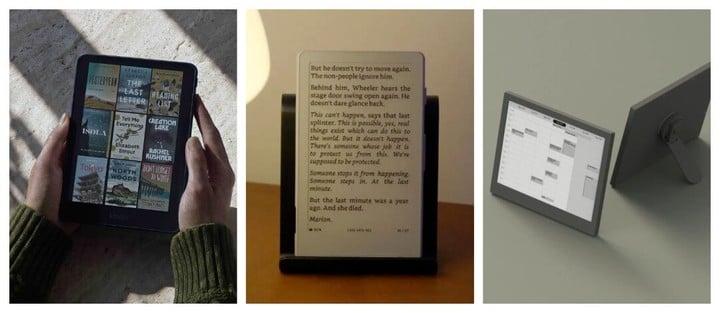
Even in the AI era, these little e-ink gadgets have collided with the "Vibe Coding" trend.
For example, "阅星瞳," originally just a basic e-reader, has been modified by many geeks—with a few lines of code written using AI programming tools—into a "desktop monitor" dedicated to monitoring backend AI running status or pulling in calendar to-dos.
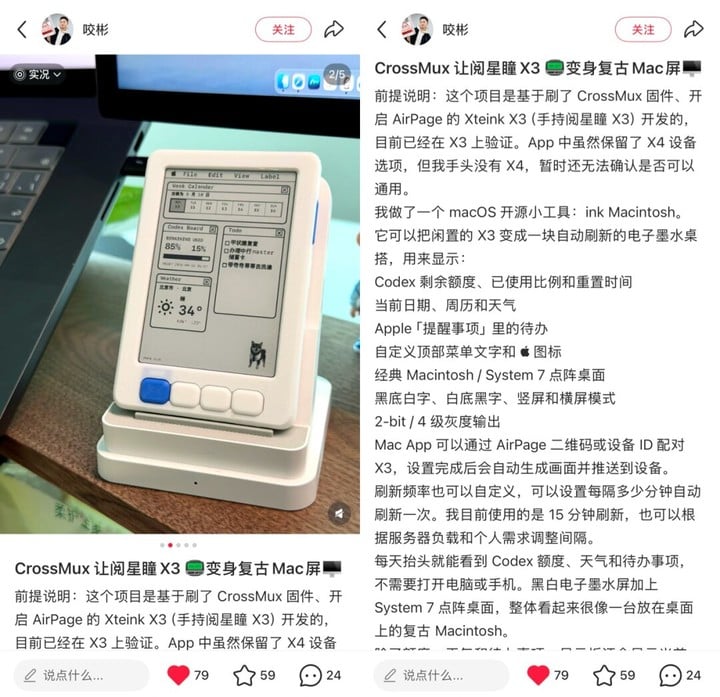
Today, when phone screens have long popularized high refresh rates and thousands of nits of brightness, both geeks building their own hardware through Vibe Coding and players using the Toast as an outfit accessory seem uniformly obsessed with this color-restrained e-ink screen.
At a time when generative AI is racing ahead, the cost of generating digital images has dropped to rock bottom, and algorithms are churning out massive quantities of ephemeral imagery every second.
We're surrounded every day by actively glowing LCD screens: you pick up your phone just to glance at a photo or the time, but end up being pulled away by unread messages and pop-ups, and before you know it you've scrolled short videos for another half hour.
The more virtual information floods in, the stronger people's fatigue with screen overload becomes, and the more they crave, in physical space, an unobtrusive, touchable "sense of certainty."

This is also why the concepts of "Calm Technology" and "Digital Detox," championed by the overseas tech community, are becoming more and more popular:
good tech products shouldn't constantly steal the spotlight, but should appear when needed and naturally recede into the background when not.
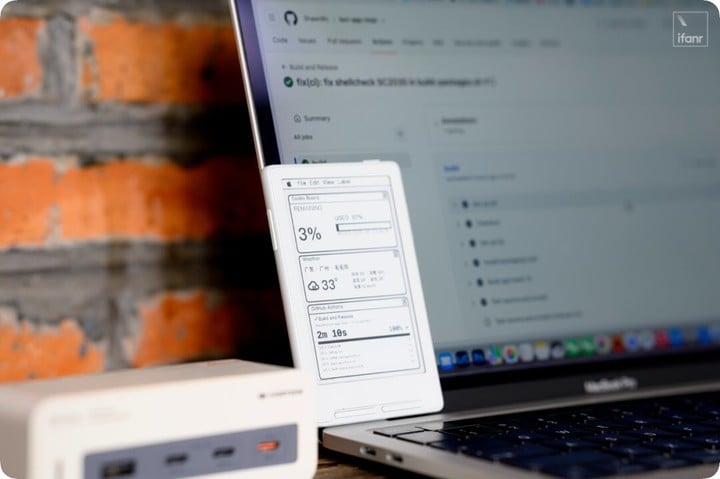
Whether it's a geek-modified AI monitor or this out-of-the-box Toast from Insta360, the essence is the same: pulling "the display of key images" out of a phone system full of algorithmic interference.
It doesn't glow, doesn't glare, and has no pop-up notifications.
This physical restraint instead enables a mini "digital detox," letting us slow down and pick out the moments most worth keeping from tens of thousands of photos, carving out a pure land free of online anxiety at our desks, in our cars, and by our bedsides.
At the same time, the spread of AI tools is also feeding back into the playability of this kind of hardware.
With tools like Doubao and ChatGPT, a simple prompt can turn a travel photo from Chiang Mai into a "commemorative fridge magnet," or redraw a snow mountain into a "geometric vector poster," then send it to the Toast with one tap.
Together, the two turn a simple photo frame into a miniature desktop gallery whose theme can change every day.
In an era when all electronic devices are chasing faster and more complex, Insta360 has brought into reality the "magic photo paper" we most yearned for when watching Harry Potter as kids.
The Insta360 Toast isn't a traditional digital product trying to wow the market with hardcore specs—it's more like a lifestyle accessory that offers modern people emotional value and an outlet for "digital detox."
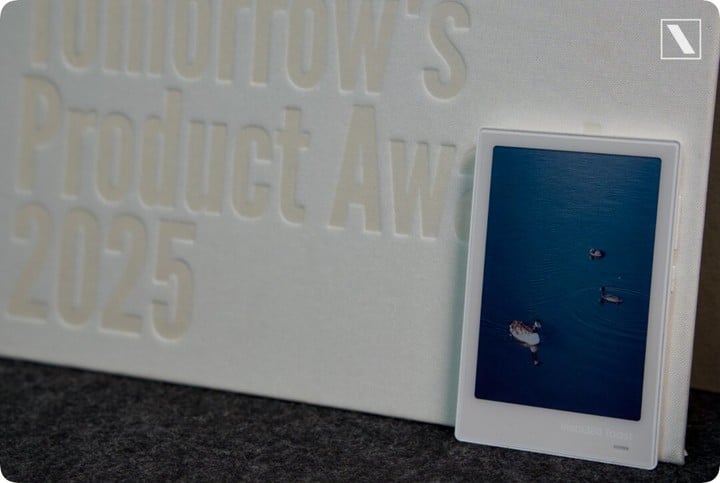
Except this time, what flows across the paper is no longer the front-page news of the wizarding world, but those truly shining moments in our lives that are worth raising a glass to.