 Newshot
Apple's glasses arrive next year: no screen, all relying on Siri to carry the show?
2026-11-16 18:53
The Apple smart glasses that have been rumored for years but never materialized may soon be served up.
According to the latest issue of "Power On" by Bloomberg reporter Mark 古尔曼, Apple's first smart glasses carry the internal codename N50, are planned to be officially unveiled at WWDC in June 2027, and will ship before the end of that same year.
By 2026, the market is already full of all kinds of smart glasses, so why would we still look forward to a pair of "Apple-branded" glasses?
Actually, just like waiting for Apple to make a foldable screen, what everyone anticipates is not merely Apple filling in another piece of the hardware puzzle, but seeing whether it can blaze a different path for a category already crowded with players.
So what exactly is this pair of Apple glasses, expected to appear at next year's WWDC, planning?
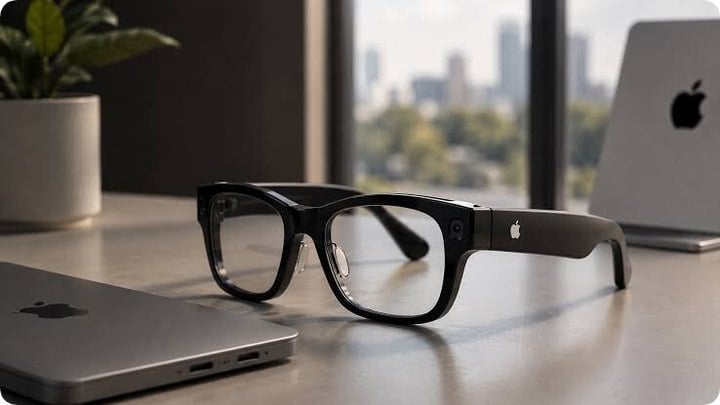
Apple's glasses arrive next year: no screen, all relying on Siri to carry the show?
Apple's glasses: first, let Siri AI see the world
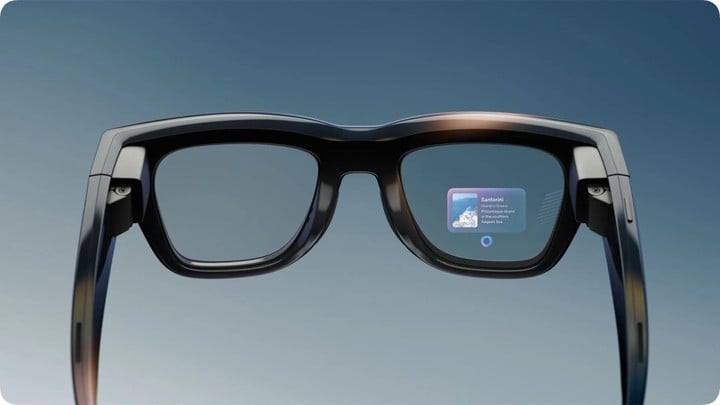
Judging from the information disclosed so far, Apple's first-generation smart glasses have cut AR display capability entirely.
There is no waveguide lens, nor a virtual teleprompter floating before your eyes; the entire interaction of the N50 is built on the camera, Siri, and audio.
The camera on the frame captures the environmental information in front of you, and you can ask Siri questions at any time—for example, identifying a building in front of you while walking down the street, looking at ingredients in the fridge and asking what dishes can be made, or casually translating street signs and conversations with people around you.
As for route navigation, sending and receiving messages, making and receiving calls, announcing notifications, and controlling music and smart home devices, these are all basic operations within Apple's Siri capabilities.
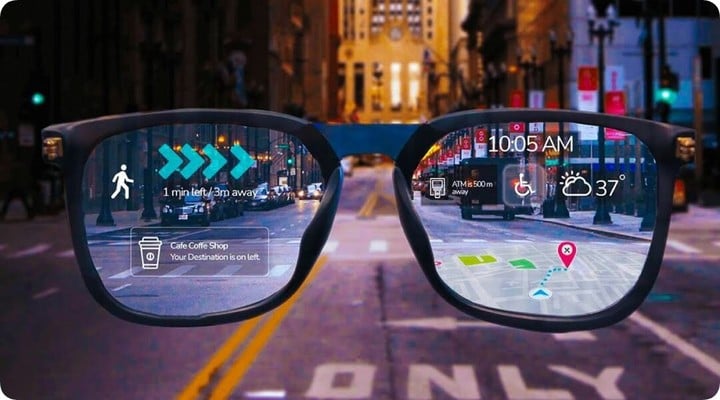
Since the display has been cut, audio becomes the star player. Besides listening to music and making calls, it also supports FaceTime Audio, and 古尔曼 says Apple's internal engineers have even rated its sound quality as "industry-leading."
Having shed the heavy optical display module, Apple was able to polish the body to look more like "a pair of glasses a normal human would wear."
It is said that the N50's frame is even slimmer than the second-generation Ray-Ban Meta, and some prototypes use an oval camera opening that is flush with the frame, without an abrupt protruding look. In addition, Apple is still refining different styles, colorways, and frame materials.
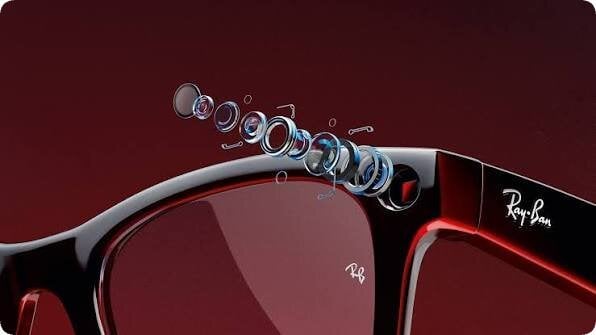
One very interesting detail mentioned is its charging method.
Some test units add a flat three-pin magnetic charging connector near the end of the left temple, roughly the size of a mint. We can even charge it while wearing the glasses—though picturing a cable trailing behind the temple is a bit cyberpunk.
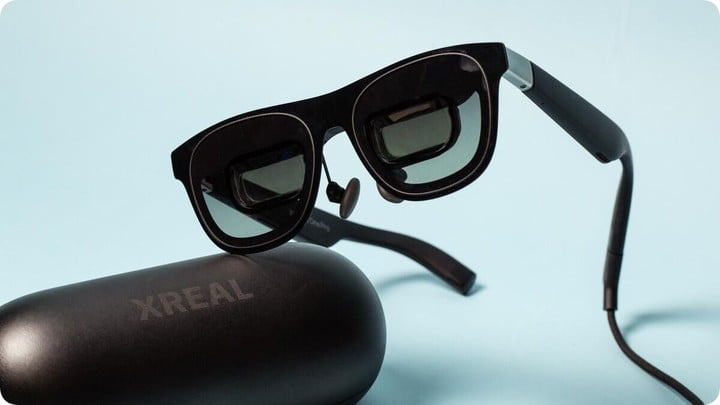
Put plainly, Apple voluntarily giving up display capability is essentially "reducing the burden" for the first-generation product. Getting weight, camera, and audio interaction right first is clearly a more pragmatic route.
In addition, some prototypes add a status indicator light on the front of the frame to signal that the device is in use or charging. 古尔曼 also mentions that Apple is trying other privacy-protection designs, though the specific plans have not yet been disclosed.
Since the screen has been cut, the core interaction of this pair of glasses naturally falls entirely into the hands of voice—in other words, Siri is the true soul of the whole product.
According to 古尔曼, Apple wants users to speak directly to the glasses, directing Siri to launch apps on the paired iPhone—when heading out, you can book a restaurant, call a ride-hailing car, order an iced Americano, or even buy movie tickets just by talking.
These apps do not run on the glasses; the one actually doing the work is still the iPhone in your pocket. In other words, it is not a standalone terminal, but merely an interaction entry point extending the iPhone onto your face.
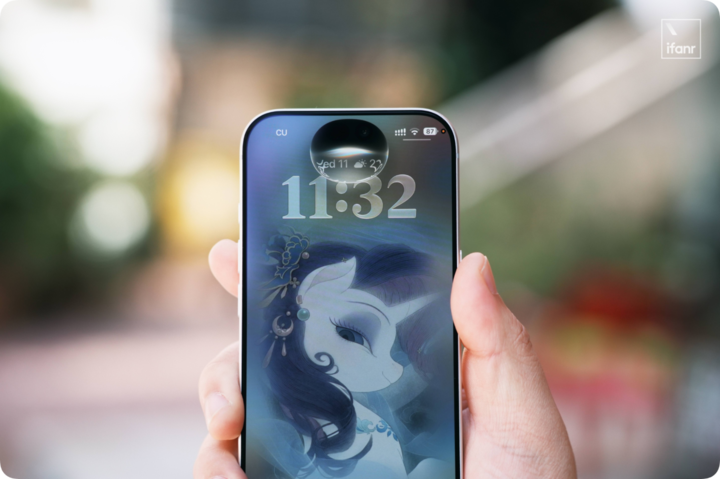
This "borrowing a chicken to lay eggs" logic is clever: developers do not need to rewrite a dedicated set of software for the glasses; as long as existing iPhone apps have their interfaces connected, the glasses can call them directly. At the same time, letting the phone run these apps in the background also neatly makes up for the glasses' limited processing power and memory.
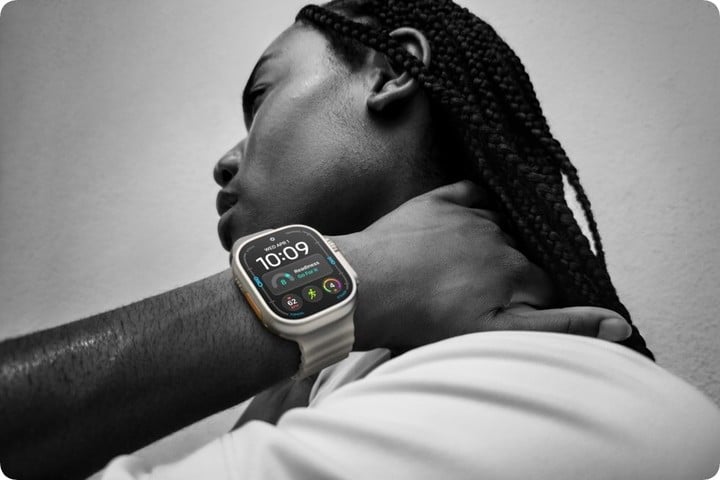
Correspondingly, this pair of glasses must also be tied to an iPhone for use. The glasses themselves are equipped with Wi-Fi, so even if the iPhone is not nearby, some basic functions can still be used, such as continuing to play audio over the network; but anything involving operations of third-party apps still cannot do without the paired iPhone.
In other words, this pair of glasses is almost inseparable from the iPhone, much like the Apple Watch in everyone's hands—as for Android users, they are naturally completely out of luck.
If you paid attention to the developments half a month ago, you would find that Apple had long been paving the way for this step.
On November 3, along with the iOS 27.3 beta, Apple opened the Siri AI Developer Preview to developers. Through App Intents, developers can expose specific functions within their apps to Siri; and the newly added Skills mechanism allows Siri to chain multiple operations together to execute more complex tasks.
Apple pressing developers so intensively to adapt is clearly clearing obstacles in advance for next year's glasses. But this also precisely exposes an awkward state:
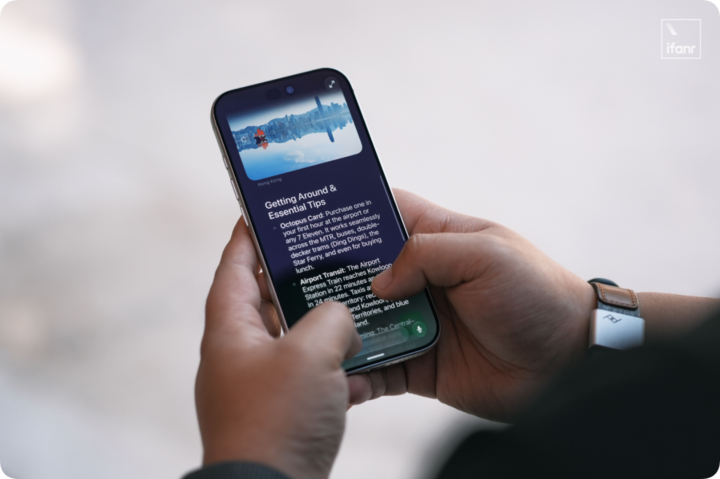
Even on its own iPhone, the current Siri AI remains in a rather "half-finished" state, and the vast majority of deep operations that can truly run through are still firmly confined to Apple's own native apps.
No wonder 古尔曼 said bluntly in the leak: the N50's hardware design has actually largely been finalized, and what is really slowing down the launch of the whole pair of glasses is instead the software and AI.
Apple making glasses is not hard; making Apple glasses is very hard
Why does everyone look forward to Apple making glasses? Actually, just as everyone looks forward to Apple making foldable-screen phones, it is the expectation that it can bring a brand-new product definition to this category.
We all know what Apple can deliver when it makes glasses—
Supply chain dominance, top-tier industrial design, industry-leading speakers, plus the spatial interaction experience accumulated from visionOS. We have every reason to believe that Apple can hand in a high-scoring answer sheet in hardware and system refinement.
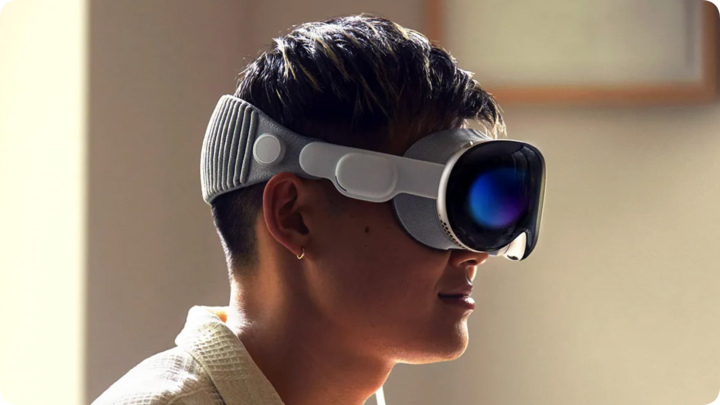
In other words, in theory we can absolutely buy a pair of "Apple-branded" good glasses that are extremely exquisitely crafted and dignified enough to wear.
But ask one step deeper: is this really the Apple glasses we want, or even, the ultimate form Apple itself wants?
In everyone's imagination, smart glasses in the AI era should be Iron Man's "Jarvis"—it can see the world in front of you, understand your subtext, directly skip cumbersome interfaces, and take charge of all programs for you in the background.
But to run "Jarvis," there must stand behind it a super terminal with high privileges. Apple has bet on Siri AI, but frankly speaking, even by iOS 27.3, the current Siri AI is simply not ready for this.

The first thing that bears the brunt is the dead knot of APIs and permissions. Under Apple's strict sandbox mechanism, Siri has not been granted the privilege of "freely taking over all apps." How much capability an app can be called upon for depends entirely on whether the third-party developer is willing to hand over the interface.
As long as the commonly used food delivery or ride-hailing apps have not fully opened their interfaces to Apple, no matter how smart your voice model is, you will never break through this wall of the ecosystem, and it will never become an all-powerful agent.
Even if we take a step back and assume that all third-party apps obediently hand over sufficiently rich APIs to Apple, Siri's experience is still "makeshift." Because the essence of this logic still has not broken out of the iPhone ecosystem's framework:
Everything you want to do is still based on what a phone could originally do; what Siri does is merely replace the action of tapping the screen with your finger with using your mouth to press those API buttons preset by developers.
Compared with an intelligent Agent, it is more like a vassal product of the iPhone.
Actually, the industry is not without ideas for breaking the deadlock. Take a model like Meta Muse as a reference; it is essentially equipping you with a virtual computer on the cloud standing by around the clock, responsible for more complex computation, memory, and task execution; or suppose Apple allows you to deploy a Mac at home as a 24-hour online private computing hub, and so on.

But these solutions are all too "un-Apple."
Because for AI to truly take over everything for you, the premise is that you must first hand over the screen images, background operations, and personal context without reservation. This approach of trading away the bottom line of privacy for global convenience runs counter to Apple's privacy values.
Thus, reality evolves into a strong gap: what we expect is a "Jarvis" that automatically takes charge of everything, but what we will most likely get in the end is just waking up Siri and hearing it read out tomorrow evening's schedule reminder.
Following this logic, an awkward fact emerges: in this contest between "capability" and "privacy," Apple has not actually found a way to break the deadlock.
It refuses to cross the privacy red line and take over everything globally, yet it cannot escape the incomplete API call chain. In everyday scenarios, these glasses will most likely meet the same fate as "CarPlay"—and with a price tag of several hundred dollars on top, it is really hard to make people feel "I must buy this."
At this point, perhaps we can only understand it as an external sensor for capturing personal context—no different, in fact, from today's various wristbands and lapel clips, which is most likely not the vision Apple truly wants.
But once it retreats to this positioning, it becomes even more awkward within Apple's own ecosystem.
After all, the Apple Watch now has Siri Recap in place, and there are even reports that Apple plans to launch AirPods with cameras by the end of 2027—these products and features are all conveniently harvesting contextual information in these scenarios.
Although the glasses have unique first-person visual perception and richer multimodal capabilities, Apple still needs to prove what kind of sufficiently unique and sufficiently high-frequency experience this capability can create.
Of course, this is by no means a dilemma for Apple alone; it is a soul-searching question that every hardware maker rushing into this battlefield must face head-on.
This will not be the smart glasses we want, and most likely, it will not be the answer Apple truly wants to bring to this era either.