 Newshot
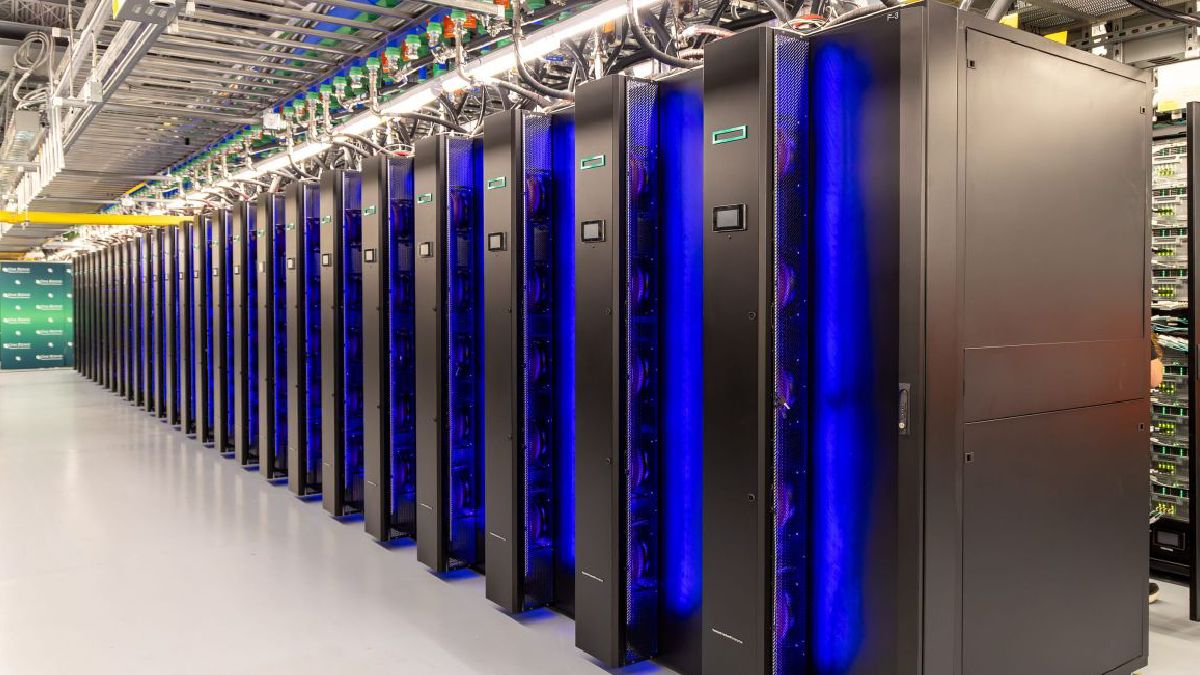
With the coming of SC26, also comes a fresh edition of the TOP500 list, which ranks the world's most powerful supercomputers. The newly released list illustrates that AMD powers 40% of the list, up 14% compared to 2025. AMD-powered systems now tally up to 202 on the list, up from 177 last year. New to the list is Lux, a “SI + HPC supercomputer” developed by AMD and the U.S. Department of Energy (DOE), which debuted at position 14.
AMD’s representation in the top 10 is familiar. After debuting in June, China’s LineShine remains in the top slot. El Capitan, powered by AMD chips, is in the second slot, followed by Frontier in third, HPC7 in sixth, and HPC6 in eighth, the same as the most recent TOP500 list.
Lux was announced a little over a year ago in a $1 billion deal between the DOE and AMD to develop two supercomputers. This is the first of the two, and the first time it’s been on the TOP500. The system was built by HPE and developed by AMD and DOE as part of the U.S. government’s Genesis Mission. The machine is housed in Oak Ridge National Laboratory’s Oak Ridge Leadership Computing Facility (OLCF), alongside machines like Frontier.
Lux relies on over 4,000 Instinct MI355X GPUs separated into over 500 nodes. For HPC workloads using FP64, the machine is capable of 317 PetaFLOPS. For AI training, the machine peaks at 20 ExaFLOPS of FP8, and for inference, 40 ExaFLOPS of FP4. With 288 GB of HBM3E per GPU, the entire system has access to 1.1 PB.
The machine uses AMD EPYC host CPUs — we weren’t able to find details on the specific generation— and AMD’s Pensando networking, with nodes built inside HPE’s ProLiant Compute XD685.
| Rank | Prev. Rank | Name | System |
|---|---|---|---|
| 1 | 1 | LineShine | LingKun, LX2 304C 1.55GHz, LingQi, Kylin OS |
| 2 | 2 | El Capitan | HPE Cray EX255a, AMD 4th Gen EPYC 24C 1.8GHz, AMD Instinct MI300A, Slingshot-11, TOSS |
| 3 | 3 | Frontier | HPE Cray EX235a, AMD Optimized 3rd Generation EPYC 64C 2GHz, AMD Instinct MI250X, Slingshot-11, HPE Cray OS |
| 4 | 4 | Aurora | HPE Cray EX - Intel Exascale Compute Blade, Xeon CPU Max 9470 52C 2.4GHz, Intel Data Center GPU Max, Slingshot-11 |
| 5 | 5 | JUPITER Booster | BullSequana XH3000, GH Superchip 72C 3GHz, NVIDIA GH200 Superchip, Quad-Rail NVIDIA InfiniBand NDR200, RedHat Enterprise Linux |
| 6 | 6 | HPC7 | HPE Cray EX255a, AMD 4th Gen EPYC 24C 1.8GHz, AMD Instinct MI300A, Slingshot-11, RHEL 9 |
| 7 | 7 | Eagle | Microsoft NDv5, Xeon Platinum 8480C 48C 2GHz, NVIDIA H100, NVIDIA Infiniband NDR |
| 8 | 8 | HPC6 | HPE Cray EX235a, AMD Optimized 3rd Generation EPYC 64C 2GHz, AMD Instinct MI250X, Slingshot-11, RHEL 8.9 |
| 9 | 9 | Supercomputer Fugaku | Supercomputer Fugaku, A64FX 48C 2.2GHz, Tofu interconnect D |
| 10 | 10 | Alps | HPE Cray EX254n, NVIDIA Grace 72C 3.1GHz, NVIDIA GH200 Superchip, Slingshot-11, HPE Cray OS |
LingKun, LX2 304C 1.55GHz, LingQi, Kylin OS
HPE Cray EX255a, AMD 4th Gen EPYC 24C 1.8GHz, AMD Instinct MI300A, Slingshot-11, TOSS
HPE Cray EX235a, AMD Optimized 3rd Generation EPYC 64C 2GHz, AMD Instinct MI250X, Slingshot-11, HPE Cray OS
HPE Cray EX - Intel Exascale Compute Blade, Xeon CPU Max 9470 52C 2.4GHz, Intel Data Center GPU Max, Slingshot-11
JUPITER Booster
BullSequana XH3000, GH Superchip 72C 3GHz, NVIDIA GH200 Superchip, Quad-Rail NVIDIA InfiniBand NDR200, RedHat Enterprise Linux
HPE Cray EX255a, AMD 4th Gen EPYC 24C 1.8GHz, AMD Instinct MI300A, Slingshot-11, RHEL 9
Microsoft NDv5, Xeon Platinum 8480C 48C 2GHz, NVIDIA H100, NVIDIA Infiniband NDR
HPE Cray EX235a, AMD Optimized 3rd Generation EPYC 64C 2GHz, AMD Instinct MI250X, Slingshot-11, RHEL 8.9
Supercomputer Fugaku
Supercomputer Fugaku, A64FX 48C 2.2GHz, Tofu interconnect D
HPE Cray EX254n, NVIDIA Grace 72C 3.1GHz, NVIDIA GH200 Superchip, Slingshot-11, HPE Cray OS
The machine has 3.5 million node-hours (one node running for one hour) per year, half of which are reserved for Genesis Mission research. Genesis Mission was established through an executive order in November 2025 with the stated goal of creating a “dedicated, coordinated national effort to unleash a new age of AI‑accelerated innovation and discovery that can solve the most challenging problems of this century.”
More specifically, the order lays out training scientific foundation models on Federal datasets, and creating “AI agents to test new hypotheses, automate research workflows, and accelerate scientific breakthroughs.” Lux is the first dedicated supercomputer for the Genesis Mission, but it joins existing machines that have been at least partially dedicated to research, including the Intel-powered Aurora at Argonne National Laboratory, which arrived fourth in the most recent TOP500.
Lux is built primarily for AI research, not as a successor to Frontier. Discovery is on track to debut as a next-gen flagship exascale supercomputer in 2028, also developed jointly by the DOE, AMD, and HPE.

Jake Roach is the Senior CPU Analyst at Tom’s Hardware, writing reviews, news, and features about the latest consumer and workstation processors.